非虚构
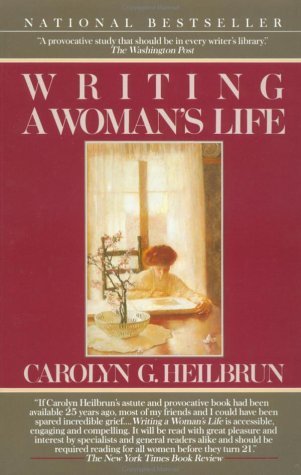
Writing a Woman's Life
Goodreads
publishing house: Ballantine Books 1989 - 9
Drawing on the experience of celebrated women, from George Sand and Virginia Woolf to Dorothy Sayers and Adrienne Rich, Heilbrun examines the struggle these writers undertook when their drives made it impossible for them to follow the traditional "male" script for a woman's life. <br /><br />Refreshing and insightful, this is an homage to brave women past and present, and an invitation to all women to write their own scripts, whatever they may be.
The Variety of Life: A Survey and a Celebration of All the Creatures that Have Ever Lived
The Variety of Life: A Survey and a Celebration of All the Creatures that Have Ever Lived Goodreads
Colin Tudge publishing house: Oxford University Press, USA 2000 - 5
Here, between the covers of one capacious book, is an illustrated summary of all the creatures that have ever lived, a vast compendium of earth's current and former inhabitants in all their dazzling and infinite diversity. Colin Tudge argues that we are entering a new phase of biology in which, for the first time, biologists are achieving profound insight into life's true diversity and developing the tools to keep track of it. heralds this new phase. The first part of the book describes why biologists now feel that there could have been as many as 4,000 billion species on Earth since life began. It then discusses the need for classification, beginning with the most basic principles--the strictly practical classification of fishmongers and foresters, who speak of "shellfish" and differentiate "hardwood" from "softwood"--and moves on to explore the intriguing deliberations of the modern "transformed cladists" and the novel contributions of molecular genetics. Part II describes the creatures themselves. It is divided into 24 sections, each describing a different group, illustrated by nearly 50 double-page spreads which present genealogical "trees" that summarize the evolutionary relationships between the creatures in each group. Some sections describe large, comprehensive groups such as the kingdoms of the Animals or the Plants. Others treat similar sub-groups in more detail, such as the Mammals, a class, or the Hominids, a family. In lively and accessible prose, all the significant groups of creatures--both alive and extinct--are described and their relationships clarified. For general readers and serious biologists alike, offers an unprecedented storehouse of knowledge of life on earth.
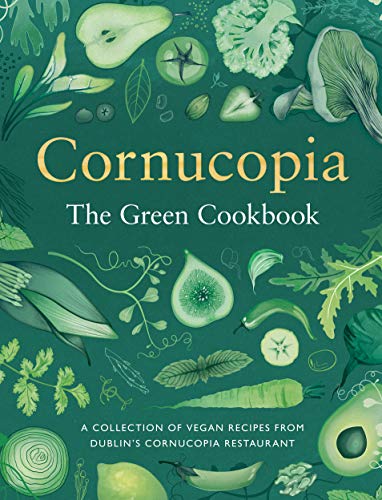
Cornucopia: The Green Cookbook
Goodreads
publishing house: Gill Books 2019 - 10
Cornucopia, on Dublin's Wicklow Street, has been serving up delicious vegetarian and vegan fare for more than 33 years. Their mission has always been to make great tasting, home produced, healthy food. At a time when plant-based eating is more popular than ever, Cornucopia is a pioneer in creating delicious meals packed with vegetables, legumes, fruits, herbs and spices. Whether you are a vegetarian, vegan or are trying to cut down on your meat intake, this book brings you punchy flavors and unique, satisfying dishes. With a wide range of ingredients and smart culinary tips and ideas, each recipe is a delight to cook in your own home. This is a cookbook for anyone who feels there is merit in reducing or limiting our consumption of animal-based foods, brought to you from Cornucopia’s long-standing head chef Tony Keogh, the staff of Cornucopia and Aoife Carrigy.
Why We Sleep
Douban
★ 8.9 23 ratings
Matthew Walker PhD publishing house: Scribner 2017 - 10
The first sleep book by a leading scientific expert—Professor Matthew Walker, Director of UC Berkeley’s Sleep and Neuroimaging Lab—reveals his groundbreaking exploration of sleep, explaining how we can harness its transformative power to change our lives for the better. Sleep is one of the most important but least understood aspects of our life, wellness, and longevity. Until very recently, science had no answer to the question of why we sleep, or what good it served, or why we suffer such devastating health consequences when we don't sleep. Compared to the other basic drives in life—eating, drinking, and reproducing—the purpose of sleep remained elusive. An explosion of scientific discoveries in the last twenty years has shed new light on this fundamental aspect of our lives. Now, preeminent neuroscientist and sleep expert Matthew Walker gives us a new understanding of the vital importance of sleep and dreaming. Within the brain, sleep enriches our ability to learn, memorize, and make logical decisions. It recalibrates our emotions, restocks our immune system, fine-tunes our metabolism, and regulates our appetite. Dreaming mollifies painful memories and creates a virtual reality space in which the brain melds past and present knowledge to inspire creativity. Walker answers important questions about sleep: how do caffeine and alcohol affect sleep? What really happens during REM sleep? Why do our sleep patterns change across a lifetime? How do common sleep aids affect us and can they do long-term damage? Charting cutting-edge scientific breakthroughs, and synthesizing decades of research and clinical practice, Walker explains how we can harness sleep to improve learning, mood, and energy levels; regulate hormones; prevent cancer, Alzheimer’s, and diabetes; slow the effects of aging; increase longevity; enhance the education and lifespan of our children, and boost the efficiency, success, and productivity of our businesses. Clear-eyed, fascinating, and accessible, Why We Sleep is a crucial and illuminating book
Helen of Troy
Douban
Bettany Hughes publishing house: Knopf 2005 - 10
An illuminating, erudite, lively search for the real Helen of Troy&#8211;a chronicle that combines historical inquiry and storytelling &#233;lan&#8211;from one of Britain’s most widely acclaimed and popular historians. As soon as men began to write, they made Helen of Troy their subject; for close to three thousand years she has been both the embodiment of absolute female beauty and a reminder of the terrible power that beauty can wield. Because of her double marriage to the Greek king Menelaus and the Trojan prince Paris, Helen was held responsible for an enduring enmity between East and West. For millennia she has been viewed as an exquisite agent of extermination. But who was she? Helen exists in many guises: a matriarch from the Age of Heroes who ruled over one of the most fertile areas of the Mycenaean world; Helen of Sparta, the focus of a cult that conflated Helen the heroine with a pre-Greek fertility goddess; the home-wrecker of the Iliad; the bitch-whore of Greek tragedy; the pin-up of Romantic artists. Focusing on the “real” Helen&#8211;a flesh-and-blood aristocrat from the Greek Bronze Age&#8211;Bettany Hughes reconstructs the context of life for this pre-historic princess. Through the eyes of a young Mycenaean woman, Hughes examines the physical, historical, and cultural traces that Helen has left on locations in Greece, North Africa, and Asia Minor. Vivid and compelling, this remarkable book brilliantly unpacks the facts and myths surrounding one of the most enigmatic and notorious figures of all time.