法国
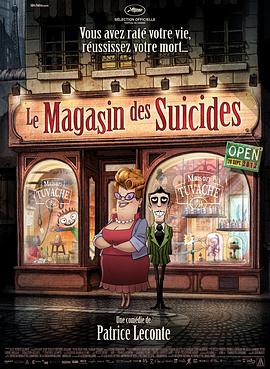
The Suicide Shop (2012) WikiData IMDb TMDB Douban Min reol Skybridge +3
Le magasin des suicides
other title:
自杀专卖店
/
Le magasin des suicides
…
In a cold French city where suicide is a common urge, there is a colorful shop, managed for many years by the Tuvache family, where it is very easy to obtain the necessary tools to satisfy the sinister desires of so many depressed citizens.
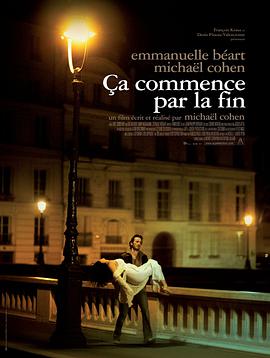
It Begins With the End (2010) WikiData IMDb TMDB Douban
Ça commence par la fin
director:
米夏埃尔·科恩
actor:
Emmanuelle Béart
/
米夏埃尔·科恩
…
other title:
结束后的开始
/
Ça commence par la fin
…
A woman, a man, a summer in Paris. Passion, break ups, reconciliations. A love story in disarray...
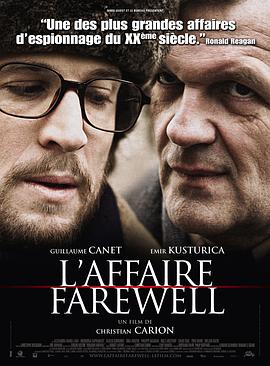
Farewell (2009) WikiData IMDb IMDb TMDB Douban +2
L'affaire Farewell
other title:
克格勃无间事件
/
Die Affäre Farewell
…
An intricate thriller about an ordinary man thrust into the biggest theft of Soviet information of the Cold War. Right after the Soviet invasion of Afghanistan. A French businessman based in Moscow, Pierre Froment, makes an unlikely connection with Grigoriev, a senior KGB officer disenchanted with what the Communist ideal has become under Brezhnev. Grigoriev begins passing Froment highly sensitive information about the Soviet spy network in the US.
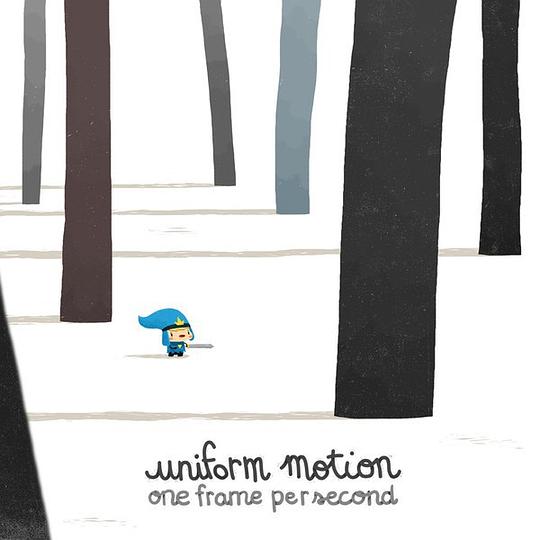
One Frame Per Second Douban
Uniform Motion
genre:
Folk
release date 2011-09-01
publisher:
Nicely Illustrated
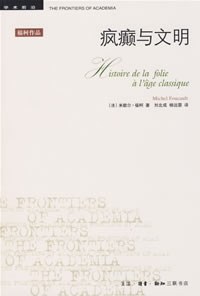
疯癫与文明 Douban Goodreads
Folie et Déraison: Histoire de la folie à l'âge classique
9.1 (90 ratings)
author:
[法] 米歇尔·福柯
translator:
刘北成
/
杨远婴
publishing house:
生活·读书·新知三联书店
2003
- 1
other title:
疯癫与文明
Madness & Civilization: A History of Insanity in the Age of Reason, by Michel Foucault, is an examination of the ideas, practices, institutions, art & literature relating to madness in Western history. It's an abridged English edition of Histoire de la folie à l'âge classique, originally published in 1961 as Folie et déraison. Histoire de la folie à l'âge classique. A full translation, The History of Madness, was published by Routledge in 6/2006. This was his 1st major book, written while Director of the Maison de France in Sweden.
This history begins in the Middle Ages, noting the social & physical exclusion of lepers. It argues that with the gradual disappearance of leprosy, madness came to occupy this excluded position. The ship of fools in the 15th century is a literary version of one such exclusionary practice, the practice of sending mad people away in boats. However, during the Renaissance, madness was regarded as a common phenomenon because humans couldn't attain Divine Reason. As Cervantes' Don Quixote, all humans are weak to desires & dissimulation. Therefore, the insane, understood as those who had come too close to God's Reason, were accepted in the middle of society. It isn't before the 17th century, in a movement famously called the Great Confinement, that unreasonable people systematically were institutionalized. In the 18th century, the mad came to be seen as having lost what made them human & become animalistic & treated as such. It isn't before 19th century that madness was regarded as an illness to be cured.
Foucault wasn't talking about medical institutions designed specifically for the insane but about the creation of houses of confinement for social outsiders, including not only the insane but also vagrants, the poor & orphans, & what effect those houses of confinement had on the insane & perceptions of madness in the West. He demonstrates that while confinement of social outcastes was a generally European phenomenon, it had a unique development in France & distinct developments in other countries such as Germany & England.
Foucault also argues that madness during the Renaissance had the power to signify the limits of social order & to point to a deeper truth. This was silenced by Enlightened Reason. He also examines the rise of modern scientific & humanitarian treatment of the insane, notably at the hands of Philippe Pinel & Samuel Tuke. He claims these modern treatments were no less controlling than previous methods. Tuke's country retreat for the mad consisted of punishing them until they gave up their commitment to madness. Similarly, Pinel's treatment of the mad amounted to an extended aversion therapy, including such treatments as cold showers & straitjackets. This treatment amounted to repeated brutality until the pattern of judgment & punishment was internalized by the patient.
This history begins in the Middle Ages, noting the social & physical exclusion of lepers. It argues that with the gradual disappearance of leprosy, madness came to occupy this excluded position. The ship of fools in the 15th century is a literary version of one such exclusionary practice, the practice of sending mad people away in boats. However, during the Renaissance, madness was regarded as a common phenomenon because humans couldn't attain Divine Reason. As Cervantes' Don Quixote, all humans are weak to desires & dissimulation. Therefore, the insane, understood as those who had come too close to God's Reason, were accepted in the middle of society. It isn't before the 17th century, in a movement famously called the Great Confinement, that unreasonable people systematically were institutionalized. In the 18th century, the mad came to be seen as having lost what made them human & become animalistic & treated as such. It isn't before 19th century that madness was regarded as an illness to be cured.
Foucault wasn't talking about medical institutions designed specifically for the insane but about the creation of houses of confinement for social outsiders, including not only the insane but also vagrants, the poor & orphans, & what effect those houses of confinement had on the insane & perceptions of madness in the West. He demonstrates that while confinement of social outcastes was a generally European phenomenon, it had a unique development in France & distinct developments in other countries such as Germany & England.
Foucault also argues that madness during the Renaissance had the power to signify the limits of social order & to point to a deeper truth. This was silenced by Enlightened Reason. He also examines the rise of modern scientific & humanitarian treatment of the insane, notably at the hands of Philippe Pinel & Samuel Tuke. He claims these modern treatments were no less controlling than previous methods. Tuke's country retreat for the mad consisted of punishing them until they gave up their commitment to madness. Similarly, Pinel's treatment of the mad amounted to an extended aversion therapy, including such treatments as cold showers & straitjackets. This treatment amounted to repeated brutality until the pattern of judgment & punishment was internalized by the patient.
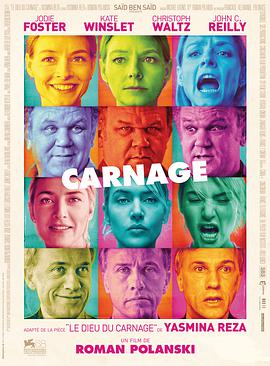


Le Voyage Dans La Lune Douban Discogs
7.9 (33 ratings)
Air
genre:
Electronic
release date 2012-02-07
publisher:
Virgin
Le voyage dans la lune (English: A Trip to the Moon) is the sixth studio album by French electronic music duo Air, released on 6 February 2012 by Virgin Records.
The album is inspired by the 1902 silent science fiction film A Trip to the Moon (Le voyage dans la lune) by Georges Méliès and is intended to be a soundtrack to the restored version of the film. A free three-minute film excerpt featuring the song "Sonic Armada" was made available for one week in early December 2011 in conjunction with a pre-order offer. A limited edition of the album (70,000 copies worldwide) includes the CD and a DVD of the film. The digital version of the album, along with the newly restored and colourised 16-minute film, was released as a strictly limited edition.
The album is inspired by the 1902 silent science fiction film A Trip to the Moon (Le voyage dans la lune) by Georges Méliès and is intended to be a soundtrack to the restored version of the film. A free three-minute film excerpt featuring the song "Sonic Armada" was made available for one week in early December 2011 in conjunction with a pre-order offer. A limited edition of the album (70,000 copies worldwide) includes the CD and a DVD of the film. The digital version of the album, along with the newly restored and colourised 16-minute film, was released as a strictly limited edition.

The Pianist (2002) WikiData IMDb TMDB Douban Skybridge +2
The Pianist
other title:
피아니스트
/
戦場のピアニスト
…
The true story of pianist Władysław Szpilman's experiences in Warsaw during the Nazi occupation. When the Jews of the city find themselves forced into a ghetto, Szpilman finds work playing in a café; and when his family is deported in 1942, he stays behind, works for a while as a laborer, and eventually goes into hiding in the ruins of the war-torn city.

Delicacy (2011) Douban
La délicatesse
other title:
微妙爱情
/
La délicatesse
…
在浪漫氤氲的法国巴黎,年轻姑娘娜塔莉(奥黛丽·塔图 Audrey Tautou 饰)曾经拥有完美的爱情和快乐的工作,但在一天清晨,意外的车祸夺走了她丈夫的生命,也掐灭了她美好的生活轨迹。她开始沉溺新工作来试图麻痹自己,也拒绝别人的感情。然而,当一位其貌不扬的瑞士同事马库 斯(弗朗索瓦·达米昂 François Damiens 饰)来到公司后,两人竟鬼使神差地渐生情愫,生活的味觉也似在慢慢复苏。但他们的交往却并不为外界看好,面对朋友们的不解和追求者的阻挠,两人将如何小心保护这份意外的爱情美味……
电影改编自大卫·冯金诺斯的同名小说,该书曾同时入围法国四大文学奖并荣获十项文学最高殊荣,在法国畅销突破75万册。
电影改编自大卫·冯金诺斯的同名小说,该书曾同时入围法国四大文学奖并荣获十项文学最高殊荣,在法国畅销突破75万册。

Love Crime (2010) WikiData IMDb TMDB Douban
Crime d'amour
other title:
罪爱
/
Crime d'amour
…
In the sterile setting of a powerful multinational, a ruthless corporate executive and her ambitious protégée bare their claws in a vicious battle for supremacy.
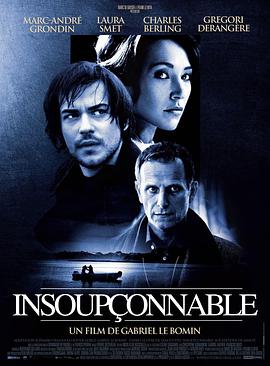
毋庸置疑 (2010) Douban
Insoupçonnable
director:
Gabriel Le Bomin
actor:
Charles Berling
/
Laura Smet
…
other title:
Insoupçonnable
Genève, de nos jours. Lise et Sam, la petite trentaine, forment un couple qui joint difficilement les deux bouts, vivant principalement des revenus de la jeune femme, hôtesse dans un club privé. Leur vie bascule le jour où Henri, veuf et notable local, tombe amoureux de Lise et la demande en mariage. En accord avec Sam, qui devra désormais se faire passer pour son frère, celle-ci accepte, voyant là l'occasion rêvée de dépouiller Henri de sa fortune. Les deux jeunes gens découvrent donc un monde a priori idyllique, mais dont ils ne soupçonnent ni les haines ni les rancœurs, à commencer par la sourde rivalité qui oppose Henri à son frère Edouard...


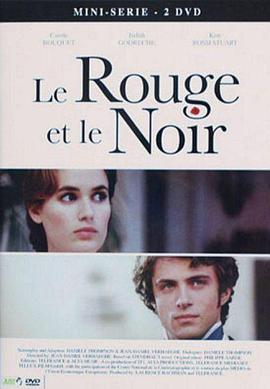
The Red and the Black (1997) WikiData IMDb TMDB Douban
Le rouge et le noir
other title:
红与黑
/
Le rouge et le noir
…
1997 television film directed by Jean-Daniel Verhaeghe

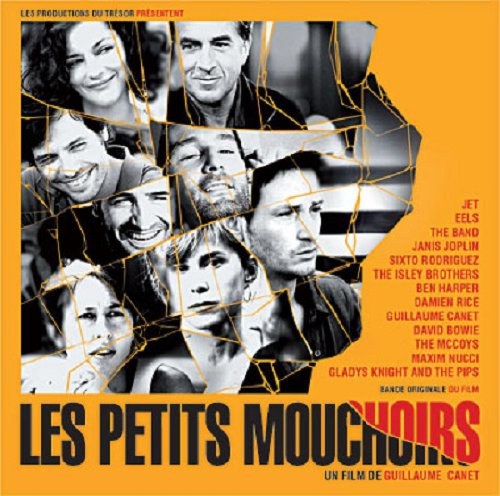
小小的白色谎言 电影原声 Douban
release date 2010-10-25
publisher:
Columbia