公共卫生
Learning From SARS Douban
author: Knobler, Stacey (EDT)/ Mahmoud, Adel (EDT)/ Lemon, Stanley (EDT)/ Mack, Alison (EDT)/ Sivitz, Laura (EDT)/ Oberholtzer, Katherine (EDT) publishing house: Natl Academy Pr 2004 - 4
The emergence of severe acute respiratory syndrome (SARS) in late 2002 and 2003 challenged the global public health community to confront a novel epidemic that spread rapidly from its origins in southern China until it had reached more than 25 other countries within a matter of months. In addition to the number of patients infected with the SARS virus, the disease had profound economic and political repercussions in many of the affected regions. Recent reports of isolated new SARS cases and a fear that the disease could reemerge and spread have put public health officials on high alert for any indications of possible new outbreaks. This report examines the response to SARS by public health systems in individual countries, the biology of the SARS coronavirus and related coronaviruses in animals, the economic and political fallout of the SARS epidemic, quarantine law and other public health measures that apply to combating infectious diseases, and the role of international organizations and scientific cooperation in halting the spread of SARS. The report provides an illuminating survey of findings from the epidemic, along with an assessment of what might be needed in order to contain any future outbreaks of SARS or other emerging infections.
June 14, 2020 read
现在回首应该叫“learning nothing from SARS"
公共卫生
Infectious Change Douban
author: Katherine Mason publishing house: Stanford University Press 2016 - 5
In February 2003, a Chinese physician crossed the border between mainland China and Hong Kong, spreading Severe Acute Respiratory Syndrome (SARS)—a novel flu-like virus—to over a dozen international hotel guests. SARS went on to kill about 800 people and sicken 8,000 worldwide. By July 2003 the disease had disappeared, but it left an indelible change on public health in China. The Chinese public health system, once famous for its grassroots, low-technology approach, was transformed into a globally-oriented, research-based, scientific endeavor.
In Infectious Change, Katherine A. Mason investigates local Chinese public health institutions in Southeastern China, examining how the outbreak of SARS re-imagined public health as a professionalized, biomedicalized, and technological machine—one that frequently failed to serve the Chinese people. Mason recounts the rapid transformation as young, highly trained biomedical scientists flooded into local public health institutions, replacing bureaucratic government inspectors who had dominated the field for decades. Infectious Change grapples with how public health in China was reinvented into a prestigious profession in which global impact and recognition were paramount—and service to vulnerable local communities was secondary.
Feb. 7, 2019 read
感觉都认识好多她采访的人……但很多东西和我的经验都是相冲突的。对公卫和临床的关系也描述的太简单了,好像是公卫不屑于和人家一起混似的——实际上权力关系到底如何,到底谁羡慕谁,背后有什么职业和权力的斗争都没有太多涉猎,非常可惜。关心“素质”、“关系”、“流动人口”真的是又有时代感又有学科差异感……
人类学 公共卫生 中国 医学 社会学
Metrics Douban
author: Vincanne Adams publishing house: Duke University Press 2016 - 3
This volume's contributors evaluate the accomplishments, limits, and consequences of using quantitative metrics in global health. Whether analyzing maternal mortality rates, the relationships between political goals and metrics data, or the links between health outcomes and a program's fiscal support, the contributors question the ability of metrics to solve global health problems. They capture a moment when global health scholars and practitioners must evaluate the potential effectiveness and pitfalls of different metrics—even as they remain elusive and problematic.
Contributors. Vincanne Adams, Susan Erikson, Molly Hales, Pierre Minn, Adeola Oni-Orisan, Carolyn Smith-Morris, Marlee Tichenor, Lily Walkover, Claire L. Wendland
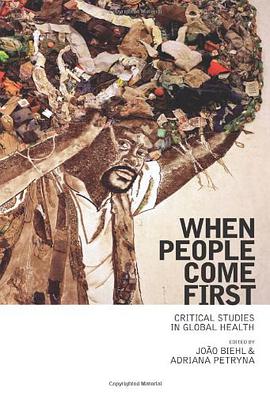
When People Come First Douban
author: João Biehl an / Adriana Petryna publishing house: Princeton University Press 2013 - 7
When People Come First critically assesses the expanding field of global health. It brings together an international and interdisciplinary group of scholars to address the medical, social, political, and economic dimensions of the global health enterprise through vivid case studies and bold conceptual work. The book demonstrates the crucial role of ethnography as an empirical lantern in global health, arguing for a more comprehensive, people-centered approach. Topics include the limits of technological quick fixes in disease control, the moral economy of global health science, the unexpected effects of massive treatment rollouts in resource-poor contexts, and how right-to-health activism coalesces with the increased influence of the pharmaceutical industry on health care. The contributors explore the altered landscapes left behind after programs scale up, break down, or move on. We learn that disease is really never just one thing, technology delivery does not equate with care, and biology and technology interact in ways we cannot always predict. The most effective solutions may well be found in people themselves, who consistently exceed the projections of experts and the medical-scientific, political, and humanitarian frameworks in which they are cast. When People Come First sets a new research agenda in global health and social theory and challenges us to rethink the relationships between care, rights, health, and economic futures.
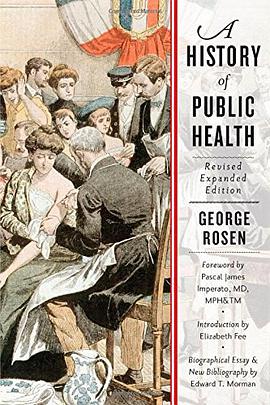
A History of Public Health Douban
author: George Rosen publishing house: Johns Hopkins University Press 2015 - 1
Since publication in 1958, George Rosen’s classic book has been regarded as the essential international history of public health. Describing the development of public health in classical Greece, imperial Rome, England, Europe, the United States, and elsewhere, Rosen illuminates the lives and contributions of the field’s great figures. He considers such community health problems as infectious disease, water supply and sewage disposal, maternal and child health, nutrition, and occupational disease and injury. And he assesses the public health landscape of health education, public health administration, epidemiological theory, communicable disease control, medical care, statistics, public policy, and medical geography.
Rosen, writing in the 1950s, may have had good reason to believe that infectious diseases would soon be conquered. But as Dr. Pascal James Imperato writes in the new foreword to this edition, infectious disease remains a grave threat. Globalization, antibiotic resistance, and the emergence of new pathogens and the reemergence of old ones, have returned public health efforts to the basics: preventing and controlling chronic and communicable diseases and shoring up public health infrastructures that provide potable water, sewage disposal, sanitary environments, and safe food and drug supplies to populations around the globe.
A revised introduction by Elizabeth Fee frames the book within the context of the historiography of public health past, present, and future, and an updated bibliography by Edward T. Morman includes significant books on public health history published between 1958 and 2014. For seasoned professionals as well as students, A History of Public Health is visionary and essential reading.