/


Mad Masters (2004) WikiData IMDb TMDB Douban
Les Maîtres fous
other title:
疯癫大师
/
Les Maîtres fous
…
Les Maitres Fous is about the ceremony of a religious sect, the Hauka, which was widespread in West Africa from the 1920s to the 1950s. Hauka participants were usually rural migrants from Niger who came to cities such as Accra in Ghana (then Gold Coast), where they found work as laborers in the city's lumber yards, as stevedores at the docks, or in the mines. There were at least 30,000 practicing Hauka in Accra in 1954 when Jean Rouch was asked by a small group to film their annual ceremony During this ritual, which took place on a farm a few hours from the city, the Hauka entered trance and were possessed by various spirits associated with the Western colonial powers: the governorgeneral, the engineer, the doctor's wife, the wicked major, the corporal of the guard.
The roots of the Hauka lie in traditional possession cults common among the Songhay and Djerma peoples of the Niger River basin. Gifted men and women may enter trance and become possessed by any of a number of strong gods, such as Dongo, god of thunder and the sky.Supplicants consult the god through the trancing medium and receive advice about their problems, cures for diseases, comfort and support, or reprimands for their wrongdoings. Like these traditional possession cults, the Hauka sect co-existed with Islam and incorporated many Islamic saints and heroes into its rituals. Most of its adherents were Muslims.
Hauka first appeared in Niger, it is thought, in the person of a former soldier who participated in the savage battles of the second German offensive of World War I in 1917 and 1918, in which West African troops were decimated despite their spectacular performance. This soldier made the pilgrimage to Mecca and returned to Niger in the 1920s. In his village, in Rouch's account, he found the people "doing a traditional dance and the soldier was possessed, very violently possessed, and while possessed he said 'I am the avant-garde of the new gods who are coming from Malia [the Red Sea]. My name is Governor Malia and I am the first of the new gods who are coming and they are the gods of strength'."
The Hauka were quickly suppressed by the French authorities in Niger, with the support of traditional chiefs and priests who feared the popularity of the new movement and its challenge to established authority. But the Hauka cult spread, even within the jail walls, and by 1935 the British administration in Ghana again attempted to suppress it and to jail the cultists. Fires broke out in response throughout Accra, and eventually there was an agreement that Hauka priests would limit their ceremonies to certain places and to Saturdays and Sundays. This was still the case in 1954 when Rouch filmed Les Maitres Fous, which was banned by the colonial government in 1955.
The Hauka movement was a phenomenon of the colonial era. After the independence of Ghana in 1957, migration was controlled and many Hauka who had settled in Accra returned to Niger. Niger itself gained independence three years later, and the Hauka began to subside and to be absorbed into the traditional religious system. Dongo, for example, the old god of thunder, is now considered the father of the Hauka. As Rouch has pointed out, "there was no more colonial power and there never was a Hauka called Kwame N'krumah." The events filmed represent the end of the Hauka development. Today the film is shown in the villages of Ghana and in the Niger Cultural Center.
The imagery in Les Maitres Fous is powerful and often disturbing: possessed men with rolling eyes and foaming at the mouth, eating a sacrificed dog (in violation of taboo), burning their bodies with naming torches. Beyond the imagery, the themes are also powerful, and have had an impact in our own culture:Jean Genet's The Blacks was modeled upon the Hauka inversion in which blacks assume the role of masters, and Peter Brook's Marat/Sade was influenced by the theatricality and invented language of Hauka possession. Yet, as Rouch reminds us in an interview in Cineaste, possession for the Hauka cultists was not theater but reality. The significance of this reality is left ambiguous in the film, although Rouch's commentary suggests that the ritual provides a psychological release which enables the Hauka to be good workers and to endure a degrading situation with dignity. The unexplored relation of the Hauka movement to their colonial experience 1-S perhaps the most intriguing issue raised by this ceremony in which the oppressed become, for a day, the possessed and the powerful.
The roots of the Hauka lie in traditional possession cults common among the Songhay and Djerma peoples of the Niger River basin. Gifted men and women may enter trance and become possessed by any of a number of strong gods, such as Dongo, god of thunder and the sky.Supplicants consult the god through the trancing medium and receive advice about their problems, cures for diseases, comfort and support, or reprimands for their wrongdoings. Like these traditional possession cults, the Hauka sect co-existed with Islam and incorporated many Islamic saints and heroes into its rituals. Most of its adherents were Muslims.
Hauka first appeared in Niger, it is thought, in the person of a former soldier who participated in the savage battles of the second German offensive of World War I in 1917 and 1918, in which West African troops were decimated despite their spectacular performance. This soldier made the pilgrimage to Mecca and returned to Niger in the 1920s. In his village, in Rouch's account, he found the people "doing a traditional dance and the soldier was possessed, very violently possessed, and while possessed he said 'I am the avant-garde of the new gods who are coming from Malia [the Red Sea]. My name is Governor Malia and I am the first of the new gods who are coming and they are the gods of strength'."
The Hauka were quickly suppressed by the French authorities in Niger, with the support of traditional chiefs and priests who feared the popularity of the new movement and its challenge to established authority. But the Hauka cult spread, even within the jail walls, and by 1935 the British administration in Ghana again attempted to suppress it and to jail the cultists. Fires broke out in response throughout Accra, and eventually there was an agreement that Hauka priests would limit their ceremonies to certain places and to Saturdays and Sundays. This was still the case in 1954 when Rouch filmed Les Maitres Fous, which was banned by the colonial government in 1955.
The Hauka movement was a phenomenon of the colonial era. After the independence of Ghana in 1957, migration was controlled and many Hauka who had settled in Accra returned to Niger. Niger itself gained independence three years later, and the Hauka began to subside and to be absorbed into the traditional religious system. Dongo, for example, the old god of thunder, is now considered the father of the Hauka. As Rouch has pointed out, "there was no more colonial power and there never was a Hauka called Kwame N'krumah." The events filmed represent the end of the Hauka development. Today the film is shown in the villages of Ghana and in the Niger Cultural Center.
The imagery in Les Maitres Fous is powerful and often disturbing: possessed men with rolling eyes and foaming at the mouth, eating a sacrificed dog (in violation of taboo), burning their bodies with naming torches. Beyond the imagery, the themes are also powerful, and have had an impact in our own culture:Jean Genet's The Blacks was modeled upon the Hauka inversion in which blacks assume the role of masters, and Peter Brook's Marat/Sade was influenced by the theatricality and invented language of Hauka possession. Yet, as Rouch reminds us in an interview in Cineaste, possession for the Hauka cultists was not theater but reality. The significance of this reality is left ambiguous in the film, although Rouch's commentary suggests that the ritual provides a psychological release which enables the Hauka to be good workers and to endure a degrading situation with dignity. The unexplored relation of the Hauka movement to their colonial experience 1-S perhaps the most intriguing issue raised by this ceremony in which the oppressed become, for a day, the possessed and the powerful.
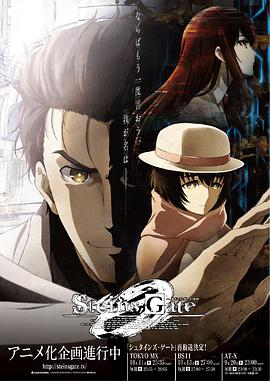
Steins;Gate 0 (2018) TMDB Douban Bangumi My NeoDB Site
STEINS;GATE 0 Season 1 part of TV Series: Steins;Gate 0
Eccentric Rintaro falls into a depression after failing to save Kurisu, but then a neuroscientist offers him the chance to interact with an AI copy.
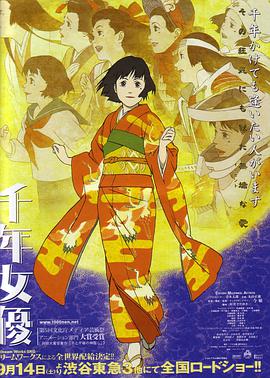

Maniac (2018) TMDB Douban
Maniac Season 1 part of TV Series: Maniac
安妮(艾玛·斯通 Emma Stone 饰)是一名长期被抑郁困扰的女子,复杂而又破碎的家庭关系让她感到精疲力竭。欧文(乔纳·希尔 Jonah Hill 饰)出生于一个庞大的家庭企业之中,作为家里的第五个孩子,他被医生诊断患上了精神分裂症,每一天都处于濒临崩溃的边缘。
詹姆斯博士(贾斯汀·塞洛克斯 Justin Theroux 饰)发明出了一种新药,据说可以治疗人类心智上的一切疑难杂症,目前已经进入了人体实验阶段,这种新药吸引了包括安妮和欧文在内的十名“小白鼠”,他们一起加入了詹姆斯博士的计划之中。詹姆斯博士向受试者承诺,这种药不会带来任何的并发症和副作用,但事实真的如此吗?
詹姆斯博士(贾斯汀·塞洛克斯 Justin Theroux 饰)发明出了一种新药,据说可以治疗人类心智上的一切疑难杂症,目前已经进入了人体实验阶段,这种新药吸引了包括安妮和欧文在内的十名“小白鼠”,他们一起加入了詹姆斯博士的计划之中。詹姆斯博士向受试者承诺,这种药不会带来任何的并发症和副作用,但事实真的如此吗?
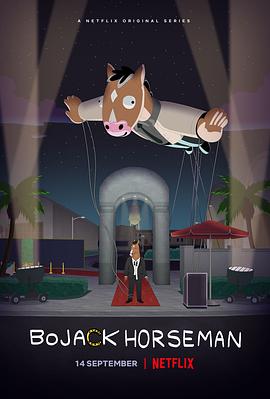
BoJack Horseman Season 5 (2018) TMDB Douban
BoJack Horseman Season 5 part of TV Series: BoJack Horseman
9.0 (281 ratings)
director:
艾米·温弗瑞
/
安妮·沃克·法瑞尔
actor:
威尔·阿奈特
/
艾米·塞德丽丝
…
BoJack's back on screen as the star of "Philbert," a new detective series produced by Princess Carolyn. But his demons are out in full force.

The Fly (1986) WikiData IMDb TMDB Douban Eggplant.place Min reol Melon Log Skybridge +5
The Fly
other title:
La mosca
/
Fluen
…
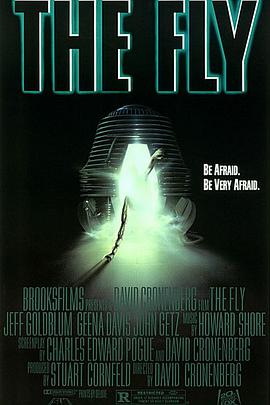
When Seth Brundle makes a huge scientific and technological breakthrough in teleportation, he decides to test it on himself. Unbeknownst to him, a common housefly manages to get inside the device and the two become one.
Conspirators of Pleasure (1996) WikiData IMDb TMDB Douban
Spiklenci slasti
other title:
极乐同盟
/
Spiklenci slasti
…
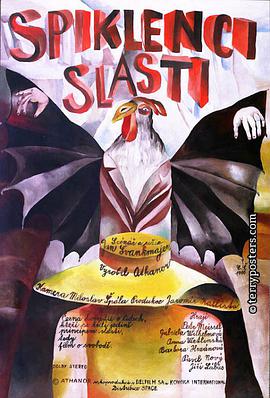
1996 film by Jan Švankmajer
Fando and Lis (1968) WikiData IMDb TMDB Douban
Fando y Lis
other title:
凡多和莉丝
/
Fando y Lis
…
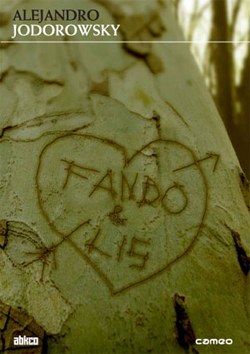
Fando and his partially paralysed lover Lis search for the mythical city of Tar.
Naked Lunch (1991) WikiData IMDb TMDB Douban
Naked Lunch
other title:
裸体午餐
/
活死人之旅(港)
…
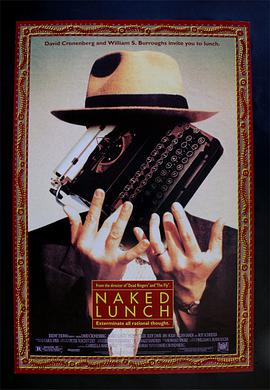
Blank-faced bug killer Bill Lee and his dead-eyed wife, Joan, like to get high on Bill's pest poisons while lounging with Beat poet pals. After meeting the devilish Dr. Benway, Bill gets a drug made from a centipede. Upon indulging, he accidentally kills Joan, takes orders from his typewriter-turned-cockroach, ends up in a constantly mutating Mediterranean city and learns that his hip friends have published his work -- which he doesn't remember writing.
On Body and Soul (2017) WikiData IMDb TMDB Douban
Teströl és lélekröl
other title:
우리는 같은 꿈을 꾼다
/
心と体と
…
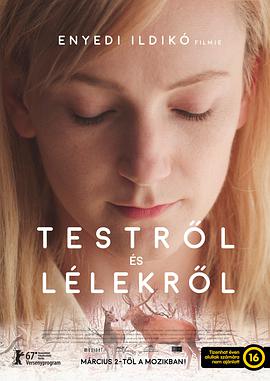
Two introverted people find out by pure chance that they share the same dream every night. They are puzzled, incredulous, a bit frightened. As they hesitantly accept this strange coincidence, they try to recreate in broad daylight what happens in their dream.