艺术史
What Painting Is
Douban
James Elkins publishing house: Routledge 2000 - 3
What is painting really? Daubs of sticky oils and crushed rock, blobs that form and reform, colors that look one way on a palette, another way on canvas, a different way still in relation to other bits of color beside them. Books on painting usually talk about Art, or about painters. But in this compelling and original work, art historian James Elkins turns to alchemy, for like the alchemist, the painter seeks to transform and be transformed by the medium. In What Painting Is, James Elkins communicates the experience of painting beyond the traditional vocabulary of art history. Alchemy provides a magical language to explore what it is a painter really does in her or his studio--the smells, the mess, the struggle to control the uncontrollable, the special knowledge only painters hold of how colors will mix, and how they will look. Written from the perspective of a painter-turned-art historian, What Painting Is is like nothing you have ever read about art.
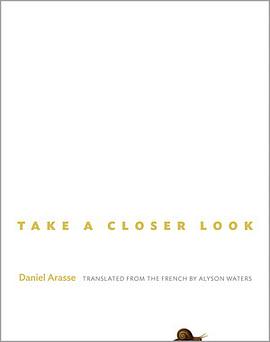
Take a Closer Look
On n'y voit rien Douban
Arasse, Daniel translator: Waters, Alyson 2013 - 9
What happens when we look at a painting? What do we think about? What do we imagine? How can we explain, even to ourselves, what we see or think we see? And how can art historians interpret with any seriousness what they observe? In six engaging, short narrative "fictions," each richly illustrated in color, Daniel Arasse, one of the most brilliant art historians of our time, cleverly and gracefully guides readers through a variety of adventures in seeing, from Velazquez to Titian, Bruegel to Tintoretto. By demonstrating that we don't really see what these paintings are trying to show us, Arasse makes it clear that we need to take a closer look. In chapters that each have a different form, including a letter, an interview, and an animated conversation with a colleague, the book explores how these pictures teach us about ways of seeing across the centuries. In the process, Arasse freshly lays bare the dazzling power of painting. Fast-paced and full of humor as well as insight, this is a book for anyone who cares about really looking at, seeing, and understanding paintings.
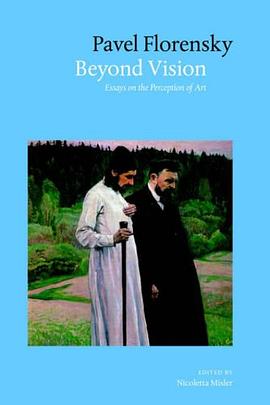
Beyond Vision
Douban Goodreads
Pavel Florensky publishing house: Reaktion Books 2002 - 11 other title: Beyond Vision: Essays on the Perception of Art
Beyond Vision is the first English-language collection of essays on art by the Russian polymath Pavel Florensky (1882_1937), with two introductory essays by the editor and an extensive bibliography. Florensky_s reputation as a theologian and philosopher is already established in the English-speaking world. This first collection in English of his art essays will be a revelation to those in the field. Pavel Florensky, a brilliant writer, mathematician, theologian, scientist, and art historian was condemned to a Siberian labor camp in 1933, and executed four years later. Nicoletta Misler is Professor in the Department of Eastern European Studies at the Istituto Universitario Orientale, Naples. Wendy Salmond is head of the Art History program at Chapman University, Orange, California.
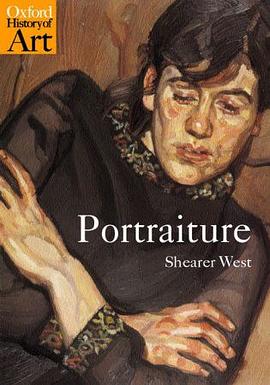
Portraiture
Douban
West, Shearer publishing house: Oxford Univ Pr 2004 - 3
This fascinating new book explores the world of portraiture from a number of vantage points, and asks key questions about its nature. How has portraiture changed over the centuries? How have portraits represented their subjects, and how have they been interpreted? Issues of identity, modernity, and gender are considered within a cultural and historical context. Shearer West uncovers much intriguing detail about a genre that has often been seen as purely representational, featuring examples from African tribes to Renaissance princes, and from 'stars' such as David and Victoria Beckham to ordinary people. In the process, she shows us how to communicate with the past in an exciting new way.
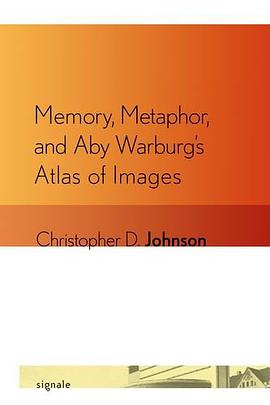
Memory, Metaphor, and Aby Warburg's Atlas of Images (Signale
Douban Goodreads
Christopher D. Johnson publishing house: Cornell University Press and Cornell University Library 2012 - 8 other title: Memory, Metaphor, and Aby Warburg's Atlas of Images
The work of German cultural theorist and art historian Aby Warburg (1866 1929) has had a lasting effect on how we think about images. This book is the first in English to focus on his last project, the encyclopedic Atlas of Images: Mnemosyne. Begun in earnest in 1927, and left unfinished at the time of Warburg's death in 1929, the Mnemosyne-Atlas consisted of sixty-three large wooden panels covered with black cloth. On these panels Warburg carefully, intuitively arranged some thousand black-and-white photographs of classical and Renaissance art objects, as well as of astrological and astronomical images ranging from ancient Babylon to Weimar Germany. Here and there, he also included maps, manuscript pages, and contemporary images taken from newspapers. Trying through these constellations of images to make visible the many polarities that fueled antiquity's afterlife, Warburg envisioned the Mnemosyne-Atlas as a vital form of metaphoric thought. While the nondiscursive, frequently digressive character of the Mnemosyne-Atlas complicates any linear narrative of its themes and contents, Christopher D. Johnson traces several thematic sequences in the panels. By drawing on Warburg's published and unpublished writings and by attending to Warburg's cardinal idea that "pathos formulas" structure the West's cultural memory, Johnson maps numerous tensions between word and image in the Mnemosyne-Atlas. In addition to examining the work itself, he considers the literary, philosophical, and intellectual-historical implications of the Mnemosyne-Atlas. As Johnson demonstrates, the Mnemosyne-Atlas is not simply the culmination of Warburg s lifelong study of Renaissance culture but the ultimate expression of his now literal, now metaphoric search for syncretic solutions to the urgent problems posed by the history of art and culture.
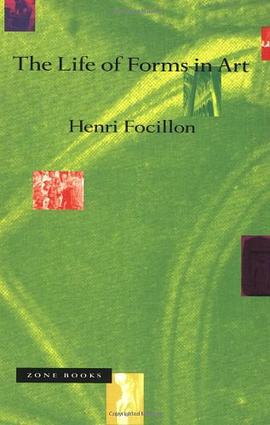
The Life of Forms in Art
Douban
Henri Focillon translator: George Kubler publishing house: Zone Books 1992 - 9
In this beautiful meditation on the history of art and the problem of style, Henri Focillon (1881-1943) describes how art forms change over time. Although he argues that the development of art is reducible to external political, social, or economic determinants, one of his great achievements was to lodge a concept of autonomous and organic artistic creation within the shifting domain of materials and techniques. Focillon emphasizes the universal presence of contradictory tendencies that give all styles manifold, stratified character.The Life of Forms remains one of the most brilliant and important applications of biological metaphors to the study of art. It has been superbly translated by Yale art historian George Kubler, whose book The Shape of Time was strongly influenced by Focillon.
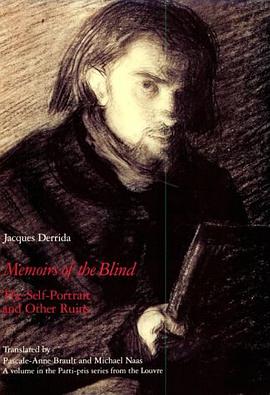
Memoirs of the Blind
Douban
Jacques Derrida translator: Michael Naas publishing house: University of Chicago Press 1993 - 10
In this brilliant essay, Jacques Derrida explores issues of vision, blindness, self-representation, and their relation to drawing, while offering detailed readings of an extraordinary collection of images. Selected by Derrida from the prints and drawings department of the Louvre, the works depict blindness--fictional, historical, and biblical. From Old and New Testament scenes to the myth of Perseus and the Gorgon and the blinding of Polyphemus, Derrida uncovers in these images rich, provocative layers of interpretation. For Derrida drawing is itself blind; as an act rooted in memory and anticipation, drawing necessarily replaces one kind of seeing (direct) with another (mediated). Ultimately, he explains, the very lines which compose any drawing are themselves never fully visible to the viewer since they exist only in a tenuous state of multiple identities: as marks on a page, as indicators of a contour. Lacking a "pure" identity, the lines of a drawing summon the supplement of the word, of verbal discourse, and, in doing so, obscure the visual experience. Consequently, Derrida demonstrates, the very act of depicting a blind person undertakes multiple enactments and statements of blindness and sight. "Memoirs of the Blind" is both a sophisticated philosophical argument and a series of detailed readings. Derrida provides compelling insights into famous and lesser known works, interweaving analyses of texts--including Diderot's "Lettres sur les aveugles," the notion of mnemonic art in Baudelaire's "The Painter of Modern Life," and Merleau-Ponty's "The Visible and the Invisible." Along with engaging meditations on the history and philosophy of art, Derrida reveals the waysviewers approach philosophical ideas through art, and the ways art enriches philosophical reflection. An exploration of sight, representation, and art, "Memoirs of the Blind" extends and deepens the meditation on vision and painting presented in "Truth and Painting." Readers of Derrida, both new and familiar, will profit from this powerful contribution to the study of the visual arts.
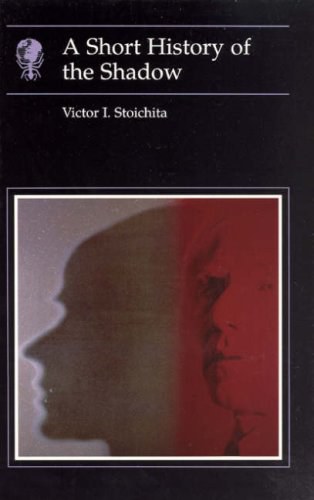
A Short History of the Shadow
Douban
Victor Stoichita publishing house: Reaktion Books 1997 - 4
In this investigative tour de force, Victor I. Stoichita untangles the history of one of the most enduring technical and symbolic challenges to beset Western artists - the depiction and meanings of shadows. The representation of shadow, and especially of cast shadow, is as old as art itself, for according to classical writers art was born when the outline of a human shadow thrown onto a wall was first traced out in order to capture it in the form of a silhouette. But the history of the shadow is properly the history of light versus dark, for in addition to indicating relief and volume or the times of day, shadows can intimate subtler interior realities - from states of mind to the state of the soul. According to J. C. Lavater in the 18th century, for example, it was the shadow of the face, not the face itself, that was the soul's reflection. More recently Andy Warhol, in his Shadows canvases, and Joseph Beuys have in turn explored the idea of the shadow as the hyper-realized revelation of utter human emptiness and as the self's awesomely powerful Doppelgänger. Stoichita’s compelling account of the shadow and Western art, which draws on texts by Renaissance artist-authors like Vasari and Cennini, folk tales, fairy tales and classical myths, works by van Eyck, Poussin, Malevich, De Chirico, Picasso and other masters, German Expressionist cinema, photography and child psychology, is a wholly original incursion into a subject that for centuries has challenged the very meaning of art as representation.
The Dada Cyborg
Douban
Matthew Biro publishing house: Univ Of Minnesota Press 2009 - 6
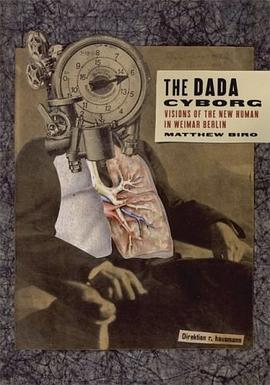
<DIV><DIV>In an era when technology, biology, and culture are becoming ever more closely connected, The Dada Cyborg explains how the cyborg as we know it today actually developed between 1918 and 1933 when German artists gave visual form to their utopian hopes and fantasies in a fearful response to World War I. In what could be termed a prehistory of the posthuman, Matthew Biro shows the ways in which new forms of human existence were imagined in Germany between the two world wars through depictions of cyborgs. Examining the work of Hannah Höch, Raoul Hausmann, George Grosz, John Heartfield, Otto Dix, and Rudolf Schlichter, he reveals an innovative interpretation of the cyborg as a representative of hybrid identity, as well as a locus of new modes of awareness created by the impact of technology on human perception. Tracing the prevalence of cyborgs in German avant-garde art, Biro demonstrates how vision, hearing, touch, and embodiment were beginning to be reconceived during the Weimar Republic. Biro’s unique and interdisciplinary analysis offers a substantially new account of the Berlin Dada movement, one that integrates the group’s poetic, theoretical, and performative practices with its famous visual strategies of photomontage, assemblage, and mixed-media painting to reveal radical images of a “new human.”</DIV>
An Anthropology of Images
Douban Goodreads
Hans Belting translator: Thomas Dunlap publishing house: Princeton University Press 2011 - 8 other title: An Anthropology of Images: Picture, Medium, Body
In this groundbreaking book, renowned art historian Hans Belting proposes a new anthropological theory for interpreting human picture making. Rather than focus exclusively on pictures as they are embodied in various media such as painting, sculpture, or photography, he links pictures to our mental images and therefore our bodies. The body is understood as a "living medium" that produces, perceives, or remembers images that are different from the images we encounter through handmade or technical pictures. Refusing to reduce images to their material embodiment yet acknowledging the importance of the historical media in which images are manifested, "An Anthropology of Images" presents a challenging and provocative new account of what pictures are and how they function. The book demonstrates these ideas with a series of compelling case studies, ranging from Dante's picture theory to post-photography. One chapter explores the tension between image and medium in two "media of the body", the coat of arms and the portrait painting. Another, central chapter looks at the relationship between image and death, tracing picture production, including the first use of the mask, to early funerary rituals in which pictures served to represent the missing bodies of the dead. Pictures were tools to re-embody the deceased, to make them present again, a fact that offers a surprising clue to the riddle of presence and absence in most pictures and that reveals a genealogy of pictures obscured by Platonic picture theory.
The Optical Unconscious
Douban
Rosalind E. Krauss publishing house: The MIT Press 1994 - 7
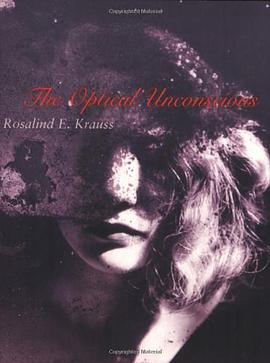
The Optical Unconscious is a pointed protest against the official story of modernism and against the critical tradition that attempted to define modern art according to certain sacred commandments and self-fulfilling truths. The account of modernism presented here challenges the vaunted principle of "vision itself." And it is a very different story than we have ever read, not only because its insurgent plot and characters rise from below the calm surface of the known and law-like field of modernist painting, but because the voice is unlike anything we have heard before. Just as the artists of the optical unconscious assaulted the idea of autonomy and visual mastery, Rosalind Krauss abandons the historian's voice of objective detachment and forges a new style of writing in this book: art history that insinuates diary and art theory, and that has the gait and tone of fiction.The Optical Unconscious will be deeply vexing to modernism's standard-bearers, and to readers who have accepted the foundational principles on which their aesthetic is based. Krauss also gives us the story that Alfred Barr, Meyer Shapiro, and Clement Greenberg repressed, the story of a small, disparate group of artists who defied modernism's most cherished self-descriptions, giving rise to an unruly, disruptive force that persistently haunted the field of modernism from the 1920s to the 1950s and continues to disrupt it today.In order to understand why modernism had to repress the optical unconscious, Krauss eavesdrops on Roger Fry in the salons of Bloomsbury, and spies on the toddler John Ruskin as he amuses himself with the patterns of a rug; we find her in the living room of Clement Greenberg as he complains about "smart Jewish girls with their typewriters" in the 1960s, and in colloquy with Michael Fried about Frank Stella's love of baseball. Along the way, there are also narrative encounters with Freud, Jacques Lacan, Georges Bataille, Roger Caillois, Gilles Deleuze, and Jean-Francois Lyotard.To embody this optical unconscious, Krauss turns to the pages of Max Ernst's collage novels, to Marcel Duchamp's hypnotic Rotoreliefs, to Eva Hesse's luminous sculptures, and to Cy Twombly's, Andy Warhol's, and Robert Morris's scandalous decoding of Jackson Pollock's drip pictures as "Anti-Form. " These artists introduced a new set of values into the field of twentieth-century art, offering ready-made images of obsessional fantasy in place of modernism's intentionality and unexamined compulsions.Rosalind Krauss is Professor of Art History at Columbia University and an editor of the journal October.
Formless
Douban Goodreads
Yve-Alain Bois / Rosalind E Krauss publishing house: Zone Books 1997 - 10 other title: Formless: A User's Guide
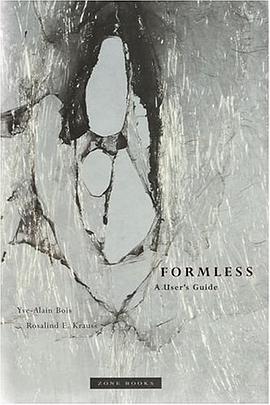
In a work that will become indispensable to anyone seriously interested in modern art, Yve-Alain Bois and Rosalind Krauss introduce a new constellation of concepts to our understanding of avant-garde and modernist art practices. Formless: A User's Guide constitutes a decisive and dramatic transformation of the study of twentieth-century culture. Although it has been over sixty years since Georges Bataille undertook his philosophical development of the term informe, only in recent years has the idea of the "formless" been deployed in the theorizing and reconfiguring of the field of twentieth-century art. This is partly because that field has most often been crudely set up as a battle between form and content; "formless" constitutes a third term standing outside that opposition, outside the binary thinking that is itself formal.<br /> <br /> In Formless: A User's Guide, Bois and Krauss present a rich and compelling panorama of the formless. They chart its persistence within a history of modernism that has always repressed it in the interest of privileging formal mastery, and they assess its destiny within current artistic production. In the domain of practice, they analyze it as an operational tool, the structural cunning of which has repeatedly been suppressed in the service of a thematics of art. Neither theme nor form, formless is, as Bataille himself expressed it, a "job." The job of Formless: A User's Guide is to explore the power of the informe. A stunning new map of twentieth-century art emerges from this reconceptualization and from the brilliantly original analyses of the work of Jackson Pollock, Andy Warhol, Cy Twombly, Lucio Fontana, Cindy Sherman, Claes Oldenburg, Jean Dubuffet, Robert Smithson, and Gordon Matta-Clark, among others.
摄影小史
A History of Photography Douban
★ 8.4 46 ratings
[德]瓦尔特·本雅明 translator: 许绮玲 / 林志明 publishing house: 广西师范大学出版社 2018 - 1
全书共收入瓦尔特·本雅明于20世纪30年代写就的《摄影小史》(1931)、《机械复制时代的艺术作品》(1936)、《绘画与摄影》(1936)和《法国国家图书馆中国画展》(1938)4篇论文。 其中,《摄影小史》和《机械复制时代的艺术作品》均为本雅明享誉世界的佳作名篇。作为对摄影、电影的批评实践中的丰碑,它们不仅为人们理解这两个媒介提供了一种全新且富于启发的视角,对尼塞福尔·尼埃普斯(Nicéphore Niépce)、欧仁·阿特热(Eugène Atget)乃至奥古斯特·桑德(August Sander)这样的摄影先驱及他们的美学、技术成就做出了令人印象深刻的评判,也极为深入地讨论了摄影、电影与绘画之间纠缠不清、若即若离的关系。
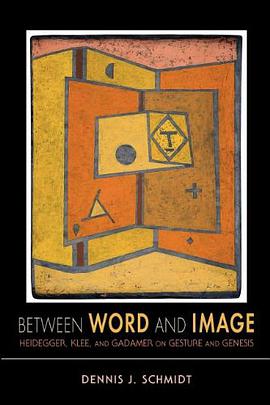
Between Word and Image
Douban
Dennis J. Schmidt publishing house: Indiana University Press 2012
Engagement with the image has played a decisive role in the formulation of the very idea of philosophy since Plato. Identifying pivotal moments in the history of philosophy, Dennis J. Schmidt develops the question of philosophy's regard of the image in thinking by considering painting - where the image most clearly calls attention to itself as an image. Focusing on Heidegger and the work of Paul Klee, Schmidt pursues larger issues in the relationship between word, image, and truth. As he investigates alternative ways of thinking about truth through word and image, Schmidt shows how the form of art can indeed possess the capacity to change its viewers.
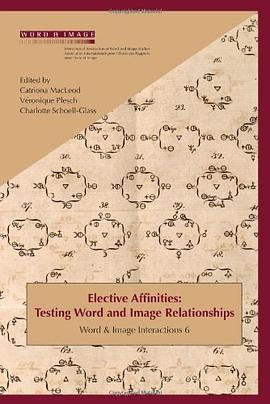
Elective Affinities
Douban Goodreads
Catriona MacLeod / Veronique Plesch … publishing house: Rodopi 2009 - 6 other title: Elective Affinities: Testing Word and Image Relationships
This volume presents the impressive range of scholarly affinities, approaches, and subjects that characterize today’s word and image studies. The essays, a selection of papers first presented in 2005 at the seventh international conference of the International Association of Word and Image Studies/Association Internationale pour l’Étude des Rapports entre Texte et Image that took place in Philadelphia, are case studies of the diverse configurations of the textual and the iconic. “Elective affinities” — a notion originally borrowed by Goethe for his 1809 novel of the same title from eighteenth-century chemistry — here refers to the active role of the two partners in the relationship of the pictorial and the verbal. Following the experimental modalities opened up by Goethe, the present volume is divided into three sections, which explore, respectively, how words and images can merge in harmony, engage in conflicts and contestations, and, finally, interact in an experimental way that self-consciously tests the boundaries and relations among verbal and visual arts. New perspectives on word and image relationships emerge, in periods, national traditions, works, and materials as different as (among many others) an installation by Marcel Duchamp and the manual accompanying it; the impact of artificial light sources on literature and art; nineteenth-century British illustrations of Native Americans; the contemporary comic book; a seventeenth-century Italian devotional manuscript uniting text, image, and music; Chinese body and performance art..
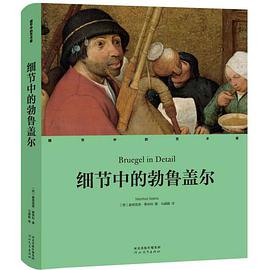
细节中的勃鲁盖尔
Douban
[荷兰] 曼弗雷德·塞林科 translator: 马婧毅 译 publishing house: 河北教育出版社 2021 - 6
彼得·勃鲁盖尔是尼德兰早期最重要且具影响力的画家。他笔下的美丽风景和乡村生活深受全世界艺术爱好者的青睐。事实上,勃鲁盖尔也是训练有素的细密画家、制图师和版画设计师,他卓越的绘画技巧使得作品中的每个细节都无懈可击。 本书展示了勃鲁盖尔的绘画、素描和版画作品,并依据创作主题进行编排,如每个季节的风景、乡村丰收景象、集市、狩猎、日常生活、圣经故事场景、谚语图像和孩子的游戏等,其中包含画家最受欢迎的作品,如《雪中的猎人》《农民的婚宴》《巴别塔》。版画和素描草图部分则包含罪恶和美德系列主题。令人惊叹的作品细节,展现了勃鲁盖尔非凡的绘画造诣。 勃鲁盖尔的作品能给读者带来丰富的观看体验。读者近距离观摩作品时,除了能感受到作品的绝美外,也展开了对画家意图表达的交错重叠的多层含义的探索,同时又能感受画家跃然纸上的幽默,这无疑是一次充满乐趣的精神之旅。
雕塑的故事
Shaping the World Douban
[英]安东尼·葛姆雷 / [英]马丁·盖福德 translator: 王珂 publishing house: 理想国 | 广西师范大学出版社 2021 - 8
雕塑是什么?雕塑可以调动人的身体,甚至操控人的身体,进而通过身体来影响人的思想。雕塑是一种行之于物的思维方式。它就像炼金术,能够将一块黏土或石头变成完全不同的东西。雕塑的基本前提,回应了由来已久的观点——“物质至上”。在这个虚拟数字时代,雕塑依然是质疑世界,以及地球的重要方式——前者由我们所创造,而后者是我们创造的来源。 雕塑家安东尼•葛姆雷与艺术史学者马丁·盖福德围绕关于造型艺术的十八个主题,展开了一场关于“雕塑是什么”对话,结集成册,是为《雕塑的故事》。在这部近四百页的图文对话集中,读者借助两位对话者的视角回顾了史前时代至今的人类造型史,涵盖了出自部落巫师、无名工匠、伟大的雕塑家,直至当红艺术实践者等创造者之手的艺术杰作。 雕塑是什么?本书的探索早已突破了所谓 "雕塑 "的传统疆界。《雕塑的故事》会探讨巫术、仪式和舞蹈,也会畅谈那些由光线、人的行为以及虚空构成的作品。以上所有元素,都能够作为塑造世界的原材料而发挥作用,并被赋予人性意义。此刻,材料即讯息——随着时间的推移,那并非创作者有意为之的杰作,却美不胜收。