艺术
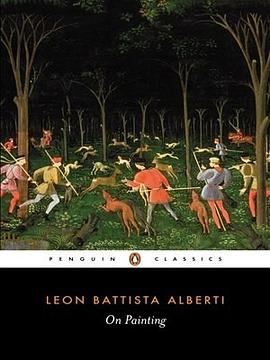
On Painting
Douban
Leon Battista Alberti translator: Cecil Grayson publishing house: Penguin Classics 1991 - 7
Artist, architect, poet and philosopher, Leon Battista Alberti revolutionized the history of art with his theories of perspective in On Painting (1435). Inspired by the order and beauty inherent in nature, his groundbreaking work sets out the principles of distance, dimension and proportion; instructs the painter on how to use the rules of composition, representation, light and colour to create work that is graceful and pleasing to the eye; and stipulates the moral and artistic pre-requisites of the successful painter. On Painting had an immediate and profound influence on Italian Renaissance artists including Ghiberti, Fra Angelico and Veneziano and on later figures such as Leonardo da Vinci, and remains a compelling theory of art.
No Medium
Douban
Dworkin, Craig 2013 - 2
In No Medium, Craig Dworkin looks at works that are blank, erased, clear, or silent, writing critically and substantively about works for which there would seem to be not only nothing to see but nothing to say. Examined closely, these ostensibly contentless works of art, literature, and music point to a new understanding of media and the limits of the artistic object. Dworkin considers works predicated on blank sheets of paper, from a fictional collection of poems in Jean Cocteau's Orphee to the actual publication of a ream of typing paper as a book of poetry; he compares Robert Rauschenberg's Erased De Kooning Drawing to the artist Nick Thurston's erased copy of Maurice Blanchot's The Space of Literature (in which only Thurston's marginalia were visible); and he scrutinizes the sexual politics of photographic representation and the implications of obscured or obliterated subjects of photographs. Reexamining the famous case of John Cage's 4'33", Dworkin links Cage's composition to Rauschenberg's White Paintings, Ken Friedman's Zen for Record (and Nam June Paik's Zen for Film), and other works, offering also a "guide to further listening" that surveys more than 100 scores and recordings of "silent" music. Dworkin argues that we should understand media not as blank, base things but as social events, and that there is no medium, understood in isolation, but only and always a plurality of media: interpretive activities taking place in socially inscribed space.
Noise, Water, Meat
Douban
Douglas Kahn publishing house: The MIT Press 2001 - 10
This interdisciplinary history and theory of sound in the arts reads the twentieth century by listening to it--to the emphatic and exceptional sounds of modernism and those on the cusp of postmodernism, recorded sound, noise, silence, the fluid sounds of immersion and dripping, and the meat voices of viruses, screams, and bestial cries. Focusing on Europe in the first half of the century and the United States in the postwar years, Douglas Kahn explores aural activities in literature, music, visual arts, theater, and film. Placing aurality at the center of the history of the arts, he revisits key artistic questions, listening to the sounds that drown out the politics and poetics that generated them. Artists discussed include Antonin Artaud, George Brecht, William Burroughs, John Cage, Sergei Eisenstein, Fluxus, Allan Kaprow, Michael McClure, Yoko Ono, Jackson Pollock, Luigi Russolo, and Dziga Vertov.
Memory, Metaphor, and Aby Warburg's Atlas of Images (Signale
Douban Goodreads
Christopher D. Johnson publishing house: Cornell University Press and Cornell University Library 2012 - 8 other title: Memory, Metaphor, and Aby Warburg's Atlas of Images
The work of German cultural theorist and art historian Aby Warburg (1866 1929) has had a lasting effect on how we think about images. This book is the first in English to focus on his last project, the encyclopedic Atlas of Images: Mnemosyne. Begun in earnest in 1927, and left unfinished at the time of Warburg's death in 1929, the Mnemosyne-Atlas consisted of sixty-three large wooden panels covered with black cloth. On these panels Warburg carefully, intuitively arranged some thousand black-and-white photographs of classical and Renaissance art objects, as well as of astrological and astronomical images ranging from ancient Babylon to Weimar Germany. Here and there, he also included maps, manuscript pages, and contemporary images taken from newspapers. Trying through these constellations of images to make visible the many polarities that fueled antiquity's afterlife, Warburg envisioned the Mnemosyne-Atlas as a vital form of metaphoric thought. While the nondiscursive, frequently digressive character of the Mnemosyne-Atlas complicates any linear narrative of its themes and contents, Christopher D. Johnson traces several thematic sequences in the panels. By drawing on Warburg's published and unpublished writings and by attending to Warburg's cardinal idea that "pathos formulas" structure the West's cultural memory, Johnson maps numerous tensions between word and image in the Mnemosyne-Atlas. In addition to examining the work itself, he considers the literary, philosophical, and intellectual-historical implications of the Mnemosyne-Atlas. As Johnson demonstrates, the Mnemosyne-Atlas is not simply the culmination of Warburg s lifelong study of Renaissance culture but the ultimate expression of his now literal, now metaphoric search for syncretic solutions to the urgent problems posed by the history of art and culture.
The Optical Unconscious
Douban
Rosalind E. Krauss publishing house: The MIT Press 1994 - 7
The Optical Unconscious is a pointed protest against the official story of modernism and against the critical tradition that attempted to define modern art according to certain sacred commandments and self-fulfilling truths. The account of modernism presented here challenges the vaunted principle of "vision itself." And it is a very different story than we have ever read, not only because its insurgent plot and characters rise from below the calm surface of the known and law-like field of modernist painting, but because the voice is unlike anything we have heard before. Just as the artists of the optical unconscious assaulted the idea of autonomy and visual mastery, Rosalind Krauss abandons the historian's voice of objective detachment and forges a new style of writing in this book: art history that insinuates diary and art theory, and that has the gait and tone of fiction.The Optical Unconscious will be deeply vexing to modernism's standard-bearers, and to readers who have accepted the foundational principles on which their aesthetic is based. Krauss also gives us the story that Alfred Barr, Meyer Shapiro, and Clement Greenberg repressed, the story of a small, disparate group of artists who defied modernism's most cherished self-descriptions, giving rise to an unruly, disruptive force that persistently haunted the field of modernism from the 1920s to the 1950s and continues to disrupt it today.In order to understand why modernism had to repress the optical unconscious, Krauss eavesdrops on Roger Fry in the salons of Bloomsbury, and spies on the toddler John Ruskin as he amuses himself with the patterns of a rug; we find her in the living room of Clement Greenberg as he complains about "smart Jewish girls with their typewriters" in the 1960s, and in colloquy with Michael Fried about Frank Stella's love of baseball. Along the way, there are also narrative encounters with Freud, Jacques Lacan, Georges Bataille, Roger Caillois, Gilles Deleuze, and Jean-Francois Lyotard.To embody this optical unconscious, Krauss turns to the pages of Max Ernst's collage novels, to Marcel Duchamp's hypnotic Rotoreliefs, to Eva Hesse's luminous sculptures, and to Cy Twombly's, Andy Warhol's, and Robert Morris's scandalous decoding of Jackson Pollock's drip pictures as "Anti-Form. " These artists introduced a new set of values into the field of twentieth-century art, offering ready-made images of obsessional fantasy in place of modernism's intentionality and unexamined compulsions.Rosalind Krauss is Professor of Art History at Columbia University and an editor of the journal October.
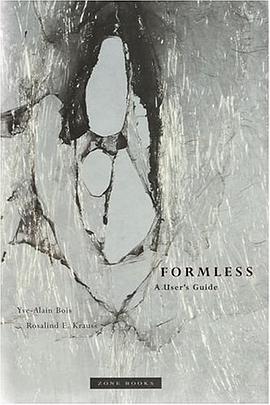
Formless
Douban Goodreads
Yve-Alain Bois / Rosalind E Krauss publishing house: Zone Books 1997 - 10 other title: Formless: A User's Guide
In a work that will become indispensable to anyone seriously interested in modern art, Yve-Alain Bois and Rosalind Krauss introduce a new constellation of concepts to our understanding of avant-garde and modernist art practices. Formless: A User's Guide constitutes a decisive and dramatic transformation of the study of twentieth-century culture. Although it has been over sixty years since Georges Bataille undertook his philosophical development of the term informe, only in recent years has the idea of the "formless" been deployed in the theorizing and reconfiguring of the field of twentieth-century art. This is partly because that field has most often been crudely set up as a battle between form and content; "formless" constitutes a third term standing outside that opposition, outside the binary thinking that is itself formal.<br /> <br /> In Formless: A User's Guide, Bois and Krauss present a rich and compelling panorama of the formless. They chart its persistence within a history of modernism that has always repressed it in the interest of privileging formal mastery, and they assess its destiny within current artistic production. In the domain of practice, they analyze it as an operational tool, the structural cunning of which has repeatedly been suppressed in the service of a thematics of art. Neither theme nor form, formless is, as Bataille himself expressed it, a "job." The job of Formless: A User's Guide is to explore the power of the informe. A stunning new map of twentieth-century art emerges from this reconceptualization and from the brilliantly original analyses of the work of Jackson Pollock, Andy Warhol, Cy Twombly, Lucio Fontana, Cindy Sherman, Claes Oldenburg, Jean Dubuffet, Robert Smithson, and Gordon Matta-Clark, among others.
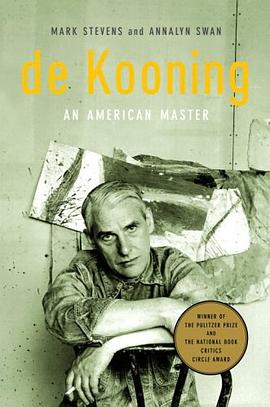
de Kooning
Douban
Mark Stevens / Annalyn Swan publishing house: Alfred A. Knopf 2006 - 4
Willem de Kooning is one of the most important artists of the twentieth century, a true “painter’s painter” whose protean work continues to inspire many artists. In the thirties and forties, along with Arshile Gorky and Jackson Pollock, he became a key figure in the revolutionary American movement of abstract expressionism. Of all the painters in that group, he worked the longest and was the most prolific, creating powerful, startling images well into the 1980s. The first major biography of de Kooning captures both the life and work of this complex, romantic figure in American culture. Ten years in the making, and based on previously unseen letters and documents as well as on hundreds of interviews, this is a fresh, richly detailed, and masterful portrait. The young de Kooning overcame an unstable, impoverished, and often violent early family life to enter the Academie in Rotterdam, where he learned both classic art and guild techniques. Arriving in New York as a stowaway from Holland in 1926, he underwent a long struggle to become a painter and an American, developing a passionate friendship with his fellow immigrant Arshile Gorky, who was both a mentor and an inspiration. During the Depression, de Kooning emerged as a central figure in the bohemian world of downtown New York, surviving by doing commercial work and painting murals for the WPA. His first show at the Egan Gallery in 1948 was a revelation. Soon, the critics Harold Rosenberg and Thomas Hess were championing his work, and de Kooning took his place as the charismatic leader of the New York school—just as American art began to dominate the international scene. Dashingly handsome and treated like a movie star on the streets of downtown New York, de Kooning had a tumultuous marriage to Elaine de Kooning, herself a fascinating character of the period. At the height of his fame, he spent his days painting powerful abstractions and intense, disturbing pictures of the female figure—and his nights living on the edge, drinking, womanizing, and talking at the Cedar bar with such friends as Franz Kline and Frank O’Hara. By the 1960s, exhausted by the feverish art world, he retreated to the Springs on Long Island, where he painted an extraordinary series of lush pastorals. In the 1980s, as he slowly declined into what was almost certainly Alzheimer’s, he created a vast body of haunting and ethereal late work. This is an authoritative and brilliant exploration of the art, life, and world of an American master. From the Hardcover edition.
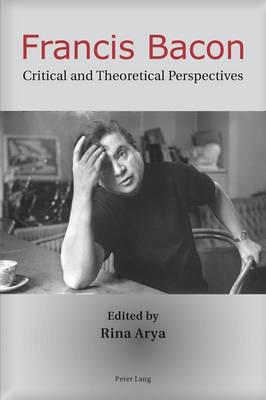
Francis Bacon
Douban Goodreads
Arya, Rina publishing house: Peter Lang AG, Internationaler Verlag der Wissenschaften 2012 - 10 other title: Francis Bacon: Critical and Theoretical Perspectives
This collection of essays on Francis Bacon (1909-1992) pays tribute to the legacy, influence and power of his art. The volume widens the relevance of Bacon in the twenty-first century and looks at new ways of thinking about or reframing him. The contributors consider the interdisciplinary scope of Bacon’s work, which addresses issues in architecture, continental philosophy, critical theory, gender studies and the sociology of the body, among others. Bacon’s work is also considered in relation to other artists, philosophers and writers who share similar concerns. The innovation of the volume lies in this move away from both an art historical framework and a focus on the artist’s biographical details, in order to concentrate on new perspectives, such as how current scholars in different disciplines consider Bacon, what his relevance is to a contemporary audience, and the wider themes and issues that are raised by his work.
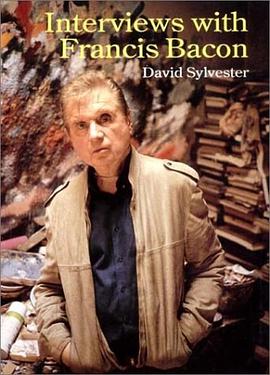
Interviews With Francis Bacon
Douban
David Sylvester publishing house: Thames & Hudson 1988 - 2
Ever since its first publication, this book - with its subsequent revised and augmented editions - has been considered a classic of its kind, and that reputation has become worldwide. As a discussion of problems of making art today it has been widely influential not only among artists but among writers and musicians. It has also been seen as the most revealing portrait that exists of one of the most singular artistic personalities of our time. Bacon's obsessive thinking about how to remake the human form in pain finds unique expression in his encounters with the distinguished art writer David Sylvester over a period of twenty-five years. In these masterfully and creatively reconstructed interviews, Sylvester has provided unparalleled access to the thought, work, and life of one of the creative geniuses of our century. With Bacon's recent death, no other work will ever match this achievement.
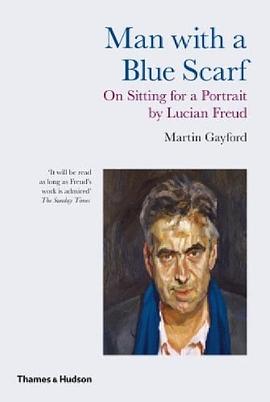
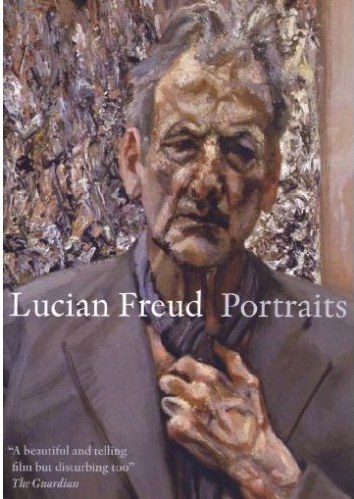
Man With a Blue Scarf
Douban
Martin Gayford publishing house: Thames & Hudson 2013 - 9
A beautifully produced paperback edition of the literary art book hailed as one of the best and most continually fascinating books about painting in recent memory. Lucian Freud (1922-2011) spent seven months painting a portrait of the art critic Martin Gayford. Gayford describes the process chronologically, from the day he arrived for the first sitting through to his meeting with the couple who bought the finished painting. As Freud creates a portrait of Gayford, so the art critic produces his own portrait of the notoriously private artist, recounting their wide-ranging conversations and giving a rare insight into Freuds working practice. The book is illustrated throughout with photographs by David Dawson of Freud at work, with paintings by Freud from the 1940s to the present, and images by other artists discussed by Freud with Gayford. The result vividly conveys what it is like to be on the inside of the process of creating a painting by a great artist. "It will be read as long as Freuds work is admired". ("The Sunday Times"). "If it is Freud who dominates this book, it is Gayfords achievement to bring him out and to do so with wit and humor as well as acute intelligence. "Man with a Blue Scarf" is literally inimitable no one else is going to get this opportunity. It's the real deal". ("The Guardian"). "A journal, an act of confession, a character study of Freud, a piecemeal survey of art history and an investigation into the practicalities of portraiture". ("The Spectator"). "Gayfords observations and Dawsons photos provide a unique insight into the working habits of the greatest painter of the human frame in all its infinite variety". ("New Statesman"). "Freud is vividly surprising, potent and dynamic a portrait of an anarchic painter with views on everything from Leonardos failings to Princess Margarets voice". ("The Observer").
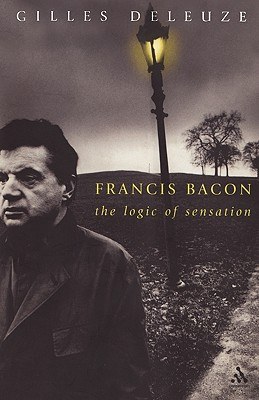
Francis Bacon
Douban
Gilles Deleuze translator: Daniel W. Smith publishing house: Continuum International Publishing Group - Mansell 2003 - 4
Gilles Deleuze was one of the most influential and revolutionary philosophers of the 20th century. Francis Bacon is widely regarded as one of the most radical painters of the 20th century. This title presents a deep engagement with Bacon's work and the nature of art. Deleuze analyses the distinctive innovations that came to mark Bacon's style: the isolation of the figure, the violent deformations of the flesh, the complex use of colour, the method of chance, and the use of the triptych form. Along the way, Deleuze introduces a number of his own famous concepts, such as the "body without organs" and the "diagram", and contrasts his own approach to painting with that of both the phenomenological and the art historical traditions. Deleuze links Bacon's work to Cezanne's notion of a "logic" of sensation, which reaches its summit in colour and the "colouring sensation". Investigating this logic, Deleuze explores Bacon's crucial relation to past painters such as Velasquez, Cezanne and Soutine, as well as Bacon's rejection of expressionism and abstract painting.
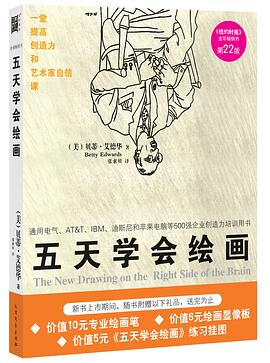
五天学会绘画
The New Drawing On the Right Side of the Brain Douban
[美] 贝蒂·艾德华 translator: 张索娃 publishing house: 北方文艺出版社 2010 - 10
每个人都有灵光一闪的时刻!贝蒂博士试图用五天教会绘画的方式启发人们积极开发自己的右脑——在传统教育系统中被忽视的创造力大脑。通过五天对边线、空间、相互关系、光影等这些绘画基本技巧的掌握,获得一种新的视角,也就是像艺术家一样看事物,并且表达出来,在这个过程中开发自己大脑的创造性潜力,从而在日常生活、学习、工作中获得一种新鲜的、富有创造力的解决问题的方式。这是一本教你在最短时间,用最高效率学会绘画技巧的书,它在美国一下销了400万册,可见非常实用。美国是一个非常注重实用的国家,讲实用比讲这个、讲那个漂亮的空话要强。《洛杉矶时报》评论本书:它“不仅是一本讲绘画的书,更是一本讲生存的书。原本是教人如何绘画的优秀教材,却不能仅仅当做一本教材来看待。它解放了很多人的思想”。书中包含许多绘画练习,有“颠倒画”、“自画像”和“改良轮廓画”。艾德华的许多观点现已成为主流,你会发现这本书对最近的众多出版物产生很大的影响,非常值得一读
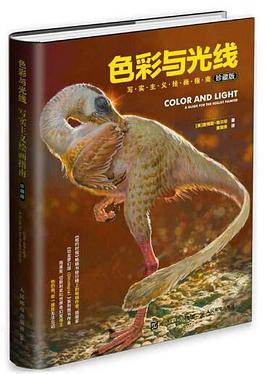
色彩与光线:写实主义绘画指南(珍藏版)
Douban
★ 8.8 8 ratings
[美]詹姆斯·格尔尼 translator: 黄朝贵 publishing house: 人民邮电出版社 2017 - 6
詹姆斯·格尔尼从20世纪80年代开始担任自由职业插画家,其油画创作方法融合了学术派写实主义以及插画艺术手法,这本书是他两本艺术指导书之一。 本书介绍的是画家进行艺术创作的两个zui重要元素—色彩与光线。色彩与光线既是所有色彩绘画都需要考虑的基础点和关键点,也是画家作画时经常遇到问题的地方。本书首先通过回顾大师作品,讲述传统绘画中对于光线和色彩的运用,紧接着论述光源、光线对形体的影响,色彩原理、颜料与色料以及色彩之间的关系,还包括怎样混合颜料,不同材质的表面对光和色彩的影响,以及各种各样的大气效应等。 本书适合各种水平的画者以及对视觉世界充满好奇心的人参考学习。
霍克尼论摄影(增订本)
HOCKNEY ON ART Douban Goodreads
★ 8.5 8 ratings
[英]大卫·霍克尼 / [英]保罗·乔伊斯 translator: 栾志超 publishing house: 理想国 | 北京日报出版社 2021 - 11 other title: 霍克尼论摄影
《霍克尼论攝影》(增订本)收录了大卫·霍克尼与好友保罗·乔伊斯关于摄影的对谈十七篇,内容关于霍克尼的图像思考与影像实验,展现了一位多才多艺、创造力十足的艺术家,在探索摄影可能性的道路上可以走多远。观看与空间,是霍克尼一如既往的关注。在本书中,他认为拼贴是摆脱传统观看方式的关键,是对表面的确认。霍克尼将自己的创作看作是用摄影来批判摄影。“毕竟,光用言语是不行的。你得使用摄影的语言。” 《霍克尼论摄影》充分体现了一位杰出艺术家的实践自觉与理论自觉。作为大卫·霍克尼唯一一部专⻔论述摄影与影像艺术的著作,本书第一版曾在1994年被引进中国,在艺术相关专业的师生群体中引起了广泛讨论。此后的二十余年,随着大卫·霍克尼著作的中文版陆续推出,本书逐渐淡出了国内读者的视野。理想国首次引进增订本,期待它将持续激起新的、更大的水花。 ———————————— 📷以摄影的语言批判摄影,用绘画的方式反思照片。 摄影成了我们辨认事物必不可少的工具。它提供了一种观看的方式,并且会让人觉得是一种正式的、正确的观看方式。但在霍克尼看来,这是摄影在本质上应被批判的所在。如果想要改变我们对世界的观看,图像就必须发生改变。 📷双色封面,随机发售!更有隐藏配色,加印解锁! 皮质封面满足触感,镭射烫印低调炫目。开本便携结实耐用,看展路上伴读良友。
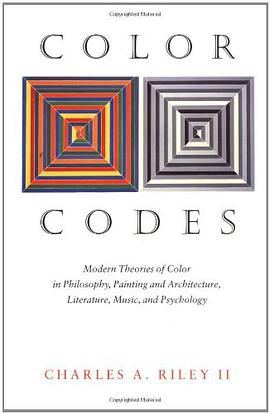
Color Codes
Douban Goodreads
Riley, Charles A. publishing house: Univ Pr of New England 1996 - 10 other title: Color Codes: Modern Theories of Color in Philosophy, Painting and Architecture, Literature, Music, and Psychology
"The first thing to realize about the study of color in our time is its uncanny ability to evade all attempts to systematically codify it," writes Charles A. Riley in this series of interconnected essays on the uses and meanings of color.
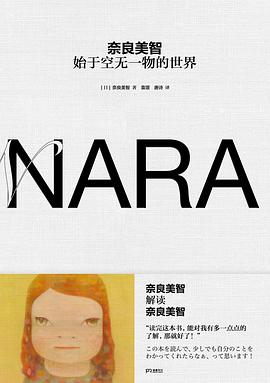
奈良美智
Douban
奈良美智 translator: 袁璟 / 唐诗 publishing house: 浦睿文化·湖南美术出版社 2022 - 1
奈良美智解读奈良美智—— “读完这本书,能对我有多一点点的了解,那就好了!” ----------------------------- 奈良美智即将在上海举办中国首展,这本书是他面向中国读者制作的首本书籍,也是他时隔多年的全新“自传”。 他的作品源自内心深处“空无一物被白雪覆盖的世界”,童年记忆、音乐、文学、在德国求学和生活的时光(1988—2000)、对自我的探索、来自欧洲和日本的当代艺术等都是他的灵感来源。在书中,奈良美智首次全面回顾自己的创作生涯,既是对自我的一次回顾与总结,也是面向未来的重新启程。 本书由自传《半生》、从七个角度(成长经历、美术、音乐、文学与电影、陶艺、旅行、与他人的联系)展开的深入访谈、近年展览、摄影作品、年表等内容组成,还收录了其生活照、经典及最新作品,是一本由奈良美智本人语言主导的史无前例的“奈良大全”。
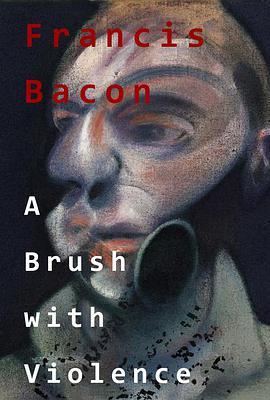
Francis Bacon: A Brush with Violence (2017)
Francis Bacon: A Brush with Violence Douban
★ 8.2 33 ratings
理查德·柯森·史密斯 actor: Francis Bacon / Garech Browne …
other title: 弗朗西斯·培根:暴力画笔
英国画家弗朗西斯·培根在世界范围内享有盛名,人们对其画作的总体印象好像总是“可怕、痛苦和令人不安”。培根的阴暗面到底来自何处?经常见到有艺术评论家将他40年代的作品与战争联系到一起,那么是来源于战争吗?受访者们似乎都对此持有保留意见。本片从更本源的角度、从培根的个人经历进行挖掘,探寻父亲艾迪·培根以及他的诸多恋人对他创作的影响。培根本人的两面性、其画作中残忍与悲悯并存的现象、其对朋友的关怀以及对自己生命的不怜惜……这些看似矛盾的信息像培根复杂的笔触一样,最终凝成了这幅摄人心魄的画作——以弗朗西斯·培根为题的肖像画。
Watched
Dec. 20, 2021
不论是从培根的画作还是他的生平来说都非常打动人,其中一些培根参与访谈的片段中他一双随时会落泪的眼睛也令人十分印象深刻。
艺术 纪录片 英国 BBC 2017
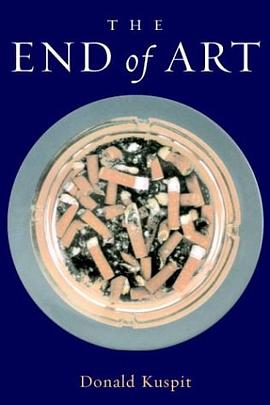
The End of Art
Douban
Kuspit, Donald B. publishing house: Cambridge Univ Pr 2004 - 1
In The End of Art, Donald Kuspit argues that art is over because it has lost its aesthetic import. Art has been replaced by 'postart', a term invented by Alan Kaprow, as a new visual category that elevates the banal over the enigmatic, the scatological over the sacred, cleverness over creativity. Tracing the demise of aesthetic experience to the works and theory of Marcel Duchamp and Barnett Newman, Kuspit argues that devaluation is inseparable from the entropic character of modern art, and that anti-aesthetic postmodern art is its final state. In contrast to modern art, which expressed the universal human unconscious, postmodern art degenerates into an expression of narrow ideological interests. In reaction to the emptiness and stagnancy of postart, Kuspit signals the aesthetic and human future that lies with the New Old Masters. The End of Art points the way to the future for the visual arts.
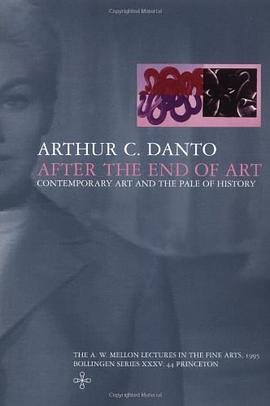
After the End of Art
Douban
Arthur C. Danto publishing house: Princeton University Press 1998 - 11
Over a decade ago, Arthur Danto announced that art ended in the sixties. Ever since this declaration, he has been at the forefront of a radical critique of the nature of art in our time. "After the End of Art" presents Danto's first full-scale reformulation of his original insight, showing how, with the eclipse of abstract expressionism, art has deviated irrevocably from the narrative course that Vasari helped define for it in the Renaissance. Moreover, he leads the way to a new type of criticism that can help us understand art in a posthistorical age where, for example, an artist can produce a work in the style of Rembrandt to create a visual pun, and where traditional theories cannot explain the difference between Andy Warhol's Brillo Box and the product found in the grocery store.Here we are engaged in a series of insightful and entertaining conversations on the most relevant aesthetic and philosophical issues of art, conducted by an especially acute observer of the art scene today. Originally delivered as the prestigious "Mellon Lectures on the Fine Arts", these writings cover art history, pop art, 'people's art,' the future role of museums, and the critical contributions of Clement Greenberg - who helped make sense of modernism for viewers over two generations ago through an aesthetics-based criticism. Tracing art history from a mimetic tradition (the idea that art was a progressively more adequate representation of reality) through the modern era of manifestos (when art was defined by the artist's philosophy), Danto shows that it wasn't until the invention of Pop art that the historical understanding of the means and ends of art was nullified.Even modernist art, which tried to break with the past by questioning the ways of producing art, hinged on a narrative. Traditional notions of aesthetics can no longer apply to contemporary art, argues Danto. Instead he focuses on a philosophy of art criticism that can deal with perhaps the most perplexing feature of contemporary art: that everything is possible.