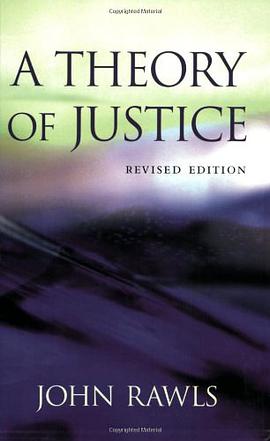
A Theory of Justice is a widely-read book of political and moral philosophy by John Rawls. It was originally published in 1971 and revised in both 1975 (for the translated editions) and 1999. In A Theory of Justice, Rawls attempts to solve the problem of distributive justice by utilising a variant of the familiar device of the social contract. The resultant theory is known as "Justice as Fairness", from which Rawls derives his two famous principles of justice: the liberty principle and the difference principle.
[edit] Objective
In A Theory of Justice Rawls argues for a principled reconciliation of liberty and equality. Central to this effort is an account of the circumstances of justice (inspired by David Hume), and a fair choice situation (closer in spirit to Kant) for parties facing such circumstances, and seeking principles of justice to guide their conduct. These parties face moderate scarcity, and they are neither naturally altruistic nor purely egoistic: they have ends they seek to advance, but desire to advance them through cooperation with others on mutually acceptable terms. Rawls offers a model of a fair choice situation (the original position with its veil of ignorance) within which parties would hypothetically choose mutually acceptable principles of justice. Under such constraints, Rawls believes that parties would find his favoured principles of justice to be especially attractive, winning out over varied alternatives, including utilitarian and libertarian accounts.
[edit] The "original position"
Main article: Original position
Like Hobbes, Locke, Rousseau and Kant, Rawls belongs to the social contract tradition. However, Rawls' social contract takes a slightly different form from that of previous thinkers. Specifically, Rawls develops what he claims are principles of justice through the use of an entirely and deliberately artificial device he calls the Original position, in which everyone decides principles of justice from behind a veil of ignorance. This "veil" is one that essentially blinds people to all facts about themselves that might cloud what notion of justice is developed.
"no one knows his place in society, his class position or social status, nor does anyone know his fortune in the distribution of natural assets and abilities, his intelligence, strength, and the like. I shall even assume that the parties do not know their conceptions of the good or their special psychological propensities. The principles of justice are chosen behind a veil of ignorance."
According to Rawls, ignorance of these details about oneself will lead to principles which are fair to all. If an individual does not know how he will end up in his own conceived society, he is likely not going to privilege any one class of people, but rather develop a scheme of justice that treats all fairly. In particular, Rawls claims that those in the Original Position would all adopt a maximin strategy which would maximise the position of the least well-off.
They are the principles that rational and free persons concerned to further their own interests would accept in an initial position of equality as defining the fundamentals of the terms of their association [Rawls, p 11]
It is important to keep in mind that the agreement that stems from the original position is both hypothetical and nonhistorical. It is hypothetical in the sense that the principles to be derived are what the parties would, under certain legitimating conditions, agree to, not what they have agreed to. In other words, Rawls seeks to persuade us through argument that the principles of justice that he derives are in fact what we would agree upon if we were in the hypothetical situation of the original position and that those principles have moral weight as a result of that. It is nonhistorical in the sense that it is not supposed that the agreement has ever, or indeed could actually be entered into as a matter of fact.
Rawls claims that the parties in the original position would adopt two such principles, which would then govern the assignment of rights and duties and regulate the distribution of social and economic advantages across society.
[edit] The First Principle of Justice
“ First: each person is to have an equal right to the most extensive scheme of equal basic liberties compatible with a similar scheme of liberties for others.[1] ”
The basic liberties of citizens are, roughly speaking, political liberty (i.e., to vote and run for office); freedom of speech and assembly, liberty of conscience and freedom of thought, freedom of the person along with the right to hold (personal) property; and freedom from arbitrary arrest. It is a matter of some debate whether freedom of contract can be inferred as being included among these basic liberties.
The first principle is more or less absolute, and may not be violated, even for the sake of the second principle, above an unspecified but low level of economic development (i.e. the first principle is, under most conditions, lexically prior to the second principle). However, because various basic liberties may conflict, it may be necessary to trade them off against each other for the sake of obtaining the largest possible system of rights. There is thus some uncertainty as to exactly what is mandated by the principle, and it is possible that a plurality of sets of liberties satisfy its requirements.
[edit] The Second Principle of Justice
Social and economic inequalities are to be arranged so that (Rawls, 1971, p.303):
a) they are to be of the greatest benefit to the least-advantaged members of society (the difference principle).
b) offices and positions must be open to everyone under conditions of (fair equality of opportunity)
Rawls' claim in b) is that departures from equality of a list of what he calls primary goods – 'things which a rational man wants whatever else he wants' [Rawls, 1971, pg. 92] – are justified only to the extent that they improve the lot of those who are worst-off under that distribution in comparison with the previous, equal, distribution. His position is at least in some sense egalitarian, with a proviso that equality is not to be achieved by worsening the position of the least advantaged. An important consequence here, however, is that inequalities can actually be just on Rawls's view, as long as they are to the benefit of the least well off. His argument for this position rests heavily on the claim that morally arbitrary factors (for example, the family we're born into) shouldn't determine our life chances or opportunities. Rawls is also keying on an intuition that we do not deserve inborn talents, thus we are not entitled to all the benefits we could possibly receive from them, meaning that at least one of the criteria which could provide an alternative to equality in assessing the justice of distributions is eliminated.
The stipulation in a) is prior to that in b) and requires more than meritocracy. 'Fair equality of opportunity' requires not merely that offices and positions are distributed on the basis of merit, but that all have reasonable opportunity to acquire the skills on the basis of which merit is assessed. It is often thought that this stipulation, and even the first principle of justice, may require greater equality than the difference principle, because large social and economic inequalities, even when they are to the advantage of the worst-off, will tend to seriously undermine the value of the political liberties and any measures towards fair equality of opportunity.
[edit] Relationship to Rawls's later work
Although Rawls never retreated from the core argument of A Theory of Justice, he modified his theory substantially in subsequent works. The discussion in this entry is limited to his views as they stood in A Theory of Justice, which stands on its own as an important (if controversial and much criticized) work of political philosophy.
His subsequent work is discussed in the entry titled John Rawls. Of particular note is his work Justice as Fairness: A Restatement (2001), in which he clarified and re-organised much of the argument of A Theory of Justice.
[edit] Critics of A Theory of Justice
A Theory of Justice made a significant contribution to re-establishing interest in political philosophy, and so it has served as the basis for much of the debate since, meaning that it has been much criticized.
In particular, Rawls's colleague at Harvard Robert Nozick wrote a defence of libertarian justice in the aftermath of A Theory of Justice, called Anarchy, State, and Utopia, which was critical of Rawls's work. Because it is, in part, a reaction to A Theory of Justice, the two books are now often read together. Another colleague of Rawls's from Harvard, Michael Walzer, wrote a defence of communitarian political philosophy, entitled "Spheres of Justice," as a result of a seminar he co-taught with Nozick.
Robert Paul Wolff wrote Understanding Rawls: A Critique and Reconstruction of A Theory of Justice immediately following the publication of A Theory of Justice, which criticized Rawls from a roughly Marxist perspective. Wolff argues in this work that Rawls's theory is an apology for the status quo insofar as it constructs justice from existing practice and forecloses the possibility that there may be problems of injustice embedded in capitalist social relations, private property or the market economy.
Feminist critics of Rawls largely focused on the extent to which Rawls's theory could account for, at all, injustices and hierarchies embedded in familial relations. Rawls argued that justice ought only to apply to the "basic structure of society" for instance, and feminists rallying around the theme of "the personal is political" took Rawls to task for failing to account for injustices found in patriarchal social relations and the sexual division of labor.
The assumptions of the original position, and in particular, the use of maximin reasoning, have also been criticized, with the implication either that Rawls designed the original position to derive the two principles, or that an original position more faithful to its initial purpose would not lead to his favored principles. However Rawls does not deny this, he uses the original position in conjunction with an intuitive argument to justify his claim of justice as fairness.
Some critics allege that Rawls' argument is weakened in failing to denote healthcare as a primary good. Proponents respond by asserting that affordable and accessible healthcare arises as an inevitable result of the benefits attained by following through with the Original Position.
One of the most influential recent criticisms of Rawls' theory has come from the philosopher G.A. Cohen, in a series of influential papers that culminate in his 2000 book If You're An Egalitarian, How Come You're So Rich? Cohen's criticisms are levelled against Rawls' avowal of inequality under the difference principle, against his application of the principle only to social institutions, and against Rawlsian fetishism with primary goods (the metric which Rawls chooses as his currency of equality).