26 fall - Borderlands History

8 books  

Book

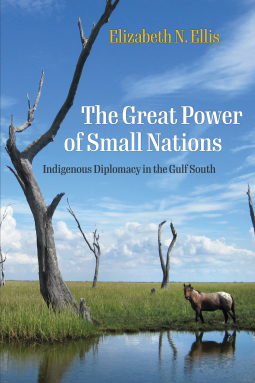
The Great Power of Small Nations: Indigenous Diplomacy in the Gulf South
Goodreads
Elizabeth N. Ellis publishing house: University of Pennsylvania Press 2022 - 11
In The Great Power of Small Nations, Elizabeth N. Ellis (Peoria) tells the stories of the many smaller Native American nations that shaped the development of the Gulf South. Based on extensive archival research and oral histories, Ellis’s narrative chronicles how diverse Indigenous peoples—including Biloxis, Choctaws, Chitimachas, Chickasaws, Houmas, Mobilians, and Tunicas—influenced and often challenged the growth of colonial Louisiana. The book centers on questions of Native nation-building and international diplomacy, and it argues that Native American migration and practices of offering refuge to migrants in crisis enabled Native nations to survive the violence of colonization. Indeed, these practices also made them powerful. When European settlers began to arrive in Indigenous homelands at the turn of the eighteenth century, these small nations, or petites nations as the French called them, pulled colonists into their political and social systems, thereby steering the development of early Louisiana. In some cases, the same practices that helped Native peoples withstand colonization in the eighteenth century, including frequent migration, living alongside foreign nations, and welcoming outsiders into their lands, have made it difficult for their contemporary descendants to achieve federal acknowledgment and full rights as Native American peoples. The Great Power of Small Nations tackles questions of Native power past and present and provides a fresh examination of the formidable and resilient Native nations who helped shape the modern Gulf South.
Book

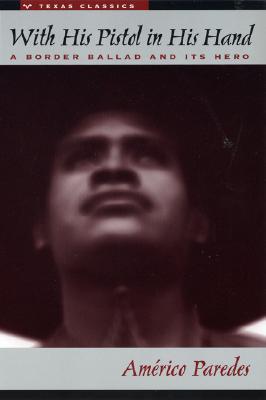
With His Pistol in His Hand: A Border Ballad and Its Hero
Goodreads
Américo Paredes publishing house: University of Texas Press 1958 - 1
Gregorio Cortez Lira, a ranchhand of Mexican parentage, was virtually unknown until one summer day in 1901 when he and a Texas sheriff, pistols in hand, blazed away at each other after a misunderstanding. The sheriff was killed and Gregorio fled immediately, realizing that in practice there was one law for Anglo-Texans, another for Texas-Mexicans. The chase, capture, and imprisonment of Cortez are high drama that cannot easily be forgotten. Even today, in the cantinas along both sides of the Rio Grande, Mexicans sing the praises of the great "sheriff-killer" in the ballad which they call "El Corrido de Gregorio Cortez."Américo Paredes tells the story of Cortez, the man and the legend, in vivid, fascinating detail in "With His Pistol in His Hand," which also presents a unique study of a ballad in the making. Deftly woven into the story are interpretations of the Border country, its history, its people, and their folkways.

Book

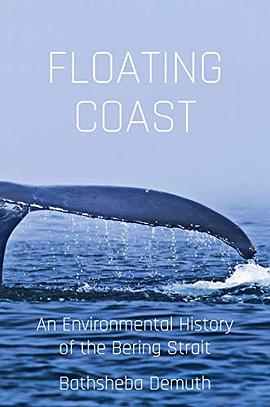
Floating Coast
Douban Goodreads
Bathsheba Demuth / 芭丝谢芭·德穆思 publishing house: W. W. Norton & Company 2019 - 9 other title: Floating Coast: An Environmental History of the Bering Strait
A groundbreaking exploration of the relationship between capitalism, communism, and Arctic ecology since the dawn of the industrial age. Whales and walruses, caribou and fox, gold and oil: through the stories of these animals and resources, Bathsheba Demuth reveals how people have turned ecological wealth in a remote region into economic growth and state power for more than 150 years. The first-ever comprehensive history of Beringia, the Arctic land and waters stretching from Russia to Canada, Floating Coast breaks away from familiar narratives to provide a fresh and fascinating perspective on an overlooked landscape. The unforgiving territory along the Bering Strait had long been home to humans—the Iñupiat and Yupik in Alaska, and the Yupik and Chukchi in Russia—before Americans and Europeans arrived with revolutionary ideas for progress. Rapidly, these frigid lands and waters became the site of an ongoing experiment: How, under conditions of extreme scarcity, would the great modern ideologies of capitalism and communism control and manage the resources they craved? Drawing on her own experience living with and interviewing indigenous people in the region, as well as from archival sources, Demuth shows how the social, the political, and the environmental clashed in this liminal space. Through the lens of the natural world, she views human life and economics as fundamentally about cycles of energy, bringing a fresh and visionary spin to the writing of human history. Floating Coast is a profoundly resonant tale of the dynamic changes and unforeseen consequences that immense human needs and ambitions have brought, and will continue to bring, to a finite planet.

Book

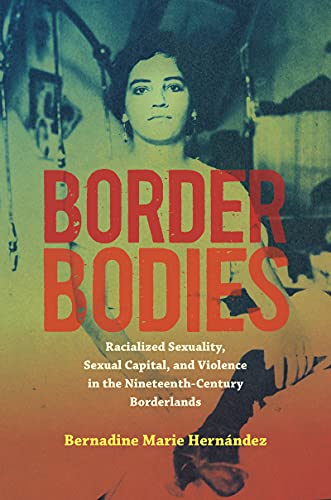
Border Bodies: Racialized Sexuality, Sexual Capital, and Violence in the Nineteenth-Century Borderlands
Goodreads
Bernadine Marie Hernández publishing house: University of North Carolina Press 2022 - 6
In this study of sex, gender, sexual violence, and power along the border, Bernadine Hernández brings to light under-heard stories of women who lived in a critical era of American history. Elaborating on the concept of sexual capital, she uses little-known newspapers and periodicals, letters, testimonios, court cases, short stories, and photographs to reveal how sex, violence, and capital conspired to govern not only women’s bodies but their role in the changing American Southwest. Hernández focuses on a time when the borderlands saw a rapid influx of white settlers who encountered elite landholding Californios, Hispanos, and Tejanos. Sex was inseparable from power in the borderlands, and women were integral to the stabilization of that power. In drawing these stories from the archive, Hernández illuminates contemporary ideas of sexuality through the lens of the borderland’s history of expansionist, violent, and gendered conquest. By extension, Hernández argues that Mexicana, Nuevomexicana, Californiana, and Tejana women were key actors in the formation of the western United States, even as they are too often erased from the region’s story.

Book

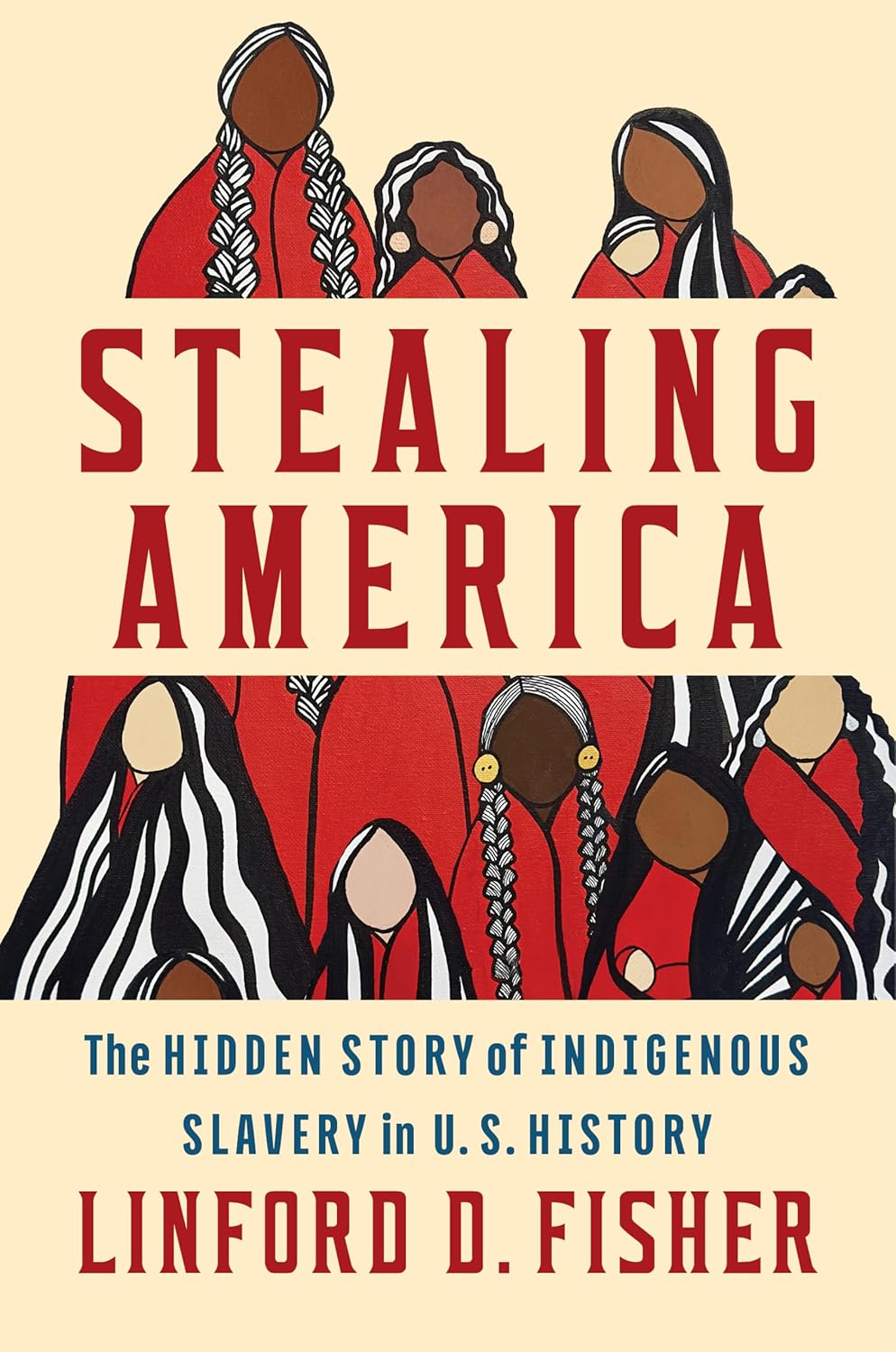
Stealing America: The Hidden Story of Indigenous Slavery in U.S. History
Goodreads
Linford D. Fisher publishing house: Liveright 2026 - 4
Indigenous enslavement was a colossal phenomenon of almost unimaginable consequences that ensnared nearly 600,000 Native Americans in North America. In a saga that predates 1619, this double-stealing of Indigenous people and their lands upends virtually every known narrative of American history. Captured Natives, often deliberately misidentified as Black slaves, were used not only on southern plantations, but on small northern farms, and were routinely shipped overseas. While the American Revolution pealed the bells of freedom for colonists, it paved a larcenous trail of westward expansion that decimated tribes and plundered Indigenous lands. Even after Congress outlawed Native slavery in 1867, Americans forced Indigenous children into boarding schools and white homes, where they labored under forced assimilation. This practice was not outlawed until the latter twentieth century, when Indian nations finally secured increasing rights and self-determination. The most comprehensive work of its kind, Stealing America presents a five-century genocidal history, more commonly known as the "American dream."

Book

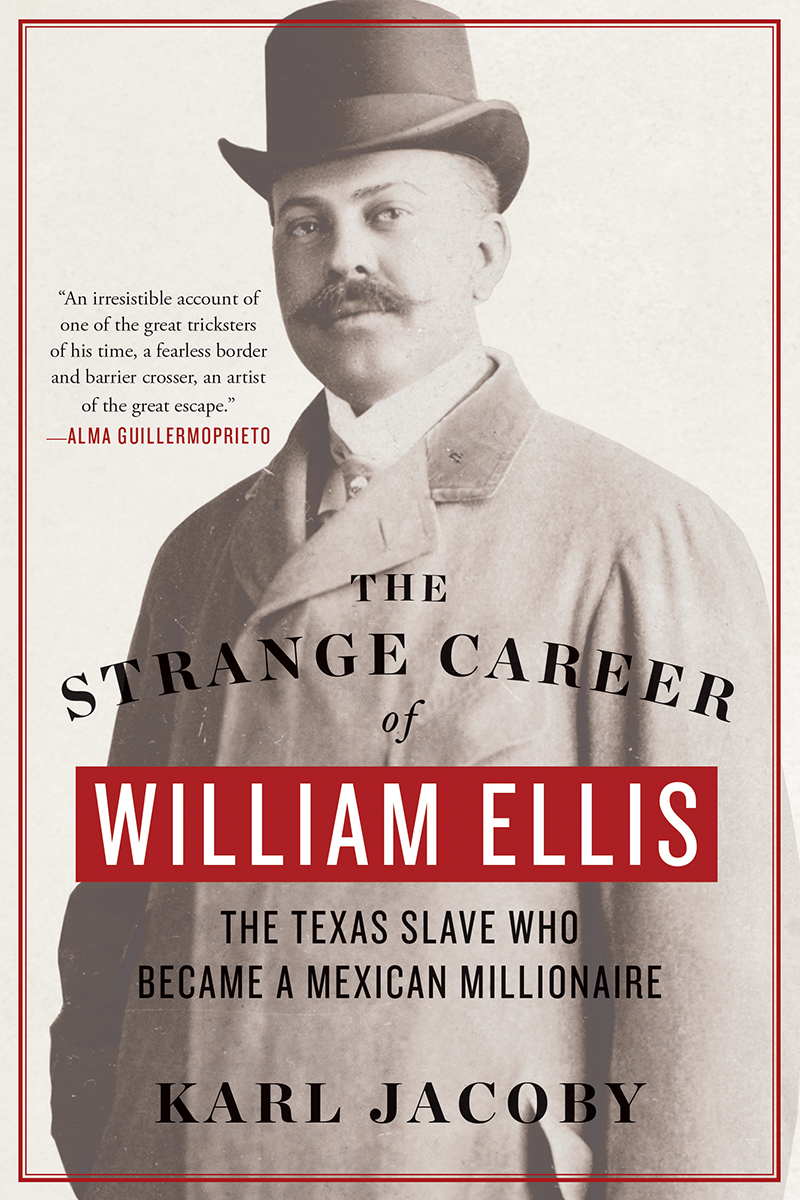
The Strange Career of William Ellis: The Texas Slave Who Became a Mexican Millionaire
Goodreads
Karl Jacoby publishing house: W. W. Norton & Company 2017 - 6
Winner of the Ray Allen Billington Prize and the Phillis Wheatley Book Award "An American 'Odyssey,' the larger-than-life story of a man who travels far in the wake of war and gets by on his adaptability and gift for gab." ― Wall Street Journal A black child born on the US-Mexico border in the twilight of slavery, William Ellis inhabited a world divided along ambiguous racial lines. Adopting the name Guillermo Eliseo, he passed as Mexican, transcending racial lines to become fabulously wealthy as a Wall Street banker, diplomat, and owner of scores of mines and haciendas south of the border. In The Strange Career of William Ellis , prize-winning historian Karl Jacoby weaves an astonishing tale of cunning and scandal, offering fresh insights on the history of the Reconstruction era, the US-Mexico border, and the abiding riddle of race in America. 8 pages of illustrations

Book

A Princely Impostor?: The Strange and Universal History of the Kumar of Bhawal
Goodreads
Partha Chatterjee publishing house: Princeton University Press 2002 - 3
In 1921 a traveling religious man appeared in eastern British Bengal. Soon residents began to identify this half-naked and ash-smeared sannyasi as none other than the Second Kumar of Bhawal--a man believed to have died twelve years earlier, at the age of twenty-six. So began one of the most extraordinary legal cases in Indian history. The case would rivet popular attention for several decades as it unwound in courts from Dhaka and Calcutta to London. This narrative history tells an incredible story replete with courtroom drama, sexual debauchery, family intrigue, and squandered wealth. With a novelist's eye for interesting detail, Partha Chatterjee sifts through evidence found in official archives, popular songs, and backstreet Bangladeshi bookshops. He evaluates the case of the man claiming, with the support of legions of tenants and relatives, to be the long-lost Kumar. And he considers the position of the sannyasi's detractors, including the colonial government and the Kumar's young widow, who resolutely refused to meet the man she denounced as an impostor. Along the way, Chatterjee introduces us to a fascinating range of human character, gleans insights into the nature of human identity, and examines the relation between scientific evidence, legal truth, and cultural practice. The story he tells unfolds alongside decades of Indian history. Its plot is shaped by changing gender and class relations and punctuated by critical historical events, including the onset of World War II, the Bengal famine of 1943, and the Great Calcutta Killings. And by identifying the earliest erosion of colonialism and the growth of nationalist thinking within the organs of colonial power, Chatterjee also gives us a secret history of Indian nationalism.

Book

The Time beneath the Concrete: Palestine between Camp and Colony
Goodreads
Nasser Abourahme publishing house: Duke University Press 2025 - 2
In The Time beneath the Concrete , Nasser Abourahme argues that settler colonialism is always as much an attempt to conquer time as it is to conquer land. Taking as his primary object  Palestinian refugee camps, created in the fallout of the eliminatory violence of Israel’s founding, Abourahme shows how these camps become the primary place where settler colonial attempts to dominate space and time encounter Indigenous refusal. Seen from the camps, Israel becomes a settler colonial project defined by its inability to move past the past—a project stuck at its foundational moment of conquest. At the same time, the Palestinian insistence on return is a refusal to abide by the closure of the past into settler futurity. Palestinian struggle does not just happen in the open time of dispossession; it happens over this time. That struggle, Abourahme demonstrates, is a form of anticolonial refusal that draws its power not from any decisive finality, but precisely from irresolution and keeping time open. Duke University Press Scholars of Color First Book Award
Sept. 19, 2026