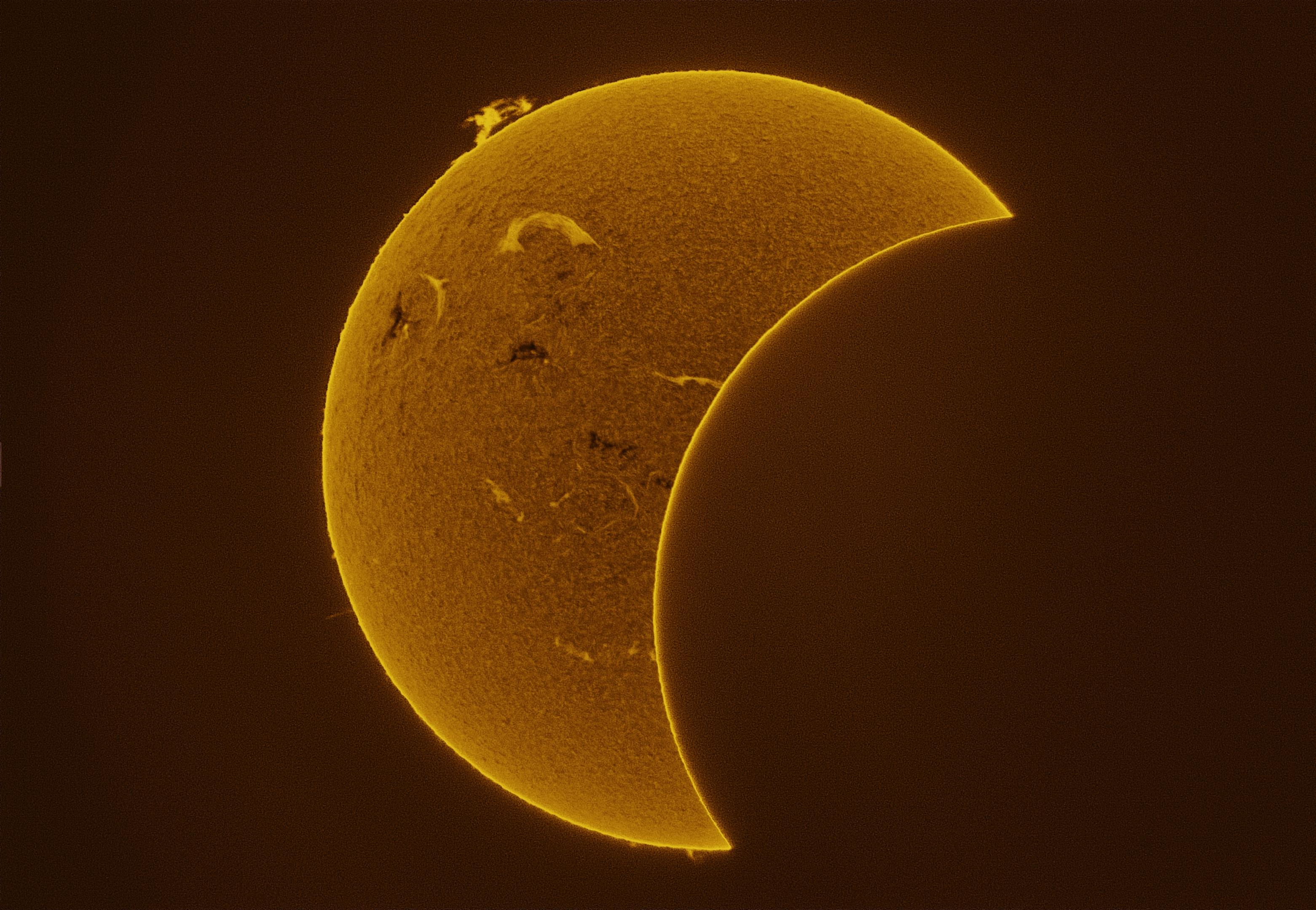
Partial eclipse from Germany. Really happy with how this shot turned out. Taken with an Acuter Elite Phoenix 40 and a ToupTek G3M678M.
#solareclipse #eclipse #eclipse2026 #photography #astrophotography #Astrodon #astronomy #sonnenfinsternis
Partial eclipse from Germany. Really happy with how this shot turned out. Taken with an Acuter Elite Phoenix 40 and a ToupTek G3M678M.
#solareclipse #eclipse #eclipse2026 #photography #astrophotography #Astrodon #astronomy #sonnenfinsternis
Live stream of the partial solar eclipse as seen from Göttingen, Germany at https://live.gwdg.de/play/sofi2026 by the University of Göttingen's Institute for Astrophysics and Geophysics: watch starting from 19h MESZ if viewing conditions happen to be less favourable from where you are located.
@unigoettingen @thegoecampus @gwdg
#sofi2026 #Sonnenfinsternis #Sonnenfinsternis2026 #partielleSonnenfinsternis #solareclipse #solareclipse2026 #partialsolareclipse #Astronomie #astronomy #Astrodon #Sonnenuntergang #astrophotography #gwdg #Göttingen #Germany #livestream #live
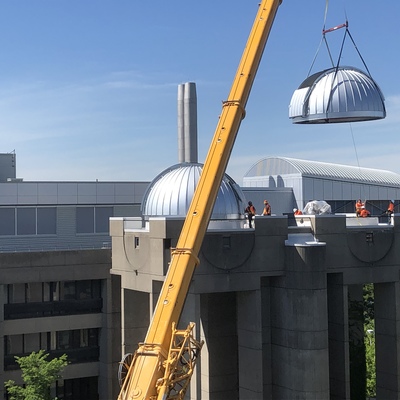
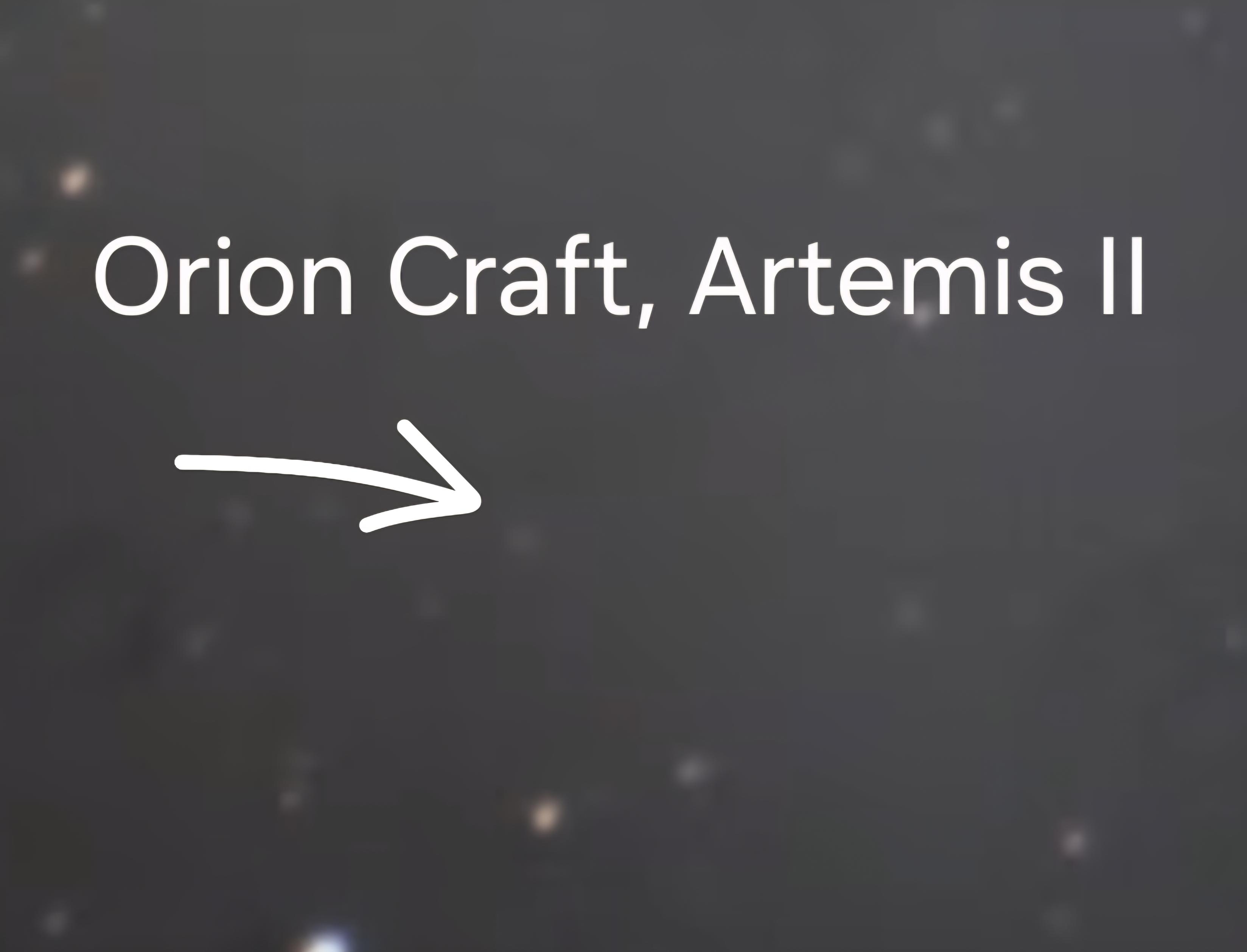
Our crew at the observatory has CAPTURED THE ORION SPACECRAFT... despite the weather in #Toronto #canada ... the low position of #ArtemisII in the sky and having had to take the science ccd off for repairs.
Enjoy everyone, now you too can wave at the pixel of #jeremyhansen ! Video is up on the @AllanICarswellObservatory YouTubechannel! https://www.youtube.com/live/dT_ykVY1VaI?si=wDd_GQHUpdYP0-qy
#space #orion #Artemis2 #moonmission #science #telescopes #yorkuniversity #moon #observatory #Astrodon #astronomy
Because I just found it on an old USB stick I offer to you this 20 year old 320x240@15fps "video" of the Anglo-Australian Telescope (AAT) having a stretch.
This is the result of running a script in the telescope control software called "Cook's Tour". The original documentation describes the purpose of this script as being to "induce nausea in the prime focus observer". When that was written the AAT was still used for prime focus photography (yes, with big glass photographic plates) which required an astronomer to be inside that black cyclinder at the top of the telescope (actually another fairly similar one) during the night, in total darkness. Cook's Tour would be a fun ride for them.
More recently it was useful as a test of telescope movement control during the mid 2000's when the telescope control system was being replaced, and it has always been and continues to be a good way to show the telescope off to visitors or get cool videos.
This version of the video is not in real time, it's been sped up by a factor of a few.
#Astronomy #Astrodon #Telescope #AngloAustralianTelescope #AAT #SidingSpringObservatory
Open PhD positions: The IMPRS for Solar System Science at the University of Göttingen and at TU Braunschweig is offering PhD projects in Star-Planet Interactions and in Planet Formation https://www.mps.mpg.de/phd/open-projects
Star-Planet Interactions with E. Ilin: https://www.mps.mpg.de/phd/star-planet-interactions
Planet Formation with J. Drążkowska: https://www.mps.mpg.de/phd/planet-formation
Application deadline: October 1st, 2026
Want to get notified when new PhD projects become available in the #IMPRS? This way, please: https://www.mps.mpg.de/phd/new-project-notification
@unigoettingen @thegoecampus @tubraunschweig @maxplanckgesellschaft
#SolarSystemSchool #MPSGoettingen #JobAd #FediHire #PhD #Jobs #PhDPositions #Astronomy #Astrophysics #Astrodon #Stars #Planets #PlanetFormation #Space
Posts under the #ag2026garching conference hashtag are starting to come in, follow the hashtag for the latest in astronomy!
Or tag along on this particularly convenient fediwall view: https://fediwall.social/?servers=mastodon.social,scicomm.xyz,wisskomm.social,fedi.buzz&tags=ag2026garching,ag2026,agtagung2026&accounts=GermanAstroSoc@wisskomm.social&lang=en,de&hide=nsfw&title=AG+2026+Garching&interval=20
Here's hoping that we here on the fediverse will be simultaneously able to
- show the live posters from the conference how much we appreciate that they're keeping us informed
- communicate that we really appreciate ALT text and would love to have it on all their posts with media attached
#ag2026garching #astrodon #astronomy #astrophysics #fediwall
#IFT15 orbital launch and landing attempt of an entire Moon rocket is currently NET this Friday, November 13, 2026. It will feature Ship 42 and Booster 22 both RTLS back to Starbase Texas.
There was sufficient data from #IFT14 Ship 41 and Booster 21, to make the first recovery attempt of an orbital rocket possible.
#Space #Astrodon #SpaceX #Starship #ElonMusk
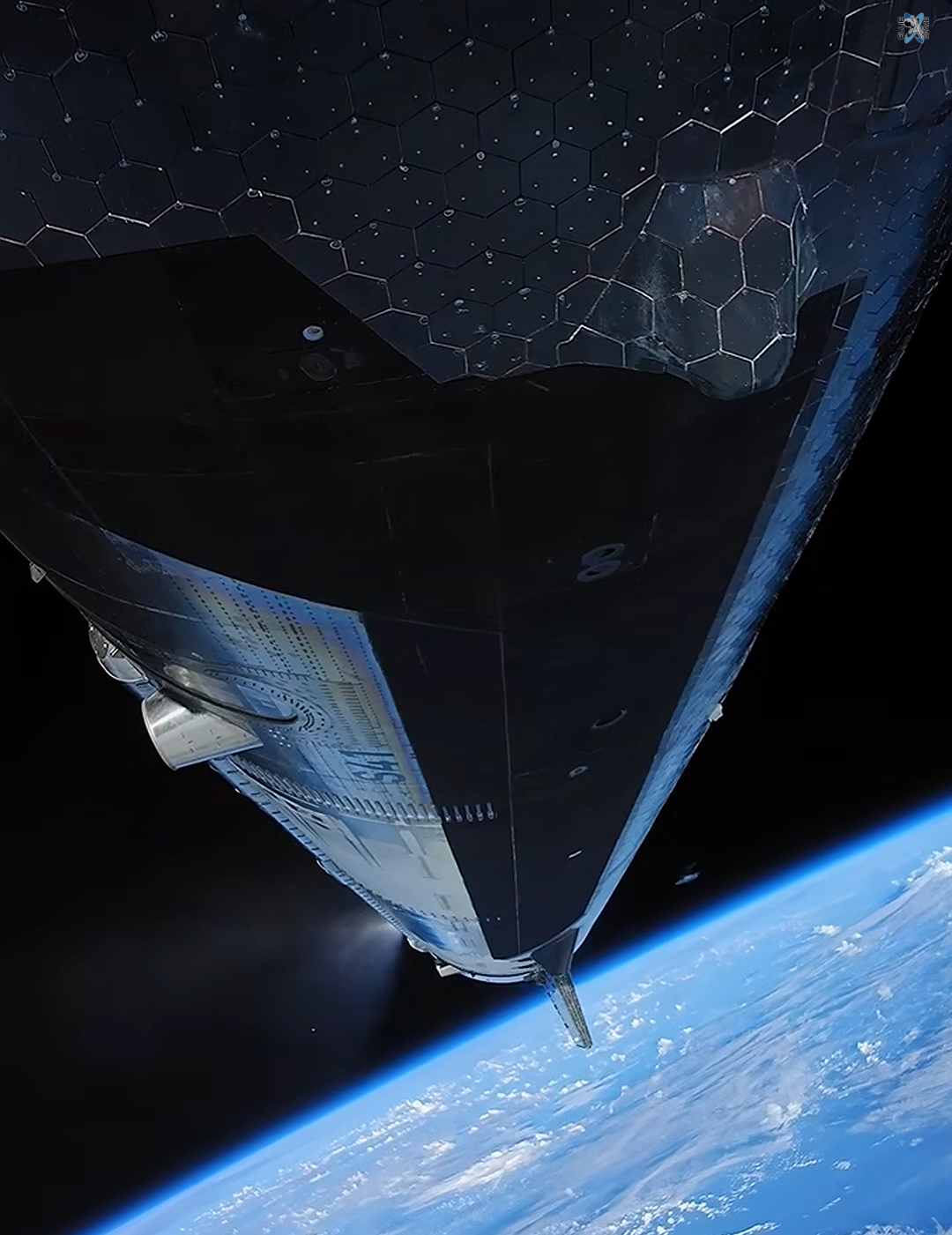
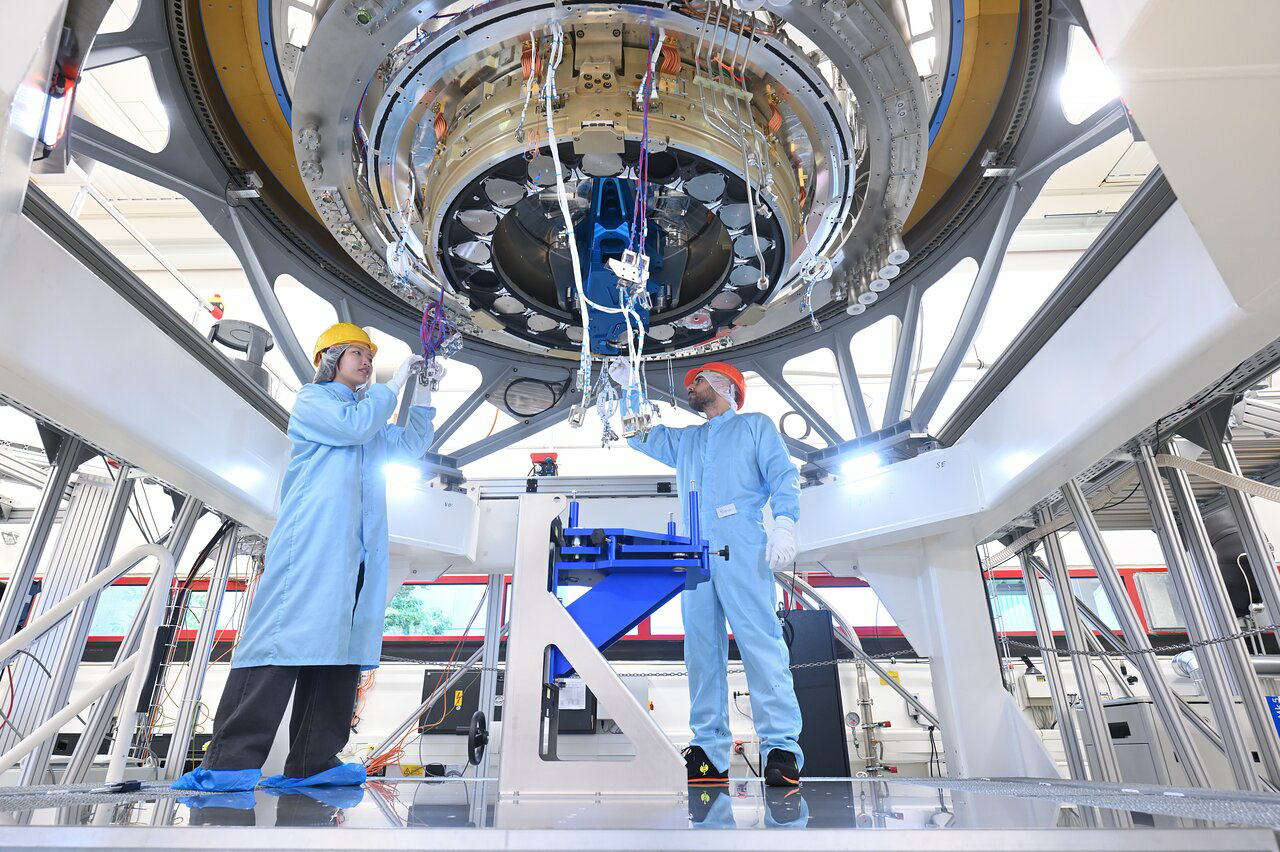
A wheel fit for a giant!
Two engineers look up at the heart of MICADO, a future instrument of our Extremely Large Telescope.
Each slot in this giant wheel carries a different filter. The mechanism measures 1.5 metres, compared with just a few tens of centimetres across in today’s telescopes.
1/2
📷 MPE/NOVA/F. Kamphues
#astrodon astronomy #astrophysics #space #science #engineering
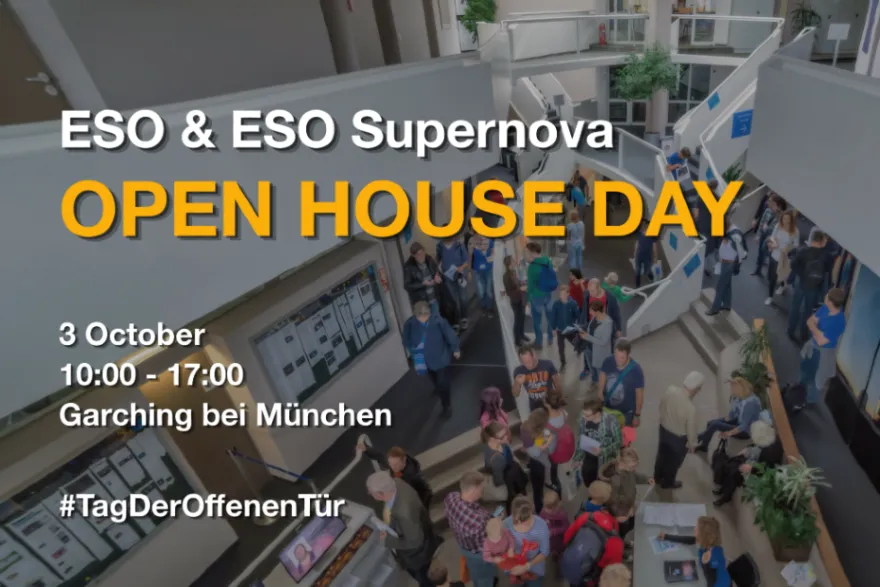
In #Munich on 3 October? Come and visit us! We’re opening our doors for the Open House Day of the Garching Research Campus.
Chats with astronomers, kids activities, live connections with our observatories in Chile... there’s plenty in store for you!
Full programme: https://www.eso.org/public/announcements/annlang26002-de/
Don’t miss the planetarium shows and exhibition at the ESO Supernova Planetarium & Visitor Centre: https://supernova.eso.org/germany/programme/detail/es1281/
#astrodon #astronomy #astrophysics #space #science #munchen #germany #deutschland
That's a new one:
"Hi Dr. Grinberg,
I came across your work while reviewing public academic records and researcher profiles.
Your research appears to have an established presence, but I couldn’t find a Wikipedia page providing a broader overview of your career.
I work with researchers on Wikipedia assessments and article development within editorial standards.
I can provide a short assessment if useful."
-- paid wikipedia pages for scientists are a thing now?
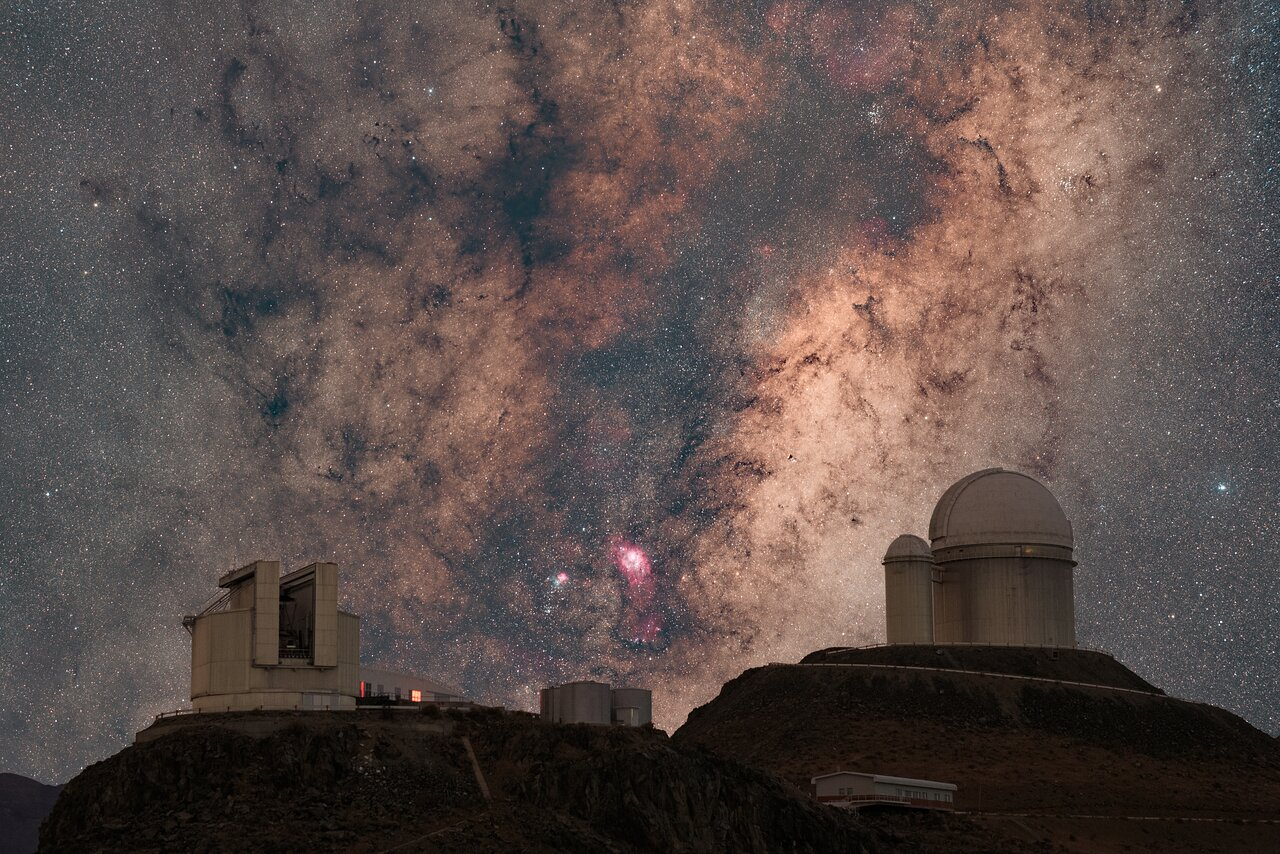
The gleaming Trifid and Lagoon nebulae can be seen between our New Technology Telescope (left) and the ESO 3.6-meter telescope (right) at La Silla.
Their red colour comes from hydrogen atoms ionised by young stars in these clouds. The Trifid nebula also shows a blue tint caused by dust reflecting the light of some of these stars.
Discover more: https://www.eso.org/public/images/potw2639a/
📷 J. Rodrigues/ESO
#astrodon #astronomy #astrophysics #astrophotography #space #science
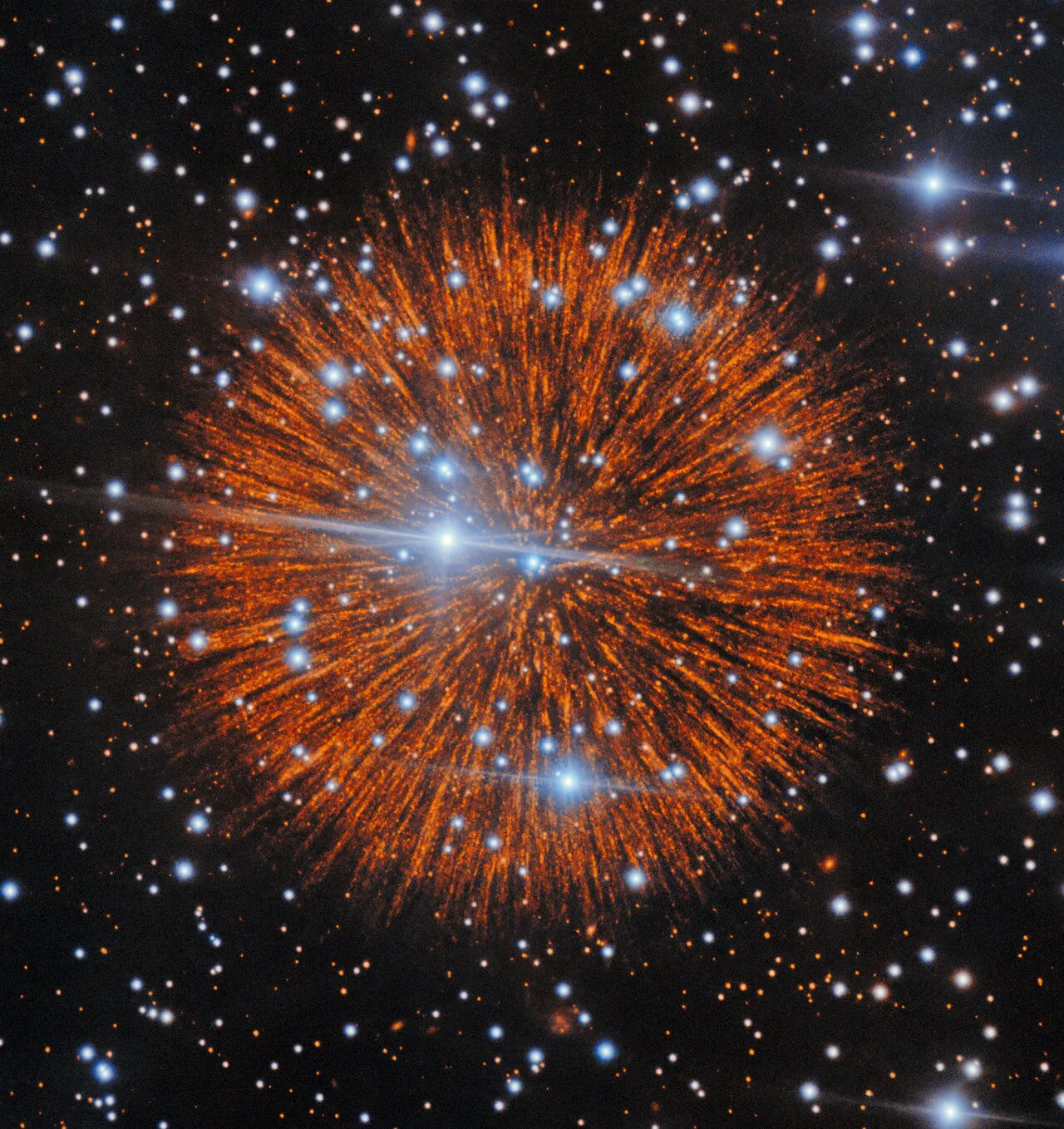
Spotted this great image, yes a real image, last night! It looks like a firework going off!
It's of the supernova remnant Pa 30 and was taken by the Gemini Observatory (north).
It's probably the only one of these I have ever seen an image of and could also be the only one we know about in the entire Galaxy.
Pa 30 (IRAS 00500+6713) has a central white dwarf star (eventually what our Sun will become).
The idea is that this supernova ejecta formed in 1181 and may have been observed / documented by Chinese and Japanese astronomers. It's thought to have formed when two white dwarfs collided.
Those long radial filaments are likely caused by Rayleigh- Taylor instabilities. The authors of the paper below suggest that these could be what's left over from a slower ejecta shell that has been shaped into these long, narrow structures by the winds of the white dwarf star.
The white dwarf itself is fascinating. Likely rapidly rotating and has a very powerful magnetic field (almost as strong as a millisecond pulsar).
Truly an odd, yet wonderful Galactic object!
Open access paper about this object: arxiv.org/abs/2301.04809
Image: https://noirlab.edu/public/images/noirlab2624a/
📸 International Gemini Observatory/NOIRLab/NSF/AURA/T. Cunningham/J. Miller & M. Rodriguez /T.A. Rector /D. de Martin & M. Zamani