Classical
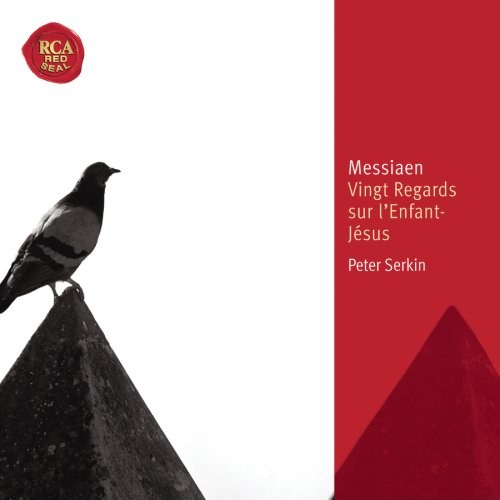
Olivier Messiaen: Vingt Regards sur l'Enfant-Jésus Douban
Peter Serkin genre: Classical
release date 2004-10-12 publisher: RCA
Amazon.com
Written in 1944, when Messiaen was 36, this work is often viewed as a masterpiece of the 20th century. It is formidable in size, length, volume, and visionary ambition. A devout Roman Catholic, Messiaen drew inspiration from the Church and its symbols, as well as from the sights and sounds of nature, especially the bird-songs that he loved and incorporated into his music. The 20 movements of this work are meant to illustrate different ways of contemplating the Nativity. They bear elaborate titles, which however do not seem to illuminate the music, at least for those unfamiliar with the religious background. But this does not really matter to the actual musical experience. The work's most pervasive characteristics are its obsessive repetitiousness, and, apart from a few soft, beautifully lyrical sections, its relentlessly high decibel level. The sustained intensity and aggressive ferociousness of the banging and crashing can be quite terrifying. Contrast is created through different textures, tempi, moods, and sudden short-lived drops in dynamics. Messiaen's genius found expression most arrestingly in his orchestration; he exploits, combines and contrasts instrumental colors and timbres with extraordinary mastery and imagination. Here, he almost succeeds in turning the piano into an orchestra, making it sing, speak, growl, clang, crash, and scream. Sometimes it seems to carry on a conversation between different registers or between contrapuntal, chordal, and call-and-response elements. The harmonic structure is fairly simple and essentially static. There are strong echoes of Debussy, of jazz, and of waltzes a la Richard Strauss. The performance is spectacular. Peter Serkin, long one of Messiaen's foremost interpreters, triumphs over all pianistic, sonic, intellectual and emotional demands. Piling sonority upon sonority, finding melodic voices in the huge chords and contrapuntal lines in the thick textures, he keeps even the slowest sections from sagging and turns the fast ones into powerful, scintillating cascades, leaving the listener dazzled and exhausted. --Edith Eisler
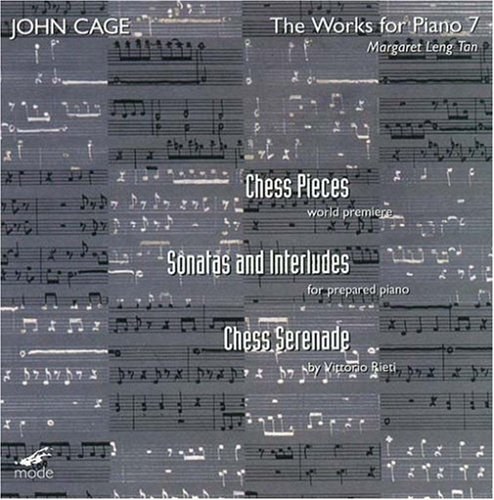
John Cage: The Works for Piano, Vol. 7 Douban
Margaret Leng Tan genre: Classical
release date 2006-03-21 publisher: Mode
A major discovery and first recording of an important Cage piece from 1944.
In 1944, John Cage was invited to participate in "The Imagery of Chess" exhibition at the Julien Levy Gallery in New York City. The artists included Calder, Noguchi, Motherwell, Breton, Duchamp, Ernst, Man Ray, Tanning and other leading surrealists.
Cage contributed a painting entitled "Chess Pieces". It was purchased at the show and went into a private collection. For decades it was deemed lost and was (almost) forgotten by Cage afficionados and scholars.
Re-assembling the original artworks for "The Imagery of Chess Revisited" show (2005-06) at the Isamu Noguchi Museum in New York led to the tracking down of the Cage painting.
Cage expert Margaret Leng Tan set about transcribing the music in the painting into a playable score which receives its premiere recording here.
Chess Pieces is from 1944, an emotional and creative year for Cage; besides echoes of Satie, Chess Pieces contains prophetic touches of minimalism and has features in common with his monumental piano piece, Four Walls, from the same year.
A renowned Cage interpreter, Ms. Tan worked closely with the composer from 1981 to 1992. Cage was particularly appreciative of her performances of his works for the prepared piano. This is Ms. Tan's long-awaited recording of Cage's prepared piano masterpiece, the Sonatas and Interludes of 1946-48.
Also included is the first recording of the only other musical score from "The Imagery of Chess" show, neo-classical composer Vittorio Rieti's Chess Serenade.
Also available as a surround sound DVD (MOD-DV158) with full performance videos of Chess Pieces and Chess Serenade, plus 2 documentaries: Mr. Cage's Prepared Piano (Ms. Tan takes an in-depth look at the prepared piano), and CAGE: Music/Art/Chess (a closeup look at Cage's and Rieti's pieces in the Noguchi Museum's "The Imagery of Chess Revisited" show).
Only on DVD
ADDITIONAL DOCUMENTARY VIDEOS:
Mr. Cage's Prepared Piano: an insightful look at the history of the prepared piano narrated and performed by Ms. Tan, who also demonstrates how to (and not to) prepare a piano, and describes the preparations in detail both visually and sonically. She prepares and performs excerpts from Bacchanale, Cage's first prepared piano work, and Sonatas & Interludes.
Cage and the Art of Chess: a visit to "The Imagery of Chess Revisited" exhibit at the Isamu Noguchi Museum with curator Larry List and Ms. Tan. Together they describe Cage's relationship to the show and examine the "Chess Pieces" painting in detail - they also discuss Rieti and his Chess Serenade. Mr. List explores a separate feature on Cage's wife, Xenia Cage, and her Chess Table (Xenia was an artist and also had a piece in the show) and sheds additional background on her life and work.
24-bit surround sound DTS and Dolby Digital surround.
Dedicated 24-bit stereo mix.
English, French, German and Spanish subtitles.
NOTE: Sonatas & Interludes is not accompanied by video.
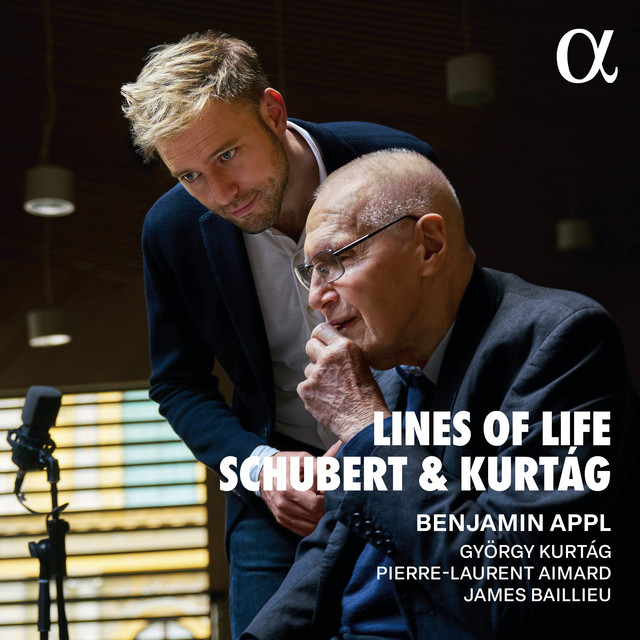
Lines of Life: Schubert & Kurtág Spotify Douban
Benjamin Appl / György Kurtág … genre: Classical
release date 2025-02-14 publisher: 2025 Alpha Classics / Outhere Music France / 2025 Benjamin Appl & Deutschlandradio & Alpha Classics / Outhere Music France
Works by Schubert and Brahms are interwoven with 13 of composer’s own songs in this beautifully realised collection
New York Douban
Ensemble Intercontemporain / Matthias Pintscher genre: Classical
release date 2017-03-24 publisher: Alpha
Here is the third release in the collaboration between the Ensemble Intercontemporain and Alpha.
This time the musicians of the ensemble and their conductor Matthias Pintscher focus on American music: Intégrales by Edgar Varèse (1924), Music for Wind Instruments by John Cage (1938), Instruments I for six instruments by Morton Feldman (1974), Elliott Carter’s Concerto for clarinet and ensemble (1996), Steve Reich’s WTC 9/11 for string quartet (2009-10), Sean Shepherd’s Blur (2011), and David Fulmer’s Within his bending sickle’s compass come for solo horn and ensemble (2014-15). More than ninety years of creativity and musical profusion at the heart of the global city that the Ensemble Intercontemporain celebrates today.
This double album is released to coincide with the fortieth anniversary of the EIC: forty years of discoveries and of promotion of contemporary music at the highest level of performance.
May 16, 2025 listened
可听性很强的
Classical
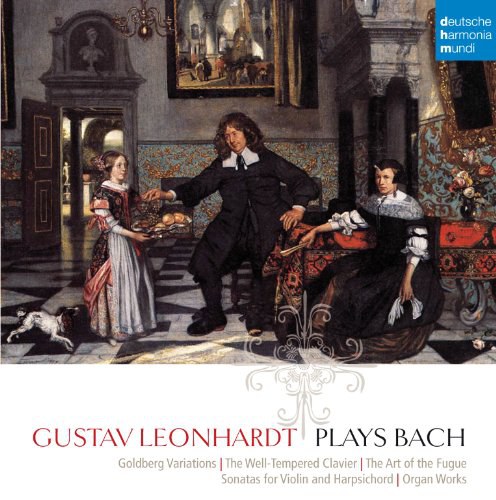
Gustav Leonhardt plays BACH Douban
Gustav Leonhardt genre: Classical
release date 2012-05-15 publisher: Deutsche Harmonia Mundi
April 15, 2025 listened
在所有无从言表也无人问津的无力,疲倦,与绝望的深处:这样又一个积雪消融作为复发旺季的春天,pragmatically,或许确实只有镇静药和古琴的巴赫能够获得稍许的宁静
Bach Classical