Classical
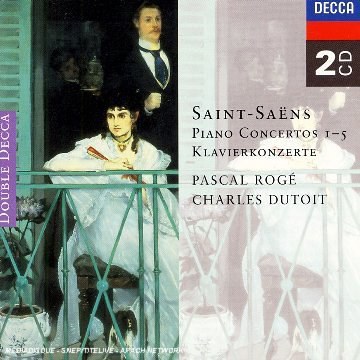
Saint-Saëns: Piano Concertos 1-5
Douban
Pascal Rogé / Philharmonia Orchestra … genre: Classical
release date 1995-02-06 publisher: Decca
Disc 1 01 Piano Concerto No.1 in D, Op.17 - 1. Andante - Allegro assai 02 Piano Concerto No.1 in D, Op.17 - 2. Andante sostenuto quasi adagio 03 Piano Concerto No.1 in D, Op.17 - 3. Allegro con fuoco 04 Piano Concerto No.2 in G minor, Op.22 - 1. Andante sostenuto 05 Piano Concerto No.2 in G minor, Op.22 - 2. Allegro scherzando 06 Piano Concerto No.2 in G minor, Op.22 - 3. Presto 07 Piano Concerto No.3 in E flat major, Op.29 - 1. Moderato assai - piu mosso (Allegro maestoso) Disc 2 01 Piano Concerto No.3 in E flat major, Op.29 - 2. Andante 02 Piano Concerto No.3 in E flat major, Op.29 - 3. Allegro non troppo 03 Piano Concerto No.4 in C minor, Op.44 - 1. Allegro moderato - Andante 04 Piano Concerto No.4 in C minor, Op.44 - 2. Allegro vivace - Andante - Allegro 05 Piano Concerto No.5 in F, Op.103 "Egyptian" - 1. Allegro animato 06 Piano Concerto No.5 in F, Op.103 "Egyptian" - 2. Andante 07 Piano Concerto No.5 in F, Op.103 "Egyptian" - 3. Molto allegro
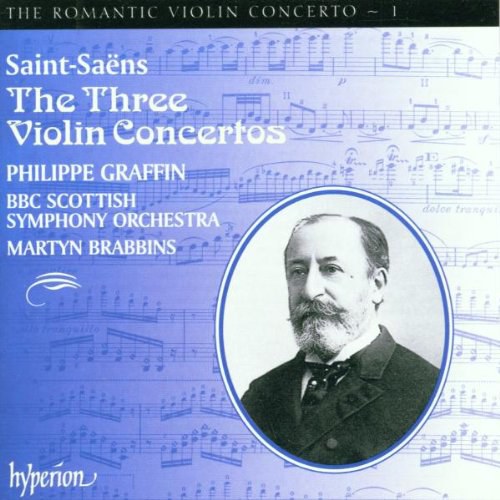
The Romantic Violin Concerto, Vol. 1
Douban
Philippe Graffin / Glasgow BBC Scottish Symphony Orchestra … genre: Classical
release date 1999-09-07 publisher: Hyperion
These sparkling performances of Saint-Saëns' violin concertos are a fitting start to Hyperion's new series of Romantic Violin Concertos; a follow on from the highly successful Romantic Piano Concerto series. Saint-Saëns C Major concerto resembles Mendelssohn's great violin concerto. Both are declamatory, extravagant in character, highly lyrical and immediately establish the soloist as a romantic protagonist. Though more conventional, the violin writing for the Concerto in A Major is ever-inventive, especially in the witty second episode where the hen from Le Carnaval des Animaux makes a premature entrance. This was the first of several works he composed for the great Spanish violinist Pablo de Sarasate; in 1859 just fifteen years old but already a famous virtuoso. Saint-Saëns' instantly memorable melodies are a feature of all his best-known works, and there are tunes in abundance in the well-known B Minor Concerto. The intense B minor mood probably offered inspiration for the violin concertos of Elgar and Bartók. Berlioz’s well-known witticism concerning the young Saint-Saëns—‘Il sait tout, mais il manque d’inexpérience’ (‘He knows everything, but lacks inexperience’)—conveys genuine admiration whilst suggesting a want of the sort of youthful extravagance that can lead to great achievement. Saint-Saëns himself described a similar aspect of his musical character, in contrast with his friend Bizet: ‘He sought passion and life above all things, whereas I ran after the chimera of purity, of style and perfection of form’. This goes some way towards explaining how such an inventive and productive composer, friend of Liszt and one of the earliest to understand the import of Wagner, could remain so traditional in many aspects of his music. In his concertos, however, the clarity and balance he sought for is allied to a sensitive and often innovatory approach to the concerto form, and to a strong feeling for idiomatic solo writing—just as accomplished when writing for violin or cello as for his own instrument, the piano. And, even if form were a primary consideration, he did not neglect passion and life. The earliest of the three violin concertos is the C major which, though composed in 1858, was only published as No 2 in 1879. Marsick gave its successful first performance the following year at the Pasdeloup concerts in Paris. It’s not known for what occasion it was originally composed; Saint-Saëns already knew several notable violinists, among them the Belgian François Seghers, founder of the Société Sainte-Cécile, who had introduced him to Liszt, and George Bridgetower, the Afro-English violinist for whom Beethoven had written his ‘Kreutzer’ Sonata. By 1858 Saint-Saëns had already become a highly accomplished composer, with three symphonies, a mass, numerous songs, cantatas and instrumental works to his credit. As with all his subsequent concertos, there is no traditional extended orchestral introduction; instead, he follows the example of Mendelssohn’s Violin Concerto in setting up an accompanimental figure over which the soloist enters with the main theme. In the classical manner, this is based around the notes of the C major chord but with a declamatory, extravagant character that immediately establishes the soloist as a romantic protagonist. The theme has a contrasting, more lyrical continuation, after which, again following Mendelssohn’s model, the orchestra takes up the opening melody in an extended tutti passage that also introduces two important subsidiary ideas. When the violin re-enters, the music moves to E major for the second subject. This turns out to be based on the lyrical continuation to the first theme. In a typically subtle piece of thematic organisation, Saint-Saëns refers, during the continuation of this melody, back to the concerto’s opening bars. Throughout the movement, indeed, he develops his ideas with remarkable resourcefulness, rarely repeating anything exactly. The cadenza arrives in the expected, conventional way, towards the end of the movement. Following Mendelssohn again, Saint-Saëns writes out his own cadenza and, in a most original touch, gradually re-introduces the full orchestra, beginning with the timpani, during its concluding passage, based on a long, sustained G. For the A minor Andante, Saint-Saëns adds a harp and three trombones to the orchestra, the harp providing a bardic accompaniment to the violin’s melancholy melodies, the trombones together with bassoons adding a sombre, antique-sounding counterpoint to the opening motif. There’s a dramatic middle section in the major, culminating in a grandiose fanfare. During the latter part of the movement the woodwind voices emerge increasingly as alternatives to the violin. In the course of an extended coda, the music builds to a climax over a pedal bass, just as in the first movement’s cadenza, after which there’s an unexpected turn to a luminous A major before a return to the sombre mood and sound of the opening. Then the oboe, quite suddenly, takes us without a break into the lively rondo finale. Though this is more conventional music, the ever-inventive violin writing gives a sparkling impression, especially in the witty second episode where the hen from Le Carnaval des Animaux makes a premature entrance. If the C major Concerto shows Saint-Saëns handling resourcefully a traditional form, in the A major work of the following year his inventiveness extends to the actual formal outlines—a single Allegro movement enclosing an Andante middle section. It was the first of several works he composed for the great Spanish violinist Pablo de Sarasate, in 1859 just fifteen years old but already a famous virtuoso. It’s tempting to see the Concerto as a portrait of the young maestro—impulsive and mercurial at the start and then, at the next solo entry, graceful and elegant. (We can hear these qualities in the recordings Sarasate made in 1904.) The soloist’s opening gesture, with its chordal motif followed by a rhythmic figure, is rarely absent for long, and gives rise to a large variety of different continuations. The Andante interlude has the simplest design—an extended violin melody framed by an introduction and postlude incorporating a tentative woodwind figure accompanied by violin trills. The organization of the Allegro is much more complex and dynamic, especially the way the material is re-ordered and re-composed after the Andante. Sarasate was also the dedicatee of Saint-Saëns’ next and final violin concerto, written in 1880. In the twenty years that had elapsed since the A major Concerto he had produced four further concertos (Nos 2, 3 and 4 for piano, No 1 for cello). He had discovered, too, the ability to write instantly memorable melodies that is a feature of all his best-known music, and developed a colourful, romantic harmonic style, with modal inflections that cloud the tonality, and often substitutes more remote chords and keys for the ones we expect. When, in the first movement, he brings in the sensuously lyrical second subject, not in the key of G major which he has seemed to prepare, but in the more remote E major, we feel transported to a magical world far removed from the passionate directness of the concerto’s opening pages. This intense B minor mood, which surely offered inspiration for the violin concertos of Elgar and Bartók (No 2), is put into even sharper relief by the gentle barcarolle that forms the second movement, set in the extremely remote key of B flat major, with no attempt to effect a tonal transition. As in the C major Concerto’s Andante, Saint-Saëns delights in relating the solo violin to the contrasting individual voices of the woodwind, establishing an intimate chamber-musical atmosphere. The arpeggio passage near the close where the violin, playing harmonics (Sarasate was particularly fond of them), is joined by the clarinet, creates a strikingly original effect. The finale begins with another abrupt key-switch, not straight back to B minor but to its close relative, E minor. Like Mendelssohn in his violin concerto, Saint-Saëns prefaces his last movement with an introduction—not meditative as in the earlier work, but a boldly dramatic dialogue in the style of a recitative. The main part of the finale has a bright, march-like character, and far from being the conventional lightweight concerto finale, it’s the most extended, complex movement of the three. There’s a wealth of memorable themes—a passionate subsidiary motif, a broad second subject, and a chorale which appears as quiet contrast but returns near the end in triumphal style to set the scene for a brilliant conclusion. One of the most impressive features of this concerto is the way Saint-Saëns integrates the element of virtuosity. No longer is the music divided neatly into cantabile or brilliant passages; instead, the virtuoso character can appear at any time, to add drama, excitement, or a decorative quality to the music. Certainly, Saint-Saëns ‘knows everything’. In this vivid, spirited work he shows more than technical wizardry. He knows how to enthrall and move us. Duncan Druce © 1999
Debussy: Préludes, Volume 1
Douban
★ 8.8 10 ratings
Arturo Benedetti Michelangeli / Claude Debussy genre: Classical
release date 1984-07-25 publisher: Deutsche Grammophon
這一套專輯收錄了米開蘭傑里被譽為「白璧無瑕」的德布西作品。德布西稱為「映象」的作品共有三集,其中前兩集是為鋼琴而寫的,每集各有三首小曲,前奏曲第一輯則由十二小曲組成。每一首小曲就像一首小詩或是靜態繪畫。義大利鋼琴家米開蘭傑里公認是最傑出但也最神祕的鋼琴家之一,他的神祕色彩也因為經常取消音樂會而益加濃厚。優秀而獨特的藝術天份結合出色的彈奏技巧以及迷人的觸鍵方式,還有善於處理鋼琴的音色與多聲部層次,整體與細節上處理得有條有理的詮釋手法,讓米開蘭傑里的音樂既有古典樂派內在的平衡,也有浪漫派的熱情與感染力,也因此米開蘭傑里不只長於詮釋古典與浪漫派的作品,還包括了印象派樂曲。
Michelangeli Plays Debussy
Douban
Arturo Benedetti Michelangeli genre: Classical
release date 1995-10-09 publisher: DG
“白璧无瑕”是人们人们听到米凯兰杰利演奏的德彪西作品时会想到的词汇之一。他的《儿童乐园》和两套《意象集》无疑都很出色。不过,录音虽然很好,但毕竟是1971年制作的,也许在价格上应该适当优惠些。《前奏曲》的钢琴演奏实在无可挑剔,同时又非常冷静超脱,尽管第2册的一些作品相当富有激情,但两册作品奇怪的冷漠仍非常引人注目。 ——《企鹅激光唱片指南》
Listened
June 6, 2017
听米神入的Debussy的坑,然而并没有受他太多干扰.....

(几年来再回过头来看,几年前说的这句话简直是图样,米神还是米神啊
Debussy Michelangeli Classical
Debussy: Piano Works
Douban
★ 9.8 10 ratings
Alexis Weissenberg genre: Classical
release date 1995-06-13 publisher: Deutsche Grammophon
Listened
June 6, 2017
厉害了,这张砖居然有近500人听过,不知道这张砖咋在你瓣这么有名。不过weissenberg似乎是难得把Debussy弹得比较清脆干净的(米神就不说了),非常喜欢他的音色。封面也无敌漂亮
Debussy Weissenberg Classical
Schumann: Piano Works
Douban
★ 10.0 6 ratings
Wilhelm Kempff
release date 2001-05-01 publisher: Deutsche Grammophon
专辑介绍: 罗伯特·舒曼 (Robert Schumann,1810-1856)罗伯特·舒曼 (Robert Schumann)舒曼是十九世纪上半叶德国音乐史上最突出的人物,在他的艺术创作中深刻地反映出德国浪漫主义的优点和弱点。 德国著名作曲家、音乐评论家。他出生于德国茨维考城书商的家庭,从小喜爱音乐和文学。因家庭偏见,他年青时在大学学习法律,只能业余学习音乐。由于孜孜不倦的追求,以至于成为当地首屈一指的钢琴家。 舒曼1810年6月8日生于茨维考城。父亲是个颇有文化修养的书商,母亲是一位外科医生的女儿。他七岁时学习钢琴,十二岁开始尝试创作。1828年遵母命进莱比锡大学攻读法律。1830年师从钢琴家维克学习钢琴,当时他立志要当一个钢琴家。当他通过曲折的斗争而能够专攻音乐时,因急于求成,借机械装置锻炼钢琴指法,使手指受伤,失去成为钢琴演奏家的可能,他遂致力于音乐创作与音乐评论。在舒曼随维克学习钢琴期间,与他的女儿克拉拉朝夕相处,建立了深厚感情。1840年秋,他们冲破家庭阻力,通过法院乾预幸福地结合了。在为克拉拉而斗争的同时,舒曼也在为“新音乐”而斗争着。他在莱比锡创办了《新音乐杂志》,为反对当时陈腐、保守、庸俗的音乐风气而斗争,并正确地向读者介绍古典音乐。因此,《新音乐杂志》成为了当时德国进步音乐思想的喉舌。当他通过曲折的斗争而能够专攻音乐时,因急于求成借助机械装置锻炼指法,使右手手指受伤,永远失去了成为钢琴家的可能,遂致力于音乐创作与音乐评论。 舒曼是浪漫主义音乐成熟时期的代表之一,他生性感情敏感,并且有民主主义思想。1834年他创办了《新音乐杂志》,对改变当时陈腐的音乐空气,促进浪漫艺术的发展,起了重要的作用。他关心和支持尚未为人所知的音乐家,如:肖邦、柏辽兹、李斯特、勃拉姆斯、瓦格纳等。1838年由于维也纳反动当局发现了他介绍舒怕特的《C大调交响曲》,迫使他无法工作,他遂于1839年回莱比锡。 1840年与当时有名的钢琴家克拉拉的结合,一直被人传为美谈,并促使他的创作热情空前高涨,结婚的一年间共写了138首歌曲,被称为“歌曲文萃”。1843年他在莱比锡音乐学院任教,1856年因患精神病逝世。 舒曼的代表作有:钢琴名曲《蝴蝶》、《狂欢节》、《交响练习曲》、《幻想曲集》等,这些乐曲促进了浪漫主义音乐风格的发展。最著名的歌曲集有《桃金娘》、《诗人之恋》、《妇人的爱情和生活》等,之后还写下了四部交响曲,及《a小调钢琴协秦曲》、《曼弗雷德序曲》等杰出的作品。 肯普夫还是一个出色的教师,1924-1929年任斯图加特高等音乐学校校长并领导钢琴高级班。二战结束后,肯普夫作为当代德国钢琴家的代表人物,受到人们尊崇,成为贝多芬、舒伯特、舒曼、勃拉姆斯钢琴作品的权威演奏家。他的演奏含蓄细腻,织体清晰,亲切高贵;音色如歌,分句和速度自然而合理,丝毫没有矫柔造作、追求外在效果的倾向。他录制了贝多芬和舒伯特全部钢琴奏鸣曲和其他作曲家钢琴作品的唱片,并编辑出版了舒曼钢琴作品选集。作为作曲家,他创作了歌剧、芭蕾舞剧、交响乐、室内乐、钢琴和管风琴的作品 在贝多芬的丧礼上,一位戴着眼镜、满脸雀斑的年轻人默默的另入了送葬者的行列。他就是才华洋溢的穷光蛋舒伯特。舒伯特虽然贫穷,但是却留下了数百首歌曲、九首交响曲、为数众多的室内乐,以及堪称继承了贝多芬传统的十五首钢琴奏鸣曲。这些作品都充满了灵妙的曲思与美丽的旋律,是浪漫派极为重要的奏鸣曲经典。 肯普夫继承了德国浪漫派的演奏传统,在这个1965-1969年之间所完成的录音之中,可以完全领受到纳今天已经消失无踪的正统浪漫派的演奏精神。除了十五首奏鸣曲之外,还加入了两首未完成的奏鸣曲,以及五首钢琴小品。这不仅是舒伯特钢琴独奏作品的精华,同时也是唱片收藏者不可或缺的一套珍贵纪录。 这套专辑是Robert Schumann的作品,不过不是全集,Wilhelm Kempff只是选取了其中几号作品,基本都是倾向于舒缓抒情的曲目.当然了,依然是黄牌子厂牌出的,本人发布这几套都是Solo Piano,中意的朋友可以看本人的发布列表. ----------介绍资料及资源均出自网络,在此感谢原作者 .
Mendelssohn: A Midsummer Night's Dream (complete) / Ozawa, Boston Symphony Orchestra
Douban
★ 9.0 10 ratings
Felix Mendelssohn / Seiji Ozawa … genre: Classical
release date 1995-01-17 publisher: Deutsche Grammophon
介质为1CD! 01 Overture "A Midsummer Night's Dream", Op.21 Boston Symphony Orchestra 11:58 02 A Midsummer Night's Dream, Op.61 Incidental Music - No.1 Scherzo Judi Dench 4:47 03 A Midsummer Night's Dream, Op.61 Incidental Music - No.2. L'istesso tempo Judi Dench 1:51 04 A Midsummer Night's Dream, Op.61 Incidental Music - Fairies' March Judi Dench 1:37 05 A Midsummer Night's Dream, Op.61 Incidental Music - No.3 Song with Chorus: "Bunte Schlangen, zweigezüngt" Kathleen Battle 4:44 06 A Midsummer Night's Dream, Op.61 Incidental Music - No.4 The Speels Judi Dench 0:41 07 A Midsummer Night's Dream, Op.61 Incidental Music - No.5 Intermezzo Judi Dench 4:08 08 A Midsummer Night's Dream, Op.61 Incidental Music - No.7 Notturno Judi Dench 6:21 09 A Midsummer Night's Dream, Op.61 Incidental Music - No.8 Melodram Judi Dench 2:32 10 A Midsummer Night's Dream, Op.61 Incidental Music - No.9 Wedding March Boston Symphony Orchestra 5:07 11 A Midsummer Night's Dream, Op.61 Incidental Music - No.10 a) Prologue Judi Dench 0:47 12 A Midsummer Night's Dream, Op.61 Incidental Music - No.10 b) Funeral March Boston Symphony Orchestra 1:33 13 A Midsummer Night's Dream, Op.61 Incidental Music - No.11 Dance of the Clowns Judi Dench 2:05 14 A Midsummer Night's Dream, Op.61 Incidental Music - 12 Allegro vivace come 1 Judi Dench 1:40 15 A Midsummer Night's Dream, Op.61 Incidental Music - Finale: "Bei des Feuers mattem Flimmern" Kathleen Battle 5:48
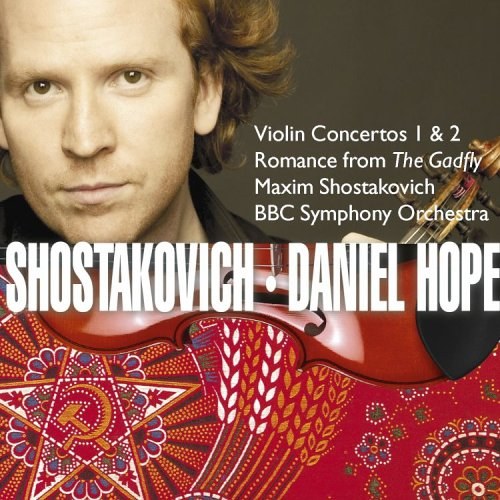
Shostakovich: Violin Concertos 1 & 2; Romance from The Gadfly
Douban
Daniel Hope genre: Classical
release date 2006-02-28 publisher: Warner Classics
The Shostakovich release pays tribute to the 100th anniversary of Shostakovich's birth and is a natural follow-up to Hope's Berg/Britten Concertos CD. Shostakovich was a 20th-Century Russian composer who wrote primarily in this romantic idiom and was heavily influenced by Mahler. Daniel Hope celebrates the works of this great contemporary composer with the accompaniment of the BBC Orchestra.
霍洛维茨在莫斯科
Douban
★ 9.9 42 ratings
Vladimir Horowitz genre: Classical
release date 1986-08-11 publisher: Deutsche Grammophon
1986年4月20日的下午,4点,天下着雨。几百名莫斯科人打着伞在雨中,旁边,莫斯科音乐学院的大礼堂里,正举行着一场音乐会。雨中的人们一个音符也听不见,他们站在这里只是为了以后能对别人说:“那天,我在那里。” 演出的时间已到,在一片雷鸣般的掌声中,一个瘦小的老人出现在台 上。他身穿着蓝状,打着蝴蝶形领结,掌声夹杂着欢呼声,老人不太灵便的走到舞台中央,对着狂热的观众耸耸肩,挥挥手,笑了笑。然后,他轻轻抚了一下钢琴,似把乐器和自己都安置稳当,等待观众沉静下来。 手放在了键盘上,按下了斯卡拉蒂奏鸣曲的第一个音。历史,欢悦、激动的音乐从他手上流淌出来,仿佛宣示着:弗拉吉米尔 霍洛维茨,这位82岁的老人,在阔别祖国六十年之后回来了。 60年前的那天,当22岁的霍洛维兹在边境准备出关时,一位闻知这位年轻钢琴家大名的士兵,将手放在了他的肩上:“你走了,别忘了你的祖国。”霍洛维兹紧张的心放了下来,他知道,这位士兵不会再检查他了,而他的鞋里藏着几千美元,这是他出国后的全部费用。他的签证只有6个月,而他一去便是60年。1942年,他放弃了苏联国籍。他常说,他不想回苏联。 然而,时至暮年,他却开始生出了一个愿望:在死之前,再看一看莫斯科。1985年,随着美国与苏联间文化交流的恢复,他的回国之行安排好了。这年,他82岁。 听到他要回国的消息,他的侄女艾莱娜马上激动的来信确证。他出国时,她才9岁。在莫斯科机场的休息处,叔侄俩不顾记者的闪光灯和提问就坐在椅子上叙开了旧。 在莫斯科,霍洛维兹拜访了斯克里亚宾的故居。霍洛维兹9岁时,斯柯里亚宾就听过他的演奏。在作曲家生前用过的钢琴上,霍洛维兹为作曲家的女儿叶莱娜弹奏他父亲的练习曲。。。。。。 莫斯科音乐学院贴出了告示,霍洛维兹将举行演奏会,惊喜传遍了莫斯科。。。。。。 正式音乐会即将开始时,200多名没有票的音乐学院学生,避开警察的防线,钻进礼堂挤满了边道。。。。。。 现在,欢悦、激动的斯卡拉蒂奏鸣曲结束了。可是这首四五分钟的小区还不足以宣誓老人登上舞台为乡亲演奏的欣喜之情,第二手接着是莫扎特的《c大调奏鸣曲》,清新、欢畅、纯净的莫扎特音乐,让劳热更透彻的艺术情怀。斯卡拉蒂、莫扎特的的这两首曲子,是霍洛维兹深为喜爱的,他谈了多少次,可他今天弹得甚至比年轻人还有活力,还要有灵性。82岁的高龄竟然没有在这里印下痕迹,而且,今天圆润、自然、优美达到了他一生从未达到的境界,美得让人难以按耐住心中的喜悦。 接下来是拉赫玛尼诺夫的前奏曲和斯克里亚宾的练习曲。进入角色之后的霍洛维兹,要触及自己与听众共有的心魂了--俄罗斯的音乐。 第三首曲子是,拉赫玛尼诺夫的《g大调前奏曲》。以往多少次的演奏中,霍洛维兹曾在这个美丽的曲子中倾注了无限的优美与幻想的。但今天,味道不同以往,这首小曲的优美与幻想中,精神头出了从未有过的宽阔深情与苍劲感慨。 台下观众的心肯定在为之颤栗,他们肯定从中听到了俄罗斯大地上的歌声,感受到了一个在海外漂泊了60年的老人对这个伟大而饱受磨难的祖国的无限的感怀。许多观众落泪而泣,在这个悲得让人充实、美得让人落泪的曲中哭泣,激动而又幸福。 演奏在莫斯科人的欢呼与泪水中继续前行:肖邦、李斯特、舒曼。。。。。。 大厅以外,世界并不安宁。四时,北非的利比亚遭到了美国空军的轰炸,美国此举也是向敌人苏联的挑衅。但在莫斯科这边,从美国回来的老钢琴家正在为俄国乡亲演奏舒曼的《梦幻曲》。西欧、美国都在转播这场演出,从银幕上关注战争情况的人们,此刻也正从银幕上观看这场音乐会。 远在万里之外的纽约,专栏记者安德鲁 卢莱写道:“看着演出,我的眼睛湿润了。不是悲伤,而是喜悦。当电视镜头从钢琴家的收益到一位苏联听众的脸上时,我发现,他的头正在微颤,笔者的眼中流下了泪水。他不像是敌人。而同时,我的泪水也流了下来。” ----------李清《音乐大师和唱片》 1988年格莱美奖最佳古典专辑,1987年法国唱片大奖 这场「霍洛维兹在莫斯科音乐会」在俄国唯一有的宣传是只在莫斯科音乐学院墙外一张小小的公告纸,上面写着「霍洛维兹将于此演出一场音乐会」。一张小小的告示,却在整个莫斯科引发有如被电电到般的喜悦和兴奋。所有看到、没看到那张告示,或只是听到这件事的人,口耳相传,光是霍洛维兹要来开音乐会的消息对他们来说就是永生难忘。1986年4月20日,星期天下午4点,霍洛维兹一样步上舞台,一个他久违了的舞台,对着台下音乐会还没开始,就已经如痴如醉的观众挥手致意,献上一个飞吻,再加上他著名的笑容,开始了这场传奇的音乐会。 这场音乐会,从一开始,许多人眼中就是含着眼泪在听霍洛维兹的演奏,对在场聆听的人来说,永远不会忘记霍洛维兹走上台时心中的快乐,这是他们人生中一段永远特殊的珍藏记忆。对于这场音乐会的成功,第二天纽约时报的以头版头条报导的标题是「霍洛维兹在莫斯科,喝采与泪水」,他也上了时代杂志的封面人物,更不提唱片及录影带的狂卖,霍洛维兹的旋风,从1928年开始吹袭全世界,到这时到达了最高顶点。
Listened
March 19, 2017
这张专大概是入门古典的神专,以后谁叫我推荐古典入门,大概我就推它了吧。钢琴独奏,相对大俗的选曲,大家弹奏、现场且意义重大,只有一部套曲且Mozart的Sonata还短小精悍,其他都是三五分钟,还有录像,即使入门以后,每隔一些时日拿出来听听也很不错呢
Classical Horowitz
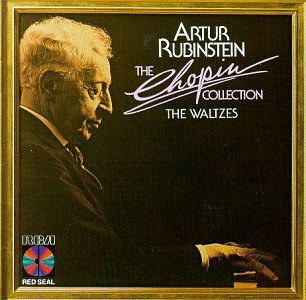
Artur Rubinstein - The Chopin Collection: The Waltzes
Douban
★ 9.7 18 ratings
Frederic Chopin / Artur Rubinstein genre: Classical
release date 1990-10-25 publisher: RCA
RCA公司出品的鲁宾斯坦演奏的肖邦全集11CD中的第9张,华尔兹。 阿图尔·鲁宾斯坦是本世纪最伟大的钢琴家,也是本世纪钢琴演奏艺术中最有代表性的人物。鲁宾斯坦于1887年出生在波兰的华沙。他是一个波兰犹太商人的儿子,很小时便崭露了出众的音乐天才。他三岁开始学钢琴,四岁就登台公开演奏,被誉为“神童”。十岁时,他在柏林师从着名钢琴家卡尔·巴尔托。1905年,赴美举行了七十五场演奏会,在演奏厅里获得听众狂热的喝彩,取得了极大的成功,从此他便一跃成为世界着名的钢旁演奏家。1946年,鲁宾斯坦加入了美国籍。1956年在美国着名的卡内基音乐厅举行了五场音乐会,总共演奏了十七首协奏曲;1960年又在四十天内举厅了十场独奏音乐会,充分显示了他那雄厚的实力和精湛的演奏技巧。 鲁宾斯坦是一个非常全面的钢琴家,他对不同时代、不同国家的作曲家的作品都有着深刻的研究,并能将它们同样演奏得精彩绝伦。他拥有高超的技巧和惊人的记忆力,弹奏的音色明亮而华丽,速度极快,音符在他的手指下如同流水一般地奔泻而出。他弹奏肖邦的作品时,更加使人感到亲切动人,其缠绵婉转的美妙琴声,能将听众带到那充满诗情的田园意境中去。 鲁宾斯坦具有极强的读者能力,而且能够迅速地将乐谱背下来。他能够在一个晚会上一口气弹奏三至四部协奏曲,他那充沛的精力和惊人的才华使人们大为震惊,不得不为他那特殊的天才所叹服。鲁宾斯坦于1982年逝世,终年九十五岁。