Classical
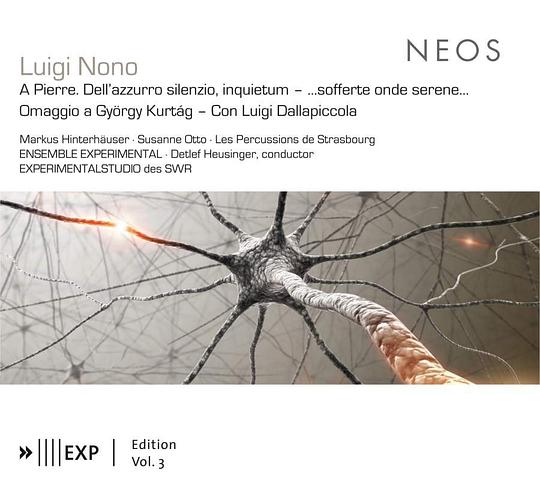
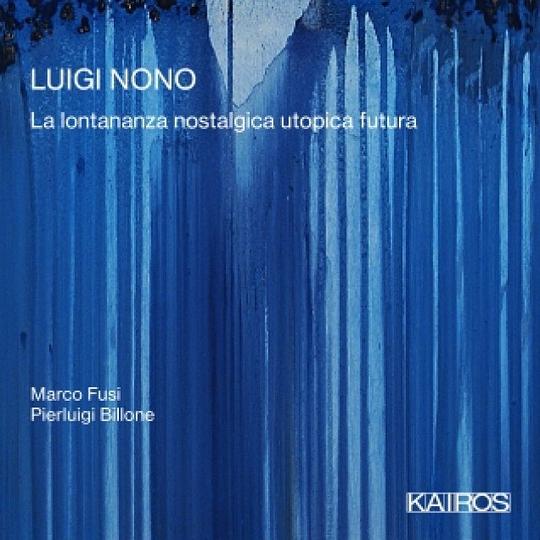
Luigi Nono: A Pierre. Dell’azzurro silenzio, inquietum; …sofferte onde serene…; Omaggio a György Kurtág; Con Luigi Dallapiccola
Douban
Les Percussions de Strasbourg / Experimentalstudio des SWR … genre: Classical
release date 2012-09-18 publisher: NEOS
DEDICATIONS Between 1981 and 1984 Luigi Nono created the first version of his central work of the 1980s, Prometeo. Tragedia dell’ascolto, and went on to produce its definitive version immediately after the premiere. He viewed all the works he composed after his legendary string quartet Fragmente – Stille, An Diotima (1979–80) as “paths leading to Prometeo”. But the piano piece …sofferte onde serene…, written for Maurizio Pollini (with a shadowy part for pre-recorded tape), and his commemorative percussion piece Con Luigi Dallapiccola already reveal initial signs of what would eventually lead, via the string quartet, to Das atmende Klarsein for chorus, solo flute and live electronics (1981). As Nono himself pointed out several times, only with this latter work did he attain what he had sought ever since Al gran sole carico d’amore, his “azione scenica” of 1975. Revealingly, it was in November 1980, half a year after the quartet’s premiere, that Nono began to work in what was then known as the EXPERIMENTALSTUDIO of the Heinrich Strobel Foundation in Freiburg im Breisgau, headed by Hans Peter Haller. In the first half of the 1980s his overriding goal was the “Tragedia dell’ascolto” Prometeo. Originally this Prometeo was meant to end with the complete Das atmende Klarsein. The works that followed Prometeo proceed, in the main, from the compositional experiences he gained from that piece. This fact is especially illuminating in the case of Omaggio a György Kurtág, which might be called Nono’s response to Omaggio a Luigi Nono (after poems by Anna Akhmatova and Rimma Dalos) that his friend Kurtág had composed for a capella chorus in 1979. The world premiere of Omaggio a György Kurtág in Florence was, by and large, an improvisation based on a number of agreements reached between the composer and his performers. But this “guided” improvisation in turn drew on the intensive experimental work that Nono had conducted with the players. It was not until three years later that he committed Omaggio a György Kurtág to paper in a written-out score. All the works that originated in and with the Freiburg EXPERIMENTALSTUDIO, beginning with Das atmende Klarsein, are rooted to a considerable extent in this long-term direct collaboration with particular musicians. In turn, each new work formed a fresh point of departure for its successor. In an initial “experimental” phase Nono was at first chiefly concerned with exploring the timbral potential of each instrument and voice, taking advantage of the studio’s equipment. The resultant written-out scores are based on these experimental and improvisational materials and their potential transformation through live electronics. No less significant were the ensuing rehearsals; Nono often postponed certain decisions in his written scores for this period of rehearsal. The joint elaboration of a piece with the musicians and the employees at the EXPERIMENTALSTUDIO fundamentally altered not only his method of composition en route to Prometeo and beyond, but also the relation between composer and performer. Several works, such as Risonanze erranti (1986), underwent various successive rewritings with each new performance before a definitive version finally emerged and was issued in print. Unusually for Nono’s overall musical output, …sofferte onde serene… initiated a long series of small-scale works for the musicians he worked with so intensively. Practically all these musicians, including Roberto Fabbriciani (flute), Ciro Scarponi (clarinet), Giancarlo Sciaffini (trombone and tuba) and Susanne Otto (contralto), also took part in his works for larger forces. Following the premiere of the string quartet, much ink was spilt about an alleged volte-face in Nono’s music after Al gran sole. But even those who were close to him at the time had little inkling of the reasons behind the noticeable changes in his style in the five years between Al gran sole and the string quartet – a period which managed to bring forth only …sofferte onde serene… and the work for Dallapiccola. Yet the commemoration of the dead unites these late works with Nono’s music from its very inception, as witness Tre epitaffi per Federico García Lorca, Canto sospeso and many other pieces. Nono even viewed his tribute to Pierre Boulez on his 60th birthday, A Pierre. Dell’azzuro silenzio, inquietum, as a backward glance at his first encounters with that composer. Nono himself responded to such questions in May 1981: “After Gran sole I felt the need to rethink my entire output, and my entire existence as a musician of the present day and an intellectual in society, in order to discover new possibilities of knowledge and creativity. Many concepts and ideas are stagnant; today it is essential to put the imagination as far as possible into the foreground”. Asked where he wanted to arrive, he replied, “Above all at Prometeo. But at present I have to clarify things for myself and form a better understanding of my own work. Up to now my works of music – in both the positive and negative sense – have been viewed far too schematically and ideologically, and my (musico-)linguistic, stylistic and structural concerns have been somewhat undervalued”. But this left unanswered the question of what drove Nono to these insights. The temptation to seek psychological answers remains great, but there is little likelihood that the answers are to be found in his biography, still less in his writings and letters: Luigi Nono’s biography is his music. In the course of the 1980s Nono’s alternating periods of euphoria and deep depression seemed to swing further and further apart. But antitheses of this sort were nothing new. “Hardly anyone wandered about more defencelessly with his contradictions”, wrote Helmut Lachenmann, and continued with great perspicacity: “Above and beyond that, the complexity and ambivalence of the man Luigi Nono – his vulnerability and anguish, his warm-heartedness and cruelty, his profound boisterousness and depression, his reckless affection for and often ice-cold detachment from his surroundings, his inflammatory nature in both the positive and negative sense – all this may be further discussed by those who believe themselves equal to human complexity per se, and this with the resources of language”. Yet Lachenmann was fully aware that Nono, in these years, had questioned himself with unparalleled radicality. After 1975 this vulnerable composer had torn down every protective barrier, even the ideological ones. He had become a seeker, wandering and questioning, and every work on our SACD bears witness to this. More than that, for the Nono of the 1980s, the absolute centre of his composing resided in listening. He discussed this topic in March 1983 in a lecture delivered in Geneva with the revealing title Error as Necessity: “Hearing music. That’s very difficult. I believe it’s a rare phenomenon today. We hear literary things; we hear what was written; we hear ourselves in a projection …”. Nono’s final works are prefaced with words by Antonio Machado, words that capture his personal view of composition and its objectives in the image of a wanderer: “Wanderer, your footsteps are / the road, and nothing more; / Wanderer, there’s no road, / the road is made by walking”. What was crucial to the composer of these works is also of supreme importance for the listener – indeed, for listeners of all challenging music, whether it be medieval monophony, Josquin, Beethoven or the music of our time: a seeking, meandering, exploratory form of listening that opens up new horizons and uncharted universes of sound. Jürg Stenzl Translation: J. Bradford Robinson
Listened
May 22, 2024
这版的sofferte onde serene和Con Luigi Dallapiccola尤其精彩,真挚,动人
Nono Classical
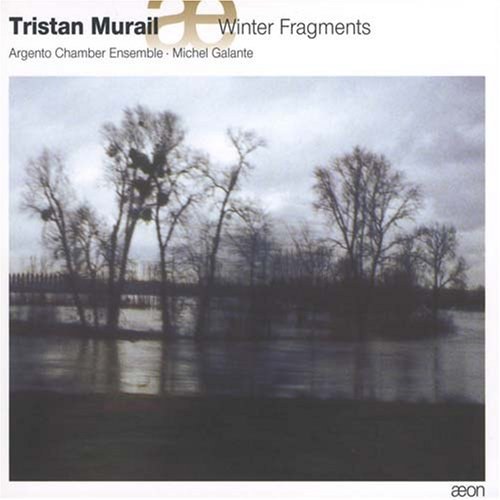
Tristan Murail: Winter Fragments
Douban
release date 2007-04-10 publisher: Aeon France
Listened
May 27, 2024
Ethers: “我相信他已经暗示了这幅作品的一个重要特征:一条线可以暂时掩盖另一条线,但随后会以新的和演变的形式展现出来。这就为我们指出了乐曲中的幽灵成分。”

Le Lac: “与‘湖’一样,这首曲子也是建立在几个不断变化的元素之上:对雨点打在湖面上的声音的分析、风格化的隆隆雷声、不知名鸟儿的叫声、春天青蛙的电子音质以及和弦旋律。这些元素被视为抽象的音乐对象,它们被修改、过滤、扭曲、和声或制作成和弦,堆叠在一起,它们被用于纯粹的声音和音乐价值-——即它们的心理影响。在我面前的这个自然模型中,保留下来的主要是永恒与无常、运动与情绪波动、意料之外的逻辑,以及蕴藏在混乱与复杂之中的秩序与简单。”
Murail Classical
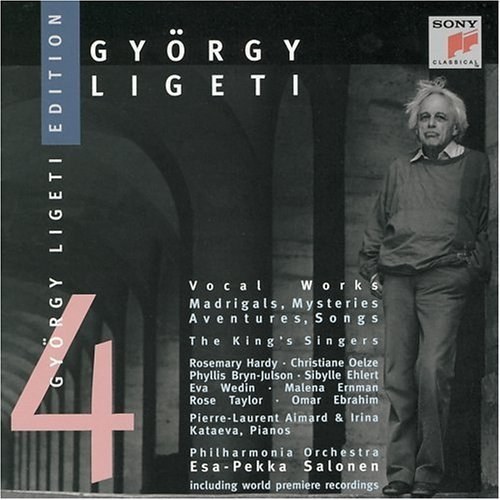
György Ligeti Edition 4: Vocal Works (Madrigals, Mysteries, Aventures, Songs)
Douban
The King's Singers / Rosemary Hardy … genre: Classical
release date 1996-10-20 publisher: Sony Classical
曲目: 1. Nonsense Madrigals: I Two Dreams And Little Bat 2. Nonsense Madrigals: II Cuckoo In The Pear-Tree 3. Nonsense Madrigals: III The Alphabet 4. Nonsense Madrigals: IV Flying Robert 5. Nonsense Madrigals: V The Lobster Quadrille 6. Nonsense Madrigals: VI A Long, Sad Tale 7. Le Grand Macabre: Mysteries Of The Macabre 8. Aventures 9. Nouvelles Aventures: Sostenuto 10. Nouvelles Aventures: Agitato molto 11. Der Sommer 12. Harom Weores-dal: I Tancol a Hold feher ingben 13. Harom Weores-dal: II Gyumolcs-furt 14. Harom Weores-dal: III Kalmar jott nagy madarakkal 15. Ot Arany-dal: I Csalfa sugar 16. Ot Arany-dal: II A legszebb virag 17. Ot Arany-dal: III A csendes dalokbol 18. Ot Arany-dal: IV A bujdoso 19. Ot Arany-dal: V Az ordog elvitte a financot 20. Negy lakodalmi tanc: I A menyasszony szep virag 21. Negy lakodalmi tanc: II A kapuban a szeker 22. Negy lakodalmi tanc: III Hopp ide tisztan 23. Negy lakodalmi tanc: IV Mikor kedves Laci batyam
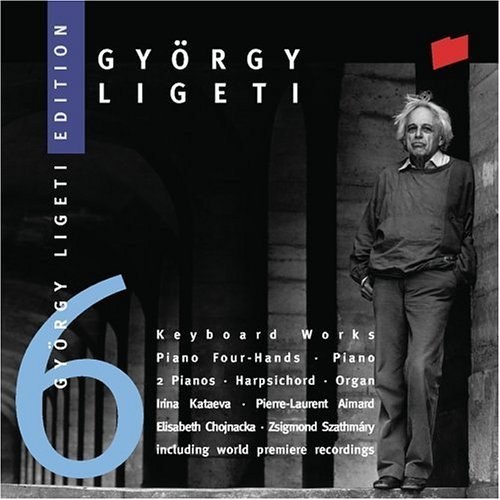
György Ligeti Edition 6: Keyboard Works (Piano Four-Hands, Piano, 2 Pianos, Harpsichord, Organ)
Douban
Irina Kataeva / Pierre-Laurent Aimard … genre: Classical
release date 1997-05-20 publisher: Sony Classical
曲目: 1. Induló (Allegro) (1942) 2. Polifón etüd (1943) 3. Három lakodalmi tánc (1950)/I. A kapuban a szekér 4. Három lakodalmi tánc (1950)/II. Hopp ide tisztán 5. Három lakodalmi tánc (1950)/III. Csángó forgós 6. Sonatina (1950)/I. Allegro 7. Sonatina (1950)/II. Andante 8. Sonatina (1950)/III. Vivace 9. Allegro (1943) 10. Capriccio No.1 (1947) 11. Invention (1948) 12. Capriccio Nr.2 (1947) 13. Three Pieces for Two Pianos (1976)/I. Monument 14. Three Pieces for Two Pianos (1976)/II. Selbstportrait mit Reich und Riley (und Chopin ist auch dabei) 15. Three Pieces for Two Pianos (1976)/III. In zart fließender Bewegung 16. Passacaglia ungherese (1978) 17. Hungarian Rock (1978) 18. Continuum (1968) 19. Ricercare - Omaggio a Frescobaldi (1951) 20. Two Studies for Organ/I. Harmonies (1967) 21. Two Studies for Organ/II. Coulée (1969) 22. Volumina (1961-2)
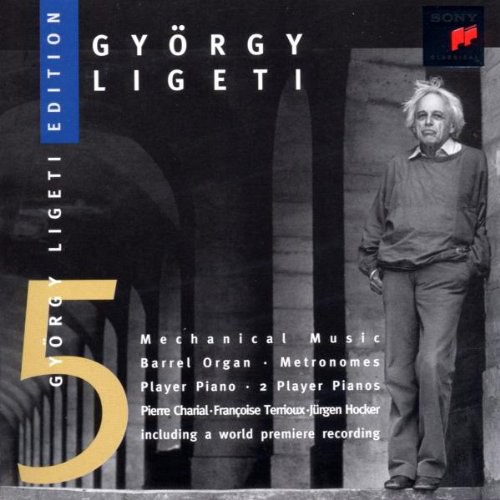
György Ligeti Edition 5: Mechanical Music (Barrel Organ, Metronomes, Player Piano, 2 Player Pianos)
Douban
Pierre Charial / Françoise Terrioux …
release date 1997-05-05 publisher: Sony Classical
曲目: 1. Continuum (Instrumental) 2. Hungarian Rock (Instrumental) 3. Capriccio No.1 (Instrumental) 4. Invention (Instrumental) 5. Capriccio No.2 (Instrumental) 6. Pohme Symphonique for 100 Metronomes (Instrumental) 7. Musica Ricercata/I. Sostenuto - Misurato - Prestissimo (Instrumental) 8. Musica Ricercata/II. Mesto, rigido e cerimoniale (Instrumental) 9. Musica Ricercata/III. Allegro con spirito (Instrumental) 10. Musica Ricercata/IV. Tempo de Valse (poco vivace - l'orgue de Barbarie) (Instrumental) 11. Musica Ricercata/V. Rubato. Lamentoso (Instrumental) 12. Musica Ricercata/VI. Allegro molto capriccioso (Instrumental) 13. Musica Ricercata/VII. Cantabile, molto legato (Instrumental) 14. Musica Ricercata/VIII. Vivace. Energico (Instrumental) 15. Musica Ricercata/IX. (Bila Bartsk in memoriam) Adagio. Mesto - Allegro maestoso (Instrumental) 16. Musica Ricercata/X. Vivace. Capriccioso (Instrumental) 17. Musica Ricercata/XI. (Omaggio a Girolamo Frescobaldi) Andante misurato e tranquillo (Instrumental) 18. Itudes pour piano, adapted for Player Piano/X. Der Zauberlehrling: Prestissimo, staccatissimo, leggierissimo (Instrumental) 19. Itudes pour piano, adapted for Player Piano/IX. Vertige: Prestissimo sempre molto legato, sehr gleichma_ig (Instrumental) 20. Itudes pour piano, adapted for Player Piano/XI. En suspens: Andante con moto, "avec l'iligance du swing" (Instrumental) 21. Itudes Pour Piano, Adapted For Player Piano/XIII. L'Escalier Du Diable: Presto Legato Ma Leggiero (Instrumental) 22. Itudes pour piano, adapted for Player Piano/XIVa. Coloana fara sfbrsit: Presto possibile, tempestoso con fuoco (Instrumental) 23. Itudes pour piano, adapted for Player Piano/VII. Galamb borong: Vivacissimo luminoso, legato possibile (Instrumental) 24. Continuum (Instrumental)
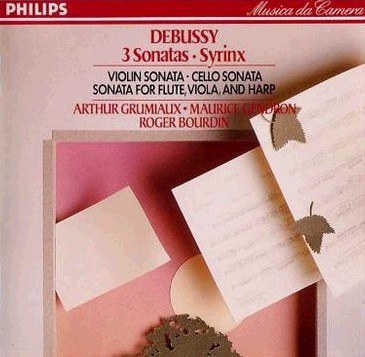
Debussy: 3 Sonatas, Syrinx
Douban
Claude Debussy / Arthur Grumiaux … genre: Classical
release date 1989-09-26 publisher: Philips
德彪西唯一的小提琴奏鸣曲作于1917年,属于其晚年作品,作品表现出更为抽象及精炼的印象主义风格,是法国小提琴作品中最有代表性的一首。不单如此,这也是德彪西最后的一部作品。当时德彪西由于多病不得不停止作曲多时,加之第一次世界大战爆发,德彪西本人的情绪也步入了最为低落的时期。可是在这个时期,德彪西却定下了写六首奏鸣曲的计划,而现在成为著名室内乐作品的《d小调大提琴奏鸣曲》,《长笛、中提琴和竖琴奏鸣曲》及这首《g小调小提琴与钢琴奏鸣曲》就是其中的三曲。遗憾的是,之后德彪西便离开了人世。德彪西也是法国音乐历史上创作风格独特的一位作曲家,尽管本人生前对被贴上印象派标签耿耿于怀,不过他作为印象派音乐家的形象还是根深蒂固的。虽为遗作,《g小调奏鸣曲》本身却有一种紧张的气氛,同时紧凑的结构也成为这个作品的另一个特征。第一乐章的主题旋律扣动人心的甜美和小提琴时不时奏出的哭泣的音色,让人印象深刻。第二乐章小提琴的诡秘风格和小提琴拨弦与钢琴的对应部分都表现了相当独特的手法。第三乐章小提琴和钢琴的高技巧性和音乐优美性都是法国小提琴作品中少有的。 大提琴奏鸣曲作于1915年,呈现给妻子恩玛,其中有令人惊叹的色彩性对比。共三个乐章:1.序奏,慢乐章,自由的奏鸣曲式。以第一主题的强奏开始,移至大提琴作宣叙调式的上行,然后大提琴奏出类似日本旋律的第二主题。发展部有急速的音型与第一主题组合开始,经过各种形态,由大提琴强奏第一主题发展,大提琴华彩导入高潮。接着第二主题再现,全曲为片断的组合。2.小夜曲,精神焕发的中板,幻想曲风格,据说为表现“对死亡的恐惧”。各种音型的对照出现和消失,增加了紧张感。速度变为很快的快板后,大提琴高音域以优美的近琴马奏发反复。再次出现拨奏形而连接到片断性的旋律,径直进入终曲。3.终曲,生气勃勃的,回旋曲风格,从钢琴快速六连音符上跃动的舞蹈般的主题开始,这个主题有东方气息,进入慢板部分后,大提琴奏宣叙调般的旋律,钢琴以优美的和声伴奏。但马上又进入由三连音形成的急速音群,达到高潮。 (摘自《音乐圣经》) 长笛独奏曲《绪任克斯》,为长笛家弗勒里而作,作于1913年。 (《音乐圣经》) 話說,希臘神話中有一則美麗的故事:人頭羊身的牧神潘(Pan)因為愛上了河神之女Syrinx,但Syrinx不喜歡他,為了逃避追求而求助於父親,河神就將她變成了河邊的蘆葦;當潘神追到了河邊,看不見意中人的身影,但飄逸的蘆葦卻勾起了他懷念的心情,遂割下蘆葦,編排成列,吹奏樂曲用以安慰他無限的思慕之情。 长笛、中提琴和竖琴奏鸣曲作于1915年,1917年4月21日首演。共4个乐章:1.牧歌,慢板,柔和的伸缩速度(rubato)。竖琴的琶音引导后,长笛奏哀怨的导入旋律,为全曲基础乐念。中提琴进入后,与长笛形成一对。然后竖琴奏平静的插句,长笛应答,在竖琴伴奏下,长笛再表现安静的第二主题。中段,长笛把中段主题片断预示后,竖琴呈示中段主题全貌。2.间奏曲,小步舞曲速度,3段体。小步舞曲主题由第一乐章开头的导入旋律构成,此主题经各种处理后,竖琴呈示有附点节奏的副主题,并被长笛与中提琴继承,最初旋律回顾后进入中段。中段由竖琴的和弦开始,然后是竖琴微妙变化的琶音,中提琴、长笛的幻想性表达。3.终曲,中庸的快板但决然地,在竖琴和弦上,第一个主题由长笛移至中提琴,后半部中提琴对中心乐念以发展。中段是在中提琴节奏化伴奏上奏出中段主题,不久又回到第一主题,进入等于第三段的再现。第一乐章的中心乐念表达的,进入急速的高潮。
Listened
May 3, 2024
有一股亲爱的梓棺先生在爱丽舍宫请我吃饭时旁边伴奏的bgm既视感😇
Classical Debussy
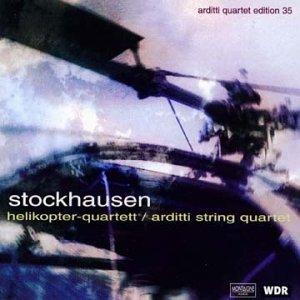
Stockhausen: Helikopter Streichquartett ("Helicopter" String Quartet)
Douban
★ 9.1 7 ratings
Karlheinz Stockhausen / Arditti String Quartet
release date 2000-01-11 publisher: Naive/Montaigne Auvidis
这部作品创作于九十年代初,其构思,按照作曲家本人的说法,源自一个梦 ---- 四位四重奏演奏者分别乘坐一架直升飞机,在天空中一边飞行一边演奏,人们通过地面上的大屏幕和扩音器,观看聆听这四件弦乐器以及这四架直升飞机共同演奏的音乐。 作曲家最初的构想,是将这部作品用于他的七日大型系列乐剧《光》之《星期三》的第三场,并作为独立的弦乐四重奏,在1994年的萨尔茨堡音乐节首演。然而由于萨尔茨堡市政当局(出于环保考虑)的强烈反对,这次演出未能实现。 直到1995年六月,这部旷世杰作才得以在阿姆斯特丹的荷兰音乐节成功上演。首演当日,最优秀的二十世纪室内乐演奏团体之一阿蒂提弦乐四重奏团,和“草蜢”直升飞机表演队的飞行员一起,合作演出了三场,并于1999年发行了唱片,全曲长约半个小时。 这部作品的完整名称是: HELICOPTER STRING QUARTET (1992/93) for string quartet, 4 helicopters with pilots and 4 sound technicians 4 television transmitters, 4 x 3 sound transmitters auditorium with 4 columns of televisions and 4 columns of loudspeakers sound projectionist with mixing console / moderator (ad lib.) 在每一架直升飞机上,各有三个麦克风,一个固定在乐器的琴马上,一个放置在演奏者嘴旁,第三个安装在机舱外、登机梯的下方。演奏者通过耳机中的节奏信号保持同步演奏,并不时以诵唱方式大声数数,三种声音信号被传送回地面,混音平衡后通过四套扬声器向音乐厅里的听众播放。 这部作品的迷人之处,在于弦乐四重奏的颤音与螺旋桨的噪音的完美交织,使得四架直升飞机本身听起来如同四部强大的乐器。 在施托克豪森的官方网站( )上,可以找到更详细的作品介绍( ),包括将近六分钟的mp3格式作品片段( )。 作曲家将这部作品献给“所有宇航员”。 附图: 《直升飞机弦乐四重奏》彩色乐谱首页和图谱首页 首演签名纪念照