Classical
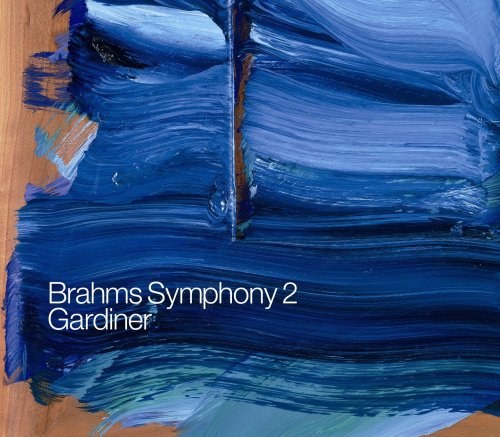
Brahms: Symphony No. 2
Douban
Sir John Eliot Gardiner / Orchestre Revolutionnaire et Romantique …
release date 2009-03-10 publisher: Soli Deo Gloria
The 2nd installment in John Eliot Gardiner's exciting new Brahms series. Brahms' most popular symphony coupled with the richly beautiful Alto Rhapsody (well-known in earlier performances by Janet Baker). Lavishly packaged hard-bound edition will appeal to Gardiner's immense loyal following.
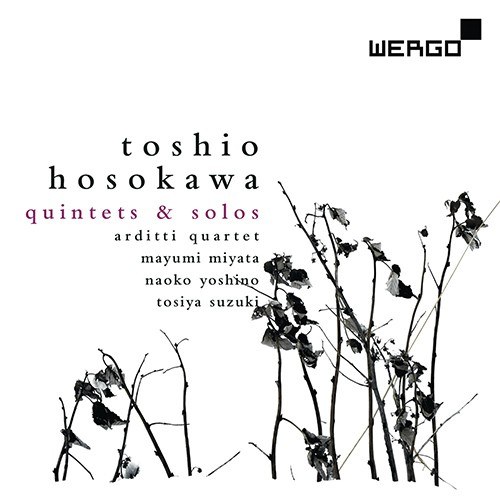
Toshio Hosokawa: Quintets & Solos
Douban
Mayumi Miyata / Naoko Yoshino … genre: Classical
release date 2014-06-20 publisher: Wergo
“Music is calligraphy using sounds painted on the canvas of silence.” Toshio Hosokawa’s idea demonstrates his engagement with Far Eastern calligraphy as the most prominent connection between his compositional esthetic and traditional Japanese arts as well as the principles of Asian philosophy. There is not a single note in the music of this Japanese composer that is not continuously modified like a brushstroke – every sound seems to be the result of inexorable change embedded in cyclic processes of birth and decay. Whereas constant oscillation is typical of “Landscape II”, “Landscape V” is one of Hosokawa’s most peaceful and static pieces. It was influenced by Mark Rothko’s monochromatic color field paintings, where a relationship is created between two nearly identical colors. Here the string quartet and the Japanese mouth organ sho seem to merge to become an oscillating instrument. Hosokawa composed “Elegy” as a memorial to Miyako Umehara, the wife of his friend, the philosopher Takeshi Umehara. The piece was first performed at the funeral ceremony by Himari Umehara, the daughter of the deceased. With its mixture of horizontally flowing microtonal motion and strikingly consonant vertical constructions (almost traditionally European), “Small Chant” appears like a synthesis of European and Asian conceptions of sound. Hosokawa has in his music repeatedly made reference to specific historical events and their existential repercussions. “Threnody” is dedicated to the victims of the Tohoku earthquake and the ensuing devastating tsunami on 11 March 2011, which claimed more than 20,000 lives. co-production with Sudwestrundfunk
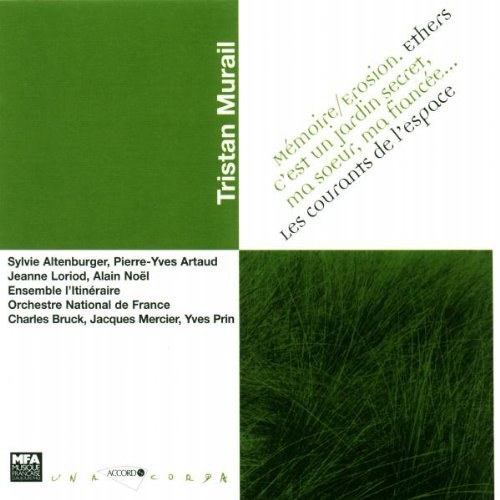
Tristan Murail: Mémoire/Erosion; Ethers; C'est un jardin secret, ma soeur, ma fiancée...; Les courants de l'espace
Douban
Sylvie Altenburger / Pierre-Yves Artaud … genre: Classical
release date 2000-08-22 publisher: Accord
1 Mémoire / Erosion (1976), Pour Cor Et Ensemble Instrumental 17:39 Conductor - Charles Bruck Ensemble - Ensemble L'Itinéraire Horn - Alain Noël Recorded By - Jean-Pierre Pelissier 2 Ethers (1978), Pour Flûte Et Cinq Instruments 20:38 Cello - David Simpson Conductor - Jacques Mercier Contrabass - Joëlle Léandre Flute - Pierre-Yves Artaud Recorded By - Claude Pavy Trombone - Christian Marchand Viola - Geneviève Renon Violin - Ami Flamer 3 C'est Un Jardin Secret, Ma Soeur, Ma Fiancée, Une Fontaine Close, Une Source Scellée (1976), Pour Alto Seul 5:00 Recorded By - Alain Brasseur Viola - Sylvie Altenburger 4 Les Courants De L'espace (1979), Pour Ondes Martenot Et Orchestre 19:21 Conductor - Yves Prin Ondes Martenot - Jeanne Loriod Orchestra - Orchestre National De France
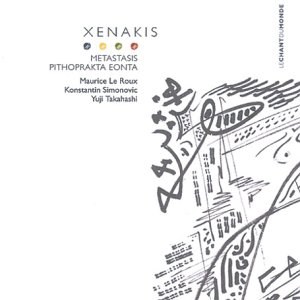
泽纳基斯《停顿之后》《皮托普拉克塔》《生物》
Douban
Iannis Xenakis / Maurice Le Roux …
release date 1993-11-23 publisher: Le Chant Du Monde Fr
Eonta, for 2 trumpets, 3 trombones & piano Composed by Iannis Xenakis with M. Chapellier, Ensemble Instrumental de Musique Contemporaine de Paris, Yuji Takahashi, Pierre Thibaud, J. Toulon, G. Moisan, L. Longo Metastasis, for 60 musicians (Anastenaria, Part 3) Composed by Iannis Xenakis Performed by Orchestre National de l' O.R.T.F. Conducted by Maurice Le Roux Pithoprakta, for 49 musicians Composed by Iannis Xenakis Performed by Orchestre National de l' O.R.T.F. Conducted by Maurice Le Roux
Xenakis: Nomos Alpha, ST/4, Morsima-Amorsima, Herma & Atrées
Douban
Konstantin Simonovitch genre: Classical
release date 2022-10-20 publisher: Erato
This album is our second collection of Iannis Xenakis’ music recorded under the aegis of Konstantin Simonovitch. It includes Atrées and Morsima-Amorsima (“what comes by fate-what doesn’t”), two works composed using probability theory, as well as notable chamber and solo pieces such as ST/4 for string quartet. Featuring the young Georges Pludermacher in one of his earliest recordings!