Classical
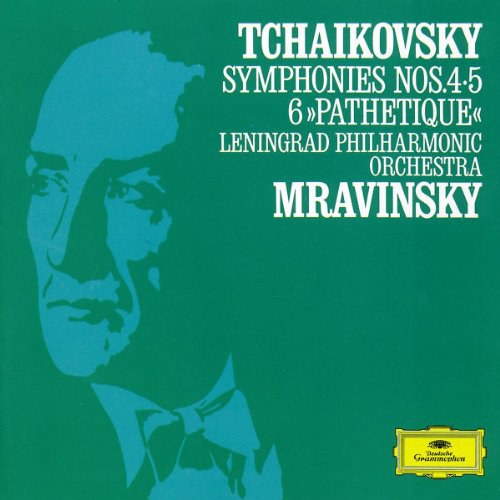
Tchaikovsky: Symphonies Nos. 4, 5, 6 "Pathetique" Douban
★ 9.7 (39 ratings) Pyotr Il'yich Tchaikovsky / Yevgeny Mravinsky … genre: Classical
release date 1990-10-25 publisher: Deutsche Grammophon
历史上只有五张唱片曾经同时登上日本究极100、日本名曲300、企鹅三星戴花与留声机百大这四份权威榜单,这张就是其中之一。
柴科夫斯基,F小调第四交响曲
创作于1877年,是柴科夫斯基获得国际声誉的第一部交响曲。当时,草率的结婚和快速的夫妻分居使作者受到了极大的打击,乐曲正是表现了他痛苦的心情和对幸福的渴望。本曲为柴科夫斯基交响曲当中最富变化、最热情的乐曲,具有明显清楚的叙述内容,采用纯音乐的形式,却有标题音乐的实质,此处所表现的是苦恼彷徨的众生相,以及威逼、协迫人类的命运魔掌,使听者产生一种凄怆之感。 曲中,作者还指出了: 只有投入人民之中,才能战胜命运、获得力量。当时,作者得到了梅克夫人的捐助,才得以脱离繁重的教学工作而专心投入到创作中去,该曲即是题献给梅克夫人。题辞是——“赠给我最好的朋友”另外,柴科夫斯基独特的旋律美感、精妙的结构、精巧的管弦乐技巧,也是本曲永久受欢迎的主要原因。
第一乐章,奏鸣曲式。序奏为持续的行板,c小调,3/4拍子。全曲的核心出现在第一乐章序奏中,这就是贯穿于整部交响曲的威严的“命运的主题”。乐章的第一主题由弦乐奏出,充满了苦恼的情绪,接着又由木管反复。这一乐章通过表现沉重忧郁的心情和转瞬即逝的幸福梦幻不停交替,揭示出渴望幸福的个人和严峻的命运压力之间的冲突。
第二乐章,如歌的行板,降b小调,2/4拍,三段体。双簧管呈现孤寂的主旋律,紧接着是感觉兴奋的副属旋律, 在主旋律以更加凄寂的形态反复而告一段落后,中段如农民舞蹈般优美。整个乐章富于诗意的音调表现了主人公暂时忘记了现实的痛苦,沉浸于对往事的回忆。
第三乐章,诙谐曲, 快板,F大调,2/4拍子。第一部分由弦乐器单独演奏,全体弦乐器持续拨奏。主旋律显得急促匆忙,但却给人以梦幻茫漠的感觉。 此部分进行至一段落, 即由木管乐器单独奏出俄罗斯舞曲般的旋律。这个乐章没有明确的感情,只是一些虚无飘渺、错综复杂的音型。
第四乐章,终曲,热情如火的快板,F大调,4/4拍子。形式为类似回旋曲的自由形式。 强烈的第一主题以全合奏形式奏出。紧接着的第二主题是根据俄罗斯民谣《野地里的桦木》所写成的朴素、优美的旋律,表现出人民的强大力量。最后,音乐在描绘节日欢乐景象的气氛中结束全曲。
柴科夫斯基e小调第五交响曲
e小调第五交响曲是俄国代表性作曲家柴可夫斯基(1840-1893)留下来的六首交响曲中的一首,它之后就是广为人知的第六交响曲《悲怆》。这首曲子于1888年在彼得堡初演。作曲家独有的忧郁和甜美的曲风交错穿插,使得整部交响曲内容丰富多彩,第二乐章里圆号独奏部分充满了温暖的憧憬,这段旋律很出名。而作者自身对于宏大的“命运主题”的呼喊则在序曲部分以单簧管演绎出来,在之后也不断回旋体现。
第一乐章 行板,转朝气蓬勃的快板 奏鸣曲形式。行板,e小调,4/4拍子的序奏开头,单簧管呈现凝重,阴沉的旋律即为本交响曲的中心旋律,它在四个乐章中都会露面。一般都这一中心旋律视为“命运”,但它只是微弱,暗淡地暗示着某种不可预期的凶兆。进入主部以后,转成生气蓬勃的快板,富有节奏的旋律,据说是取材自波兰的民谣
第二乐章 略带有自由感的如歌行板,D小调 12/8拍子 三段体。乐章的主旋律甜美而兼有肃穆,伤感,充满期盼与憧憬。双簧管演奏的副旋律中注入了温柔而具有抚慰力量的女性光辉。
第三乐章 中庸的快板 A大调 3/4拍子,三段体。摒弃了传统的谐谑而使用圆舞曲乃是柴可夫斯基的新尝试,以艳丽的旋律为中心的梦幻式圆舞曲,给听众 一种飘渺的感觉
第四乐章 终曲,庄严的行板转活泼的快板,回旋奏鸣曲形式。序奏为E大调,4/4拍子,实际是全曲“中心旋律”的大调形式,开始是弦乐合奏,接着在弦乐器以三连音装饰下,管乐合奏庄严地呈现。此乐章庄严,雄壮,仿佛在高唱“战胜悲哀”的凯歌一般,又以人类的力量最终战胜了命运而告终。
〖音乐,升起或沉落〗——转帖,作者不详
——柴科夫斯基的《第六悲怆交响曲》
像就长寿的托尔斯泰对自己的健康非常感谢一样,柴科夫斯基的天分是感谢他的忧郁病(Hypochondria),感谢这件随他终生的恶魔般的厄运。它把他抛入生命充满了一切苦难和甜蜜的两个极端,在他被单纯的瞬息的感情所支配,生活就要变得好受时,忧郁和始终存在的恐怖把美好的画面一点点蹂躏。柴科夫斯基的幸福是忧郁症,是精神濒临崩溃的折磨,他的痛苦是冯•梅克夫人的信,是一次次从莫斯科倾斜着落向彼得堡的大雪。在他的《第四交响曲》中,在《D大调小提琴协奏曲》和《罗密欧与朱丽叶幻想序曲》中,甚至是那几部欢乐的芭蕾舞剧《天鹅湖》或《睡美人》,我们经常在美丽的场景音乐中听到如利器般划破湖面的紧张不安的音符,而后浪漫的耳朵在尖利、金属性的声音中恐惧和颤栗着,那个半夜来到哈姆雷特跟前的魑魅又出现:“To be, or not to be?”当然,柴科夫斯基绝无贝多芬理性,他更无法想到超越,在他的作品里,我们倾听到最多的是他的真诚和赤裸裸的痛苦,这种痛苦也是19世纪末俄罗斯人深刻的绝望。这一点,我们在文学上找到类似的人倒不是曾被《如歌的行板》感动过的托尔斯泰,而是描写在受苦边境生活过的俄罗斯同胞陀思妥耶夫斯基。
1891年夏天,柴科夫斯基从美国回来后,一直蛰伏在一个叫迈伊丹诺伏的小镇写作。每天他望着被落叶盖满的黑色大道,期待仆人愉快的门铃带来梅克夫人的书信。一部歌剧和一部舞剧。这部舞剧叫《胡桃夹子》。冬天,他的《黑桃皇后》在布拉格和基辅上演,他在莫斯科和汉堡之间穿梭指挥。接着他被选为法兰西学院的院士,剑桥大学又将音乐博士的头衔赠予他。柴科夫斯基似乎在晚年得到了世人梦寐以求的名和利,只是他不像以前那个终日抑郁的柴科夫斯基了。连他的弟弟莫德斯特也不相信:“我的哥哥似乎已经不属于他自己了;一种无可抗拒的力量似乎已经占有了他,驱使他的那种神秘的力量,是一种深沉,不可解释的焦虑,那是一个绝望的心情,我不能把这种解释为一种死亡的预告。”实际上这时候的柴科夫斯基已是站在天堂门口等候领取上帝的牌子了。他只差一样来总结和申诉一生,很快地,在1893年2 月,他写道:“我一生中从没有这样满足过,从没有这样骄傲过,这样快活过,因为我确确实实写出了一件好东西。”柴科夫斯基在这部有四个标题乐章的交响曲中展开他一生的命运:热情、爱情、失望、死亡。
第一乐章柔板,缓慢的引子中,独奏大管阴沉地吹出后来成为第一乐章主题的音型,这一章是柴科夫斯基生活常态的写照,他是一个生活在内心的作曲家,不善与人交往。从他与梅克夫人的恋情来看,他宁愿与她在信纸上见面,——他们之间的书信可谓是音乐史、文学史上的杰作,——也从没有(不愿?)单独约会过。速度加快时第一乐章主题被肢解,并从一乐器转到另一乐器,越来越焦躁不安。激动渐渐消退后,第二乐章进入。优美的快板,这一乐章是痛苦时的甜蜜回忆:和法国歌手热烈的爱情,在梅克夫人的弗罗洛夫庄园享受美好时光,在欧洲轻快潇洒的旅行——这一切像满山遍野的阳光一样在第二乐章里铺开。我们感受到了人类最美好的东西——爱情。第三乐章急板,开头似乎是一堆印象,远远有进行曲作为暗示,它越走越近,越来越响,冷对一切。它的力量背后潜伏着恐惧。这个乐章是对黑暗丑恶和恐惧的表达,是前几部交响曲所没有的。1890年,资助了柴科夫斯基十三年之久的梅克夫人断绝了他们之间的关系,梅克夫人是他心中的上帝,她突如其来的绝交从灵魂上陷柴科夫斯基于死地。接着,在第四乐章悲哀的柔板里,弦乐开始像是悲怆地哀叹结局的黑暗、空洞,其中美妙的第二乐章隐隐若现。似乎是含情脉脉的告别,再会了,家乡的树木;再会了,母亲的呼唤;再会了,亲爱的兄弟;再会了,圣母般的梅克夫人!最后的高潮不是像传统交响音乐的向前冲,而是无能为力地向命运低头,金属的管弦乐器像一朵蔫了的花。这个乐章几乎是安魂曲,其中看不到永恒的安息,除了坟墓,什么也没有。如果你想在《悲怆》里听到什么勇气、超越之类的东西,你可找错了对象,他能给你的就是这么多了。悲怆而不是悲壮。当一个人能面视自己的体伤和血泪时,我们为什么还要他悲剧地思索?这一点我反而更相信柴氏的单纯和真诚。
柴科夫斯基不如马勒深刻?最近,渐渐听到对他的非难之言,有人甚至抓住他的同性恋丑事,说他是位滥情作曲家。但这已足够了。对于这位生前忍受苦难折磨的俄罗斯音乐大师,我们无法要求太多,我们甚或像晚柴氏四十年的俄罗斯阿克梅派女诗人阿赫玛托娃长诗《安魂曲》中的《致死神》,借以作一曲致柴科夫斯基的灵魂哀歌:
你终归要来,何必不是现在?
我虽然很难,但我在等待,
我熄了灯,打开门,请你来,
你既神秘,又平常,
来吧,因你乐意出现的面目,
…… ……
北极星当空照耀,叶尼塞河翻滚波涛。
那一双我所钟爱的蓝眼睛,
光焰把最后的恐惧遮盖住了。
〖唱片介绍〗
这套双CD唱片收录俄罗斯指挥大师穆拉文斯基指挥列宁格勒爱乐乐团演奏的柴柴科夫斯基第4、5、6交响曲。这个版本本公认是正宗原汁原味的俄罗斯演绎,令无数人趋之若骛。
穆拉文斯基是本世纪苏联指挥界的元老,在苏联乃至世界上都享有极高的声誉,穆拉文斯基的指挥风格细致而严谨,他具有随心所欲地操纵乐队的能力,无论是指挥古典主义作品还是浪漫主义作品,他都能准确地把握住作品的风格,并且恰到好处地加进自己的精辟而独到的见解,穆拉文斯基最擅长指挥俄国作曲家的作品,他对柴科无斯基、肖斯塔科维奇等俄罗斯作曲作品的处理是最具权威性的,1960年,穆拉文斯基率领列宁格勒爱乐造访英国,趁隙录下了柴可夫斯基最后三首交响曲。虽然同样的曲目,穆拉文斯基在前苏联也曾数次留下录音,但却都略嫌寒冷坚硬,未能达到这个伦敦录音的成就,这是柴可夫斯基交响曲的一种典范,相信再过百年也不会改变。
历史上只有五张唱片曾经同时登上日本究极100、日本名曲300、企鹅三星戴花与留声机百大这四份权威榜单,这张就是其中之一。同时这套唱片还曾获得1988年爱迪生唱片大奖、1990年Penguin Rosette Award。
这张专辑听得最多的是柴5,很少听悲怆,因为害怕自己陷入这痛苦的音乐中不能自拔。了解老柴人都知道他过的是多么可怕的艰难生活,没有什么东西比他在第六交响曲中表现这种挫折更为激动和准确了。当我听到第四乐章时(也就是本帖默认播放的)它简直把我打倒了。这时我感受到的东西,就是生活二字。任何人如果恋爱过和失恋过,他立即就会明白这儿表达的感情。谱纸上端写着“柔板的哀歌”,主题是在小调上,音乐的爆发就是一个受伤灵魂在呼叫…………柴可夫斯基音乐中的主角在这个乐章中放弃了一切生的希望,吟唱着葬礼的咒语,在充满悲哀的旋律中一切都结束了,包括生命。
这首悲怆是老柴生命最后几个月中痛苦经历的真实写照。悲怆公演后的一个星期,他就与世长辞了。
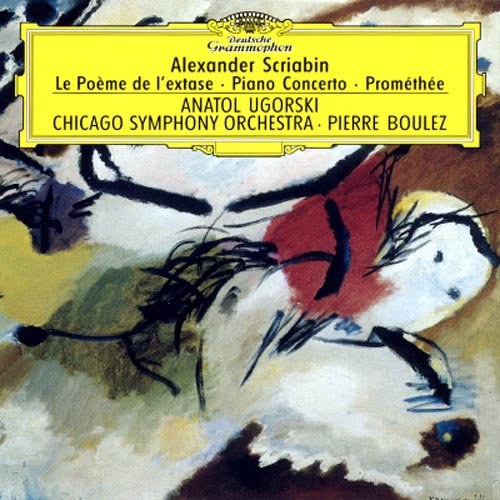
Alexander Scriabin: Le Poème de l'extase; Piano Concerto; Prométhée Douban Spotify
★ 9.8 (13 ratings) Anatol Ugorski / Pierre Boulez … genre: Classical
release date 1999-07-20 publisher: Deutsche Grammophon
If you want to hear music suited to the millennial frenzy, a prime place to start is with Russian maverick composer Alexander Scriabin. In the final years of his unfortunately brief life, he dreamed up transcendent musical projects that make Wagner seem like parlor entertainment. Among the relatively few orchestral works Scriabin did complete are some stunners that blaze a uniquely visionary, idiosyncratic path beyond the impasse of ripe fin-de-siècle romanticism. The three starkly contrasting pieces gathered here offer a splendid entrée into his music. Henry Miller once described the Poem of Ecstasy as "a bath of cocaine, ice, and rainbows." Boulez conjures oceanic heavings and flickering, perfumed washes of color from his players, leading to a mighty orgasm of sound. The composer was also a dynamic virtuoso pianist (a classmate of Rachmaninoff's), and his early concerto shows its debt to Chopin while pursuing an original and tightly integrated blend of soloist and orchestra. Pianist Anatol Ugorski's unflapping conviction reveals the piece for the gem it is--the slow movement's melody is particularly indelible--leaving you wondering why this concerto is programmed so rarely. The piano also adds an important color in Scriabin's 1910 symphonic poem Prometheus, where he ventures even beyond the Poem of Ecstasy into progressive musical territory. From this amalgam of occult mysticism and pioneering harmony, Boulez fashions a majestically textured, multidimensional account that sounds opulent but unclotted. If this whets your appetite for a truly unique composer, try the Scriabin twofer on Chandos that includes his bizarrely brilliant Divine Poem Symphony. --Thomas May
斯特拉文斯基《彼得鲁什卡》选曲,普罗柯菲耶夫《第七钢琴奏鸣曲》,韦伯恩《钢琴变奏曲》,布列兹《第二钢琴奏鸣曲》 / 波里尼演奏 Douban
★ 10.0 (8 ratings) Maurizio Pollini genre: Classical
release date 1996-02-13 publisher: Deutsche Grammophon
Amazon.com essential recording
Pollini is so much a part of the contemporary music scene that it's amazing to realize that the earliest material on this disc (Stravinsky and Prokofiev) dates to the 1940s. These two performances retain their power to startle and amaze, both through Pollini's seemingly effortless virtuosity and through the immediacy of his musical conceptions. This Prokofiev is a close rival even to Richter's. Webern, from six years later, is so colorful and well organized that it makes the difficult music almost easy to listen to. Not many listeners will put up with Boulez's obscurities, but there is still plenty to make the disc worthwhile. --Leslie Gerber
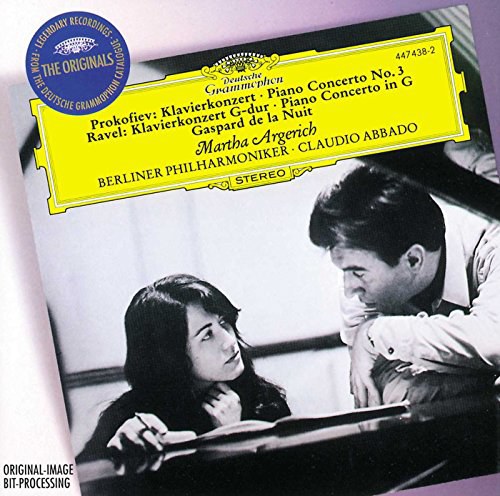
普罗柯菲耶夫《第三钢琴协奏曲》 / 拉威尔《钢琴协奏曲》《夜之幽灵》 Douban Spotify
★ 9.5 (17 ratings) Martha Argerich / Claudio Abbado … genre: Classical
release date 1996-05-14 publisher: Deutsche Grammophon
详细内容: SERGE PROKOFIEV(1891-1953)Konzert für Klavier und Orchester Nr.3 C-dur op.261 1.Andante-Allegro2 2.Thema.Andantino-Variation I.L'istesso tempo-Var Ⅱ.Allegro-Var.Ⅲ.Allegro moderato-Var.Ⅳ.Andantino meditativo-Var.Ⅴ.Allegro giusto-Thema.L'istesso tempo3 3.Allegro ma non troppoMAURICE RAVEL(1875-1937)Konzert für Klavier und Orchester G-dur4 1.Allegramente5 2.Adagio assai6 3.PrestoGaspard de la nuit7 1.Ondine.Lent8 2.Le Gibet.Très lent9 3.Scarbo.Modéré广告语: 普罗柯菲耶夫:《第三钢琴协奏曲》,拉威尔:《G大调钢琴协奏曲》,《夜之幽灵》/著名女钢琴家阿格里奇演奏,阿巴多指挥柏林爱乐乐团介质: cd
June 16, 2017 listened
阿姐弹得真够快的,其实我觉得挺带感的。另外,当时第一次听,我居然觉得Prokofiev的旋律要比Ravel好(Ravel第一乐章无敌像新春报喜😂)
Prokofiev Ravel Classical Argerich Abbado
普罗科菲耶夫第二钢琴协奏曲 拉威尔G大调钢琴协奏曲 Douban
★ 8.4 (5 ratings) 李云迪 / 小泽征尔 … genre: Classical
release date 2007-12-21 publisher: 环球唱片
</OBJECT
介质为CD!
首位与柏林爱乐乐团合作录制唱片的中国钢琴家,顶尖阵容,爆棚演录。
肖邦钢琴大赛冠军李云迪携手指挥大师小泽征尔和世界顶尖的柏林爱乐乐团,挑战普罗科菲耶夫和拉威尔的钢琴协奏曲。李云迪电光火石的超技和小泽棒下的柏林爱乐无坚不摧的爆发力让人重新认识了这两部20世纪的钢琴杰作,这是李云迪琴艺跨入更高境界的绝佳见证,钢琴艺术的爱好者不可错过的精彩唱片。
他的手指无所不能,诗意和技巧通常难以兼备,但他两者都有。这是我的第一印象,这就是我为什么对李云迪的演奏着迷并希望同他合作。
星路历程:李云迪生于重庆,自幼酷爱音乐,并流露对音乐敏感的天性。四岁开始在重庆市少年宫随谭建明学习手风琴,一年后即在重庆少儿手风琴比赛中获幼儿组第一名。七岁转学钢琴,启蒙于吴勇,九岁起师从但昭义教授,开始接受严格的专业训练,琴艺突飞猛进。94年以第一名的成绩考入四川音乐学院附中,开始从事钢琴专业的正规学习,并陆续在国内外一系列钢琴比赛中崭露头角。
自赢得95年在美国史达拉汶斯基青少年国际钢琴比赛第三名后,云迪获深圳艺术学校的赏识,并邀请加入就读。2000年10月,李云迪受国家文化部选派,参加在波兰华沙举行的第十四届萧邦国际钢琴比赛,赢得金奖,且创下了几项纪录。首先,他是这个奖项举办七十多年来最年轻的冠军得主。其次,这项赛事于过去十年连续两届第一名出缺,他是首位再夺此桂冠的乐手。此外,他是第一位获得此殊荣的中国人。肖邦比赛的特约评判认为:"在掌握肖邦演奏风格上,他是最完美也最富有诗意的钢琴家";"他的演奏体现最优的声音和最完美的技术";也有评论说:"他几乎完美地掌握各种音乐因素的平衡","是称职的继承人"。
2001年4月3日,李云迪正式签约环球唱片旗下德国唱片品牌-Deulsche Grammophcn,奠定了云迪在当今国际乐坛重要地位,而云迪首张钢琴专辑亦于同年12月5日香港面世,名为“肖邦钢琴精选集”。同时,李云迪赴德国汉诺威深造钢琴演奏,跟随Arie Vardi老师学习音乐。
YUNDI LI piano 李云迪钢琴
Berliner Philharmoniker 柏林爱乐乐团
Seiji ozawa 小泽征尔
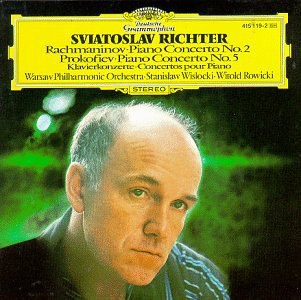
Rachmaninov: Piano Concerto No. 2 / Prokofiev: Piano Concerto No. 5 Douban
Stanislaw Wislocki / Witold Rowicki … genre: Classical
release date 1985-02-01 publisher: Deutsche Grammophon
《拉赫玛尼诺夫:第二钢琴协奏曲》普罗科菲耶夫:《G大调第五钢琴协奏曲》/著名钢琴家里赫特演奏,斯坦尼斯拉夫·维斯洛奇,维托德·洛维奇指挥波兰华沙爱乐乐团。

Sergei Rachmaninov(1873-1943)
Concerto For Piano And Orchestra No.2 In C Minor,Op.18
01 Moderato 11:07
02 Adagio Sostenuto 11:52
03 Allegro Scherzando 11:35
Serge Prokofiev(1891-1953)
Concerto For Piano And Orchestra No.5 In G Major,Op.55
04 Allegro Con Brio 5:00
05 Moderato Ben Accentuato 3:59
06 Toccata-Allegro Con Fuoco 1:52
(Più Presto Che La Prima Volta)
07 Larghetto 6:39
08 Vivo 5:07
拉赫玛尼诺夫:第1-4号钢琴协奏曲 Douban Spotify
★ 9.3 (17 ratings) Vladimir Ashkenazy / André Previn … genre: Classical
release date 1996-02-13 publisher: Decca
A clear favorite, April 23, 2003
Reviewer: "grok_" (San Diego, CA United States) - See all my reviews
I love Rachmaninoff, especially these piano concertos, and Ashkenazy and Previn provide us with masterful performances. You really need to compare other performances of these concertos to know just how good these are. The beauty of these performances is that everything comes together with such refinement. Previn exhibits a great understanding of these pieces and the LSO responds well (as usual). Ashkenazy is precise and yet expressive at the same time. He articulates each note so clearly. But more than this, Previn and Ashkenazy are magically attuned to each other. The music flows with a perfect balance between piano and orchestra.
These analog recordings from Decca are excellently engineered. The dynamic range is exceptional with a wide soundstage. As with other London/Decca and DG recordings, the midrange brass has a slight edge to it. Also, Ashkenazy is close miked, so his piano extends across 60% of the soundstage, which is not exactly realistic. However, these are minor quibbles that do not detract from a masterful performance and an otherwise expansive, crisp recording.
There is no reason to restrict oneself to a single performance of these marvelous concertos. But, if ever I had to restore my collection, I would purchase this set first.
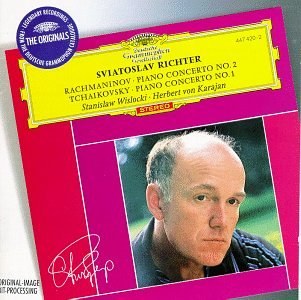
里赫特:拉赫玛尼诺夫第二钢琴协奏曲/柴可夫斯基第一钢琴协奏曲 Douban Spotify
★ 9.5 (71 ratings) Sergey Rachmaninov / Pyotr Il'yich Tchaikovsky … genre: Classical
release date 1996-02-13 publisher: Deutsche Grammophon
柴科夫斯基一共有三首钢琴协奏曲,当然就是属第一号最有名了。在这首钢琴中,作者深深情地、热情洋溢地表达了对生活的热爱与对光明的渴望,钢琴与乐队的协奏成功地实现习了真挚的感情抒发与强烈的、激动人心的交响化效果的高度和谐与协调,从而使产生极其巨大的音乐感染力。

1963年由卡拉杨指挥维也维交响乐团、闻名世界、脾气怪异的前苏联钢琴大师演奏钢琴的"大禾花"版被众多乐评称为无出其右。李希特+卡拉扬+维也纳爱乐,这样的组合,精彩绝对可期。

而拉赫玛尼诺夫的第二钢琴协奏曲,可以算是20世纪音乐家创作的钢琴协奏曲中最受欢迎的。这一乐曲被公认为拉赫玛尼诺夫的“最高杰作”,广受世人的喜爱和欢迎。在所有俄罗斯作曲家所作的钢琴协奏曲中,本曲为首屈一指的名作。

里赫特的这一版本充满梦幻色彩,可以说是最接近拉氏原意的演绎,当然成为“拉二”的首选版本!
Beethoven: Piano Sonatas Nos. 8, 14, 21 & 23 / Wilhem Kempff Douban
★ 9.7 (20 ratings) Ludwig van Beethoven / Wilhelm Kempff genre: Classical
release date 1996-01-23 publisher: Deutsche Grammophon
《贝多芬钢琴奏鸣曲精选》收录No.8“悲怆”、NO.14“光月”、No.21“华尔斯坦”、No.23“热情”/肯普夫演奏,大师版。

01 Sonate No. 8 C-moll Op. 13 'Pathetique': Grave - Allegro di molto e con brio
02 Sonate No. 8 C-moll Op. 13 'Pathetique': Adagio cantabile
03 Sonate No. 8 C-moll Op. 13 'Pathetique': Rondo. Allegro
04 Sonate No. 14 cis-moll Op. 27 No. 2 'Mondschein-Sonate': Adlagio sostenuto - attacca:
05 Sonate No. 14 cis-moll Op. 27 No. 2 'Mondschein-Sonate': Allegretto - acttacca:
06 Sonate No. 14 cis-moll Op. 27 No. 2 'Mondschein-Sonate': Presto agitato
07 Sonate No. 21 C-dur Op. 53 'Waldstein-Sonate': Allegro con brio
08 Sonate No. 21 C-dur Op. 53 'Waldstein-Sonate': Introduzione. Adagio molto - attacca:
09 Sonate No. 21 C-dur Op. 53 'Waldstein-Sonate': Rondo. Allegretto moderato
10 Sonate No. 23 f-moll Op. 57 'Appassionata': Allegro assai
11 Sonate No. 23 f-moll Op. 57 'Appassionata': Andante con moto - attacca:
12 Sonate No. 23 f-moll Op. 57 'Appassionata': Allegro, ma non troppo - Presto
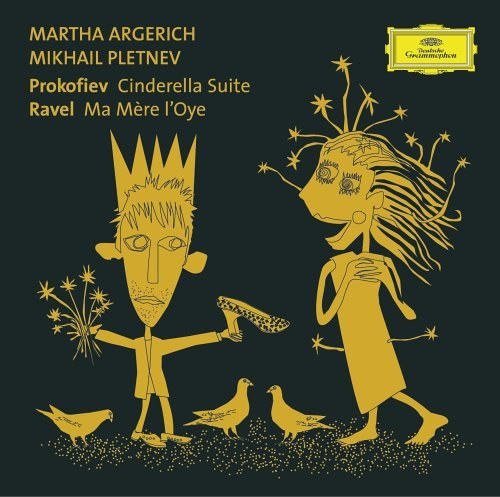
普罗科菲耶夫-灰姑娘组曲 & 拉威尔-鹅妈妈 Douban
Martha Argerich / Mikhail Pletnev genre: Classical
release date 2004-09-14 publisher: Deutsche Grammophon
阿根廷女钢琴家玛尔塔.阿格里奇(Martha Argerich),无需过多介绍。1957年,16岁时在意大利波尔萨诺举行的布索尼国际钢琴比赛中获第一名,同年又在日内瓦国际钢琴比赛中获一等奖。1965年在华沙第七届国际肖邦钢琴比赛中获一等奖,波兰唱片公司在现场录制了她演奏的肖邦e小调钢琴协奏曲的唱片,在世界各地被抢购一空,令其名扬全球。只要是她的演奏会,音乐厅内便座无虚席,到处是鲜花和掌声,她录制的唱片也受到热烈欢迎。
集钢琴家、指挥家、作曲家于一身的普列特涅夫(Mikhail Pletnev),精通7国语言。16岁被派往参加1973年巴黎国际青少年钢琴比赛,赢得了他的第一个冠军。参加1977年第五届全苏钢琴家比赛,和1978年第六届柴科夫斯基国际音乐比赛,荣获两项的钢琴一等奖。1990年苏联解体不久,已有10年指挥经验的普列特涅夫,在艰难中创建了俄罗斯国家乐团。
能把当今琴坛上的两位钢琴名家Pletnev和Argerich拉拢在一齐录音,看来只有DG公司才最有可能实现的了,因为两位都是DG旗下的签约艺员,这样的一个录音是一次难得的盛会,也是世界首度录音。Pletnev与Argerich都以高超的技巧而闻名,在《灰姑娘组曲》快乐章中,我们听到的是绝妙甚至叫人透不过气的合奏,那些梦境般充满炫目色彩及旋律的乐章中更令人迷醉。另一首《鹅妈妈》同样展示出了两位钢琴家超凡描绘及想象力。
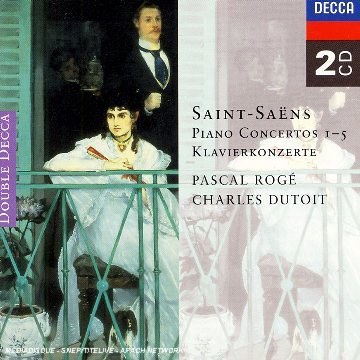
Saint-Saëns: Piano Concertos 1-5 Douban
Pascal Rogé / Philharmonia Orchestra … genre: Classical
release date 1995-02-06 publisher: Decca
Disc 1
01 Piano Concerto No.1 in D, Op.17 - 1. Andante - Allegro assai
02 Piano Concerto No.1 in D, Op.17 - 2. Andante sostenuto quasi adagio
03 Piano Concerto No.1 in D, Op.17 - 3. Allegro con fuoco
04 Piano Concerto No.2 in G minor, Op.22 - 1. Andante sostenuto
05 Piano Concerto No.2 in G minor, Op.22 - 2. Allegro scherzando
06 Piano Concerto No.2 in G minor, Op.22 - 3. Presto
07 Piano Concerto No.3 in E flat major, Op.29 - 1. Moderato assai - piu mosso (Allegro maestoso)

Disc 2
01 Piano Concerto No.3 in E flat major, Op.29 - 2. Andante
02 Piano Concerto No.3 in E flat major, Op.29 - 3. Allegro non troppo
03 Piano Concerto No.4 in C minor, Op.44 - 1. Allegro moderato - Andante
04 Piano Concerto No.4 in C minor, Op.44 - 2. Allegro vivace - Andante - Allegro
05 Piano Concerto No.5 in F, Op.103 "Egyptian" - 1. Allegro animato
06 Piano Concerto No.5 in F, Op.103 "Egyptian" - 2. Andante
07 Piano Concerto No.5 in F, Op.103 "Egyptian" - 3. Molto allegro
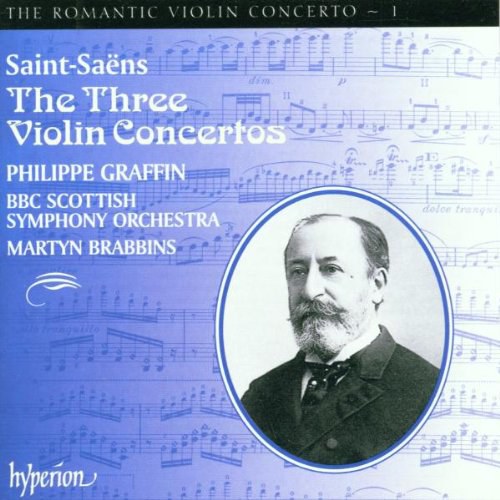
The Romantic Violin Concerto, Vol. 1 Douban
Philippe Graffin / Glasgow BBC Scottish Symphony Orchestra … genre: Classical
release date 1999-09-07 publisher: Hyperion
These sparkling performances of Saint-Saëns' violin concertos are a fitting start to Hyperion's new series of Romantic Violin Concertos; a follow on from the highly successful Romantic Piano Concerto series.
Saint-Saëns C Major concerto resembles Mendelssohn's great violin concerto. Both are declamatory, extravagant in character, highly lyrical and immediately establish the soloist as a romantic protagonist.
Though more conventional, the violin writing for the Concerto in A Major is ever-inventive, especially in the witty second episode where the hen from Le Carnaval des Animaux makes a premature entrance. This was the first of several works he composed for the great Spanish violinist Pablo de Sarasate; in 1859 just fifteen years old but already a famous virtuoso. Saint-Saëns' instantly memorable melodies are a feature of all his best-known works, and there are tunes in abundance in the well-known B Minor Concerto. The intense B minor mood probably offered inspiration for the violin concertos of Elgar and Bartók.
Berlioz’s well-known witticism concerning the young Saint-Saëns—‘Il sait tout, mais il manque d’inexpérience’ (‘He knows everything, but lacks inexperience’)—conveys genuine admiration whilst suggesting a want of the sort of youthful extravagance that can lead to great achievement. Saint-Saëns himself described a similar aspect of his musical character, in contrast with his friend Bizet: ‘He sought passion and life above all things, whereas I ran after the chimera of purity, of style and perfection of form’. This goes some way towards explaining how such an inventive and productive composer, friend of Liszt and one of the earliest to understand the import of Wagner, could remain so traditional in many aspects of his music. In his concertos, however, the clarity and balance he sought for is allied to a sensitive and often innovatory approach to the concerto form, and to a strong feeling for idiomatic solo writing—just as accomplished when writing for violin or cello as for his own instrument, the piano. And, even if form were a primary consideration, he did not neglect passion and life.
The earliest of the three violin concertos is the C major which, though composed in 1858, was only published as No 2 in 1879. Marsick gave its successful first performance the following year at the Pasdeloup concerts in Paris. It’s not known for what occasion it was originally composed; Saint-Saëns already knew several notable violinists, among them the Belgian François Seghers, founder of the Société Sainte-Cécile, who had introduced him to Liszt, and George Bridgetower, the Afro-English violinist for whom Beethoven had written his ‘Kreutzer’ Sonata. By 1858 Saint-Saëns had already become a highly accomplished composer, with three symphonies, a mass, numerous songs, cantatas and instrumental works to his credit. As with all his subsequent concertos, there is no traditional extended orchestral introduction; instead, he follows the example of Mendelssohn’s Violin Concerto in setting up an accompanimental figure over which the soloist enters with the main theme. In the classical manner, this is based around the notes of the C major chord but with a declamatory, extravagant character that immediately establishes the soloist as a romantic protagonist. The theme has a contrasting, more lyrical continuation, after which, again following Mendelssohn’s model, the orchestra takes up the opening melody in an extended tutti passage that also introduces two important subsidiary ideas. When the violin re-enters, the music moves to E major for the second subject. This turns out to be based on the lyrical continuation to the first theme. In a typically subtle piece of thematic organisation, Saint-Saëns refers, during the continuation of this melody, back to the concerto’s opening bars. Throughout the movement, indeed, he develops his ideas with remarkable resourcefulness, rarely repeating anything exactly. The cadenza arrives in the expected, conventional way, towards the end of the movement. Following Mendelssohn again, Saint-Saëns writes out his own cadenza and, in a most original touch, gradually re-introduces the full orchestra, beginning with the timpani, during its concluding passage, based on a long, sustained G.
For the A minor Andante, Saint-Saëns adds a harp and three trombones to the orchestra, the harp providing a bardic accompaniment to the violin’s melancholy melodies, the trombones together with bassoons adding a sombre, antique-sounding counterpoint to the opening motif. There’s a dramatic middle section in the major, culminating in a grandiose fanfare. During the latter part of the movement the woodwind voices emerge increasingly as alternatives to the violin. In the course of an extended coda, the music builds to a climax over a pedal bass, just as in the first movement’s cadenza, after which there’s an unexpected turn to a luminous A major before a return to the sombre mood and sound of the opening. Then the oboe, quite suddenly, takes us without a break into the lively rondo finale. Though this is more conventional music, the ever-inventive violin writing gives a sparkling impression, especially in the witty second episode where the hen from Le Carnaval des Animaux makes a premature entrance.
If the C major Concerto shows Saint-Saëns handling resourcefully a traditional form, in the A major work of the following year his inventiveness extends to the actual formal outlines—a single Allegro movement enclosing an Andante middle section. It was the first of several works he composed for the great Spanish violinist Pablo de Sarasate, in 1859 just fifteen years old but already a famous virtuoso. It’s tempting to see the Concerto as a portrait of the young maestro—impulsive and mercurial at the start and then, at the next solo entry, graceful and elegant. (We can hear these qualities in the recordings Sarasate made in 1904.) The soloist’s opening gesture, with its chordal motif followed by a rhythmic figure, is rarely absent for long, and gives rise to a large variety of different continuations. The Andante interlude has the simplest design—an extended violin melody framed by an introduction and postlude incorporating a tentative woodwind figure accompanied by violin trills. The organization of the Allegro is much more complex and dynamic, especially the way the material is re-ordered and re-composed after the Andante.
Sarasate was also the dedicatee of Saint-Saëns’ next and final violin concerto, written in 1880. In the twenty years that had elapsed since the A major Concerto he had produced four further concertos (Nos 2, 3 and 4 for piano, No 1 for cello). He had discovered, too, the ability to write instantly memorable melodies that is a feature of all his best-known music, and developed a colourful, romantic harmonic style, with modal inflections that cloud the tonality, and often substitutes more remote chords and keys for the ones we expect. When, in the first movement, he brings in the sensuously lyrical second subject, not in the key of G major which he has seemed to prepare, but in the more remote E major, we feel transported to a magical world far removed from the passionate directness of the concerto’s opening pages. This intense B minor mood, which surely offered inspiration for the violin concertos of Elgar and Bartók (No 2), is put into even sharper relief by the gentle barcarolle that forms the second movement, set in the extremely remote key of B flat major, with no attempt to effect a tonal transition. As in the C major Concerto’s Andante, Saint-Saëns delights in relating the solo violin to the contrasting individual voices of the woodwind, establishing an intimate chamber-musical atmosphere. The arpeggio passage near the close where the violin, playing harmonics (Sarasate was particularly fond of them), is joined by the clarinet, creates a strikingly original effect.
The finale begins with another abrupt key-switch, not straight back to B minor but to its close relative, E minor. Like Mendelssohn in his violin concerto, Saint-Saëns prefaces his last movement with an introduction—not meditative as in the earlier work, but a boldly dramatic dialogue in the style of a recitative. The main part of the finale has a bright, march-like character, and far from being the conventional lightweight concerto finale, it’s the most extended, complex movement of the three. There’s a wealth of memorable themes—a passionate subsidiary motif, a broad second subject, and a chorale which appears as quiet contrast but returns near the end in triumphal style to set the scene for a brilliant conclusion. One of the most impressive features of this concerto is the way Saint-Saëns integrates the element of virtuosity. No longer is the music divided neatly into cantabile or brilliant passages; instead, the virtuoso character can appear at any time, to add drama, excitement, or a decorative quality to the music. Certainly, Saint-Saëns ‘knows everything’. In this vivid, spirited work he shows more than technical wizardry. He knows how to enthrall and move us.
Duncan Druce © 1999
Debussy: Préludes, Volume 1 Douban
★ 8.8 (10 ratings) Arturo Benedetti Michelangeli / Claude Debussy genre: Classical
release date 1984-07-25 publisher: Deutsche Grammophon
這一套專輯收錄了米開蘭傑里被譽為「白璧無瑕」的德布西作品。德布西稱為「映象」的作品共有三集,其中前兩集是為鋼琴而寫的,每集各有三首小曲,前奏曲第一輯則由十二小曲組成。每一首小曲就像一首小詩或是靜態繪畫。義大利鋼琴家米開蘭傑里公認是最傑出但也最神祕的鋼琴家之一,他的神祕色彩也因為經常取消音樂會而益加濃厚。優秀而獨特的藝術天份結合出色的彈奏技巧以及迷人的觸鍵方式,還有善於處理鋼琴的音色與多聲部層次,整體與細節上處理得有條有理的詮釋手法,讓米開蘭傑里的音樂既有古典樂派內在的平衡,也有浪漫派的熱情與感染力,也因此米開蘭傑里不只長於詮釋古典與浪漫派的作品,還包括了印象派樂曲。