“The viola is commonly (with rare exceptions indeed) played by infirm violinists, or by decrepit players of wind instruments who happen to have been acquainted with a stringed instrument once upon a time.”
–Richard Wager
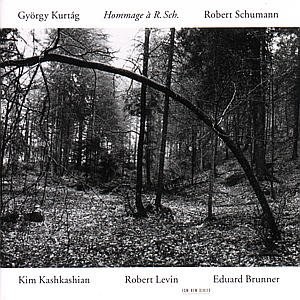
If ever a recording could put Wagner’s infamous statement to rest, this would be it. Simply overflowing with musical brilliance, it remains one of the finest examples of what the viola is capable of. Kim Kashkashian’s technique and passion are almost palpable and one can only marvel at the humble respect she brings to both. The viola doesn’t simply exist somewhere between violin and cello, forever doomed to be second rate to both. It is, rather, an utterly dynamic and rich musical object, and the ways in which Hindemith unravels its subtler intonations in these sonatas is nothing short of monumental. Every chapter tells us something new, until the linguistic possibilities of the music represented in this eclectic set are exhausted.
Sonate op. 31,4
The first movement is a virtuosic leap through microtonal harmonies and energetic flights of fancy. Kashkashian negotiates these with such conviction, they sound spontaneously composed. As evocative as the music is, it is difficult to picture anything while listening to it, existing as it does in a sound world fashioned from the innards of its own body. And in this fashion it proceeds, drawing from its ligaments, veins, and arteries a broader musical circulation that extends one’s sense of self beyond the instrumental and into the metaphysical. Kashkashian ends with a dramatic flourish, as if to punctuate the ineffability of belonging. The second movement is a mournful monologue. This, Kashkashian plays with heartfelt sensitivity, much in contrast to the raw strength with which she attacks the opening movement. She extracts from her instrument sounds and emotions that are deeply ingrained in the wood itself, brought forth through the strings just as breath is spun into voice through the throat. She does this not so much with the “effortlessness” often ascribed to virtuosi, but rather makes audible her long hours of dedicated practice, her struggles to wrench from this neglected instrument an entirely orchestral palette of atmospheres. The third movement opens with double stops and a linear introduction of the theme before venturing off into beautiful variations and idiosyncratic counterpoint. Again, Hindemith shows a fondness for tight harmonies, for the spatial potential between adjacent notes. The theme is a fascinating melody, devoid of context and therefore unbounded. As Kashkashian builds her energy, the music regresses into its constituent melodic parts before taking pause. The next section of the third movement is marked “Langsam,” and is an accordingly pliant interlude that hangs in the air like a piece of windblown pollen. Kashkashian plays it as if sharing a new discovery. The final passage springs from the solace of the tangential middle with almost Pan-like exuberance. We see in this music a certain quality of “understanding,” a mischievous surrender to the will of compositional potential.
Sonate op. 25,1
This second sonata erupts with a series of portati, which are dissonant enough to catch our attention with discomfort but which eventually resolve themselves in airy double stops. Here we find beauty not only in those moments that provoke consonance, but perhaps even more so in those moments swirled like knots in a tree. The second movement is another earthy meditation that allows the listener to focus on every sound contained in the lone string. We find in this movement a robust patience. There is no sadness here, only the room in which to deal with our own faults. Through these singular notes we are given a glimpse of what such a process might look like. The third movement is a violent dance that climbs the ladder of its own expression before hurtling itself into a vale of doubt. It is a short foray that dies as quickly as it is born. The final movement begins slowly and with a beauty that is only heightened in the aftermath of the previous display of suicidal vigor. Kashkashian draws out each note into a linear phrase before accentuating it with another. This kind of lilting pattern continues throughout, lending a dirge-like quality to a fitting conclusion.
Sonate 1937
This sonata is like a lesson in biology, highlighting the fluidity between skin and the musical score. The first movement is a convoluted organism indeed. It undulates with its own respiratory rhythm, shaping itself as a voice might in a debate or argument, and in doing so perfectly captures the details of its own fallibility. This is followed by another heartfelt slow movement, as nocturnal as it is bright. The mood changes quickly as the playing erupts into a more frenzied exhibition, plying the listener with forced resolution and the impatience that drives it. The ensuing calm segues into a beautiful pizzicato passage, which exploits all the resonance residing within the viola’s, and the performer’s, body. Soon the bow is returned to the strings, laying out a delicate tessellation of finality. We finish with a somber and somewhat indecisive third movement.
Sonate op. 11,5
This sonata begins with a rather terse opening statement, both in length and in mood. It is as if we have been given a contentious opinion that we can’t quite figure out, but which we know is fraught with danger. The movement has a touch-and-go quality that comes to a head with an obligatory and theatrical exit. The second movement climbs even as it descends, a Jacob’s Ladder toy in sound. As gripping as Hindemith’s faster movements are, it is in these downtempo moments that he displays his greatest deftness, so engaging are they in their fortitude, in their ability to imply the inexpressible, in their wantonness for melody and articulation, and in their remarkable ability to highlight the joys of self-discovery. The Scherzo is a stone changing directions in mid air as it skips across water. It is playful; not in the sense that a child might play, but in the sly intelligence of social agency that is part and parcel of adulthood. A masterful miniature, to be sure. The 11-minute epic that is the last movement also moves very organically. It dances and glides—opening its melodic gills to whatever might pass through them before erupting into gorgeous runs across the fingerboard that simply revel in the melodic possibility they so artfully carry—and moves like a folksong.
After such an exposition of prowess on the viola alone, the gentle introduction of a piano changes things considerably. While a certain level of restraint is to be expected from the accompanist, Robert Levin draws his playing through the viola’s almost vocal cartography, astutely aware of the dialogic nature of their music-making. The recording from hereon out is strikingly different. The viola remains quite present while the piano seems far away, as if playing on the other side of the room, thereby opening the spatial possibilities of the music and further contrasting the intimate pointillism of the solo sonatas with the broader strokes of the accompanied. At times the piano and viola would seem to be talking to themselves, as if after a long argument between a couple that has been together for so long that, no matter what they say, their voices blend with an exacting harmony.
Sonate op. 11,4
The opening Phantasie is stunningly beautiful, lapsing into moments of passive romanticism even as it unravels more overblown threads. The second movement is comprised by a jaunty theme with variations and fleshes out the sonata form in uniquely ecstatic ways. The finale with variations brings itself even closer to the jouissance inherent in the first two movements, only to lower into mysterious asides that seem to hover around the edges of its introduction.
Sonate op. 25,4
This sonata brims with a Bartokian jouissance, at once sylvan and nomadic. The viola enters, a dancer waiting for just the right moment to let loose her footwork. The piano responds with a playful challenge, which the viola answers wholeheartedly and with due respect. This rhythmically dynamic and challenging movement ends with a light touch of pizzicato. The second is full of tragedy, proceeding at a crawl through an indefinable wreckage that, while familiar to us, is also something we can never experience because it is not our own. The finale is filled with drama and screeching tremolos, and sings with the conviction of a mountaineer. The third movement is a boisterous exposition that ends with a few lines in unison and a soaring high note to finish.
Sonate 1939
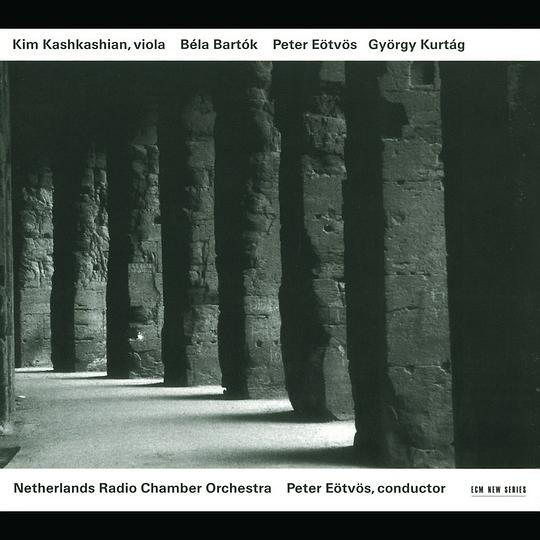
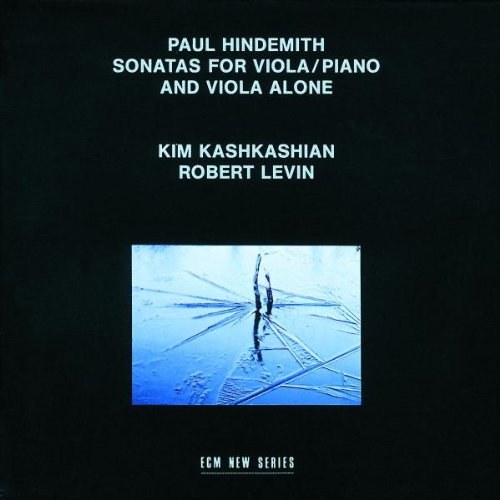
This last sonata begins as if in mid-phrase, jumping right into its melodies with careful abandon. The piano and viola play off each other rather explicitly, holding fast to connection and release. Whereas this movement is filled with playful moments, plucked diversions, and pianistic revelry, the second plants its feet firmly on the path and rushes toward its finale. The third movement, another Phantasie, ruptures the music’s icy surface like the sticks on the album’s cover. As we come to a close, the sound cracks like an egg.
Of the many solo sonatas for various instruments composed since the time of Bach, it is Hindemith’s that most concretely capture a likeminded spirit. While Paganini’s caprices, for example, model Bach on the surface, they are essentially showstoppers meant to test the technical limits of whoever dares perform them. The solo violin works of Ysaÿe are also closely allied with Bach. Ysaÿe draws more specifically and overtly, and in doing so pushes away from Bach in the process. By contrast, Hindemith chose colors from his own palette. In the same way that Bach revitalized the violin and the cello, Hindemith forged a space for the viola. I hear no evidence in these sonatas to suggest that Hindemith was in any way attempting an imitation. He was, rather, exploring his own territory with unbridled honesty. Thankfully, Kashkashian has given us this landmark performance to enjoy to our hearts’ content. Her playing is by turns robust and delicate, her tone impeccable, her technique assured and minimally adorned.
It has been said that, as a performer, one develops a certain appreciation for a given piece of music that the listener can never access, for the performer learns a piece from the inside out. What separates Kashkashian from the rest is her willingness to let the listener in on the performer’s appreciation, and on the different levels of which such an engagement is comprised. We feel every detail as we would feel our own.