J.R.R.托尔金

Tolkien: Maker of Middle-earth
Douban
Catherine McIlwaine
publishing house:
The Bodleian Library
2018
- 6
This richly illustrated book explores the huge creative endeavour behind Tolkien’s enduring popularity. Lavishly illustrated with over 300 images of his manuscripts, drawings, maps and letters, the book traces the creative process behind his most famous literary works – The Hobbit, The Lord of the Rings and The Silmarillion and reproduces personal photographs and private papers (some of which have never been seen before in print).
Tolkien drew on his deep knowledge of medieval literature and language to inform his literary imagination. Six introductory essays cover some of the main themes in Tolkien’s life and work including the influence of northern languages and legends on the creation of his own legendarium; his concept of ‘Faërie’ as a literary construct; the central importance of his invented languages in his fantasy writing; his visual imagination and its emergence in his artwork; and the encouragement he derived from the literary group known as the Inklings.
This book brings together the largest collection of original Tolkien material ever assembled in a single volume. Drawing on the archives of the Tolkien collections at the Bodleian Libraries, Oxford, and Marquette University, Milwaukee, as well as private collections, this exquisitely produced catalogue draws together the worlds of J.R.R. Tolkien – scholarly, literary, creative and domestic – offering a rich and detailed understanding and appreciation of this extraordinary author.

胡林的子女
The Children of Húrin Douban
[英] J. R. R. 托尔金 著
/
[英] 克里斯托弗·托尔金 编
…
translator:
邓嘉宛
/
石中歌
publishing house:
世纪文景 | 上海人民出版社
2018
- 8
胡林的子女的传奇,是J.R.R.托尔金教授创造的瑰丽世界——中洲里最重要的故事之一。与“贝伦与露西恩”“刚多林的陷落”并称中洲远古时代的三大传说;既是《魔戒》那宏大背景的组成部分,更是《精灵宝钻》必不可少的基石。悲剧英雄图林的经历,有世界各地神话的遗绪,又有赫克托耳、科里奥兰纳斯等辈的悲怆。堕落的维拉魔苟斯擒获人类族长胡林,对其威逼利诱软硬兼施,强迫其屈服。胡林的凛然让魔苟斯心生毒计,转而诅咒胡林的儿女——图林和涅诺尔兄妹,并强迫胡林眼见两人遭遇种种不幸……

The Great Tales of Middle-Earth
Douban
J. R. R. Tolkien
publishing house:
Houghton Mifflin Harcourt
2018
- 10
Just in time for holiday gift-giving, The Great Tales is a beautiful boxed set of the final novels of Middle-earth: Children of Húrin, Beren and Lúthien, and The Fall of Gondolin, packaged together for the first time. Completing Christopher Tolkien’s lifelong achievement as the editor and curator of his father J.R.R. Tolkien’s manuscripts, The Great Tales features handsome color plates and maps by famed illustrator Alan Lee.

A Middle-earth Traveller
Google Books Douban
John Howe
publishing house:
HarperCollins
2017
- 10
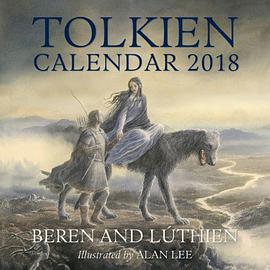
Let acclaimed Tolkien artist John Howe take you on an unforgettable journey across Middle-earth, from Bag End to Mordor, in this richly illustrated sketchbook fully of previously unseen artwork, anecdotes and meditations on Middle-earth.
Middle-earth has been mapped, Bilbo’s and Frodo’s journeys plotted and measured, but Middle-earth remains a wilderland for all that. The roads as yet untraveled far outnumber those down which Tolkien had time to wander.
A Middle-Earth Traveller presents a walking tour of Tolkien’s Middle-earth, visiting not only places central to his stories, but also those just over the hill or beyond the horizon. Events from Tolkien’s books are explored battles of the different ages that are almost part of legend by the time of The Lord of the Rings; lost kingdoms and ancient myths, as well as those places only hinted at: kingdoms of the far North and lands beyond the seas.
Sketches that have an on-the-spot’ feel to them are interwoven with the artist’s observations gleaned from Tolkien’s books and recollections of his time spent in Middle-earth while working alongside Peter Jackson on the Lord of the Rings and Hobbit film trilogies. Combining concept work produced for films, existing Middle-earth art and many new paintings and sketches exclusive to this book, A Middle-earth Traveller will take the reader on a unique and unforgettable journey across Tolkien’s magical landscape.


Flora of Middle-Earth
Douban
Walter S. Judd
/
Graham A. Judd
publishing house:
Oxford University Press
2017
- 8
Few settings in literature are as widely known or celebrated as J.R.R. Tolkien's Middle-Earth. The natural landscape plays a major role in nearly all of Tolkien's major works, and readers have come to view the geography of this fictional universe as integral to understanding and enjoying Tolkien's works. And in laying out this continent, Tolkien paid special attention to its plant life; in total, over 160 plants are explicitly mentioned and described as a part of Middle-Earth. Nearly all of these plants are real species, and many of the fictional plants are based on scientifically grounded botanic principles.
In Flora of Middle Earth: Plants of Tolkien's Legendarium, botanist Walter Judd gives a detailed species account of every plant found in Tolkien's universe, complete with the etymology of the plant's name, a discussion of its significance within Tolkien's work, a description of the plant's distribution and ecology, and an original hand-drawn illustration by artist Graham Judd in the style of a woodcut print. Among the over three-thousand vascular plants Tolkien would have seen in the British Isles, the authors show why Tolkien may have selected certain plants for inclusion in his universe over others, in terms of their botanic properties and traditional uses. The clear, comprehensive alphabetical listing of each species, along with the visual identification key of the plant drawings, adds to the reader's understanding and appreciation of the Tolkien canon.

The Fall of Gondolin
Douban
J. R. R. Tolkien
publishing house:
HarperCollins
2018
- 8
In the Tale of The Fall of Gondolin are two of the greatest powers in the world. There is Morgoth of the uttermost evil, unseen in this story but ruling over a vast military power from his fortress of Angband. Deeply opposed to Morgoth is Ulmo, second in might only to Manwë, chief of the Valar.
Central to this enmity of the gods is the city of Gondolin, beautiful but undiscoverable. It was built and peopled by Noldorin Elves who, when they dwelt in Valinor, the land of the gods, rebelled against their rule and fled to Middle-earth. Turgon King of Gondolin is hated and feared above all his enemies by Morgoth, who seeks in vain to discover the marvellously hidden city, while the gods in Valinor in heated debate largely refuse to intervene in support of Ulmo's desires and designs.
Into this world comes Tuor, cousin of Túrin, the instrument of Ulmo's designs. Guided unseen by him Tuor sets out from the land of his birth on the fearful journey to Gondolin, and in one of the most arresting moments in the history of Middle-earth the sea-god himself appears to him, rising out of the ocean in the midst of a storm. In Gondolin he becomes great; he is wedded to Idril, Turgon's daughter, and their son is Eärendel, whose birth and profound importance in days to come is foreseen by Ulmo.
At last comes the terrible ending. Morgoth learns through an act of supreme treachery all that he needs to mount a devastating attack on the city, with Balrogs and dragons and numberless Orcs. After a minutely observed account of the fall of Gondolin, the tale ends with the escape of Túrin and Idril, with the child Eärendel, looking back from a cleft in the mountains as they flee southward, at the blazing wreckage of their city. They were journeying into a new story, the Tale of Eärendel, which Tolkien never wrote, but which is sketched out in this book from other sources.
Following his presentation of Beren and Lúthien Christopher Tolkien has used the same 'history in sequence' mode in the writing of this edition of The Fall of Gondolin. In the words of J.R.R. Tolkien, it was ‘the first real story of this imaginary world’ and, together with Beren and Lúthien and The Children of Húrin, he regarded it as one of the three 'Great Tales' of the Elder Days.
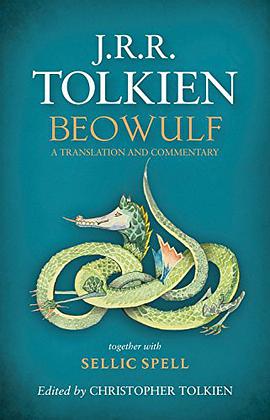

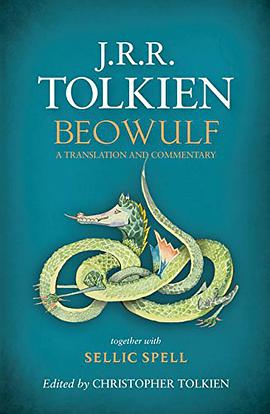
Beowulf
Google Books DoubanThe translation of Beowulf by J.R.R. Tolkien was an early work, very distinctive in its mode, completed in 1926: he returned to it later to make hasty corrections, but seems never to have considered its publication. This edition is twofold, for there exists an illuminating commentary on the text of the poem by the translator himself, in the written form of a series of lectures given at Oxford in the 1930s; and from these lectures a substantial selection has been made, to form also a commentary on the translation in this book.
Suitable for tablets and newer eink readers. Due to the limitations of older ereading devices, some special characters may not display correctly within the text.
From his creative attention to detail in these lectures there arises a sense of the immediacy and clarity of his vision. It is as if he entered into the imagined past: standing beside Beowulf and his men shaking out their mail-shirts as they beached their ship on the coast of Denmark, listening to the rising anger of Beowulf at the taunting of Unferth, or looking up in amazement at Grendel’s terrible hand set under the roof of Heorot.
But the commentary in this book includes also much from those lectures in which, while always anchored in the text, he expressed his wider perceptions. He looks closely at the dragon that would slay Beowulf "snuffling in baffled rage and injured greed when he discovers the theft of the cup"; but he rebuts the notion that this is "a mere treasure story", "just another dragon tale". He turns to the lines that tell of the burying of the golden things long ago, and observes that it is "the feeling for the treasure itself, this sad history" that raises it to another level. "The whole thing is sombre, tragic, sinister, curiously real. The ‘treasure’ is not just some lucky wealth that will enable the finder to have a good time, or marry the princess. It is laden with history, leading back into the dark heathen ages beyond the memory of song, but not beyond the reach of imagination." Sellic spell, a "marvellous tale", is a story written by Tolkien suggesting what might have been the form and style of an Old English folk-tale of Beowulf, in which there was no association with the "historical legends" of the Northern kingdoms.

The Fall of Gondolin
Douban
JRR Tolkien
/
Christopher Tolkien
…
publishing house:
Houghton Mifflin Harcourt
2018
- 8
In the Tale of The Fall of Gondolin are two of the greatest powers in the world. There is Morgoth of the uttermost evil, unseen in this story but ruling over a vast military power from his fortress of Angband. Deeply opposed to Morgoth is Ulmo, second in might only to Manwë, chief of the Valar: he is called the Lord of Waters, of all seas, lakes, and rivers under the sky. But he works in secret in Middle-earth to support the Noldor, the kindred of the Elves among whom were numbered Húrin and Túrin Turambar.
Central to this enmity of the gods is the city of Gondolin, beautiful but undiscoverable. It was built and peopled by Noldorin Elves who, when they dwelt in Valinor, the land of the gods, rebelled against their rule and fled to Middle-earth. Turgon King of Gondolin is hated and feared above all his enemies by Morgoth, who seeks in vain to discover the marvellously hidden city, while the gods in Valinor in heated debate largely refuse to intervene in support of Ulmo’s desires and designs.
Into this world comes Tuor, cousin of Túrin, the instrument of Ulmo’s designs. Guided unseen by him Tuor sets out from the land of his birth on the fearful journey to Gondolin, and in one of the most arresting moments in the history of Middle-earth the sea-god himself appears to him, rising out of the ocean in the midst of a storm. In Gondolin he becomes great; he is wedded to Idril, Turgon’s daughter, and their son is Eärendel, whose birth and profound importance in days to come is foreseen by Ulmo.
At last comes the terrible ending. Morgoth learns through an act of supreme treachery all that he needs to mount a devastating attack on the city, with Balrogs and dragons and numberless Orcs. After a minutely observed account of the fall of Gondolin, the tale ends with the escape of Túrin and Idril, with the child Eärendel, looking back from a cleft in the mountains as they flee southward, at the blazing wreckage of their city. They were journeying into a new story, the Tale of Eärendel, which Tolkien never wrote, but which is sketched out in this book from other sources.
Following his presentation of Beren and Lúthien Christopher Tolkien has used the same ‘history in sequence’ mode in the writing of this edition of The Fall of Gondolin. In the words of J.R.R. Tolkien, it was ‘the first real story of this imaginary world’ and, together with Beren and Lúthien and The Children of Húrin, he regarded it as one of the three ‘Great Tales’ of the Elder Days.
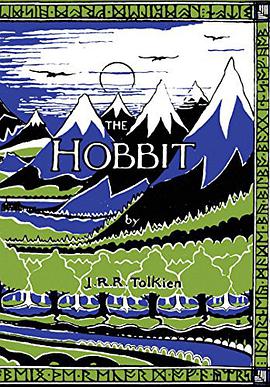
The Hobbit Facsimile First Edition
Douban Goodreads
J. R. R. Tolkien
publishing house:
HarperCollins
2016
- 9
other title:
The Hobbit, or There and Back Again
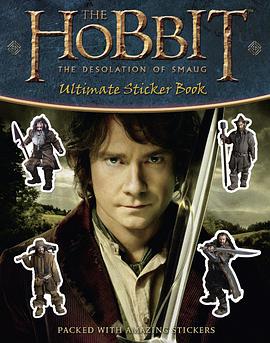
This sumptuous gift set includes a replica of the very rare first edition of The Hobbit, the only edition where one can now read the original version of the story before Tolkien re-edited it nearly 30 years later. The Hobbit was published on 21 September 1937 with a print run of 1,500 copies. With a beautiful cover design and nearly a dozen black & white drawings by the author himself, the book proved to be popular and was reprinted shortly afterwards, and history was already being made. The scarcity of the first edition has resulted in copies commanding huge prices, way beyond the reach of most Tolkien fans. In addition, subsequent changes to the text - particularly those to chapter five when Tolkien decided to expand the text to marry it up to events in The Lord of the Rings - mean that the opportunity to read the book in its original form and format has become quite difficult. This special printing reprints the first edition, so that Tolkien's story may be enjoyed in its original form.