美国
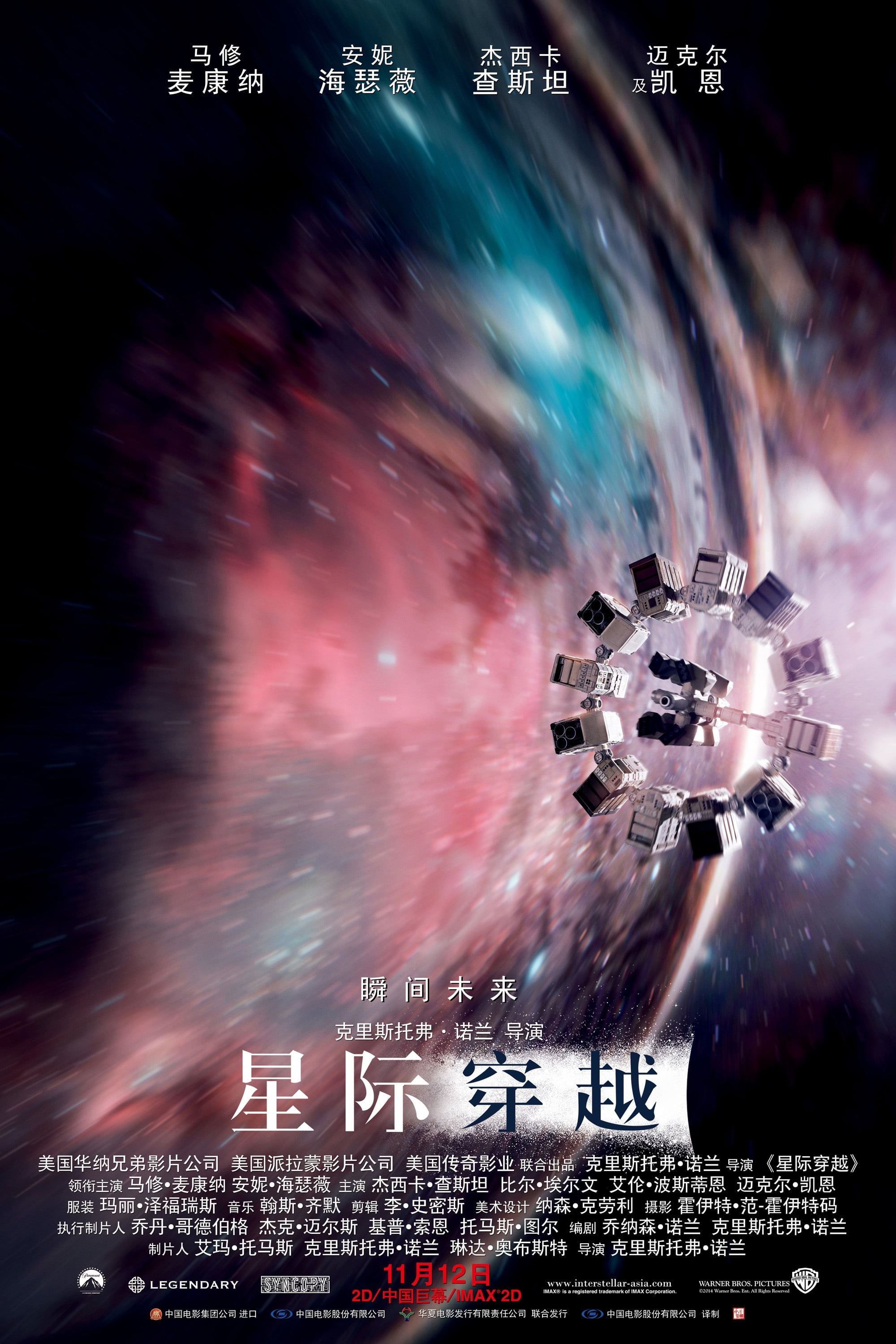
Interstellar (2014) WikiData IMDb TMDB Douban Bangumi Bangumi Eggplant.place Min reol Skybridge +6
Interstellar
director:
Christopher Nolan
actor:
Matthew McConaughey
/
Anne Hathaway
…
other title:
星际穿越
/
星际启示录(港)
…
The adventures of a group of explorers who make use of a newly discovered wormhole to surpass the limitations on human space travel and conquer the vast distances involved in an interstellar voyage.

Zootopia (2016) WikiData IMDb TMDB Douban Bangumi Eggplant.place Min reol Skybridge +5
Zootopia
other title:
Zootropolis
/
Zootrópolis
…
Determined to prove herself, Officer Judy Hopps, the first bunny on Zootopia's police force, jumps at the chance to crack her first case - even if it means partnering with scam-artist fox Nick Wilde to solve the mystery.
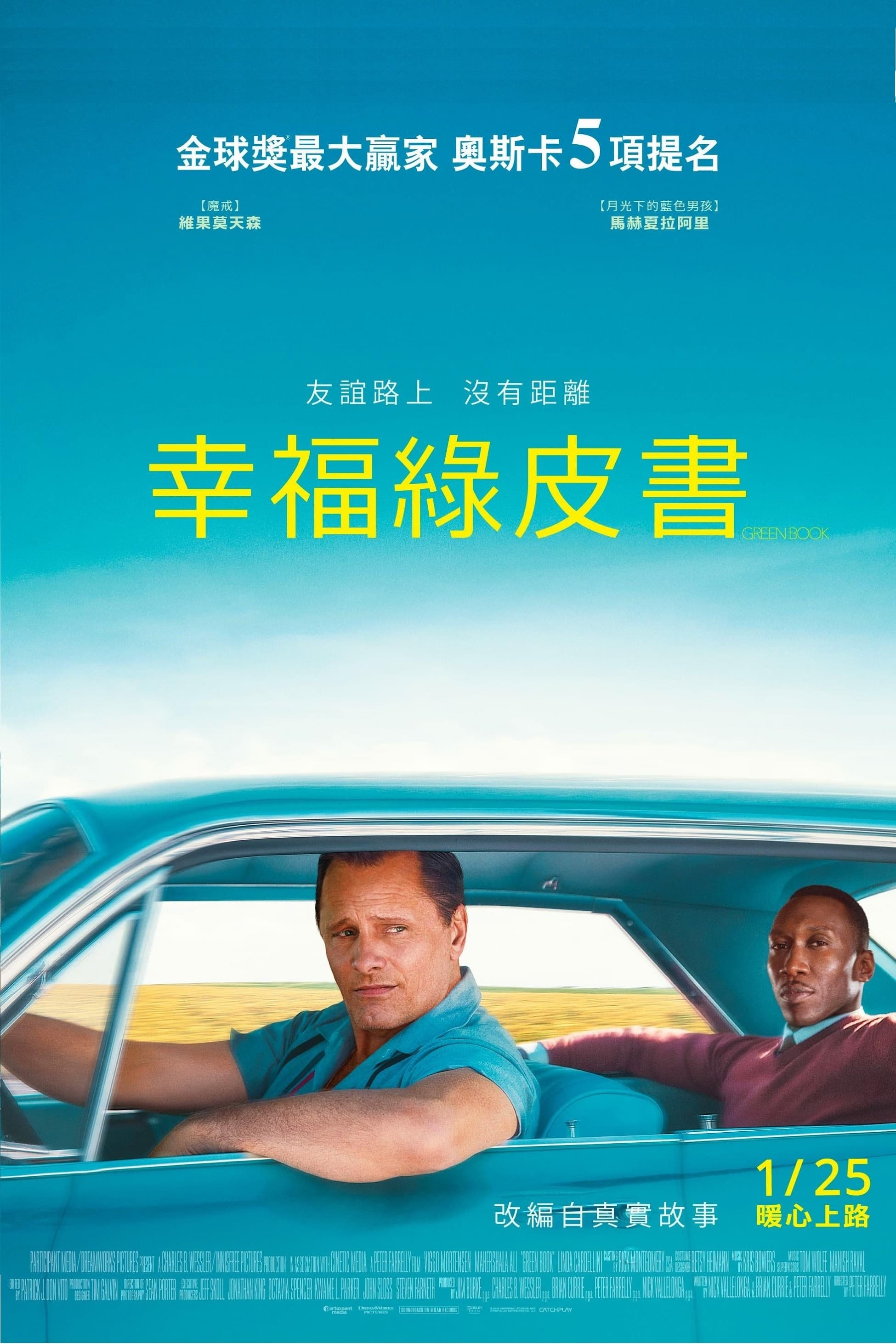
Green Book (2018) WikiData IMDb TMDB Douban Eggplant.place Skybridge +3
Green Book
other title:
Green Book : Sur les routes du Sud
/
Green Book - Eine besondere Freundschaft
…
Tony Lip, a bouncer in 1962, is hired to drive pianist Don Shirley on a tour through the Deep South in the days when African Americans, forced to find alternate accommodations and services due to segregation laws below the Mason-Dixon Line, relied on a guide called The Negro Motorist Green Book.

The Polar Express (2004) WikiData IMDb TMDB Douban Eggplant.place Skybridge +3
The Polar Express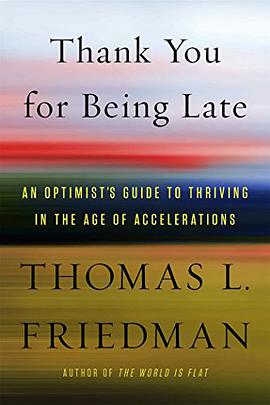
Thank You for Being Late Douban
author:
Thomas L. Friedman
publishing house:
Farrar, Straus and Giroux
2016
- 11
A field guide to the twenty-first century, written by one of its most celebrated observers
We all sense it―something big is going on. You feel it in your workplace. You feel it when you talk to your kids. You can’t miss it when you read the newspapers or watch the news. Our lives are being transformed in so many realms all at once―and it is dizzying.
In Thank You for Being Late, a work unlike anything he has attempted before, Thomas L. Friedman exposes the tectonic movements that are reshaping the world today and explains how to get the most out of them and cushion their worst impacts. You will never look at the world the same way again after you read this book: how you understand the news, the work you do, the education your kids need, the investments your employer has to make, and the moral and geopolitical choices our country has to navigate will all be refashioned by Friedman’s original analysis.
Friedman begins by taking us into his own way of looking at the world―how he writes a column. After a quick tutorial, he proceeds to write what could only be called a giant column about the twenty-first century. His thesis: to understand the twenty-first century, you need to understand that the planet’s three largest forces―Moore’s law (technology), the Market (globalization), and Mother Nature (climate change and biodiversity loss)―are accelerating all at once. These accelerations are transforming five key realms: the workplace, politics, geopolitics, ethics, and community.
Why is this happening? As Friedman shows, the exponential increase in computing power defined by Moore’s law has a lot to do with it. The year 2007 was a major inflection point: the release of the iPhone, together with advances in silicon chips, software, storage, sensors, and networking, created a new technology platform. Friedman calls this platform “the supernova”―for it is an extraordinary release of energy that is reshaping everything from how we hail a taxi to the fate of nations to our most intimate relationships. It is creating vast new opportunities for individuals and small groups to save the world―or to destroy it.
Thank You for Being Late is a work of contemporary history that serves as a field manual for how to write and think about this era of accelerations. It’s also an argument for “being late”―for pausing to appreciate this amazing historical epoch we’re passing through and to reflect on its possibilities and dangers. To amplify this point, Friedman revisits his Minnesota hometown in his moving concluding chapters; there, he explores how communities can create a “topsoil of trust” to anchor their increasingly diverse and digital populations.
With his trademark vitality, wit, and optimism, Friedman shows that we can overcome the multiple stresses of an age of accelerations―if we slow down, if we dare to be late and use the time to reimagine work, politics, and community. Thank You for Being Late is Friedman’s most ambitious book―and an essential guide to the present and the future.
We all sense it―something big is going on. You feel it in your workplace. You feel it when you talk to your kids. You can’t miss it when you read the newspapers or watch the news. Our lives are being transformed in so many realms all at once―and it is dizzying.
In Thank You for Being Late, a work unlike anything he has attempted before, Thomas L. Friedman exposes the tectonic movements that are reshaping the world today and explains how to get the most out of them and cushion their worst impacts. You will never look at the world the same way again after you read this book: how you understand the news, the work you do, the education your kids need, the investments your employer has to make, and the moral and geopolitical choices our country has to navigate will all be refashioned by Friedman’s original analysis.
Friedman begins by taking us into his own way of looking at the world―how he writes a column. After a quick tutorial, he proceeds to write what could only be called a giant column about the twenty-first century. His thesis: to understand the twenty-first century, you need to understand that the planet’s three largest forces―Moore’s law (technology), the Market (globalization), and Mother Nature (climate change and biodiversity loss)―are accelerating all at once. These accelerations are transforming five key realms: the workplace, politics, geopolitics, ethics, and community.
Why is this happening? As Friedman shows, the exponential increase in computing power defined by Moore’s law has a lot to do with it. The year 2007 was a major inflection point: the release of the iPhone, together with advances in silicon chips, software, storage, sensors, and networking, created a new technology platform. Friedman calls this platform “the supernova”―for it is an extraordinary release of energy that is reshaping everything from how we hail a taxi to the fate of nations to our most intimate relationships. It is creating vast new opportunities for individuals and small groups to save the world―or to destroy it.
Thank You for Being Late is a work of contemporary history that serves as a field manual for how to write and think about this era of accelerations. It’s also an argument for “being late”―for pausing to appreciate this amazing historical epoch we’re passing through and to reflect on its possibilities and dangers. To amplify this point, Friedman revisits his Minnesota hometown in his moving concluding chapters; there, he explores how communities can create a “topsoil of trust” to anchor their increasingly diverse and digital populations.
With his trademark vitality, wit, and optimism, Friedman shows that we can overcome the multiple stresses of an age of accelerations―if we slow down, if we dare to be late and use the time to reimagine work, politics, and community. Thank You for Being Late is Friedman’s most ambitious book―and an essential guide to the present and the future.
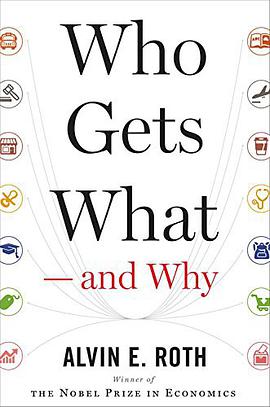
Who Gets What — and Why Douban
author:
Alvin E. Roth
publishing house:
Houghton Mifflin Harcourt
2015
- 6
A Nobel laureate reveals the often surprising rules that govern a vast array of activities — both mundane and life-changing — in which money may play little or no role.
If you’ve ever sought a job or hired someone, applied to college or guided your child into a good kindergarten, asked someone out on a date or been asked out, you’ve participated in a kind of market. Most of the study of economics deals with commodity markets, where the price of a good connects sellers and buyers. But what about other kinds of “goods,” like a spot in the Yale freshman class or a position at Google? This is the territory of matching markets, where “sellers” and “buyers” must choose each other, and price isn’t the only factor determining who gets what.
Alvin E. Roth is one of the world’s leading experts on matching markets. He has even designed several of them, including the exchange that places medical students in residencies and the system that increases the number of kidney transplants by better matching donors to patients. In Who Gets What — And Why, Roth reveals the matching markets hidden around us and shows how to recognize a good match and make smarter, more confident decisions.
If you’ve ever sought a job or hired someone, applied to college or guided your child into a good kindergarten, asked someone out on a date or been asked out, you’ve participated in a kind of market. Most of the study of economics deals with commodity markets, where the price of a good connects sellers and buyers. But what about other kinds of “goods,” like a spot in the Yale freshman class or a position at Google? This is the territory of matching markets, where “sellers” and “buyers” must choose each other, and price isn’t the only factor determining who gets what.
Alvin E. Roth is one of the world’s leading experts on matching markets. He has even designed several of them, including the exchange that places medical students in residencies and the system that increases the number of kidney transplants by better matching donors to patients. In Who Gets What — And Why, Roth reveals the matching markets hidden around us and shows how to recognize a good match and make smarter, more confident decisions.
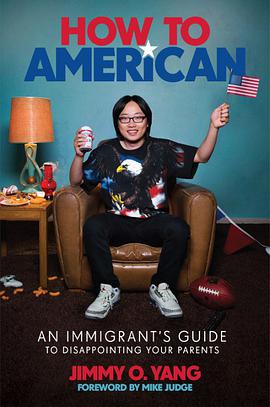
How to American Douban
Standup comic, actor and fan favorite from HBO's Silicon Valley and the film Crazy Rich Asians shares his memoir of growing up as a Chinese immigrant in California and making it in Hollywood.
"I turned down a job in finance to pursue a career in stand-up comedy. My dad thought I was crazy. But I figured it was better to disappoint my parents for a few years than to disappoint myself for the rest of my life. I had to disappoint them in order to pursue what I loved. That was the only way to have my Chinese turnip cake and eat an American apple pie too."
Jimmy O. Yang is a standup comedian, film and TV actor and fan favorite as the character Jian Yang from the popular HBO series Silicon Valley. In How to American, he shares his story of growing up as a Chinese immigrant who pursued a Hollywood career against the wishes of his parents: Yang arrived in Los Angeles from Hong Kong at age 13, learned English by watching BET RapCity for three hours a day, and worked as a strip club DJ while pursuing his comedy career. He chronicles a near deportation episode during a college trip Tijuana to finally becoming a proud US citizen ten years later. Featuring those and many other hilarious stories, while sharing some hard-earned lessons, How to American mocks stereotypes while offering tongue in cheek advice on pursuing the American dreams of fame, fortune, and strippers.
"I turned down a job in finance to pursue a career in stand-up comedy. My dad thought I was crazy. But I figured it was better to disappoint my parents for a few years than to disappoint myself for the rest of my life. I had to disappoint them in order to pursue what I loved. That was the only way to have my Chinese turnip cake and eat an American apple pie too."
Jimmy O. Yang is a standup comedian, film and TV actor and fan favorite as the character Jian Yang from the popular HBO series Silicon Valley. In How to American, he shares his story of growing up as a Chinese immigrant who pursued a Hollywood career against the wishes of his parents: Yang arrived in Los Angeles from Hong Kong at age 13, learned English by watching BET RapCity for three hours a day, and worked as a strip club DJ while pursuing his comedy career. He chronicles a near deportation episode during a college trip Tijuana to finally becoming a proud US citizen ten years later. Featuring those and many other hilarious stories, while sharing some hard-earned lessons, How to American mocks stereotypes while offering tongue in cheek advice on pursuing the American dreams of fame, fortune, and strippers.
The Right Side of History Douban
America has a God-shaped hole in its heart, argues New York Times bestselling author Ben Shapiro, and we shouldn't fill it with politics and hate.
In 2016, Ben Shapiro spoke at UC Berkeley. Hundreds of police officers were required from 10 UC campuses across the state to protect his speech, which was -- ironically -- about the necessity for free speech and rational debate.
He came to argue that Western Civilization is in the midst of a crisis of purpose and ideas. Our freedoms are built upon the twin notions that every human being is made in God’s image and that human beings were created with reason capable of exploring God’s world.
We can thank these values for the birth of science, the dream of progress, human rights, prosperity, peace, and artistic beauty. Jerusalem and Athens built America, ended slavery, defeated the Nazis and the Communists, lifted billions from poverty and gave billions spiritual purpose. Jerusalem and Athens were the foundations of the Magna Carta and the Treaty of Westphalia; they were the foundations of Declaration of Independence, Abraham Lincoln’s Emancipation Proclamation, and Martin Luther King Jr.’s Letter from Birmingham Jail.
Civilizations that rejected Jerusalem and Athens have collapsed into dust. The USSR rejected Judeo-Christian values and Greek natural law, substituting a new utopian vision of “social justice” – and they starved and slaughtered tens of millions of human beings. The Nazis rejected Judeo-Christian values and Greek natural law, and they shoved children into gas chambers. Venezuela rejects Judeo-Christian values and Greek natural law, and citizens of their oil-rich nation have been reduced to eating dogs.
We are in the process of abandoning Judeo-Christian values and Greek natural law, favoring instead moral subjectivism and the rule of passion. And we are watching our civilization collapse into age-old tribalism, individualistic hedonism, and moral subjectivism. We believe we can reject Judeo-Christian values and Greek natural law and satisfy ourselves with intersectionality, or scientific materialism, or progressive politics, or authoritarian governance, or nationalistic solidarity.
We can’t.
The West is special, and in The Right Side of History, Ben Shapiro bravely explains that it’s because too many of us have lost sight of the moral purpose that drives us each to be better, or the sacred duty to work together for the greater good, or both. A stark warning, and a call to spiritual arms, this book may be the first step in getting our civilization back on track.
In 2016, Ben Shapiro spoke at UC Berkeley. Hundreds of police officers were required from 10 UC campuses across the state to protect his speech, which was -- ironically -- about the necessity for free speech and rational debate.
He came to argue that Western Civilization is in the midst of a crisis of purpose and ideas. Our freedoms are built upon the twin notions that every human being is made in God’s image and that human beings were created with reason capable of exploring God’s world.
We can thank these values for the birth of science, the dream of progress, human rights, prosperity, peace, and artistic beauty. Jerusalem and Athens built America, ended slavery, defeated the Nazis and the Communists, lifted billions from poverty and gave billions spiritual purpose. Jerusalem and Athens were the foundations of the Magna Carta and the Treaty of Westphalia; they were the foundations of Declaration of Independence, Abraham Lincoln’s Emancipation Proclamation, and Martin Luther King Jr.’s Letter from Birmingham Jail.
Civilizations that rejected Jerusalem and Athens have collapsed into dust. The USSR rejected Judeo-Christian values and Greek natural law, substituting a new utopian vision of “social justice” – and they starved and slaughtered tens of millions of human beings. The Nazis rejected Judeo-Christian values and Greek natural law, and they shoved children into gas chambers. Venezuela rejects Judeo-Christian values and Greek natural law, and citizens of their oil-rich nation have been reduced to eating dogs.
We are in the process of abandoning Judeo-Christian values and Greek natural law, favoring instead moral subjectivism and the rule of passion. And we are watching our civilization collapse into age-old tribalism, individualistic hedonism, and moral subjectivism. We believe we can reject Judeo-Christian values and Greek natural law and satisfy ourselves with intersectionality, or scientific materialism, or progressive politics, or authoritarian governance, or nationalistic solidarity.
We can’t.
The West is special, and in The Right Side of History, Ben Shapiro bravely explains that it’s because too many of us have lost sight of the moral purpose that drives us each to be better, or the sacred duty to work together for the greater good, or both. A stark warning, and a call to spiritual arms, this book may be the first step in getting our civilization back on track.
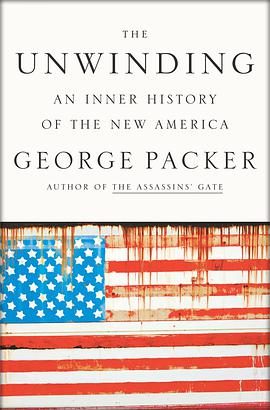
The Unwinding Douban
author:
George Packer
publishing house:
Farrar, Straus and Giroux
2013
- 5
American democracy is beset by a sense of crisis. Seismic shifts during a single generation have created a country of winners and loser s, allowing unprecedented freedom while rending the social contract, driving the political system to the verge of breakdown, and setting citizens adrift to find new paths forward. In The Unwinding, George Packer, author of The Assassins’ Gate: America in Iraq, tells the story of the United States over the past three decades in an utterly original way, with his characteristically sharp eye for detail and gift for weaving together complex narratives.
The Unwinding journeys through the lives of several Americans, including Dean Price, the son of tobacco farmers, who becomes an evangelist for a new economy in the rural South; Tammy Thomas, a factory worker in the Rust Belt trying to survive the collapse of her city; Jeff Connaughton, a Washington insider oscillating between political idealism and the lure of organized money; and Peter Thiel, a Silicon Valley billionaire who questions the Internet’s significance and arrives at a radical vision of the future. Packer interweaves these intimate stories with biographical sketches of the era’s leading public figures, from Newt Gingrich to Jay-Z, and collages made from newspaper headlines, advertising slogans, and song lyrics that capture the flow of events and their undercurrents.
The Unwinding portrays a superpower in danger of coming apart at the seams, its elites no longer elite, its institutions no longer working, its ordinary people left to improvise their own schemes for success and salvation. Packer’s novelistic and kaleidoscopic history of the new America is his most ambitious work to date.
The Unwinding journeys through the lives of several Americans, including Dean Price, the son of tobacco farmers, who becomes an evangelist for a new economy in the rural South; Tammy Thomas, a factory worker in the Rust Belt trying to survive the collapse of her city; Jeff Connaughton, a Washington insider oscillating between political idealism and the lure of organized money; and Peter Thiel, a Silicon Valley billionaire who questions the Internet’s significance and arrives at a radical vision of the future. Packer interweaves these intimate stories with biographical sketches of the era’s leading public figures, from Newt Gingrich to Jay-Z, and collages made from newspaper headlines, advertising slogans, and song lyrics that capture the flow of events and their undercurrents.
The Unwinding portrays a superpower in danger of coming apart at the seams, its elites no longer elite, its institutions no longer working, its ordinary people left to improvise their own schemes for success and salvation. Packer’s novelistic and kaleidoscopic history of the new America is his most ambitious work to date.
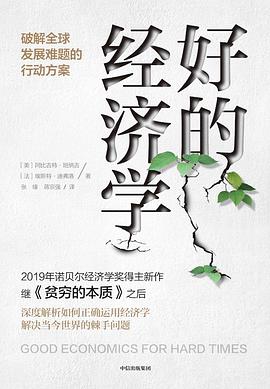
好的经济学 Douban
Good Economics for Hard Times
author:
[美] 阿比吉特·班纳吉
/
[法] 埃斯特·迪弗洛
translator:
张缘
/
蒋宗强
publishing house:
中信出版集团
2020
- 4
为什么移民给经济带来的影响,不遵循供求规律?为什么贸易会导致失业率上升和工资下降?谁曾经真正解释了增长的原因和发生的时机?
从新德里到达喀尔,从巴黎到华盛顿特区,移民问题、收入差距、全球化困局、技术颠覆、经济增长放缓、气候变化加速等问题随处可见,如何妥善处理这些问题,或许是我们这个时代的核心挑战。我们已然拥有了应对这些挑战的资源,但缺乏能够帮助我们消弭分歧、重建互信的理念,以及,我们常常错用了经济学。
在这本革命性的著作中,2019年诺贝尔经济学奖得主、麻省理工学院著名经济学家班纳吉和迪弗洛直面上述挑战,以明晰优雅的笔触阐述了经济学领域的前沿研究成果,提出了诸多富有创新和启发性的解决方案,以令人信服的理由阐释了我们应该采取哪些明智之举,以应对经济增长、移民、贫困等迫切挑战。
从新德里到达喀尔,从巴黎到华盛顿特区,移民问题、收入差距、全球化困局、技术颠覆、经济增长放缓、气候变化加速等问题随处可见,如何妥善处理这些问题,或许是我们这个时代的核心挑战。我们已然拥有了应对这些挑战的资源,但缺乏能够帮助我们消弭分歧、重建互信的理念,以及,我们常常错用了经济学。
在这本革命性的著作中,2019年诺贝尔经济学奖得主、麻省理工学院著名经济学家班纳吉和迪弗洛直面上述挑战,以明晰优雅的笔触阐述了经济学领域的前沿研究成果,提出了诸多富有创新和启发性的解决方案,以令人信服的理由阐释了我们应该采取哪些明智之举,以应对经济增长、移民、贫困等迫切挑战。
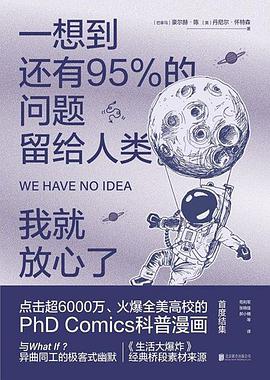
一想到还有95%的问题留给人类,我就放心了 Douban Goodreads
We Have No Idea: A Guide to the Unknown Universe
author:
[巴拿马] 豪尔赫•陈
/
[美] 丹尼尔·怀特森
translator:
苟利军
/
张晓佳
…
publishing house:
北京联合出版公司
2018
- 12
这是一本“逆向科普”的科普书。你以为你知道的事情,其实连世界顶尖科学家都不知道。这本书告诉你那些“顶尖科学家都不知道的事情” 。但这并非一本“答案”之书。本书旨在告诉你人类最前沿科学的边界,带领你一起从未知探索到已知。
这是一本趣味和严谨并存的科普书。一个科学家,放弃科研,改画漫画。20年后,他邀请一位顶尖科学家共同创作了这本“科普未知”的科普书。
这是一本你不看就会“落伍”的科普书。为什么“黑洞” “暗物质” “暗能量”“宇宙”“平行空间”等概念对人类有着深深的吸引力?那是因为它们是“未知”的。只有未知的事物才能勾起人类强大的好奇心而好奇心正是人类发展的源动力。
这是一本趣味和严谨并存的科普书。一个科学家,放弃科研,改画漫画。20年后,他邀请一位顶尖科学家共同创作了这本“科普未知”的科普书。
这是一本你不看就会“落伍”的科普书。为什么“黑洞” “暗物质” “暗能量”“宇宙”“平行空间”等概念对人类有着深深的吸引力?那是因为它们是“未知”的。只有未知的事物才能勾起人类强大的好奇心而好奇心正是人类发展的源动力。

医生的修炼 Douban
author:
[美国] 阿图·葛文德
translator:
欧冶
publishing house:
浙江人民出版社
2015
- 8
新手医生阿图满怀抱负进入梦想中的白色巨塔,他将遇到哪些意想不到的试炼?硬着头皮第一次拿起手术刀的他,将如何处理突如其来的变故?在错误切开病人气管的时候,他如何面对从手边一丝丝逝去的生命?在“成功是常态,失败就是一条人命”的职业生涯中,在每一个或者温暖或惊悚的病例故事背后,都是生与死的殊死较量。
本书精选了14个主题,从不同侧面展现了医生所面对的世界的不确定性,和做抉择时需要考虑的复杂因素。一个个医学现象背后,是外科医生群体的自我审视与修炼。
适合医疗界人士、政策制定者和普通大众阅读。
本书精选了14个主题,从不同侧面展现了医生所面对的世界的不确定性,和做抉择时需要考虑的复杂因素。一个个医学现象背后,是外科医生群体的自我审视与修炼。
适合医疗界人士、政策制定者和普通大众阅读。
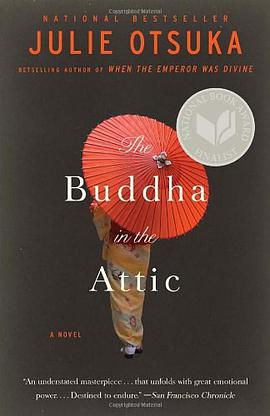
The Buddha in the Attic Douban
author:
Julie Otsuka
publishing house:
Anchor
2012
- 3
Winner of the PEN/Faulkner Award For Fiction
National Book Award and Los Angeles Times Book Prize Finalist
A New York Times Notable Book
A gorgeous novel by the celebrated author of When the Emperor Was Divine that tells the story of a group of young women brought from Japan to San Francisco as “picture brides” nearly a century ago. In eight unforgettable sections, The Buddha in the Attic traces the extraordinary lives of these women, from their arduous journeys by boat, to their arrival in San Francisco and their tremulous first nights as new wives; from their experiences raising children who would later reject their culture and language, to the deracinating arrival of war. Once again, Julie Otsuka has written a spellbinding novel about identity and loyalty, and what it means to be an American in uncertain times.
National Book Award and Los Angeles Times Book Prize Finalist
A New York Times Notable Book
A gorgeous novel by the celebrated author of When the Emperor Was Divine that tells the story of a group of young women brought from Japan to San Francisco as “picture brides” nearly a century ago. In eight unforgettable sections, The Buddha in the Attic traces the extraordinary lives of these women, from their arduous journeys by boat, to their arrival in San Francisco and their tremulous first nights as new wives; from their experiences raising children who would later reject their culture and language, to the deracinating arrival of war. Once again, Julie Otsuka has written a spellbinding novel about identity and loyalty, and what it means to be an American in uncertain times.
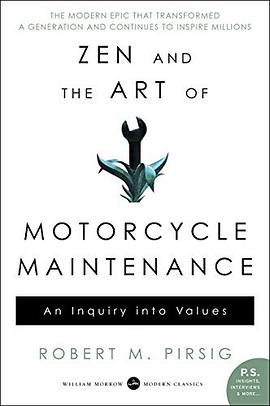
Zen and the Art of Motorcycle Maintenance Douban
author:
Robert M Pirsig
publishing house:
William Morrow & Company
2005
- 8
A narration of a summer motorcycle trip undertaken by a father and his son, Zen and the Art of Motorcycle Maintenance becomes a personal and philosophical odyssey into fundamental questions on how to live. The narrator's relationship with his son leads to a powerful self-reckoning; the craft of motorcycle maintenance leads to an austerely beautiful process for reconciling science, religion, and humanism. Resonant with the confusions of existence, this classic is a touching and transcendent book of life.</p>
This new edition contains an interview with Pirsig and letters and documents detailing how this extraordinary book came to be.</p>This P.S. edition features an extra 16 pages of insights into the book, including author interviews, recommended reading, and more.
This new edition contains an interview with Pirsig and letters and documents detailing how this extraordinary book came to be.</p>This P.S. edition features an extra 16 pages of insights into the book, including author interviews, recommended reading, and more.