艺术史
艺术史的另一半
Douban
★ 8.6 5 ratings
李君棠 / 垂垂 2022 - 6
马奈的缪斯、罗丹的情人、波洛克太太、北斋的女儿……这是她们的名字吗?她们真正的名字是什么? . 一本可以让你笑着读完的艺术史科普漫画 一次性认识23位艺术史中不可或缺的女艺术家 一种全新角度重读艺术史的可能性 . 也许在你一口气读完后,你会发现这本书的意义还远不于此 ———————————— 【内容简介】 《艺术史的另一半》从女艺术家的视角出发进行艺术史科普,不仅介绍艺术史上的重要事件与流派,还通过23位女艺术家的故事,带你一览从洞穴绘画到现代主义雕塑的艺术史。这本书也尝试回答艺术史上一个著名的蠢问题:“为什么没有伟大的女艺术家?”如果没有,原因是什么?如果有,是什么样的社会与个人生活的限制,使得她们在艺术史叙事中被遮蔽? ———————————— 【本书看点】 ★ 全年龄艺术史科普,零基础读者轻松掌握艺术史中的重要风格与流派 从女艺术家的生平与作品出发,科普艺术史上的重要事件与流派。比如,历史画、肖像画、风俗画、风景画和静物画哪种更高级?艺术赞助人对艺术的发展起到了什么作用?现代博物馆的雏形是什么?浮世绘如何产生?巴黎沙龙“长什么样”?艺术家和评论家,谁的意见更值钱?现代艺术市场怎么诞生?如何看懂现代主义?包豪斯、达达主义、超现实主义究竟怎么回事?女艺术家在哪里工作? ★ 以漫画小史形式,解答那些“艺术史中的关键问题” · 谁来决定一幅画是不是好看的? · 为什么那幅画会这么值钱? · 艺术家需不需要有商业头脑? ★ 一次性认识23位历史上伟大的女艺术家 卡特琳娜•范•海默森、索福尼斯巴•安圭索拉、拉维尼亚•丰塔纳、阿特米西亚•真蒂莱斯基、朱迪斯•莱斯特、雷切尔•勒伊斯、玛丽亚•西比拉•梅里安、安杰里卡•考夫曼、管道升、文俶、葛饰应为、贝尔特•莫里索、玛丽•卡萨特、卡米耶•克洛岱尔、玛丽安•冯•韦雷夫金、玛丽安•布兰德、里奥诺拉•卡灵顿、弗里达•卡罗、塔玛拉•德•莱姆皮卡、李•克拉斯纳、乔治亚•欧姬芙和艾达•欧姬芙、路易斯•布尔乔亚…… 各个时代的女性艺术家如何突破社会及个人生活中的限制,改变艺术史的进程、提出描绘世界的新方法。 ★ 一次重读艺术史的可能性:从女艺术家的角度重新观看艺术史上的重要事件 · 19世纪晚期,许多巴黎艺术家们厌倦了沙龙的陈腐品位,走出画室,到户外写生,成为第一批现代生活的画家。 · 那时的女艺术家们,需要申请“男装许可”,才能获得更多行动自由。 · 文艺复兴时期,做一位伟大的雕塑家,需要钱购买昂贵的材料,为运送材料的船只、协助雕塑的助手付费,还需要面积巨大的工作室,才能存放材料、完成大型订单。 19世纪以前,几乎没有女艺术家能同时拥有这些优越条件。
知识生成的图像史
Douban
尹吉男 2022 - 7
“开放的艺术史丛书”原创系列首作 清理习见,改变思考古代图像史的方法 集二十余年精粹,呈现总结“知识生成”研究路径与思想源流 -- 传统美术史的概念需要不断更新,作品的概念可能也要不断改变,甚至放大。我有一种感觉,以后的学者可能只关注研究的问题是不是学术上的进展,而不太关注门类,即到底 是社会学、哲学史、文学史,还是美术史。 我的目标是促进整个中国艺术史的研究。这些事情很迫切。如果接下来我们着重研究中国和外部互动中的那些中间环节,以后的学术模式可能会发生改变,不再是西方人提问题中国人回答,而是中国学者不断提出新的问题并引发全球的学者回答。到那时候,中国学术的生产时期就真正到来了。 ——尹吉男 清理习见,改变思考古代图像史的方法。 《知识生成的图像史》汇集了尹吉男关于顾恺之、董源、谢环及《杏园雅集图》等美术史上重要画家、作品的个案研究,以及此前积累的多篇中国书画鉴定学研读札记,几乎每篇都引起相当的反响,并形成了某种写作范式。作者追问明清鉴定家的晋唐画概念、关于风格的类型标尺等问题,从图像的视角观照历史,引领艺术理论和文化研究的新趋势。在中国绘画传统的风格研究与主题研究之外,讨论了图像史的复杂性与多样性,并由此带出了他对中国古代图像史的总体思考,即要“超越审美”“超越真伪”,尊重“物”的独特性,并且努力思考“物”的意义,别具方法论创见。
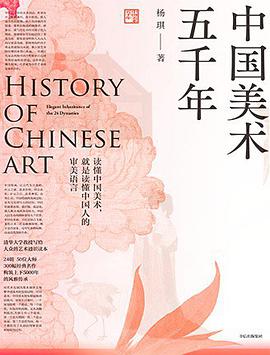
中国美术五千年
Douban
杨琪 2022 - 3
读懂中国美术,就是读懂中国人审美语言。24个朝代,50位名家,300幅传世画作,构筑上下5000年的风雅传承。 本书按照时间线,讲述中国美术的风格演变、技法沿革、题材变迁,解析历代作品中蕴含的中国人独特的精神追求:从旧石器时代的岩画中看见对天人和谐的祈盼,从商周青铜器中看见对礼乐制度的坚守,从敦煌壁画中看见慈悲天下的佛家精神,从山水画中看见寄情高远的文人情怀……美术里的中国,既淡雅、悠远,又庄严、宏伟。 看见中国人古今相连的审美情趣,也看见中国人生生不息的创造力。美术中见中国。
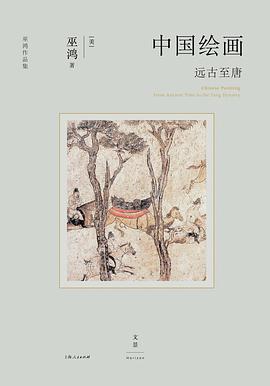
中国绘画:远古至唐
Douban Eggplant.place
★ 9.3 9 ratings
[美国] 巫鸿 publishing house: 上海人民出版社 2022 - 3
◆ 编辑推荐—————————————————————————————————————— 突破卷轴画范围,拓展“中国绘画”概念的疆域 改变绘画史叙事模式,重新讲述中国绘画的故事 本书是著名美术史家巫鸿的最新著作,脱胎于《中国绘画三千年》中作者负责撰写的《旧石器时期到唐代》一章,重新梳理结构框架、补充最新的研究成果,全面讲述了从远古时代至唐代末期的早期中国绘画的发展、不同时代绘画的风格和特点。作者在本书中有意识地突破卷轴画的范围,把“中国绘画”的概念扩大,在材料上把彩陶、壁画、屏幛、贴落和其他类型图画都包括进来,以其敏锐的图像分析能力全面理解中国近百年来的考古学成果,改变既有的绘画史叙事模式,呈现出不同时代、不同平面上的不同图像之间的内在勾连。 ◆ 内容简介—————————————————————————————————————— ·从岩石上的神秘图像,到陶器、建筑上的纹饰与壁画,绘画的二维平面如何产生? ·从陶瓮上的鹳鱼石斧图,到彩绘漆盒上人物与时空交叠的空间性图画,器物表面的写实绘画如何引发了画像的独立? ·楚汉墓葬礼仪艺术展现的第一个绘画高潮如何联系着后世佛教壁画和卷轴画的繁荣发展? ·名家辈出的宫廷艺术与臻于极盛的公共宗教艺术在朝野间的争奇斗艳如何塑造了富有变化和新意的盛唐气象? 在中国绘画三千年的漫长历史中,以唐末为节点的早期绘画担负着开发绘画媒材的宏大历史职责,无名画家的集体创作在日常生活和宗教礼仪环境中扮演着重要的角色,不同于以卷轴画为大宗的后世绘画,考古材料中所反映出的不同时期、地域和画手的风格变化,使得这段绘画史具有了研究方法上的独特性格。
全球景观中的中国古代艺术
Douban
★ 8.5 8 ratings
[美国] 巫鸿 publishing house: 生活·读书·新知三联书店 2017 - 1
“全球景观中的中国古代艺术”系列讲座采用 “全球美术史”的视点,对中国古代美术的重要特点进行反思。这个反思建立在两个基础上,一是把全球美术看做一个整体,其中包含着许多即独立又互动的地区性美术传统,每个地区传统都对人类美术的整体做出了宝贵的贡献。二是这些地区性的贡献是不同的,正因如此才造成了人类美术的无比丰富。 讲座的核心问题因此也可以归结为一个问题:传统中国美术对整体的人类美术史做出了什么最独特的、因而也是最有价值的贡献?对这个问题的注视点不一定一样,回答也不必相同。本系列讲座的关注点是确定中国美术中具有鲜明文化特性,同时又是源远流长、深具影响一些基本线索。类似的艺术形式在世界上其它地区美术传统中可能也存在,但不具有在中国美术中的持续性和深刻性。
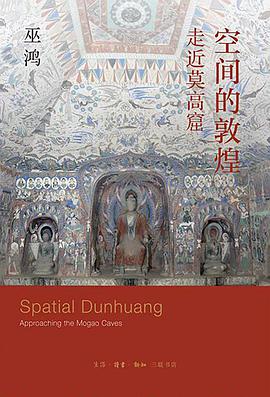
空间的敦煌
Spatial Dunhuang: Approaching the Mogao Caves Douban Goodreads
★ 8.5 6 ratings
[美国] 巫鸿 publishing house: 生活·读书·新知三联书店 2022 - 1
近一个世纪之前,陈寅恪先生在《陈垣敦煌劫余录序》中写道:“一时代之学术,必有其新材料与新问题。取用此材料,以研求问题,则为此时代学术之新潮流。”如果百年之前的情况是敦煌文献和敦煌艺术的新材料将引出新的研究问题,今天的情况则是经多几代学人的积累,基础性调查和材料整理已相当充盈,需要更多以研究中产生的新问题带动对材料的再发掘。巫鸿的这部新作通过“空间”这一角度,调动读者自身经验,从敦煌城一路向西,来到凿有数千洞窟的鸣沙山;面对扑面而来的崖壁展开历史想象,并以人的身体为尺度,进入不同时期的洞窟空间,感受洞窟的功能、性质和参观方式的明显变化。在洞窟中,身体参与感知雕塑和系列壁画以及它们之间的关系,最终目光视线落在单幅画面上,进入画面内部空间,完成精神层面的观看意义。因此,书中虽然广泛借助和征引了关于敦煌研究的原始材料,却试图从新的层面显示它们的意义,激发读者调动自己的身体和眼睛,在阅读中开启一趟敦煌莫高窟的历史文化之旅。
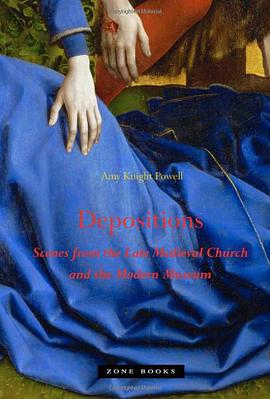
Depositions
Douban
Amy Knight Powell publishing house: Zone Books 2012 - 3
From late medieval reenactments of the Deposition from the Cross to Sol Lewitt's Buried Cube, Depositions is about taking down images and about images that anticipate being taken down. Foretelling their own depositions, as well as their re-elevations in contexts far from those in which they were made, the images studied in this book reveal themselves to be untimely--no truer to their first appearance than to their later reappearances. In Depositions, Amy Powell makes the case that late medieval paintings and ritual reenactments of the Deposition from the Cross not only picture the deposition of Christ (the Imago Dei) but also allegorize the deposition of the image as such and, in so doing, prefigure the lowering of "dead images" during the Protestant Reformation. Late medieval pre-figurations of Reformation iconoclasm anticipate, in turn, the repeated "deaths" of art since the advent of photography: that is the premise of the vignettes devoted to twentieth-century works of art that conclude each chapter of this book. In these vignettes, images that once stood in late medieval churches now find themselves among works of art from the more recent past with which they share certain formal characteristics. These surreal encounters compel us to reckon with affinities between images from different times and places. Turning pseudomorphosis--formal resemblance where there is no similarity of artistic intent -- on its head, Powell explores what happens to our understanding of historically and conceptually distant works of art when they look alike.
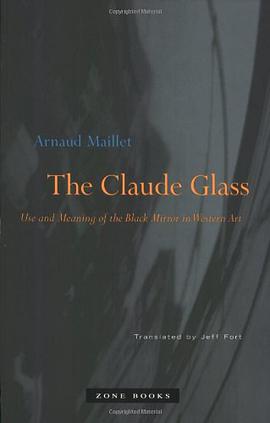
The Claude Glass
Douban
Arnaud Maillet translator: Jeff Fort publishing house: Zone 2009 - 3
A study of a largely forgotten optical device and its relation to notions of opacity, transparency, and imagination.
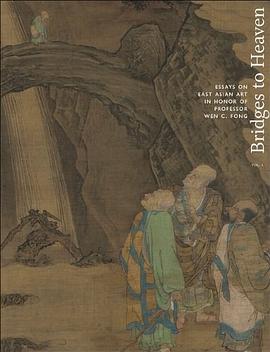
Bridges to Heaven
Douban
Jerome Silbergeld publishing house: Princeton University Press 2011
Wen C. Fong established America's first program in East Asian art history at Princeton University, where he taught Chinese art from 1954 to 1999. During this time, he supervised more than thirty PhD students, most of whom have gone on to hold professorships or museum positions throughout the United States, East Asia, and Europe. This two-volume book honors Professor Fong's extraordinary half-century career at Princeton and the Metropolitan Museum of Art by gathering almost forty essays on Chinese, Japanese, and Korean art history, written by his students and by some of his lifelong colleagues in this field of study. These full-length essays address a wide range of subjects, building bridges in many directions, from early jades and bronzes through traditional painting and prints, to photography, cinema, and modern museum practice. The diversity, depth, and originality of these essays make this work a monumental contribution to the study of the arts of East Asia. The book includes an interview of Professor Fong, conducted by Jerome Silbergeld, and a bibliography of Fong's work.
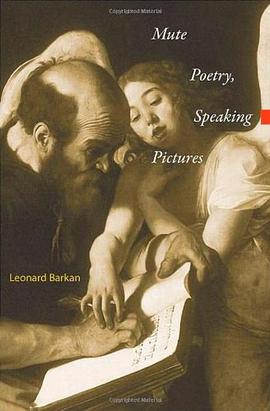
Mute Poetry, Speaking Pictures
Douban
Leonard Barkan publishing house: Princeton University Press 2012 - 11
Why do painters sometimes wish they were poets - and why do poets sometimes wish they were painters? What happens when Rembrandt spells out Hebrew in the sky or Poussin spells out Latin on a tombstone? What happens when Virgil, Ovid, or Shakespeare suspend their plots to describe a fictitious painting? In "Mute Poetry, Speaking Pictures", Leonard Barkan explores such questions as he examines the deliciously ambiguous history of the relationship between words and pictures, focusing on the period from antiquity to the Renaissance but offering insights that also have much to say about modern art and literature. The idea that a poem is like a picture has been a commonplace since at least ancient Greece, and writers and artists have frequently discussed poetry by discussing painting, and vice versa, but their efforts raise more questions than they answer. From Plutarch ("painting is mute poetry, poetry a speaking picture") to Horace ("as a picture, so a poem"), apparent clarity quickly leads to confusion about, for example, what qualities of pictures are being urged upon poets or how pictorial properties can be converted into poetical ones. The history of comparing and contrasting painting and poetry turns out to be partly a story of attempts to promote one medium at the expense of the other. At the same time, analogies between word and image have enabled writers and painters to think about and practice their craft. Ultimately, Barkan argues, this dialogue is an expression of desire: the painter longs for the rich signification of language while the poet yearns for the direct sensuousness of painting.
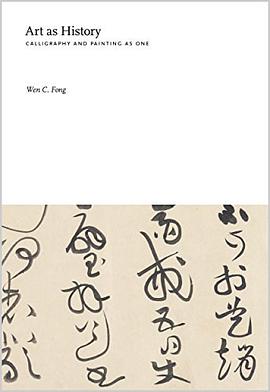
Art as History
Douban
Wen C. Fong publishing house: Princeton University Press 2014
This richly illustrated book provides an anthology and summation of the work of one of the world’s leading historians of Chinese painting and calligraphy. Wen Fong helped create the field of East Asian art history during a distinguished five-decade career at Princeton University and the Metropolitan Museum of Art. Few if any writers in English have such a broad knowledge of the history and practice of Chinese painting and calligraphy. In this collection of some of his most recent essays, Fong gives a sweeping tour through the history of Chinese painting and calligraphy as he offers new and revised views on a broad range of important subjects. The topics addressed include “art as history,” in which each art object preserves a moment in art’s own significant history; the museum as a place of serious study and education; the close historical relationship between calligraphy and painting and their primacy among Chinese fine arts; the parallel development of representational painting and sculpture in early painting history; the greater significance of brushwork, seen abstractly as a means of personal expression by the artist, in later painting history; the paradigmatic importance of the master-to-follower lineage as a social force in shaping the continuity and directing the subtle changes in Chinese painting history; the role of collectors; and the critical necessity of authenticated works for establishing an accurate art history. Throughout the book, Fong skillfully combines close analysis and detailed contextualization of individual works to reveal how the study of Chinese painting and calligraphy yields deep insights about Chinese culture and history.
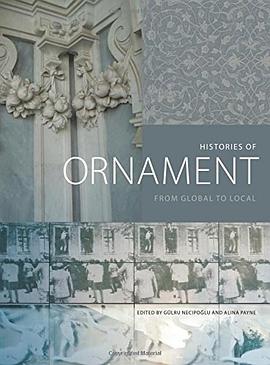
Histories of Ornament
Douban Goodreads
Gülru Necipoglu and Alina Payne publishing house: Princeton University Press 2016 - 3 other title: Histories of Ornament: From Global to Local
This lavishly illustrated volume is the first major global history of ornament from the Middle Ages to today. Crossing historical and geographical boundaries in unprecedented ways and considering the role of ornament in both art and architecture, Histories of Ornament offers a nuanced examination that integrates medieval, Renaissance, baroque, and modern Euroamerican traditions with their Islamic, Indian, Chinese, and Mesoamerican counterparts. At a time when ornament has re-emerged in architectural practice and is a topic of growing interest to art and architectural historians, the book reveals how the long history of ornament illuminates its global resurgence today. Organized by thematic sections on the significance, influence, and role of ornament, the book addresses ornament's current revival in architecture, its historiography and theories, its transcontinental mobility in medieval and early modern Europe and the Middle East, and its place in the context of industrialization and modernism. Throughout, Histories of Ornament emphasizes the portability and politics of ornament, figuration versus abstraction, cross-cultural dialogues, and the constant negotiation of local and global traditions. Featuring original essays by more than two dozen scholars from around the world, this authoritative and wide-ranging book provides an indispensable reference on the histories of ornament in a global context. Contributors include: Michele Bacci (Fribourg University); Anna Contadini (University of London); Thomas B. F. Cummins (Harvard); Chanchal Dadlani (Wake Forest); Daniela del Pesco (Universita degli Studi Roma Tre); Vittoria Di Palma (USC); Anne Dunlop (University of Melbourne); Marzia Faietti (University of Bologna); María Judith Feliciano (independent scholar); Finbarr Barry Flood (NYU); Jonathan Hay (NYU); Christopher P. Heuer (Clark Art); Rémi Labrusse (Université Paris Ouest Nanterre la Défense); Gülru Necipoğlu (Harvard); Marco Rosario Nobile (University of Palermo); Oya Pancaroğlu (Bosphorus University); Spyros Papapetros (Princeton); Alina Payne (Harvard); Antoine Picon (Harvard); David Pullins (Harvard); Jennifer L. Roberts (Harvard); David J. Roxburgh (Harvard); Hashim Sarkis (MIT); Robin Schuldenfrei (Courtauld); Avinoam Shalem (Columbia); and Gerhard Wolf (KHI, Florence).
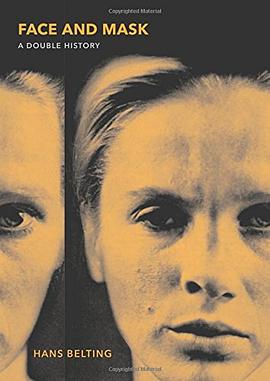
Face and Mask
Douban
Hans Belting translator: Abby J. Hansen publishing house: Princeton University Press 2017 - 3
A cultural history of the face in Western art, ranging from portraiture in painting and photography to film, theater, and mass media This fascinating book presents the first cultural history and anthropology of the face across centuries, continents, and media. Ranging from funerary masks and masks in drama to the figural work of contemporary artists including Cindy Sherman and Nam June Paik, renowned art historian Hans Belting emphasizes that while the face plays a critical role in human communication, it defies attempts at visual representation. Belting divides his book into three parts: faces as masks of the self, portraiture as a constantly evolving mask in Western culture, and the fate of the face in the age of mass media. Referencing a vast array of sources, Belting's insights draw on art history, philosophy, theories of visual culture, and cognitive science. He demonstrates that Western efforts to portray the face have repeatedly failed, even with the developments of new media such as photography and film, which promise ever-greater degrees of verisimilitude. In spite of sitting at the heart of human expression, the face resists possession, and creative endeavors to capture it inevitably result in masks―hollow signifiers of the humanity they're meant to embody. From creations by Van Eyck and August Sander to works by Francis Bacon, Ingmar Bergman, and Chuck Close, Face and Mask takes a remarkable look at how, through the centuries, the physical visage has inspired and evaded artistic interpretation.
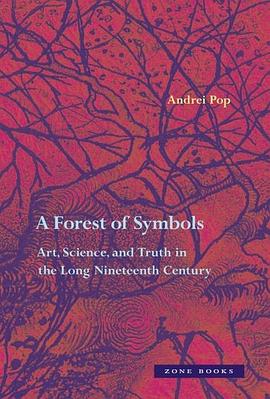
A Forest of Symbols
Douban
Andrei Pop publishing house: Zone Books 2019 - 10
In this groundbreaking book, Andrei Pop presents a lucid reassessment of those writers and artists in the late nineteenth century whose work merits the adjective “symbolist.” For Pop, this term denotes an art that is self-conscious about its modes of making meaning and he argues that these symbolist practices, which sought to provide more direct access to the viewer by constant revision of its material means of meaning-making (brushstrokes on a canvas, words on a page), are crucial to understanding the genesis of modern art. The symbolists saw art not as a social revolution, but a revolution in sense and in how we conceptualize the world. At the same time, the concerns of symbolist painters and poets were shared to a remarkable degree by theoretical scientists of the period, especially by mathematicians and logicians who were dissatisfied with the strict empiricism dominant in their disciplines, and which made shared knowledge seem unattainable. A crisis of sense made art and science look for conceptual foundations underlying the diverging subjective responses and perceptions of individuals. Unlike other studies of this period, Pop’s focus is not on how individual artists may have absorbed bits of scientific theories, but rather on the philosophical questions that were relevant to both domains. The problem of subjectivity in particular, of what in one’s experience can and cannot be shared, was crucial to the possibility of collaboration within science and to the communication of artistic innovation. Pop’s brilliant close readings of the literary and visual practices of Manet and Mallarmé, of drawings by Ernst Mach, William James and Wittgenstein, of experiments with color by Bracquemond and Van Gogh, and of the philosophical systems of Frege and Russell add up to a startling but coherent picture of the symbolist heritage of modernity and its consequences.
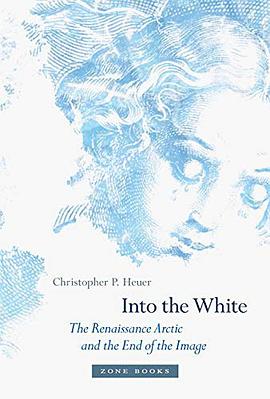
Into the White
Douban Goodreads
Christopher P. Heuer publishing house: Zone Books 2019 - 5 other title: Into the White: The Renaissance Arctic and the End of the Image
European narratives of the Atlantic New World tell stories of people and things: strange flora, wondrous animals, and sun-drenched populations for Europeans to mythologize or exploit. Yet between 1500 and 1700 one region upended all of these conventions in travel writing, science, and, most unexpectedly, art: the Arctic. Icy, unpopulated, visually and temporally “abstract,” the far North – a different kind of terra incognita for the Renaissance imagination – offered more than new stuff to be mapped, plundered, or even seen. Neither a continent, an ocean, nor a meteorological circumstance, the Arctic forced visitors from England, the Netherlands, Germany, and Italy, to grapple with what we would now call a “nonsite,” spurring dozens of previously unknown works, objects, and texts – and this all in an intellectual and political milieu crackling with Reformation debates over art’s very legitimacy. Into the White uses five case studies to probe how the early modern Arctic (as site, myth, and ecology) affected contemporary debates of perception and matter, of representation, discovery, and the time of the earth – long before the nineteenth century romanticized the polar landscape. In the far North, this book contends, the Renaissance exotic became something far stranger than the marvelous or the curious, something darkly material and unmasterable, something beyond the idea of image itself.
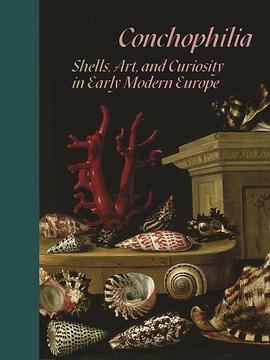
Conchophilia
Douban Goodreads
Marisa Anne Bass, Anne Goldgar, Hanneke Grootenboer, and Claudia Swan publishing house: Princton University Press 2021 - 8 other title: Conchophilia: Shells, Art, and Curiosity in Early Modern Europe
Among nature’s most artful creations, shells have long inspired the curiosity and passion of artisans, artists, collectors, and thinkers. Conchophilia delves into the intimate relationship between shells and people, offering an unprecedented account of the early modern era, when the influx of exotic shells to Europe fueled their study and representation as never before. From elaborate nautilus cups and shell-encrusted grottoes to delicate miniatures, this richly illustrated book reveals how the love of shells intersected not only with the rise of natural history and global trade but also with philosophical inquiry, issues of race and gender, and the ascent of art-historical connoisseurship. Shells circulated at the nexus of commerce and intellectual pursuit, suggesting new ways of thinking about relationships between Europe and the rest of the world. The authors focus on northern Europe, where the interest and trade in shells had its greatest impact on the visual arts. They consider how shells were perceived as exotic objects, the role of shells in courtly collections, their place in still-life tableaus, and the connections between their forms and those of the human body. They examine how artists gilded, carved, etched, and inked shells to evoke the permeable boundary between art and nature. These interactions with shells shaped the ways that early modern individuals perceived their relation to the natural world, and their endeavors in art and the acquisition of knowledge. Spanning painting and print to architecture and the decorative arts, Conchophilia uncovers the fascinating ways that shells were circulated, depicted, collected, and valued during a time of remarkable global change. "In Conchophilia seven scholars dissect why Renaissance-era collectors braved maritime hazards to beachcomb. Finding the pearliest treasures at shorelines called for avoiding crocodiles, spiny urchins and ‘burning sea slime’. . . . Painters depicted shells, with names as wonderful as ‘precious wentletrap’ and ‘speckled episcopal miter,’ arrayed on banquet tables or in the hands of exulting deities. Metalsmiths set nautiluses on gold pedestals sculpted with mermaid and sea foam motifs. Collectors had favorite shells cemented onto grotto walls, sometimes in the bristly shapes of pine cones and artichokes." —Eve M. Kahn, New York Times "The exquisitely illustrated, thought-provoking book examines the complicated provenances, varied uses, and key role of shells in shaping this period’s visual and aesthetic culture." —Lauren Moya Ford, Hyperallergic "A truly fascinating book with broad interdisciplinary appeal. Conchophilia is well researched, and filled with remarkable visual material, rich descriptions, and new insights."—Angela Vanhaelen, author of The Wake of Iconoclasm "Important and potentially field-defining, Conchophilia convincingly argues for the aesthetic, philosophical, and social importance of exotic shells in early modern culture. The work’s interdisciplinary nature combined with the sheer mass of dazzling illustrations will appeal to a wide audience as well as specialists in art history, the history of science, and the history of early modern Europe."—Beth Tobin, author of The Duchess’s Shells
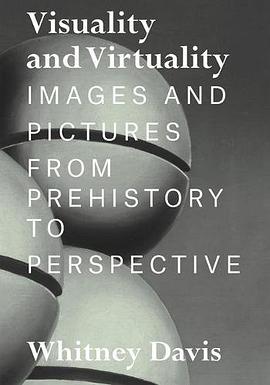
Visuality and Virtuality
Douban Goodreads
Whitney Davis publishing house: Princeton University Press 2017 - 11 other title: Visuality and Virtuality: Images and Pictures from Prehistory to Perspective
A provocative and challenging new conceptual framework for the study of images This book builds on the groundbreaking theoretical framework established in Whitney Davis’s acclaimed previous book, A General Theory of Visual Culture, in which he shows how certain culturally constituted aspects of artifacts and pictures are visible to informed viewers. Here, Davis uses revealing archaeological and historical case studies to further develop his theory, presenting an exacting new account of the interaction that occurs when a viewer looks at a picture. Davis argues that pictoriality—the depiction intended by its maker to be seen—emerges at a particular standpoint in space and time. Reconstruction of this standpoint is the first step of the art historian’s craft. Because standpoints are inherently mutable and mobile, pictoriality constantly shifts in form and possible meaning. To capture this complexity, Davis develops new concepts of radical pictorial ambiguity, including “bivisibility” (the fact that pictures can always be seen in ways other than intended), pictorial naturalism, and the behavior of pictures under changing angles of view. He then applies these concepts to four cases—Paleolithic cave painting; ancient Egyptian tomb decoration; classical Greek architectural sculpture, with a focus on the Parthenon frieze; and Renaissance perspective as invented by Brunelleschi. A profound new theory of the work of both makers and viewers by one of the discipline’s most esteemed and engaged thinkers, Visuality and Virtuality is essential reading for art historians, architects, archaeologists, and philosophers of art and visual theory.