视觉文化
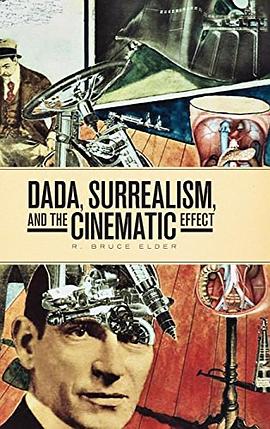
DADA, Surrealism, and the Cinematic Effect
Douban
R. Bruce Elder publishing house: Wilfrid Laurier University Press 2013 - 8
This book deals with the early intellectual reception of the cinema and the manner in which art theorists, philosophers, cultural theorists, and especially artists of the first decades of the twentieth century responded to its advent. While the idea persists that early writers on film were troubled by the cinema's lowly form, this work proposes that there was another, largely unrecognised, strain in the reception of it. Far from anxious about film's provenance in popular entertainment, some writers and artists proclaimed that the cinema was the most important art for the moderns, as it exemplified the vibrancy of contemporary life. This view of the cinema was especially common among those whose commitments were to advanced artistic practices. Their notions about how to recast the art media (or the forms forged from those media's materials) and the urgency of doing so formed the principal part of the conceptual core of the artistic programs advanced by the vanguard art movements of the first half of the twentieth century. This book, a companion to the author's previous, "Harmony & Dissent", examines the Dada and Surrealist movements as responses to the advent of the cinema.
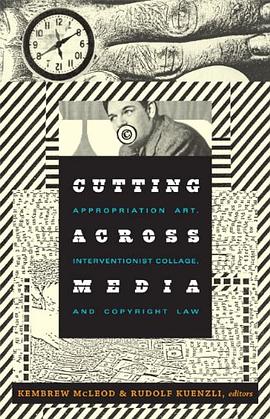
Cutting Across Media
Douban
McLeod, Kembrew; Kuenzli, Rudolf; 2011 - 5
The contributors to Cutting Across Media focus on collage and appropriation art, exploring the legal ramifications of such practices in an age when private companies can own culture using copyright and trademark law. Examining the intersections of the popular and the avant-garde, each essay is implicitly or explicitly concerned with the politics of appropriation art and other forms of collage that intervene in popular media discourses. Cutting Across Media features some important, eye-popping archival pieces, along with new essays by leading academics, critics, essayists, and artists. It scrutinizes and in some instances illustrates forms of collage and appropriation art such as audio mash-ups, remixed news broadcasts, literary collage, visual collage, and plagiarism-as-art, as well as culture jamming, pranks, and billboard alteration. Among the contributors to the collection are the novelist and essayist Jonathan Lethem, the poet and cultural critic Joshua Clover, the filmmaker Craig Baldwin, the hip-hop historian Jeff Chang, the 'zine-maker and sound collage artist Lloyd Dunn, and Negativland, the infamous collective that was sued in 1992 for sampling U2 in a satirical sound collage. Contributors: Craig Baldwin; David Banash; Marcus Boon; Jeff Chang; Joshua Clover; Lorraine Morales Cox; Lloyd Dunn; Pierre Joris; Douglas Kahn; Rudolf Kuenzli; Rob Latham; Jonathan Lethem; Carrie McLaren; Kembrew McLeod; Negativland; Philo T. Farnsworth; Davis Schneiderman; Siva Vaidhyanathan; Gabor Valyi; Eva Hemmungs Wirten
凝视的快感
Google Books Douban
克里斯蒂安·麦茨等 / 吴琼编 publishing house: 人民大学出版社 2005 other title: 凝视的快感
“电影是什么?”当巴赞的这个提问进入视觉文化研究领域时,它首先关注的是生产电影关注电影的机器(包括放映机、银幕、影院等)、影像等与观影者之间的关系。本书重点阐述在精神分析的欲望运做中,电影文本与主体(观影者)是如何相互建构的。所选的篇目既包括穆尔维、鲍德利和麦茨的经典研究,也包括德鲁兹、齐泽克、普林斯等人精彩的影片解读,而富瑞的两篇则对于我们了解电影理论的最新进展可大有帮助。
The Art of Describing
Douban Goodreads
Svetlana Alpers publishing house: University Of Chicago Press 1984 - 4 other title: The Art of Describing: Dutch Art in the Seventeenth Century
"The art historian after Erwin Panofsky and Ernst Gombrich is not only participating in an activity of great intellectual excitement; he is raising and exploring issues which lie very much at the centre of psychology, of the sciences and of history itself. Svetlana Alpers's study of 17th-century Dutch painting is a splendid example of this excitement and of the centrality of art history among current disciples. Professor Alpers puts forward a vividly argued thesis. There is, she says, a truly fundamental dichotomy between the art of the Italian Renaissance and that of the Dutch masters. . . . Italian art is the primary expression of a 'textual culture, ' this is to say of a culture which seeks emblematic, allegorical or philosophical meanings in a serious painting. Alberti, Vasari and the many other theoreticians of the Italian Renaissance teach us to 'read' a painting, and to read it in depth so as to elicit and construe its several levels of signification. The world of Dutch art, by the contrast, arises from and enacts a truly 'visual culture.' It serves and energises a system of values in which meaning is not 'read' but 'seen, ' in which new knowledge is visually recorded."--George Steiner, "Sunday Times" "There is no doubt that thanks to Alpers's highly original book the study of the Dutch masters of the seventeenth century will be thoroughly reformed and rejuvenated. . . . She herself has the verve, the knowledge, and the sensitivity to make us see familiar sights in a new light."--E. H. Gombrich, "New York Review of Books"
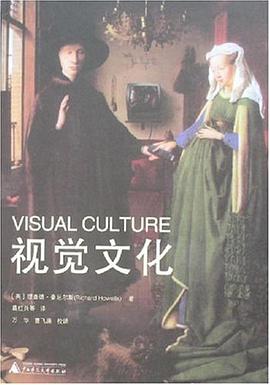
视觉文化
Visual Culture Douban
理查德·豪厄尔斯 translator: 葛红兵 publishing house: 广西师范大学出版社 2007 - 5
《视觉文化》是一本关于视觉文化分析的介绍性书籍,它将有助于加强我们的视觉文化修养。它并不着力于对特定视觉文本内涵的解释,而是试图教会我们独立解析视觉文本的传播内容和传播方式。这是一本理论性的书籍,但是,它把理论建立在例证分析的基础上。
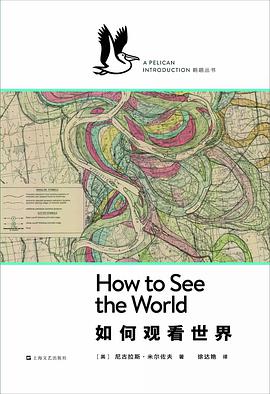
如何观看世界
Douban
★ 7.8 8 ratings
[英] 尼古拉斯·米尔佐夫 translator: 徐达艳 publishing house: 上海文艺出版社 2017 - 4
从Google图片到Instagram,从自拍到虚拟游戏,视觉图像在数量上出现大爆炸。我们正在经历一场空前的视觉革命。困惑、无序、释放、焦虑同时产生,所有这些会将我们引向何处?本书就是来阐明,我们怎样才能理清这些变化,并且理解它们对我们的视觉世界产生的意义。我们将看到什么在兴起,什么在衰退,什么正在被大家热烈争论。 作者纽约大学教授尼古拉斯o米尔佐夫(Nicholas Mirzoeff)是视觉文化研究领军人物,他融合艺术、历史、理论以及日常生活经验各方知识,与我们探讨:视觉文化是什么?如何从海量的视觉图像里发掘有用信息?视觉文化如何塑造、定义我们的生活,如何帮助我们改变世界?
摄影哲学的思考
Für eine Philosophie der Fotographie Douban
★ 9.0 12 ratings
[巴西]威廉·弗卢塞尔 translator: 毛卫东 / 丁君君 publishing house: 中国民族摄影艺术出版社 2017
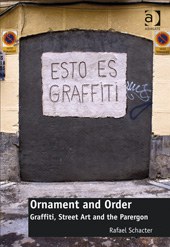
Ornament and Order
Douban
Rafael Schacter publishing house: Ashgate Publishing 2014 - 9
Based on an in-depth ethnographic study working with some of the world’s most influential Independent Public Artists, this book takes a completely new approach. Placing these illicit aesthetic practices within a broader historical, political, and aesthetic context, it argues that they are in fact both intrinsically ornamental (working within a classic architectonic framework), as well as innately ordered (within a highly ritualized, performative structure). Rather than disharmonic, destructive forms, rather than ones solely working within the dynamics of the market, these insurgent images are seen to reface rather than deface the city, operating within a modality of contemporary civic ritual.
Art Power
Douban
Boris Groys publishing house: MIT Press 2008 - 3
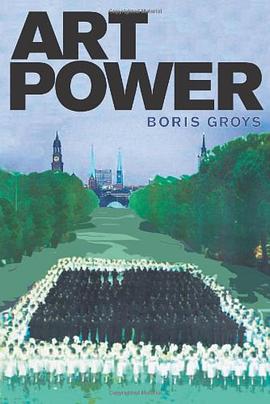
Art has its own power in the world, and is as much a force in the power play of global politics today as it once was in the arena of cold war politics. Art, argues distinguished theoretician Boris Groys, is hardly a powerless commodity subject to the art market's fiats of inclusion and exclusion. In Art Power, Groys examines modern and contemporary art according to its ideological function. Art, Groys writes, is produced and brought before the public in two ways—as a commodity and as a tool of political propaganda. In the contemporary art scene, very little attention is paid to the latter function; the official and unofficial art of the former Soviet Union and other former Socialist states, for example, is largely excluded from the field of institutionally recognized art, usually on moral grounds (although, Groys points out, criticism of the morality of the market never leads to calls for a similar exclusion of art produced under market conditions). Arguing for the inclusion of politically motivated art in contemporary art discourse, Groys considers art produced under totalitarianism, Socialism, and post-Communism. He also considers today’s mainstream Western art—which he finds behaving more and more according to the norms of ideological propaganda: produced and exhibited for the masses at international exhibitions, biennials, and festivals. Contemporary art, Groys argues, demonstrates its power by appropriating the iconoclastic gestures directed against itself—by positioning itself simultaneously as an image and as a critique of the image. In Art Power, Groys examines this fundamental appropriation that produces the paradoxical object of the modern artwork.
比特城市
City of Bits: Space, Place, and the Infobahn Douban
[美] 威廉·J.米歇尔 translator: 余小丹 / 陈毅平 (校) publishing house: 拜德雅丨重庆大学出版社 2017 - 4
本书面世于20世纪末。在那时,计算机已开始普遍介入人类生活。作者威廉·J. 米歇尔教授对这一现象展开了深入而卓绝的研究。其研究领域十分开阔,涉及建筑学、媒介学、艺术学等多个学科。本书则是在这一跨学科背景中展开。 它从当时既有的生活形制出发,结合计算机技术的发展实况,对 未来的人类生活进行了一系列设想。在这些构想里,从宏大的生活时空,到细微的身体发肤,都产生了前所未有的变化。时间重置,建筑重组,身体和思维也重新调整。而这一切,也就是“互联网+”时代的我们正经历和将面临的境况。 很大程度上,米歇尔教授的多数预言已经逐一得到实现,但他的思路在今日看来依旧是崭新的,而这正是本书所要为读者呈现的重点。本书从技术出发,却不止步于技术,而是对未来之可能的情动。
表征的重负:论摄影与历史
The Burden of Representation: Essays on Photographies and Histories Douban
[美]约翰·塔格 translator: 周韵 publishing house: 拜德雅 | 重庆大学出版社 2018
-编辑推荐- 照片曾作为一种证据工具而被广泛使用,然而在这个“有图有真相”已成为笑话、“PS”技术大行其道的时代,层出不穷的“假照片”事例却不断地警醒我们去重新思考照片与事实之间的关系。 ★ 照片是可靠、真实的作证材料吗? ★ 照片的真实性来自于何处? ★ 照片的证据价值取决于什么? ★ 照片的意义和现实效果是如何被生产和解读的? 眼下这部摄影史研究的必读作品试图给出一些明确的回应。“每一张照片与其指称对象一样自然”的观念正变得遥遥欲坠,照片不应被当作一种对现实的真实记录,它需要的不是神奇的炼金术,而是历史。通过追溯照片证据被用于英国工业化、城市化进程中的一段鲜为人知的历史,本书揭示了这段历史所暗示的构成照片证据价值的权力关系。 -内容简介- 在法庭、医院和警察局里,在护照、许可证和通行证上,照片被频繁地用于档案、证据和记录。那些置于镜头前的事物与摄影影像之间的对应联系被理所当然地建立了起来,似乎照片就可以断言一种压倒一切的真实,证明那些曾经存在过的现实。 然而,照片作为此种“证据工具”,它所拥有的此种“证据之力”又是如何且在何时被确立并被接受的?哪种类型的照片能够以这种方式被生产和使用?哪些组织和机构有权赋予它这一地位?这涉及哪些摄影表征的概念,又会产生何种结果? 通过对摄影进行严格的历史和体制分析,本书从摄影记录与现代国家(涵盖卫生、市政、司法、社会控制等)的关系着手,展示了被织入国家机器与社会网络中的摄影所扮演的各种角色,呈现了现代国家和社会的“规训实践”与作为“观看实践”的摄影的相互关系。作者将摄影纳入现代国家的创生与社会控制的视野中加以考察,书中的观点植根于他对现代国家的发展和扩张的历史性把握。他在书中所展现的问题意识,显示了福柯思想对摄影史研究的重大影响。 -名人 & 媒体推荐- 关于摄影体制化及其社会和政治后果的探讨,犀利睿智、富有感情、清晰易读。塔格的新锐之声使艺术史的实践和政治重新焕发活力。 ——阿尔伯特•布瓦姆,加州大学洛杉矶分校艺术史教授 约翰•塔格代表了美国摄影批评的新声音。他与普遍的狭隘论调的区别在于他熟悉欧洲马克思主义和后结构主义论争中的主要人物的思想。迅速发展但刚起步的摄影史学科从对这些思想的应用中获益匪浅。 ——乌尔里希•凯勒,加州大学圣塔芭芭拉分校艺术史教授 塔格的工作有助于重塑影响了整整一代批评家的文化政治因素......人们可以在这些篇章中识别出摄影与权力关系之独特理论的展露。或许,对于当下和未来的摄影史学者来说,正是这一理论成为了《表征的重负》一书最具挑战性和启发性的遗产。 ——《后像》 本书是反霸权史写作的典范。在福柯式的风格中,塔格认为,摄影始终是话语系统的一部分……他提供了理论和方法论的自我意识的框架,并彻底审视了现实主义的问题。 ——《媒介,文化和社会》 一部重要且令人印象深刻的文集。其中的共同主题和论点,以及他深思熟虑的介绍,提供了摄影及其各种体制历史的新知识。 ——《艺术史》
视觉文化面面观
Visual Culture:The Study of the Visual after the Cultural Turn Douban
[加] 玛格丽特·迪科维茨卡娅 translator: 李芳 / 肖伟胜 publishing house: 拜德雅 | 重庆大学出版社 2019 - 8
-编辑推荐- ★什么是视觉研究? ★它的研究对象是什么? ★对于艺术史家来说,视觉文化存在着哪些关联? ★艺术史家如今对视觉研究该采取怎样的态度? ★艺术史研究同视觉与文化研究之间有什么关系? ★视觉文化需要运用明显不同于艺术史与文化研究的阐释方法吗? 在本书中,作者通过对马丁•杰伊、尼古拉斯•米尔佐夫、W. J. T. 米歇尔等众多学者的访谈,为我们梳理了视觉文化研究的谱系与对象,勾勒出这一新领域跨学科、跨媒介的驳杂面貌。 -内容简介- 近年来,视觉文化已经日渐成为一个重要的跨学科研究领域。视觉文化认为图像在表征世界中的意义上占据中心地位。它不认为所谓的“高级”文化的地位更高。但是,尽管目前视觉文化研究和项目的数量激增,但该领域本身似乎没有就其范围、目标、定义和方法达成共识。在本书中,迪科维茨卡娅概述了这一新的研究领域,以便调和不同的理论立场,并了解其进一步研究的潜力。她的目的是说明视觉文化如何避免她所谓的威胁它的斯库拉(Scylla)和卡律布狄斯(Charybids):前者指的是因为它偏离了传统的艺术史层面,所以缺乏特定研究对象;后者指的是因为它似乎包含了与文化和视觉有关的一切,所以将这一领域扩展到不相干的田地。 迪科维茨卡娅对视觉文化进行了考古学的追踪,研究了艺术史的“文化转向”和视觉研究的兴起。基于问卷调查、口述史以及对这一领域主要学者的访谈,她首先讨论了这一领域的发展历程、理论框架及研究方法,然后研究了视觉文化的四个项目课程,它们分别位于罗切斯特大学、芝加哥大学、加州大学尔湾分校、纽约大学石溪分校。通过对这些项目的理论和实践的分析,迪科维茨卡娅描绘了视觉文化项目在21世纪的未来。
回视:历史想象与图像修辞
Past Looking: Historical Imagination and the Rhetoric of the Image Douban
[美]迈克尔·安·霍利 translator: 王洪华 publishing house: 拜德雅 | 重庆大学出版社 2020 - 5
-编辑推荐- 过去与现在,历史与当下 发自老去繁星的光芒是我们观察黑暗与远方的唯一光亮 旧时的艺术至今仍对始终绕其旋转的历史理解产生着强大的吸力 —————————— 一场在艺术作品与史学家之间持续的“相爱相杀”的角力 一次对名家名画及其历史诠释的集中评说 一次对艺术史学方法的深度理论探讨 —————————— 史学家的“此时此在”与艺术作品的“彼时彼在”如何往返互动? 艺术作品的撰写者是以何种方式破解了作品?史学创造过程又始自何处? 艺术作品如何使我们遵照其自身的比喻逻辑,以某些特定修辞视角去观看它? 为了解答这些问题,本书对中世纪晚期、文艺复兴和巴洛克艺术史中的个案进行了研究。这些研究的要义,都在于史学家与艺术作品之间的交互性问题,即时间上的“此时此在”与“彼时彼在”的互动关系。作者认为,观看过去不是一个简单的顺时行为,在撰写过去的问题上,我们或许只一味专注于观察过去留下的蛛丝马迹,却未意识到艺术作品无时无刻不在回望我们。 尽管本书研究的是旧时的艺术,但作者的理论视角和方法却是当代的,她提出的“动态诠释法”既强调研究者对研究对象所施加的作用,也强调研究对象对研究者所具有的启示。她要求以研究者此时此在的主观眼光去回望历史上客观存在的艺术,去与彼时彼在的艺术互动,去进行动态诠释的实践。 -内容简介- 本书探索了艺术作品的再现手段如何影响后世批评家对其所作的评论和诠释,这其中的主要问题是关于图像和文本之间修辞意识形态的有效对应。作者通过具体的史学例证(布克哈特对意大利文艺复兴艺术的共时研究;沃尔夫林所例举的巴洛克艺术的案例;夏皮罗和弗洛伊德对达•芬奇艺术的争论;潘诺夫斯基对北方文艺复兴时期绘画中“伪装的象征主义”的注解),论证了被编码于艺术作品之中的再现手段如何继续被编码在与其相关的评论中。 作者认为,历史上的艺术现象和艺术作品,在往昔产生之时,就有为后人而存在的意向,尤其是再现式的艺术,仿佛是为后人的研究而开放自身的。在这个意义上,后人对往日艺术的研究,不是“此时此在”的主观诠释,而是对“彼时彼在”的探讨。作者指出,如果对于诠释的动态理解要求我们艺术史家必须反思自己对待作品的方式,那么质疑作品怎么对待我们同样有益。
学做视觉民族志(原书第3版)
Doing Visual Ethnography 3e Douban
[澳]莎拉·平克 translator: 邝明艳 / 唐晓莉 publishing house: 拜德雅 | 重庆大学出版社 2019
-编辑推荐- ★ 为何读? 影像“无处不在”,它们渗透进我们的学术工作和日常生活,成为民族志学者工作中不可分割的元素。当代的民族志研究已然卷入了视觉技术、影像、隐喻和观看方式等的旋涡中。本书是一次邀请,它希望引起大家对民族志研究过程中的影像、技术以及观看和体验方式的关注。 ★ 如何读? “方法是为研究服务的,而非研究为方法服务。”本书不是一个提供方法的文本,而是一本方法论的书籍:它旨在提出方法上的建议,邀请读者参与到这种方法中,对其进行评估,看是否能以及如何运用到他们的课题中,如果读者愿意的话也可以对这种方法进行调试和改造。 -内容简介- 近年来,视觉研究和民族志相融合的趋势日益显现。本书是这两者融合而产生的一本里程碑意义的著作,它历经3版,足以看出它在这一领域的经典性。 本书分为三大部分共10章: ★ 第1章将视觉民族志置于广阔的历史和学科背景中,将为后面的章节所讨论的视觉民族志方法提供历史和学科的描述。 ★ 第2章概括了一种方法,它将视觉影像和技术与反身性民族志相关联,聚焦于主观性、创造性和自我意识。 它将社会个体的人类学思想与视觉理论及对消费和物质文化的探索相结合,意在思考视觉影像和技术是怎样与两种文化交织在一起的:一种是民族志学者研究的文化,另一种是学者们置身其中的学术文化。 ★ 第3章延续了第2章的讨论,关注视觉田野调查准备工作的实践。在此,作者通过田野调查中的性别关系的例子,反思了项目设计、伦理考量和身份认同等问题。 ★ 由4-7章组成的第二部分通过聚焦在实践中一直被使用的各种视觉和数字技术来考察视觉民族志方法论和方法。第4章集中探讨摄影在民族志研究实践中的使用。植根于视觉社会学和人类学的摄影还能以各种方式被运用于众多领域。 ★ 第5章将讨论视频在视觉民族志研究中的运用。在此,作者将不再以统治了视觉人类学实践和文献的民族志电影为中心,而是考虑了不同的方式,其中视频录像可以成为民族志情境中的一种。 ★ 第6章是专为第3版而写的,作者将重点讨论网络媒体在视觉民族志中的应用,探讨融入这一情境中的新的视觉民族志研究实践如何显现。 ★ 第7章继续前面三章的话题,着重探讨在民族志进程中对视觉材料的组织和阐释。 ★ 本书的最后一部分致力于分析作为民族志学者如何利用数字和视觉影像传播我们的研究。第8章和第9章讨论不同类型文本的产生,视觉的、书面的和其他材料怎样在不同的表征中结合并互联,尤其是摄影和视频。 ★ 数字媒体已经为视觉影像的使用打开了新的令人激动的可能性。然而,这些可能性也带来了一系列表征、 阐释和知识产权等问题,第10章将就此进行探讨。
身体图景
Bodyscape: Art. Modernity and the Ideal Figure Douban
[美]尼古拉斯·米尔佐夫(Nicholas Mirzoeff) translator: 萧易 publishing house: 拜德雅丨重庆大学出版社 2018 - 6
- 编辑推荐 - ★你的身体不是它自己。而且,我的也不是。它正处在医药、运动、营养、减脂、卡路里计算这些后现代控制论力量的围攻之下。 ★一旦身体发生变化,一切都会随之转型。身体既是抵抗后现代主义种种全球性趋势的最后据点,也是首先受到它们影响的前哨。 ★从大卫的油画到“越战”纪念碑,对国族、性态和技术的思考如何反映在对身体和政治身体的再现之中?从安格尔到毕加索和麦当娜,理想形体何以实现?从比属刚果的纪实摄影到让-米歇尔·巴斯奎特的涂鸦,种族化实践的影响,以及由此产生的抵制,如何得到深刻体现? ★在这复杂多变的身体图景之中,我们是谁?我们的身体如何被塑造?认知你自己,从认知你的身体图景开始。 ★艺术中并不存在视觉的中立性,如果存在,那么艺术就不再能够给予我们任何东西。现代的旁观者应当让位于后现代的见证者。欢迎来到身体图景的见证席。 - 内容简介 - 西方艺术长期追求对完美身体的视觉化。如今,碎片组构而成的或单一模型衍生的理想化白人异性恋身体已陷入危机。但取而代之的又是怎样的身体呢?我们困惑于从革命时期法国到当代纽约的各种身体图像。而在本书中,尼古拉斯•米尔佐夫对这样的困惑进行了追本溯源的探究。他讨论到,身体再现总是受政治和文化认同危机的形塑,远非成为一成不变的圣像那么简单。 本书所涉艺术家众多,包括达·芬奇、普桑和马奈这样的绘画大师,也包括朱丽亚•玛格丽特·卡梅隆和保罗·斯特兰德这样的摄影家,还有辛迪·舍曼、奇奇·史密斯和南希·斯佩罗这样的当代艺术家。米尔佐夫这一极具启发性的研究展现了他们作品中身体的核心地位。 从大卫的油画到“越战”纪念碑,米尔佐夫探讨了对种族、国族、性别、性态和技术的思考如何反映在对身体和政治身体的再现之中。进一步,从安格尔到毕加索和麦当娜,米尔佐夫考量了圣母的理想形体。加诸他者身体的种族视觉烙印,使理想的西方身体成为可能。从比属刚果的纪实摄影到让-米歇尔·巴斯奎特的艺术创作,这种种族化实践的影响,以及由此产生的抵制,得到了深刻体现。
Society of the Spectacle
Douban
居伊·德波 translator: Fredy Perlman publishing house: Black & Red 2000 - 6
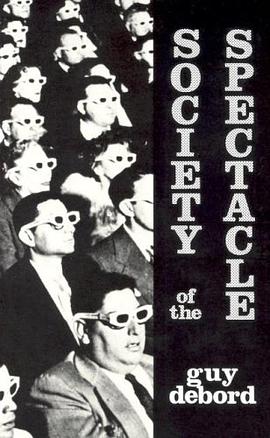
The Das Kapital of the 20th century. An essential text, and the main theoretical work of the situationists. Few works of political and cultural theory have been as enduringly provocative. From its publication amid the social upheavals of the 1960's up to the present, the volatile theses of this book have decisively transformed debates on the shape of modernity, capitalism, and everyday life in the late 20th century. This is the original translation by Fredy Perlman, kept in print continuously for the last 30 years, keeping the flame alive when no-one else cared.
More than One Picture
Douban
Felix Thurlemann publishing house: Yale University Press 2019 - 11
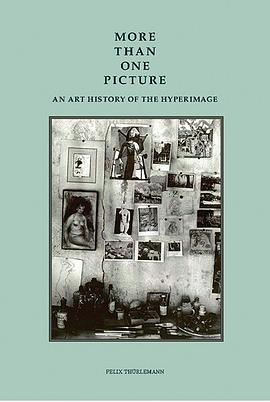
In exhibitions, illustrated art books, and classrooms, artworks or their photographic reproductions are arranged as calculated ensembles that have their own importance. In this volume, Felix Thurlemann develops a theory of this type of image use, arguing that with each new gathering of images, an art object is reinterpreted. These hyperimages have played a major role in the history of art since the seventeenth century, and the main actors of the art world are all hyperimage creators. In part because the hyperimage is not permanently available, this interplay of images has been largely unexplored. Through case studies organized within three groups of producers-collectors and curators, art historians, and artists-Thurlemann proposes a theory of the hyperimage, explores the semiotic nature of this plural image use, and discusses the arrangement and interpretation of such pictures in order to illuminate the phenomenon of Western image culture from the beginning of the seventeenth century until today. His analysis of the ways in which images are assembled and associated provides a crucial context for the explosive present-day deployment of images on digital devices.
Image Science
Douban
W. J. T. Mitchell publishing house: University of Chicago Press 2015 - 10
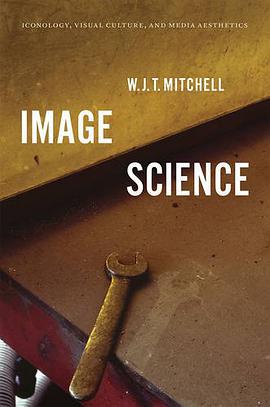
Almost thirty years ago, W. J. T. Mitchell’s "Iconology" helped launch the interdisciplinary study of visual media, now a central feature of the humanities. Along with his subsequent "Picture Theory" and "What Do Pictures Want?", Mitchell’s now-classic work introduced such ideas as the pictorial turn, the image/picture distinction, the metapicture, and the biopicture. These key concepts imply an approach to images as true objects of investigation—an “image science.” Continuing with this influential line of thought, Image Science gathers Mitchell’s most recent essays on media aesthetics, visual culture, and artistic symbolism. The chapters delve into such topics as the physics and biology of images, digital photography and realism, architecture and new media, and the occupation of space in contemporary popular uprisings. The book looks both backward at the emergence of iconology as a field and forward toward what might be possible if image science can indeed approach pictures the same way that empirical sciences approach natural phenomena. Essential for those involved with any aspect of visual media, Image Science is a brilliant call for a method of studying images that overcomes the “two-culture split” between the natural and human sciences.