漂在加拿大


大野狼 Douban
WOLVES
author:
(英)埃米莉·格雷维特 文/图
translator:
柯倩华
publishing house:
河北教育出版社
2010
- 3
一只兔子在图书馆里借了一本关于大野狼的书,他专注地读啊读啊,直到……兔子究竟有没有被大野狼吃掉?所有图画只是兔子在阅读时的想象?还是另有内情?兔子家门口那堆无人理会的信件,是因为兔子已经被吃掉了?还是因为他实在太爱那本书,带着它远走高飞了呢?书中各式巧妙的线索,让读者在阅读故事的同时,不断在现实与虚拟中穿梭;设计精美的借书卡和图书馆的信件,也为这本书增添了无穷的乐趣。埃米莉•格雷维特的这本《大野狼》,绝对能让你回味无穷。

两张老照片的故事 Douban
author:
岑龙
publishing house:
译林出版社
2015
- 8
“我”的父亲出生于海南岛偏僻的乡村。1930年代,在老师、亲友们的帮助下获得了赴日留学的机会。他在异国之地随身携带唯一一张母子合影,勉励自己用功。他跟日本同学山本最要好,俩人结下了深厚的友谊。可是,不久战争爆发,他毅然即刻回国,临走时将那张母子合影留给了山本。战后的一天,“我”的父亲收到了来自山本母亲的信,得知在他回国后不久山本出征,战死了。随信附上两张老照片:“我”爸爸的母子合影和在山本的遗物发现的山本家母子合影。岁月流逝,“我”长大了,在樱花盛开时来到了日本,替父亲和他同学探访樱花。他想一直珍藏两张照片,将两张老照片的故事世代传说下去……以作者父亲的亲生经历为原型,讲述跨国国界的友谊被战争离间的悲剧。

美丽的新年 Douban
Mei Li
author:
[美] 托马斯·汉德福思
translator:
蒙正童书馆
publishing house:
中国华侨出版社
2016
- 1
故事主人公美丽的纯朴开朗给了读者深刻的印象,她只有三个铜板的压岁钱,先是给了需要钱过年的贫困女孩力大第一个铜钱,又忍住美食的诱惑用第二枚铜钱买了鞭炮,第三枚铜钱则给哥哥圣玉带来了财运。虽然压岁钱花完时,美丽多少有些沮丧,而算命道士“统治一个王国”的预言,又令美丽兴奋不已。经过城里一天的历险,善有善报的美丽,在女孩力大的帮助下,顺利出城,踏上回家的路。所有的劳累和饥饿在美丽看到家的那一刻全都融化了,妈妈温柔的问候,热腾腾的年夜饭,是每个归家游子的期盼。

安的种子 Douban
author:
王早早
/
黄丽
2008
有幸看到这本书的大人——无论你是不是准备将它读给孩子听——也许都应该先找一个安静的角落,轻轻地念给自己听,然后想一想、再想一想,我们有没有得到过“千年莲花的种子”?有,当然有。我们日夜都在马不停蹄地追逐一些“珍贵”的东西呢,仿佛所有的人都希望以最快的速度达到各种各样的目的。这时候,大自然的规律往往被撇在一边,我们甚至不会思考冬天是不是可以种花,只一味想着“我要第一个种出来”、“怎样才能种出来呢”。生活的主题仿佛只是追逐,我们不知道有多久没有去散步了。
在这急功近利的社会中,安的那份平和的心境,宛如一潭清澈平静的水,是多么难得。一天天长大的孩子啊,你总有一天也会得到“千年莲花的种子”,会为了各种“珍贵”的东西日以继夜、马不停蹄。可是,无论如何,希望你记得安——这个你小时候听过的故事里的小和尚,记得他感激地把种子装进小布袋里、挂在胸前;记得他从容地去买东西、扫雪、做斋饭、挑水;记得他悠悠然散步的样子。他告诉你,要怀着希望、有所追求,但一定要淡定、顺其自然;同时,享受生活的过程,享受那些平凡琐碎的小事、享受等待。
祝福所有看到这个故事的大人和孩子,祝你们在某个盛夏的清晨,也看到千年莲花的盛开。
在这急功近利的社会中,安的那份平和的心境,宛如一潭清澈平静的水,是多么难得。一天天长大的孩子啊,你总有一天也会得到“千年莲花的种子”,会为了各种“珍贵”的东西日以继夜、马不停蹄。可是,无论如何,希望你记得安——这个你小时候听过的故事里的小和尚,记得他感激地把种子装进小布袋里、挂在胸前;记得他从容地去买东西、扫雪、做斋饭、挑水;记得他悠悠然散步的样子。他告诉你,要怀着希望、有所追求,但一定要淡定、顺其自然;同时,享受生活的过程,享受那些平凡琐碎的小事、享受等待。
祝福所有看到这个故事的大人和孩子,祝你们在某个盛夏的清晨,也看到千年莲花的盛开。

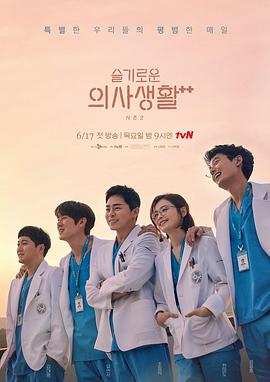
Hospital Playlist (Wise Doctor Life 2) (2021) TMDB Douban Bangumi Eggplant.place
슬기로운 의사생활 시즌2 Season 2 part of TV Series: Hospital Playlist
Hospital Playlist (Wise Doctor Life) (2020) TMDB Douban Bangumi Eggplant.place
슬기로운 의사생활 Season 1 part of TV Series: Hospital Playlist
The Cult of We Douban Goodreads Skybridge
author:
Eliot Brown
/
Maureen Farrell
publishing house:
Crown
2021
- 6
other title:
The Cult of We: WeWork, Adam Neumann, and the Great Startup Delusion
The definitive inside story of WeWork, its audacious founder, and what its epic unraveling says about a financial system drunk on the elixir of Silicon Valley innovation—from the Wall Street Journal correspondents (recently featured in the WeWork Hulu documentary) whose scoop-filled reporting hastened the company’s downfall.
WeWork would be worth $10 trillion, more than any other company in the world. It wasn’t just an office space provider. It was a tech company—an AI startup, even. Its WeGrow schools and WeLive residences would revolutionize education and housing. One day, mused founder Adam Neumann, a Middle East peace accord would be signed in a WeWork. The company might help colonize Mars. And Neumann would become the world’s first trillionaire.
This was the vision of Neumann and his primary cheerleader, SoftBank’s Masayoshi Son. In hindsight, their ambition for the company, whose primary business was subletting desks in slickly designed offices, seems like madness. Why did so many intelligent people—from venture capitalists to Wall Street elite—fall for the hype? And how did WeWork go so wrong?
In little more than a decade, Neumann transformed himself from a struggling baby clothes salesman into the charismatic, hard-partying CEO of a company worth $47 billion—on paper. With his long hair and feel-good mantras, the six-foot-five Israeli transplant looked the part of a messianic truth teller. Investors swooned, and billions poured in.
Neumann dined with the CEOs of JPMorgan and Goldman Sachs, entertaining a parade of power brokers desperate to get a slice of what he was selling: the country’s most valuable startup, a once-in-a-lifetime opportunity and a generation-defining moment.
Soon, however, WeWork was burning through cash faster than Neumann could bring it in. From his private jet, sometimes clouded with marijuana smoke, he scoured the globe for more capital. Then, as WeWork readied a Hail Mary IPO, it all fell apart. Nearly $40 billion of value vaporized in one of corporate America’s most spectacular meltdowns.
Peppered with eye-popping, never-before-reported details, The Cult of We is the gripping story of careless and often absurd people—and the financial system they have made.
WeWork would be worth $10 trillion, more than any other company in the world. It wasn’t just an office space provider. It was a tech company—an AI startup, even. Its WeGrow schools and WeLive residences would revolutionize education and housing. One day, mused founder Adam Neumann, a Middle East peace accord would be signed in a WeWork. The company might help colonize Mars. And Neumann would become the world’s first trillionaire.
This was the vision of Neumann and his primary cheerleader, SoftBank’s Masayoshi Son. In hindsight, their ambition for the company, whose primary business was subletting desks in slickly designed offices, seems like madness. Why did so many intelligent people—from venture capitalists to Wall Street elite—fall for the hype? And how did WeWork go so wrong?
In little more than a decade, Neumann transformed himself from a struggling baby clothes salesman into the charismatic, hard-partying CEO of a company worth $47 billion—on paper. With his long hair and feel-good mantras, the six-foot-five Israeli transplant looked the part of a messianic truth teller. Investors swooned, and billions poured in.
Neumann dined with the CEOs of JPMorgan and Goldman Sachs, entertaining a parade of power brokers desperate to get a slice of what he was selling: the country’s most valuable startup, a once-in-a-lifetime opportunity and a generation-defining moment.
Soon, however, WeWork was burning through cash faster than Neumann could bring it in. From his private jet, sometimes clouded with marijuana smoke, he scoured the globe for more capital. Then, as WeWork readied a Hail Mary IPO, it all fell apart. Nearly $40 billion of value vaporized in one of corporate America’s most spectacular meltdowns.
Peppered with eye-popping, never-before-reported details, The Cult of We is the gripping story of careless and often absurd people—and the financial system they have made.


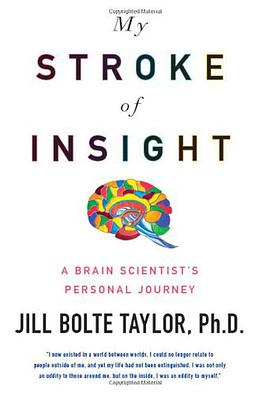
My Stroke of Insight Douban
author:
Jill Bolte Taylor
publishing house:
Viking Adult
2008
- 5
在线阅读本书
A brain scientist's journey from a debilitating stroke to full recovery becomes an inspiring exploration of human consciousness and its possibilities
On the morning of December 10, 1996, Jill Bolte Taylor, a thirty-seven-year-old Harvard-trained brain scientist, experienced a massive stroke when a blood vessel exploded in the left side of her brain. A neuroanatomist by profession, she observed her own mind completely deteriorate to the point that she could not walk, talk, read, write, or recall any of her life, all within the space of four brief hours. As the damaged left side of her brain--the rational, grounded, detail- and time-oriented side--swung in and out of function, Taylor alternated between two distinct and opposite realties: the euphoric nirvana of the intuitive and kinesthetic right brain, in which she felt a sense of complete well-being and peace; and the logical, sequential left brain, which recognized Jill was having a stroke, and enabled her to seek help before she was lost completely.
In My Stroke of Insight , Taylor shares her unique perspective on the brain and its capacity for recovery, and the sense of omniscient understanding she gained from this unusual and inspiring voyage out of the abyss of a wounded brain. It would take eight years for Taylor to heal completely. Because of her knowledge of how the brain works, her respect for the cells composing her human form, and most of all an amazing mother, Taylor completely repaired her mind and recalibrated her understanding of the world according to the insights gained from her right brain that morning of December 10th.
Today Taylor is convinced that the stroke was the best thing that could have happened to her. It has taught her that the feeling of nirvana is never more than a mere thought away. By stepping to the right of our left brains , we can all uncover the feelings of well-being and peace that are so often sidelined by our own brain chatter. A fascinating journey into the mechanics of the human mind, My Stroke of Insight is both a valuable recovery guide for anyone touched by a brain injury, and an emotionally stirring testimony that deep internal peace truly is accessible to anyone, at any time. Questions for Jill Bolte Taylor Amazon.com: Your first reaction when you realized what was happening to your body was one you would expect: "Oh my gosh, I'm having a stroke!" Your second, though, was a little more surprising: "Wow, this is so cool!" What could be cool about a stroke? Taylor: I grew up to study the brain because I have a brother who is only 18 months older than I am. He was very different in the way he perceived experiences and then chose to behave. As a result, I became fascinated with the human brain and how it creates our perception of reality. He was eventually diagnosed with the brain disorder schizophrenia, and I dedicated my career to the postmortem investigation of the human brain in an attempt to understand, at a biological level, what are the differences between my brain and my brothers brain. On the morning of the stroke, I realized that my brain was no longer functioning like a "normal" brain and this insight into my brother's reality excited me. I was fascinated to intimately understand what it might be like on the inside for someone who would not be diagnosed as normal. Through the eyes of a curious scientist, this was an absolutely rare and fascinating experience for me to witness the breakdown of my own mind. Amazon.com: What did you learn about the brain from your stroke and your recovery that your scientific training hadn't prepared you for? Taylor: My scientific training did not teach me anything about the human spirit and the value of compassion. I had been trained as a scientist, not as a clinician. I can only hope that we are teaching our future physicians about compassion in medicine, and I know that some medical schools, including the Indiana University School of Medicine, have created a curriculum with this intention. My training as a scientist, however, did provide me with a roadmap to how the body and brain work. And although I lost my left cognitive mind that thinks in language, I retained my right hemisphere that thinks in pictures. As a result, although I could not communicate with the external world, I had an intuitive understanding about what I needed to do in order to create an environment in which the cells in my brain could be happy and healthy enough that they could regain their function. In addition, because of my training, I had an innate trust in the ability of my brain to be able to recover itself and my mother and I respected the organ by listening to it. For example, when I was tired, I allowed my brain to sleep, and when I was fresh and capable of focusing my attention, we gave me age-appropriate toys and tools with which to work. Amazon.com: Your stroke affected functions in your left brain, leaving you to what you call the "la-la land" of your right hemisphere. What was it like to live in your right brain, and then to rebuild your left? Taylor: When the cells in my left brain became nonfunctional because they were swimming in a pool of blood, they lost their ability to inhibit the cells in my right hemisphere. In my right brain, I shifted into the consciousness of the present moment. I was in the right here, right now awareness, with no memories of my past and no perception of the future. The beauty of La-la land (my right hemisphere experience of the present moment) was that everything was an explosion of magnificent stimulation and I dwelled in a space of euphoria. This is great way to exist if you don't have to communicate with the external world or care whether or not you have the capacity to learn. I found that in order for me to be able to learn anything, however, I had to take information from the last moment and apply it to the present moment. When my left hemisphere was completely nonfunctional early on, it was impossible for me to learn, which was okay with me, but I am sure it was frustrating for those around me. A simple example of this was trying to put on my shoes and socks. I eventually became physically capable of putting my shoes and socks on, but I had no ability to understand why I would have to put my socks on before my shoes. To me they were simply independent actions that were not related and I did not have the cognitive ability to figure out the appropriate sequencing of the events. Over time, I regained the ability to weave moments back together to create an expanse of time, and with this ability came the ability to learn methodically again. Life in La-la land will always be just a thought away, but I am truly grateful for the ability to think with linearity once again. Amazon.com: What can we learn about our brains and ourselves from your experience, even if we haven't lived through the kind of brain trauma you have? Taylor: I learned that I have much more say about what goes on between my ears than I was ever taught and I believe that this is true for all of us. I used to understand that I had the ability to stop thinking about one thing by consciously choosing to preoccupy my mind with thinking about something else. But I had no idea that it only took 90 seconds for me to have an emotional circuit triggered, flush a physiological response through my body and then flush completely out of me. We can all learn that we can take full responsibility for what thoughts we are thinking and what emotional circuitry we are feeling. Knowing this and acting on this can lead us into feeling a wonderful sense of well-being and peacefulness. Amazon.com: You are the "Singin' Scientist" for Harvard's Brain Bank (just as you were before your stroke). Could you tell us about the Brain Bank (in song or not)? Taylor: There is a long-term shortage of brain tissue donated for research into the severe mental illnesses. Most people dont realize that when you sign the back of your license as an organ donor, the brain is not included. If you would like to donate your brain for research, you must contact a brain bank directly. There is also a shortage of "normal control" tissue for research. The bottom line reality is that if there were more tissue available for research, then more scientists would be dedicating their careers to the study of the severe mental illnesses and we would have more answers about what is going on with these disorders. The numbers of mentally ill individuals in our society are staggering. The most serious and disabling conditions affect about 6 percent--or one in 17--adults and 9-13 percent of children in the United States. Half of all lifetime conditions of mental illness start by age 14 years, and three-fourths by age 24 years. For more information about brain donation to the Harvard brain bank, please call 1-800-BRAINBANK or visit them at: www.brainbank.mclean.org If you would like to hear me sing the brain bank jingle, please visit www.drjilltaylor.com!
A brain scientist's journey from a debilitating stroke to full recovery becomes an inspiring exploration of human consciousness and its possibilities
On the morning of December 10, 1996, Jill Bolte Taylor, a thirty-seven-year-old Harvard-trained brain scientist, experienced a massive stroke when a blood vessel exploded in the left side of her brain. A neuroanatomist by profession, she observed her own mind completely deteriorate to the point that she could not walk, talk, read, write, or recall any of her life, all within the space of four brief hours. As the damaged left side of her brain--the rational, grounded, detail- and time-oriented side--swung in and out of function, Taylor alternated between two distinct and opposite realties: the euphoric nirvana of the intuitive and kinesthetic right brain, in which she felt a sense of complete well-being and peace; and the logical, sequential left brain, which recognized Jill was having a stroke, and enabled her to seek help before she was lost completely.
In My Stroke of Insight , Taylor shares her unique perspective on the brain and its capacity for recovery, and the sense of omniscient understanding she gained from this unusual and inspiring voyage out of the abyss of a wounded brain. It would take eight years for Taylor to heal completely. Because of her knowledge of how the brain works, her respect for the cells composing her human form, and most of all an amazing mother, Taylor completely repaired her mind and recalibrated her understanding of the world according to the insights gained from her right brain that morning of December 10th.
Today Taylor is convinced that the stroke was the best thing that could have happened to her. It has taught her that the feeling of nirvana is never more than a mere thought away. By stepping to the right of our left brains , we can all uncover the feelings of well-being and peace that are so often sidelined by our own brain chatter. A fascinating journey into the mechanics of the human mind, My Stroke of Insight is both a valuable recovery guide for anyone touched by a brain injury, and an emotionally stirring testimony that deep internal peace truly is accessible to anyone, at any time. Questions for Jill Bolte Taylor Amazon.com: Your first reaction when you realized what was happening to your body was one you would expect: "Oh my gosh, I'm having a stroke!" Your second, though, was a little more surprising: "Wow, this is so cool!" What could be cool about a stroke? Taylor: I grew up to study the brain because I have a brother who is only 18 months older than I am. He was very different in the way he perceived experiences and then chose to behave. As a result, I became fascinated with the human brain and how it creates our perception of reality. He was eventually diagnosed with the brain disorder schizophrenia, and I dedicated my career to the postmortem investigation of the human brain in an attempt to understand, at a biological level, what are the differences between my brain and my brothers brain. On the morning of the stroke, I realized that my brain was no longer functioning like a "normal" brain and this insight into my brother's reality excited me. I was fascinated to intimately understand what it might be like on the inside for someone who would not be diagnosed as normal. Through the eyes of a curious scientist, this was an absolutely rare and fascinating experience for me to witness the breakdown of my own mind. Amazon.com: What did you learn about the brain from your stroke and your recovery that your scientific training hadn't prepared you for? Taylor: My scientific training did not teach me anything about the human spirit and the value of compassion. I had been trained as a scientist, not as a clinician. I can only hope that we are teaching our future physicians about compassion in medicine, and I know that some medical schools, including the Indiana University School of Medicine, have created a curriculum with this intention. My training as a scientist, however, did provide me with a roadmap to how the body and brain work. And although I lost my left cognitive mind that thinks in language, I retained my right hemisphere that thinks in pictures. As a result, although I could not communicate with the external world, I had an intuitive understanding about what I needed to do in order to create an environment in which the cells in my brain could be happy and healthy enough that they could regain their function. In addition, because of my training, I had an innate trust in the ability of my brain to be able to recover itself and my mother and I respected the organ by listening to it. For example, when I was tired, I allowed my brain to sleep, and when I was fresh and capable of focusing my attention, we gave me age-appropriate toys and tools with which to work. Amazon.com: Your stroke affected functions in your left brain, leaving you to what you call the "la-la land" of your right hemisphere. What was it like to live in your right brain, and then to rebuild your left? Taylor: When the cells in my left brain became nonfunctional because they were swimming in a pool of blood, they lost their ability to inhibit the cells in my right hemisphere. In my right brain, I shifted into the consciousness of the present moment. I was in the right here, right now awareness, with no memories of my past and no perception of the future. The beauty of La-la land (my right hemisphere experience of the present moment) was that everything was an explosion of magnificent stimulation and I dwelled in a space of euphoria. This is great way to exist if you don't have to communicate with the external world or care whether or not you have the capacity to learn. I found that in order for me to be able to learn anything, however, I had to take information from the last moment and apply it to the present moment. When my left hemisphere was completely nonfunctional early on, it was impossible for me to learn, which was okay with me, but I am sure it was frustrating for those around me. A simple example of this was trying to put on my shoes and socks. I eventually became physically capable of putting my shoes and socks on, but I had no ability to understand why I would have to put my socks on before my shoes. To me they were simply independent actions that were not related and I did not have the cognitive ability to figure out the appropriate sequencing of the events. Over time, I regained the ability to weave moments back together to create an expanse of time, and with this ability came the ability to learn methodically again. Life in La-la land will always be just a thought away, but I am truly grateful for the ability to think with linearity once again. Amazon.com: What can we learn about our brains and ourselves from your experience, even if we haven't lived through the kind of brain trauma you have? Taylor: I learned that I have much more say about what goes on between my ears than I was ever taught and I believe that this is true for all of us. I used to understand that I had the ability to stop thinking about one thing by consciously choosing to preoccupy my mind with thinking about something else. But I had no idea that it only took 90 seconds for me to have an emotional circuit triggered, flush a physiological response through my body and then flush completely out of me. We can all learn that we can take full responsibility for what thoughts we are thinking and what emotional circuitry we are feeling. Knowing this and acting on this can lead us into feeling a wonderful sense of well-being and peacefulness. Amazon.com: You are the "Singin' Scientist" for Harvard's Brain Bank (just as you were before your stroke). Could you tell us about the Brain Bank (in song or not)? Taylor: There is a long-term shortage of brain tissue donated for research into the severe mental illnesses. Most people dont realize that when you sign the back of your license as an organ donor, the brain is not included. If you would like to donate your brain for research, you must contact a brain bank directly. There is also a shortage of "normal control" tissue for research. The bottom line reality is that if there were more tissue available for research, then more scientists would be dedicating their careers to the study of the severe mental illnesses and we would have more answers about what is going on with these disorders. The numbers of mentally ill individuals in our society are staggering. The most serious and disabling conditions affect about 6 percent--or one in 17--adults and 9-13 percent of children in the United States. Half of all lifetime conditions of mental illness start by age 14 years, and three-fourths by age 24 years. For more information about brain donation to the Harvard brain bank, please call 1-800-BRAINBANK or visit them at: www.brainbank.mclean.org If you would like to hear me sing the brain bank jingle, please visit www.drjilltaylor.com!

云朵面包 Douban
author:
[韩] 白嬉娜 著
/
[韩] 金向寿 摄
translator:
明书
publishing house:
接力出版社
2013
- 3
不是每个孩子都可以从雨树上摘下云朵,不是每个妈妈都能将云朵加糖发酵,也不是每个爸爸都可以在沙丁鱼罐头一样的车上吃到云朵早餐。就是那么一点点,一点点从天而降的想象,生活就像云朵一样轻盈地飘了起来,飞过城市的上空,小心翼翼而惊喜非常。这就是被童话照亮的瞬间啊,此刻你有没有发觉,自己的心正在变得好柔软,并且发出美丽而轻微的叹息呢?
作为用图画书来演绎的童话,《云朵面包》还别具一种新颖的魅力。它混合了多种艺术的表现手法,除了绘画外,还大量采用了摄影、剪纸、布艺的方法,通过精心的拼贴来构图,加以暖暖的灯光照射,让画面充满了质感,富有浓浓的生活气息。
作为用图画书来演绎的童话,《云朵面包》还别具一种新颖的魅力。它混合了多种艺术的表现手法,除了绘画外,还大量采用了摄影、剪纸、布艺的方法,通过精心的拼贴来构图,加以暖暖的灯光照射,让画面充满了质感,富有浓浓的生活气息。

50个世界各地的幸运传说 Douban
小さな幸せがみつかる 世界のおまじない
author:
[日]龟井英里
translator:
宋春晓
/
英尔岛
publishing house:
上海三联书店
2023
- 1
本书介绍了至今仍在生活中沿用的50个幸运魔法,配有美丽的插图,内容涉及世界各地习俗、民间传说和神话等等。光是看着本书蕴含魔法的可爱插图都能命人幸福感倍增,也非常适合作为礼物来送给特别的人。
++++++++++++++++++++++++++++++++
本书首发搭配上海三联书店独家设计的的文具产品(和纸胶带、贴纸和迷你卡片套装),给每日的学习生活注入可爱温馨的幸福气息!
++++++++++++++++++++++++++++++++
本书首发搭配上海三联书店独家设计的的文具产品(和纸胶带、贴纸和迷你卡片套装),给每日的学习生活注入可爱温馨的幸福气息!

PlayTime (1967) WikiData IMDb TMDB Douban Min reol Skybridge +3
Play Time
other title:
玩乐时间
/
嬉戲時間
…
Clumsy Monsieur Hulot finds himself perplexed by the intimidating complexity of a gadget-filled Paris. He attempts to meet with a business contact but soon becomes lost. His roundabout journey parallels that of an American tourist, and as they weave through the inventive urban environment, they intermittently meet, developing an interest in one another. They eventually get together at a chaotic restaurant, along with several other quirky characters.

Clarkson's Farm Season 3 (2024) TMDB Douban Bangumi
Clarkson's Farm Season 3 part of TV Series: Clarkson's Farm
The third series of Clarkson’s Farm finds Diddly Squat facing some seriously daunting challenges. The crops are failing in the severe hot weather, inflation has driven prices of supplies sky high, dreams for the beloved restaurant are dashed and now the farm shop also faces closure.
Jeremy urgently needs to come up with creative new ways of making ends meet, so hatches a plan to turn a profit from hundreds of acres of unfarmed land - thick woodland and hedgerows that make up half of Diddly Squat. This triggers an avalanche of Clarkson-crafted schemes, involving everything from goats and pigs to mushrooms, nettles and deer.
Someone new arrives to Diddly Squat, which puts Kaleb's nose out of joint – as well as the returning characters all working to help Jeremy’s farming ambitions come to fruition.
Jeremy urgently needs to come up with creative new ways of making ends meet, so hatches a plan to turn a profit from hundreds of acres of unfarmed land - thick woodland and hedgerows that make up half of Diddly Squat. This triggers an avalanche of Clarkson-crafted schemes, involving everything from goats and pigs to mushrooms, nettles and deer.
Someone new arrives to Diddly Squat, which puts Kaleb's nose out of joint – as well as the returning characters all working to help Jeremy’s farming ambitions come to fruition.

The Stolen Airship (1967) WikiData IMDb TMDB Douban
Ukradená vzducholoď
director:
卡尔·齐曼
actor:
哈努斯·博尔
/
Jan Cizek
…
other title:
被盗的飞船
/
Ukradená vzducholoď
…
Five young people take off in a lighter-than-air machine at the Prague Centennial Exhibition. A live-action/animated film based loosely on Jules Verne's novels Two Years' Vacation and The Mysterious Island. The film in Art Nouveau style consists of live-action scenes, generally shot in black and white, as well as hand-drawn, stop-motion, and cutout animation. Various live-action and animated elements are often composited into the same scene.
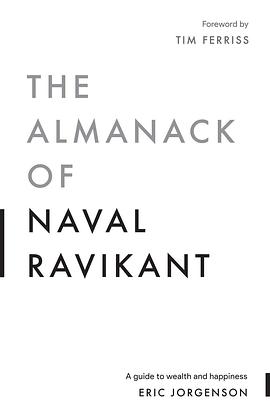
The Almanack of Naval Ravikant Douban Eggplant.place
author:
Naval Ravikant
/
Eric Jorgenson
publishing house:
Magrathea Publishing
2020
- 9
Getting rich is not just about luck; happiness is not just a trait we are born with. These aspirations may seem out of reach, but building wealth and being happy are skills we can learn.
So what are these skills, and how do we learn them? What are the principles that should guide our efforts? What does progress really look like?
Naval Ravikant is an entrepreneur, philosopher, and investor who has captivated the world with his principles for building wealth and creating long-term happiness. The Almanack of Naval Ravikant is a collection of Naval’s wisdom and experience from the last ten years, shared as a curation of his most insightful interviews and poignant reflections. This isn’t a how-to book, or a step-by-step gimmick. Instead, through Naval’s own words, you will learn how to walk your own unique path toward a happier, wealthier life.
This book has been created as a public service. It is available for free download in pdf and e-reader versions on Navalmanack.com. Naval is not earning any money on this book. Naval has essays, podcasts and more at Nav.al and is on Twitter @Naval.
So what are these skills, and how do we learn them? What are the principles that should guide our efforts? What does progress really look like?
Naval Ravikant is an entrepreneur, philosopher, and investor who has captivated the world with his principles for building wealth and creating long-term happiness. The Almanack of Naval Ravikant is a collection of Naval’s wisdom and experience from the last ten years, shared as a curation of his most insightful interviews and poignant reflections. This isn’t a how-to book, or a step-by-step gimmick. Instead, through Naval’s own words, you will learn how to walk your own unique path toward a happier, wealthier life.
This book has been created as a public service. It is available for free download in pdf and e-reader versions on Navalmanack.com. Naval is not earning any money on this book. Naval has essays, podcasts and more at Nav.al and is on Twitter @Naval.

Jules and Jim (1962) WikiData IMDb TMDB Douban Sommerdreieck +2
Jules et Jim
director:
François Truffaut
actor:
Jeanne Moreau
/
Oskar Werner
…
other title:
쥴 앤 짐
/
突然炎のごとく
…
In the carefree days before World War I, introverted Austrian author Jules strikes up a friendship with the exuberant Frenchman Jim and both men fall for the impulsive and beautiful Catherine.

孤独患者 Douban
La Différence invisible
author:
[法]朱莉·达什 著
/
[法]卡罗琳小姐 绘
translator:
万洁
publishing house:
北京联合出版公司
2019
- 3
玛格丽特27岁,是个很普通的女孩。她喜欢动物,喜欢阳光灿烂的天气,也喜欢她的小猫发出的呼噜呼噜的声音。从外表上,你看不出她和其他女孩的区别,但玛格丽特的确与众不同。她不喜欢生活里的变动,上下班要走一样的路,甚至早餐都要吃一样的东西。她对人群和噪声格外敏感。她很难听懂同事开的玩笑,也不理解其他人委婉的表达。她不知道自己为什么和其他人不同,直到有一天,她知道了一个名词——孤独症。