美国

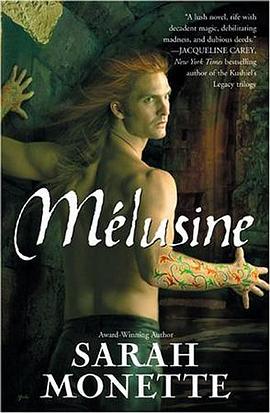
Melusine
Douban
Sarah Monette
publishing house:
Ace Hardcover
2005
- 2
From Publishers Weekly
Starred Review. Set in the wondrous city of Mélusine, Monette's extraordinary first fantasy novel focuses on two captivating characters from two very different worlds: Felix Harrowgate, a powerful magician at the court of Lord Steven Teverius, and Mildmay the Fox, a cat burglar who has been trained as an assassin. When Felix falls prey to the unscrupulous machinations of a man who's plotting to destroy Mélusine, he's left nearly mad, unable to clear his name or explain his actions. Mildmay, on the other hand, undertakes a simple burglary, thinking it will lead to a bit of extra flash that will keep him going for more than a few days. Instead, the burglary opens the way to a series of unfortunate events that force Felix and Mildmay into a partnership neither of them could have anticipated or desired. Jacqueline Carey provides a blurb, but those readers expecting a knock-off of that author's Kushiel series will be happily surprised. Monette resembles Carey only insofar as she, too, is a highly original writer with her own unique voice.
Copyright © Reed Business Information, a division of Reed Elsevier Inc. All rights reserved.
From School Library Journal
Adult/High School–Mélusine is a city both sordid and splendid, rich in history and layered with corruption. Monette shows readers this fantastical place through the eyes of two characters: Felix, a member of an elite society of wizards, and Mildmay, a thief and former assassin. After his past as a whore is revealed, Felix returns to the man who trained him to pass as a noble. His malicious mentor uses a sexual ritual and Felix's magic to shatter the Virtu, a crystal that stabilizes magic. Felix goes mad, is imprisoned, and is sent to an asylum. Mildmay's precarious existence becomes more and more difficult. When he hits rock bottom, he is hired by another wizard, whose card divination says Mildmay will lead him to Felix. Monette has created an interesting world, leaving enough unexplained to intrigue patient readers. Profane Mildmay and insane Felix have distinctive narrative voices. Side plots and secondary characters are dropped soon after the two meet, so any resolution of the many issues raised will have to wait until the sequel.–Susan Salpini, TASIS–The American School in England
Copyright © Reed Business Information, a division of Reed Elsevier Inc. All rights reserved.

The Death and Life of Great American Cities
Douban
Jane Jacobs
publishing house:
Vintage
1992
A direct and fundamentally optimistic indictment of the short-sightedness and intellectual arrogance that has characterized much of urban planning in this century, The Death and Life of Great American Cities has, since its first publication in 1961, become the standard against which all endeavors in that field are measured. In prose of outstanding immediacy, Jane Jacobs writes about what makes streets safe or unsafe; about what constitutes a neighborhood, and what function it serves within the larger organism of the city; about why some neighborhoods remain impoverished while others regenerate themselves. She writes about the salutary role of funeral parlors and tenement windows, the dangers of too much development money and too little diversity. Compassionate, bracingly indignant, and always keenly detailed, Jane Jacobs's monumental work provides an essential framework for assessing the vitality of all cities.

Art Photography Now
DoubanIn the previous century, photography helped shape art; in the current one, it has begun to dominate it. Not only are major international museums and galleries mounting blockbuster exhibitions, but art photographers are also being celebrated as contemporary masters and their work commands unprecedented prices. This indispensable survey presents the work of 76 of the most important and best-known art photographers in the world: Andreas Gursky, Thomas Struth, Cindy Sherman, Jeff Wall, Sophie Calle, Wolfgang Tillmans, Nan Goldin, Martin Parr, Allan Sekula, Boris Mikhailov, Inez van Lamsweerde, Stephen Meisel, Philip-Lorca diCorcia, Sam Taylor-Wood, and many more are featured in its pages. Susan Bright, former Curator of Photographs at London's National Portrait Gallery, has organized the book into seven sections--City, Portrait, Document, Object, Landscape, Fashion, and Narrative--and provides an introductory essay for each. Along with each photographer's works, presented in sequence within those divisions, Bright's commentaries provide context and depth, and quotations from the artists themselves offer valuable insights into the motivation, inspiration, and intentions behind the work. Following in the tradition of Photography Past/Forward: Aperture at 50 and the Photography Speaks series, this volume will become an essential resource for curators, collectors, scholars, practitioners, and anyone who wants comprehensive, up-to-date exposure to the state of the medium today.