Paste Magazine's The 100 Best Anime Movies of All Time (2023 Update)

98 movies   2 tv shows  

Movie

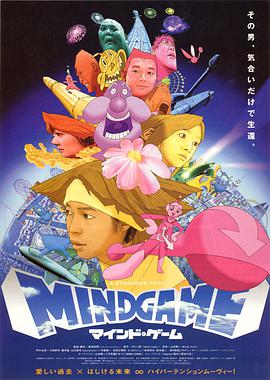
Mind Game (2004)
マインド・ゲーム
★ 8.9 (405 ratings) director: 汤浅政明 actor: 今田耕司 / 藤井隆 …
other title: 心理游戏 / マインド・ゲーム …
2004 film by Masaaki Yuasa
Anharten: Trying to pin down Masaaki Yuasa’s 2004 breakout debut with a summary is no easy task, as the now-storied director behind such modern anime classics as Kick-Heart, Ping Pong and The Tatami Galaxy revels in defying expectations with his maximalist anything-goes approach to animation. When 20-year-old aspiring comic artist Nishi dies in a yakuza hold-up while attempting to protect his childhood crush Myon, his soul meets God before escaping Limbo and reassuming his body moments before his tragic death. The couple lead a high-speed getaway in one of the Yakuza member’s cars before diving into the ocean and being swallowed into the belly of a … see what I mean? Mind Game is like witnessing a seven-hour Ayahuasca trip encapsulated into a feature-length film. Impressionistic, avant garde, and above all unique, Mind Game is a confusing and exhilarating shock to the senses that’s just shy of impossible to forget.—Toussaint Egan

Movie

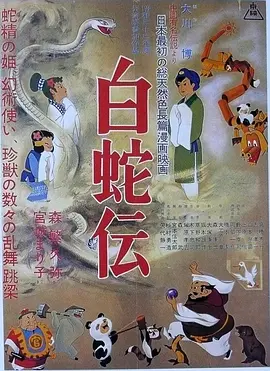
The White Snake Enchantress (1958) WikiData IMDb TMDB Douban
白蛇伝
★ 7.0 (19 ratings) director: 薮下泰司 actor: 宫城真里子 / 森繁久弥 …
other title: 白蛇传 / 白蛇伝 …
As a young boy, Xu-Xian is forced to free his pet, a small snake. Unbeknownst to him, the snake is actually a young snake goddess named Bai-Niang and she is in love with him. Many years later, when they are both adults, the princess is magically transformed into a human and sets out to find her love. But the local wizard believes her to be a vampire, and banishes Xu-Xian from the village in order to save him. Xu-Xian's pet pandas Panda and Mimi set out to save him and bring him, in the process becoming leaders of an animal gang.
Anharten: Based on the Chinese folktale The Legend of the White Snake, Panda and the Magic Serpent is noteworthy for being not only being the first full color anime film, but for being the first licensed anime film to be shown in America. In 1952, shortly after the post-war animosities between Japan and the West began to dissipate, Toei studio acquired the rights to the story and five years later set out to adapt it into a feature-length film. Hiroshi Okawa, president of Toei films at the time, had hoped to emulate the personality-driven marketing of Walt Disney with the film, aiming to transform the studio into the so-called “Disney of the East.” Despite receiving honors at the Venice Children’s Film Festival in 1959, the film performed poorly in the states and received a very small theater run. The film’s significance doesn’t stop there though, as Panda and the Magic Serpent is credited by Hayao Miyazaki as one of the films that first inspired him to become an animator and Rintaro, who would later become an influential director in his own right for such films as Galaxy Express 999 and Metropolis, got his first animation job as an in-betweener working on this very film.—Toussaint Egan

Movie

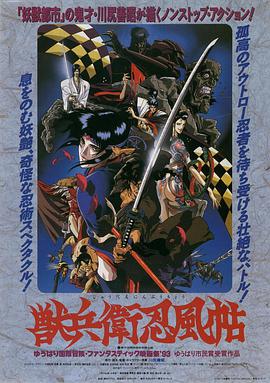
Ninja Scroll (1993)
獣兵衛忍風帖
★ 8.3 (165 ratings) director: 川尻善昭 actor: 山寺宏一 / 筱原惠美 …
other title: 兽兵卫忍风帖 / 獣兵衛忍風帖 …
Jubei is a masterless ninja who travels the land alone, lending his services to those with gold—or a worthy cause. His fearsome abilities have served him well, but a plot to overthrow the government threatens to end his wandering ways—and possibly his life.
Anharten: Set during the Tokugawa era of Japan, Ninja Scroll follows the story of Jubei Kibagami, an itinerant samurai warrior (partly inspired by the real-life folk hero, Jubei Yagyu) who is recruited by a government agent to defeat the Eight Devils of Kimon, a cabal of demonic ninja who conspire to overthrow the Tokugawa regime and plunge Japan into destruction. Along the way he meets Kagero, a beautiful and mysterious poison eater, and is forced to confront the demons of his past as he fights to preserve the present. Produced during the boom of anime’s foreign markets, Ninja Scroll was one of the first titles released by Manga Entertainment in the West. Its well-defined animation, unflinching hyper-violence, and impressively creative fight sequences made it a requisite gateway title for early anime fans and is rightfully looked upon as a cult classic to this day. The film qualifies as a time capsule for one of anime’s heyday periods, with exquisite production values married to impeccably crafted set pieces. Ninja Scroll pushed the boundaries of excess, with unflinching depictions of sensuality and sexual violence shown alongside showers of gore and decapitation. The film was front-and-center for the argument that anime “wasn’t just for kids” in the mid-’90s, and qualifies today as a must-see title for a serious anime fan. Yoshiaki Kawajiri’s Ninja Scroll is the quintessential anime chanbara action film, no question.—Toussaint Egan

Movie

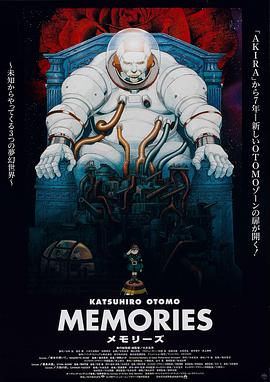
Memories (1995)
Memories
★ 8.6 (586 ratings) director: 森本晃司 / 冈村天斋 … actor: Tsutomu Isobe / Koichi Yamadera …
other title: 回忆三部曲 / 追忆三部曲 …
In this anime anthology, a salvage ship crew happens upon a haunted vessel in "Magnetic Rose"; a cold tablet turns a lab worker into a biological weapon in "Stink Bomb"; and an urban populace carries on an endless war with an unseen foe in "Cannon Fodder."
Anharten: After wrapping production on Akira in 1988, Katsuhiro Otomo returned in 1995 to helm his third anthology collection of short films, titled Memories. Initially scripted around the theme of the collection’s namesake, the anthology eventually yielded a series of three shorts, each directed by one of three of the most acclaimed directors working at the time, Otomo included. The collection’s first segment, “Magnetic Rose,” is unanimously praised as the anthology’s best and for good reason. Directed by Koji Morimoto and scripted by Satoshi Kon, “Magnetic Rose” is emblematic of the themes of perception, identity and uncertainty, which exemplify Kon’s work at its best, depicting the terrifying story of a deep space salvage cruise’s ensnarement in the siren wiles of an aristocratic opera singer. The anthology’s other two installments, Tensai Okamura’s “Stink Bomb” and Otomo’s “Cannon Fodder,” are worth the price of admission as well, the former a crassly comedic take on an extinction-level crisis and the latter a wartime parable animated with a intriguing Terry Gilliam-esque art style in one long take. Whatever your palate as anime film-goer, Memories is not to be missed.—Toussaint Egan

Movie

Nausicaä of the Valley of the Wind (1984)
風の谷のナウシカ
★ 8.8 (1069 ratings) director: 宫崎骏 actor: 岛本须美 / 松田洋治 …
other title: 风之谷 / 風の谷のナウシカ …
After a global war, the seaside kingdom known as the Valley of the Wind remains one of the last strongholds on Earth untouched by a poisonous jungle and the powerful insects that guard it. Led by the courageous Princess Nausicaä, the people of the Valley engage in an epic struggle to restore the bond between humanity and Earth.
Anharten: Nausicaä of the Valley of the Wind is, quite simply, the film responsible for the creation of Studio Ghibli. The film not only signaled Miyazaki’s nascent status as one of anime’s preeminent creators, but also sparked the creation of an animation studio whose creative output would dominate the medium for decades to come. Following the release of The Castle of Cagliostro, Miyazaki was commissioned by his producer and future long-time collaborator Toshio Suzuki to create a manga in order to better pitch a potential film to his employers at Animage. What resulted was Nausicaä, a fantasy epic, inspired by the works of Ursula K. Le Guin and Jean “Moebius” Giraud, starring a courageous warrior princess trying to mend a rift between humans and the forces of nature while soaring across a post-apocalyptic world. The success of Nausicaä as a serialized manga would culminate in a film adaptation that would then go on to be heralded as one of the greatest animated films of all-time. Nausicaä was the film that introduced the world to motifs and themes by which Miyazaki would become universally known for: a courageous female protagonist unconscious of and undeterred by gender norms, the surmounting power of compassion, environmental advocacy, and an unwavering love and fascination with the phenomenon of flight. The essentialness of Nausicaä of the Valley of the Wind’s placement within the greater canon of animated film, Japanese or otherwise, cannot be overstated. It spawned an entire generation of animators, among them Hideaki Anno, whose lauded work on the film’s climactic finale would later inspire him to go on to create Neon Genesis Evangelion. If you haven’t seen this film yet, do so immediately. And if you have already, it only gets better with age.—Toussaint Egan

Movie

Only Yesterday (1991) WikiData IMDb TMDB Douban
おもひでぽろぽろ
★ 8.4 (497 ratings) director: 高畑勋 actor: 今井美树 / 柳叶敏郎 …
other title: 岁月的童话 / おもひでぽろぽろ …
In lyrical switches between the present and the past, Taeko contemplates the arc of her life, and wonders if she has been true to the dreams of her childhood self.
Anharten: Re-released in American theaters for the first time since its 1991 Japanese debut, Only Yesterday is a simple slice-of-life story of one woman’s childhood and her time spent in the countryside as an adult. Whereas Miyazaki’s films more often skew towards the fantastical, Takahata has a penchant for directing more human dramas that are distinguished with wildly varying and experimental art styles. Only Yesterday follows Taeko Okajima, a 27-year-old unmarried office worker who takes a holiday to visit her extended family in the rural farmlands of Yamagata where she helps to harvest safflowers. While there, she reflects back on her time as a young girl growing up with her parents in Tokyo and how her experiences back then have come to shape her life in the present. Only Yesterday was a rarity when it was first released in 1991: an animated drama tailored for adult audiences near-entirely absent of the gloss of magical realism that defined the majority of Studio Ghibli’s (and most of the anime industry’s) work up to that point. An endearing story of the power of nostalgia and how it shapes perception of the world and of ourselves well into adulthood, Only Yesterday defied expectations and went on to become the highest grossing Japanese film of that year, inspiring a wave of similar “slice-of-life” features and earning Takahata immense critical acclaim. Only Yesterday remains something special nearly twenty-five years later: an earnest and affecting story of a woman continuing to grow and learn well past becoming an adult.—Toussaint Egan

Movie

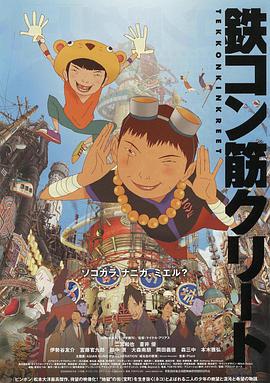
Tekkonkinkreet (2006)
鉄コン筋クリート
★ 8.3 (352 ratings) director: 迈克尔·艾里亚斯 actor: 二宫和也 / 苍井优 …
other title: 恶童 / 鉄コン筋クリート …
2006 film by Michael Arias
Anharten: Based on Taiyo Matsumoto’s cult-classic manga, Tekkonkinkreet is a landmark in Japanese animation not only for its extensive hybrid 3D-meets-2D animation but also for being the first major anime feature to be helmed by a non-Japanese director. Tekkonkinkreet follows the stories of Black and White, two orphaned thieves and street fighters who “rule” over the metropolitan sprawl known as Treasure Town. When a small army of extraterrestrial land developers move into town to destroy the low-income housing in and around the city, the brothers attempt to defend their turf and fight back. But lightning-fast punches and death-defying leaps can only delay the inevitable for so long, and Black and White must both eventually come to grips with the consequences of trying to live in the past. Inspired by his time exploring the cityscapes of Hong Kong, Shanghai and Colombo, Treasure Town is almost a character itself—a love letter to the unique chaoticism of pan-Asian industrialism. Tekkonkinkreet is a complicated and compelling story of love and friendship amid a constantly crumbling and reshaping world that feels intimately tied to the communities through which it was inspired. It’s a story about the uneasy turmoil of emotional growth, of holding close to the core of what makes you who you are while learning to let go of everything else that holds you back.—Toussaint Egan

Movie

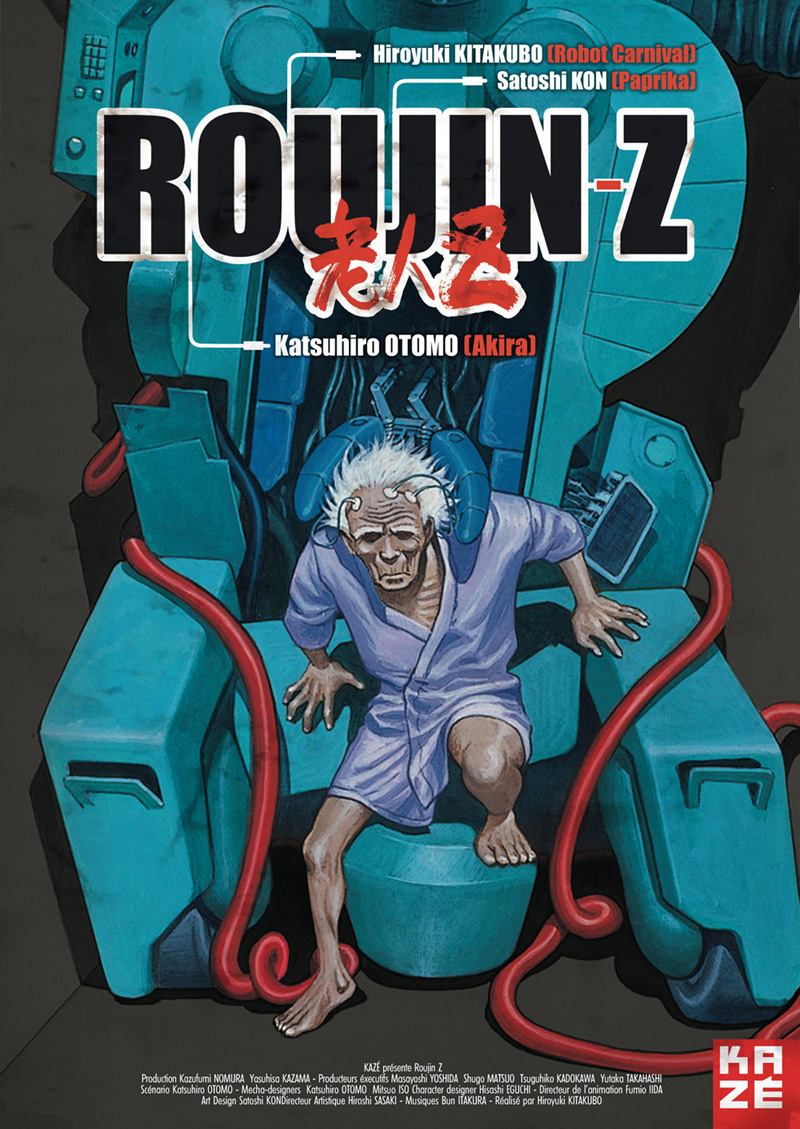
Roujin Z (1991) WikiData IMDb TMDB Douban
Rôjin Z
★ 7.9 (100 ratings) director: Hiroyuki Kitakubo actor: Chisa Yokoyama / Toni Barry …
other title: Rôjin Z / Oldman Z …
1991 film by Hiroyuki Kitakubo
Anharten: Katsuhiro Otomo is a legend in the field of anime and manga for good reason. Beyond his crowning achievement, Akira, he is responsible for a score of interesting and thought-provoking anime films that continue to push the boundaries of what animation can do. One such case is Roujin-Z, a pitch-black satire of the Japanese health care industry and military industrial complex. Otomo didn’t direct the film—Hiroyuki Kitakubo (Blood the Last Vampire, Golden Boy) did, with Otomo producing, writing and providing mecha designs. This was also the great Satoshi Kon’s first production. All the talent arrayed in the creation of Roujin-Z help make it one of the most singular animated comedies ever made. The story concerns a not-so-distant future where the government has developed a robot that can care for the elderly in every way—cleaning them, entertaining them, allowing them to use the bathroom, all while they remain safely ensconced in the unit. The first person to test the unit is a dying widower named Kiyuro Takazawa. He is deeply unhappy at being placed in the machine, and his unhappiness manifests itself in unexpected ways as his psyche infects the unit, and it begins to use ingrained abilities the government thought no one would discover. Soon enough, the Z-001 is careening across Tokyo, destroying buildings and battling government military hardware, all while Kiyuro wails about going to the beach, where he and his dead wife made some important memories. On paper, this all seems fairly dire, but all of these events are underplayed and lightened by several adorable side characters, from a rogues gallery of mischievous septuagenarian hackers, to Kiyuro’s devoted human nurse, Nobuko. Only Otomo would decide to house a trenchant social commentary about Japan’s discarding of its elderly inside a robot-gone-amok satire of government bureaucracy and greed. Somehow, it all hangs together and makes for a dark but often hilarious satire with some delightful scenes of robotic destruction. The film overall looks more like an OVA than a high-budget feature, but the designs are memorable and based in hard science (again, this is Otomo), and the characters are vibrant and goofy enough to soften the proceedings. Roujin-Z was dubbed in English by Manga Entertainment and released in the United States in 1994, and is still fairly easy to grab subbed or dubbed on DVD. Those looking for more Otomo after Akira would do well to give this unusual gem a look. —J.D.

Movie

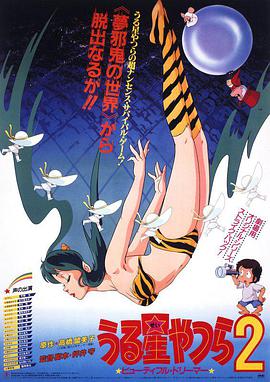
Urusei Yatsura 2: Beautiful Dreamer (1984)
うる星やつら2 ビューティフル・ドリーマー
★ 8.7 (44 ratings) director: 押井守 actor: 平野文 / 古川登志夫 …
other title: 福星小子2:绮丽梦中人 / うる星やつら2 ビューティフル・ドリーマー …
1984 film by Mamoru Oshii
Anharten: Before his name became synonymous with such titles as Patlabor and Ghost in the Shell, Mamoru Oshii first cut his teeth as an animator directing the television series adaptation of Rumiko Takahashi’s Urusei Yatsura manga and its first two theatrical installments. While the series’ first film, Only You, is a fairly typical fantasy romance-romp that plays close to the formulaic familiarity of the series, Beautiful Dreamer was a far more experimental and ultimately divisive film among the series’ fanbase and set Oshii on the path to become the director we know him as today. Beautiful Dreamer follows Ataru Moroboshi, a lecherous if well-meaning high schooler and his extraterrestrial fiancée Lum as he and his friends scramble to finish preparing for their high school’s annual school festival. It’s not long before they discover something strange is going on, with each day seemingly repeating itself ad infinitum. It’s up to Ataru, Lum and the other to discover what’s causing this bizarre temporal loop, and whether such a state of existence is either a blessing or a curse. With Beautiful Dreamer, Oshii stopped playing to the gratifications of his audience and instead made a film that was, for better or for worse depending on who you ask, entirely his own. In many ways, Beautiful Dreamer can be viewed as the forebear to The Disappearance of Haruhi Suzumiya, at least in terms of its ambition to upend and experiment with the status quo of an established series. If you’re looking for an engaging romance drama that doubles as an important touchstone in the history of one of anime’s most influential directors, Beautiful Dreamer is wholeheartedly recommended.—Toussaint Egan

Movie

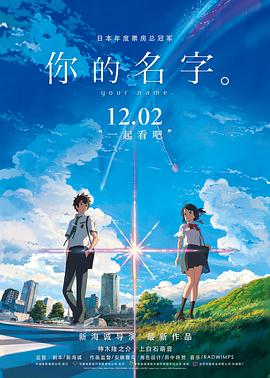
Your Name (2016)
君の名は。
★ 8.2 (2566 ratings) director: 新海诚 actor: 神木隆之介 / 上白石萌音 …
other title: 你的名字。 / 君の名は。 …
High schoolers Mitsuha and Taki are complete strangers living separate lives. But one night, they suddenly switch places. Mitsuha wakes up in Taki’s body, and he in hers. This bizarre occurrence continues to happen randomly, and the two must adjust their lives around each other.
Anharten: Much like his contemporary Mamoru Hosoda, Makoto Shinkai is a director who is frequently championed as the “new” Hayao Miyazaki in the conversation surrounding who will succeed him as his heir apparent. This comparison however, much like in the case of Hosoda, ends up being frustratingly reductionist in its appraisal of both directors. Shinkai’s films are not light-hearted family adventures or archetypal pillars of anime canonicity, but tense, melancholic odes to contemporary Japanese society that highlight the ways in which physical, emotional and temporal distance inform the shape and course of human relationships. His fifth feature film, Your Name, exercises Shinkai’s predilection for “star-crossed love” to its narrative and thematic endpoint, situating the budding romance of the film’s protagonists at the epicenter of an astrological event of nothing shy of life-or-death consequence. The recipient of over a dozen awards, in addition to becoming the highest-grossing anime film of its time, Your Name is Shinkai’s most critically and commercially successful production to date, a masterful film that ranks among the very best the medium has to offer.—Toussaint Egan

Movie

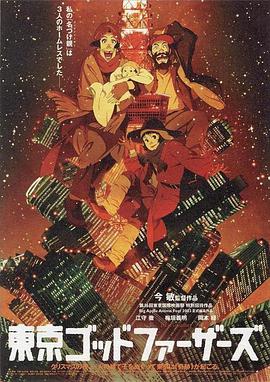
Tokyo Godfathers (2003)
東京ゴッドファーザーズ
★ 8.9 (1654 ratings) director: Satoshi Kon actor: Tohru Emori / Yoshiaki Umegaki …
other title: 东京教父 / 東京ゴッドファーザーズ …
2003 film directed by Satoshi Kon
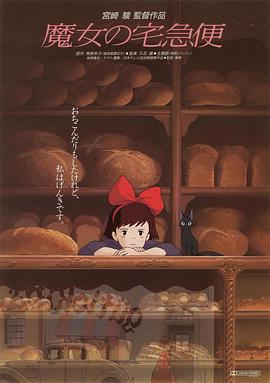
Anharten: Tokyo Godfathers is something of an outlier, not only among Satoshi Kon’s films, but across the medium of anime as a whole. After all, anime features that depict Christmas as something more than a backdrop are few and far between, especially one that offers such an inspired modern take on the Three Wise Men and the birth of the Christ. Tokyo Godfathers is the story of Gin, Hana and Miyuki, three homeless friends who discover an abandoned baby while rifling through the trash in search of a Christmas present. They resolve to find the child’s parents and bring her safely home, embarking on a journey that takes them to every far corner of the city and inevitably face-to-face with lives they had each abandoned. Named after Robert Ford’s 1948 western take on the christian nativity story, Tokyo Godfathers is Christmas story in the purest sense—a redemptive fable about fallible people and the extraordinary extent through which they go to set one piece of the world, however small, right. Compassionate and hopeful without once cheapening itself with saccharine sentimentality, Tokyo Godfathers resonates with a raw and honest appeal to emotion that merits comparison to the likes of Frank Capra’s It’s a Wonderful Life. If you’re a bit burnt out over Christmas cheer, do yourself a favor and put this one on around the holidays. You won’t regret it.—Toussaint Egan

Movie

Kiki's Delivery Service (1989)
魔女の宅急便
★ 8.5 (1322 ratings) director: 宫崎骏 actor: 高山南 / 佐久间丽 …
other title: 魔女宅急便 / Kiki la petite sorcière …
A young witch, on her mandatory year of independent life, finds fitting into a new community difficult while she supports herself by running an air courier service.
Anharten: Based on Eiko Kadono’s popular 1985 young adult novel, Kiki’s Delivery Service is a cheerful and charming story of adolescent independence and growing up. Miyazaki’s fourth film under Studio Ghibli follows the titular Kiki, a 13-year-old witch who ventures out into the world from the comfort of her hometown for a year to begin her training as an adult. Noticeably lacking in any sort of antagonist or grand adventure, Kiki’s Delivery Service focuses instead on the everyday struggles of a young adult coming into her own, albeit with a magical twist. Finding a place to stay, securing a job, learning how to make new friends and taking on more responsibilities: these are the sort of stakes that define Kiki’s journey and make her story an endearing one. Miyazaki’s affinity for depicting flight shines through every scene of Kiki wrestling against the air current to steady her broom mid-flight, her dress billowing in the wind as she jets off in the film’s spectacular finale. Though all of Studio Ghibli’s previous films were modest critical if not financial successes up to this point, Kiki’s Delivery Service was a true watershed moment for the studio, becoming the highest-grossing film in Japan in 1989 and securing critical acclaim both at home and overseas. The film is a story of independence, positivity and the font of inner strength that compels every young person to go out into the world and build a life for his or herself.—Toussaint Egan

Movie

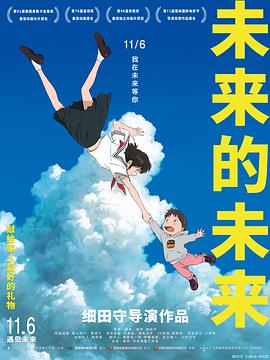
Mirai (2018)
未来のミライ
★ 6.6 (225 ratings) director: 细田守 actor: 上白石萌歌 / 黑木华 …
other title: 未来的未来 / 未来のミライ …
2018 film directed by Mamoru Hosoda
Anharten: Most if not all of Mamoru Hosoda’s original films produced in the past decade function, to some degree or another, as exercises in autobiography. Summer War, apart from a premise more or less recycled from Hosoda’s 2000 directorial debut Digimon Adventure: Our War Game!, was the many times removed story of Hosoda meeting his wife’s family for the first time. 2012’s Wolf Children was inspired by the passing of Hosoda’s mother, animated in part by the anxieties and aspirations at the prospect of his own impending parenthood. 2015’s The Boy and the Beast was completed just after the birth of Hosoda’s first child, the product of his own questions as to what role a father should play in the life of his son. Mirai, the director’s seventh film, is not inspired from Hosoda’s own experience, but through the experiences of his first-born son meeting his baby sibling for the first time. Told through the perspective of Kun, a toddler who feels displaced and insecure in the wake of his sister Mirai’s birth, Mirai is a beautiful adventure fantasy drama that whisks the viewer through a dazzling odyssey across Kun’s entire family tree, culminating in a poignant conclusion that emphasizes the beauty of what it means to love and be loved. Mirai is Hosoda’s most accomplished film, the recipient of the first Academy Award nomination for an anime film not produced by Studio Ghibli, and an experience as edifying as it is a joy to behold.—Toussaint Egan

Movie

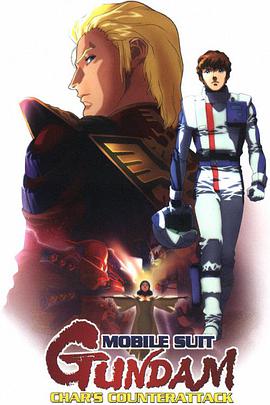
Mobile Suit Gundam Char's Counter Attack (1988)
機動戦士ガンダム 逆襲のシャア
★ 8.8 (89 ratings) director: 富野由悠季 actor: 古谷彻 / 池田秀一 …
other title: 机动战士高达 逆袭的夏亚 / 機動戦士ガンダム 逆襲のシャア …
1988 film by Yoshiyuki Tomino
Anharten: The first Gundam theatrical and final chapter in the original saga begun in 1979 with the “Universal Century Timeline” of the Mobile Suit Gundam TV series, Char’s Counterattack has the weight of three seasons of TV behind it. Yoshiyuki Tomino, creator of the Gundam series, directed and wrote the film, adapting it faithfully from his novel, Hi-Streamer. Widely considered the best film in the Gundam franchise, Char’s Counterattack is most successful at wrapping up the 14-year rivalry between the “hero” of the Earth Federation, Amuro Ray, and the leader of Neo-Zeon, Char Aznable. The story involves a classic Gundam dilemma: Char’s Neo-Zeon force attempts to drop an asteroid filled with nuclear weapons onto Earth, which would free the colonies from the yoke of oppression by their rivals, the Earth Federation, and kill everyone on Earth in the process. As with all of the best Gundam tales, Tomino approaches the story from a hard sci-fi point of view, clearly laying out the science behind things like giant mobile suits and “newtypes” (humans that have evolved to acquire psychic abilities). Tomino carefully lays out the reasoning behind Char and Amuro’s passions and hatreds, not allowing the viewer to choose a clear side. Gundam series have always been willing to take on discussions about the horrors of war and how mankind, for all its advancements, never seems to be able to free itself from humanity’s baser instincts. Char’s Counterattack attempts this as well, yet it’s mostly concerned with wrapping up the rivalry between Amuro and Char—and on that note, it succeeds wildly. Featuring gorgeous, tense fight sequences set in space, an excellent soundtrack by Shigeaki Saegusa, and some of the most lauded Gundam designs in the history of the franchise, the film is inarguably one of the high points of the Gundam Universe. One down side: if you don’t have the investment of spending hundreds of episodes of television with these characters, the plot can be confusing, and Char/Amuro’s ending will likely not resonate as strongly. Regardless, Char’s Counterattack remains a key moment in the Gundam universe, one still worth checking out almost 30 years later. Hail Zeon! —J.D.

Movie

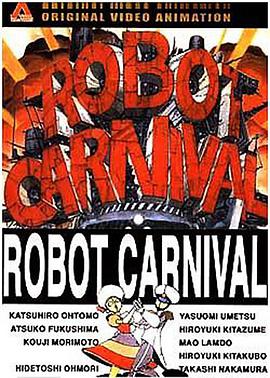
Robot Carnival (1987) IMDb TMDB Douban
ロボットカーニバル
★ 7.9 (102 ratings) director: 大友克洋 / 森本晃司 … actor: 森次晃嗣 / Yayoi Maki …
other title: 机器人嘉年华 / ロボットカーニバル …
An anthology of various tales told in various styles with robots being the one common element among them.
Anharten: Silent animated shorts set to dramatic orchestral music, commonly known as Silly Symphonies, were all the rage in America throughout the 1920s and ’30s. Perhaps the most famous example from this era of animation was Fantasia, produced by Walt Disney and released to critical acclaim in 1940. Robot Carnival is anime’s answer to that film, a collection of nine short films produced by nine of the most esteemed anime directors and character designers of their time. For sure, not every short shines as a pillar of canonical greatness, e.g., Hiroyuki Kitazume’s “Starlight Angel” or Hidetoshi Omori’s “Deprive.” But when a short does shine, it’s a sight to behold. Koji Morimoto’s “Franken’s Gear” is a brilliant choice for an opener, while Manabu Ohashi’s “Cloud” is a melancholic gem that memorably experiments through the use of scratchboard animation. Hiroyuki Kitakubo’s “Strange Tales of Meiji Machine Culture: Westerner’s Invasion” is a imaginative take on the Giant Robot subgenre that’s as ridiculous as its name, and Takashi Nakamura’s “Chicken Man and Red Neck” is the true anime analog to Fantasia’s iconic “Night on Bald Mountain.” Even if Robot Carnival was not an awesome collection—and it is—it would still be a remarkable timestamp of when a constellation of talented young director align to create a project born completely out of a love for the medium.—Toussaint Egan

Movie

Panda! Go Panda! (1972) WikiData IMDb TMDB Douban
パンダコパンダ
★ 7.7 (52 ratings) director: 高畑勋 actor: 杉山佳寿子 / 熊仓一雄 …
other title: 熊猫家族 / パンダコパンダ …
The plot follows Mimiko, a bright little girl left alone when her grandmother leaves on a trip. Making a few stops at some local stores, Mimiko comes home to her house in a bamboo grove and finds a baby panda named Panny sleeping on the back doorstep. She quickly makes friends with the little panda, and invites him in for a drink. His father, PapaPanda, soon comes to visit, and they decide to become a family after PapaPanda offers to.
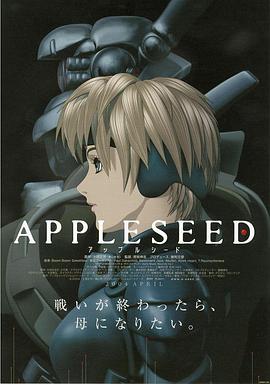
Anharten: If you’re looking for the direct spiritual predecessor to the likes of My Neighbor Totoro or Ponyo, you’ll have to turn your focus all the way back to 1972, a full thirteen years before Studio Ghibli was founded. Initially released that year as a 33-minute theatrical short film before being expanded a year later with a second installment titled The Rainy-Day Circus, Panda! Go, Panda! introduced the trope of a lovable and mischievous sidekick character that would later become a constant throughout some of the studio’s best known works. Conceived, scripted and storyboarded by Hayao Miyazaki and directed by his mentor Takahata, Panda is the story of a little girl named Mimiko who, after being left home alone while her grandmother is away, becomes the adoptive daughter and surrogate mother to a giant talking panda and his son Panny. It only gets weirder from there. Mimiko is a Pippi Longstockings-like character who is unfazed by the sheer insanity that surrounds her, while her lovable panda father has a low-key psychotic vibe about him when it comes to his obsession with the bamboo grove outside Mimiko’s house. Still, Panda! Go, Panda! isn’t meant to be taken seriously. It’s a fun, cutesy children’s film with an infectious theme song that satisfies in its simplicity while also being a fascinating precursor to what Studio Ghibli would go on to perfect in their later work.—Toussaint Egan

Movie

Appleseed (2004)
アップルシード
★ 7.2 (90 ratings) director: 荒牧伸志 actor: 小林爱 / 小杉十郎太 …
other title: 苹果核战记 / アップルシード …
In a utopian society created at the end of the third world war, a female warrior who has been plucked from the badlands begins to see cracks in this new facade. And what does this community have planned for the rest of humankind?
Anharten: Based on Masamune Shirow’s 1985 award-winning sci-fi action manga series, Appleseed tells the story of ESWAT soldier Deunan Knute and her cyborg lover Briareos, who are charged with defending the utopian city of Olympus amid the turmoil of a post-apocalyptic world. Already well-respected for his mecha designs for such series as Megazone 23 and Bubblegum Crisis, Appleseed was Shinji Aramaki’s feature-length debut and noteworthy for its extensive use of CGI and cel-shading technology. Though far from the first anime to be exclusively produced in this format and released just three years after the critical and commercial windfall of Square Enix’s Final Fantasy: The Spirits Within, Appleseed was quintessential in proving the vitality and convenience of using CGI in anime production when put in the right hands. With great visuals, solid action, an infectious techno soundtrack courtesy of Japanese electronic duo Boom Boom Satellites, and a serviceable if clichéd plot, Appleseed remains a significant touchstone in the history of early-aught animation and, on top of that, a pretty entertaining watch to boot.—Toussaint Egan

Movie

Laputa: Castle in the Sky (1986)
天空の城ラピュタ
★ 8.9 (1808 ratings) director: Hayao Miyazaki actor: Mayumi Tanaka / Keiko Yokozawa …
other title: 天空之城 / 天空の城ラピュタ …
A young boy and a girl with a magic crystal must race against pirates and foreign agents in a search for a legendary floating castle.
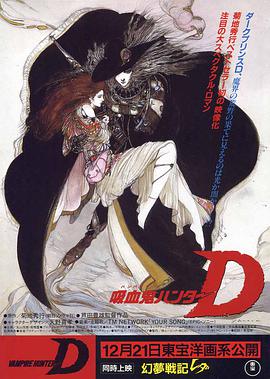
Anharten: Coming off the critical and commercial success of Nausicaä of the Valley of the Wind, Hayao Miyazaki would go on to found Studio Ghibli alongside his mentor and collaborator Isao Takahata and Toshio Suzuki before immediately setting to work on the studio’s first major production. Castle in the Sky, alternatively titled as Laputa: Castle in the Sky, opens with a young girl named Sheeta who, after narrowly escaping the clutches of a band of air pirates who seek to exploit her for unknown ends, is miraculously saved as she falls from a flying airship by a mysterious amulet that levitates her safely to the ground. She lands in the careful arms of Pazu, a young boy from a local mining village who dreams of one day discovering the fabled floating city of Laputa and vindicating his father’s memory. What follows is a two-hour high-action adventure between the pair being doggedly chased by pirates, the military and an unscrupulous government agent—all on a quest to find the legendary castle and manipulate its untold treasures and secrets to their own nefarious ends. Castle in the Sky is a tremendous film powered by pure propulsive momentum, each setting filled with back-to-back hilarious and harrowing moments that would give Indiana Jones a run for its money in terms of action and spectacle. Inspired by the likes of Gulliver’s Travels and Judeo-Christian folklore, the floating city of Laputa is just one of the countless iconic locations that Miyazaki has conjured into the collective imagination throughout his near-fifty-year-long career. Though perhaps not as well-known as Princess Mononoke or Spirited Away, Castle in the Sky is nonetheless an essential entry in Studio Ghibli’s filmography of classics.—Toussaint Egan

Movie

Vampire Hunter D (1985)
吸血鬼ハンターD
★ 7.5 (44 ratings) director: 芦田丰雄 actor: 盐泽兼人 / 永井一郎 …
other title: Caçador de Vampiros D / Vampire Hunter D : Chasseur de vampires …
In a far-future time ruled by the supernatural, a young girl requests the help of a vampire hunter to kill the vampire who has bitten her and thus prevent her from becoming a vampire herself.
Anharten: Being an anime fan in the late ’80s/early ’90s was more difficult than it is today, with the wealth of streaming options available to younger fans. In the pre-internet, VHS era, U.S. anime fans were forced to choose from what was available at their local video store- or black market illegal fansubs. To otaku of a certain age, Vampire Hunter D is a classic of this bygone era. One of the first “adult-themed” anime to come across the pond and end up at places like Blockbuster—for you younger readers, that was Netflix before Netflix—it was pretty much required viewing by any budding anime fan. In fact it’s fair to say that for a time, Vampire Hunter D had higher awareness among U.S. fans than any anime with the exception of Akira, or one or two other major titles. The story, adapted from Hideyuki Kikuchi’s 1983 novel, is a relatively simplistic gothic western set against a post-apocalyptic backdrop and following the adventures of the dhampir (half-vampire) “Vampire Hunter D.” D himself is properly mysterious and taciturn in the classic mode of Japanese male protagonists, speaking rarely and generally being more of a “man of action.” This is good, as the script adaptation and dub are pretty rough (there has since been a Blu-Ray release of the film with the original Japanese dialogue). Where Vampire Hunter D excels is in its design, by the legendary Yoshitaka Amano, and direction, by Toyoo Ashida (Fist of the North Star). As an OVA, the animation quality is better than the average TV series of the era, but not up to the level of a theatrical release. A superior follow-up film, Vampire Hunter D: Bloodlust, was released 15 years later, and the series of light novels upon which the films are based still continues today. From today’s perspective, Vampire Hunter D is a dated, almost charming, example of a time when this sort of semi-adult cartoon content was considered “dangerous” to budding young anime fans in the United States. Along with a few other key titles like Wicked City and Ninja Scroll, Vampire Hunter D lit the flame for many older anime fans, and for that reason alone it deserves to be appreciated. —J.D.

Movie

Interstella 5555: The 5tory of the 5ecret 5tar 5ystem (2003)
Interstella 5555: The 5tory of the 5ecret 5tar 5ystem
★ 8.1 (30 ratings) director: 竹之内和久 / 西尾大介 actor: 蠢朋克
other title: 星际5555:异星梦系统秘传 / The 5tory of the 5ecret 5tar 5ystem …
Four talented alien musicians are kidnapped by a record producer who disguises them as humans. Shep, a space pilot in love with bass player Stella, follows them to Earth. Reprogrammed to forget their real identities and renamed The Crescendolls, the group quickly becomes a huge success playing soulless corporate pop. At a concert, Shep manages to free all the musicians except Stella, and the band sets out to rediscover who they really are — and to rescue Stella.
Anharten: Back in 2003, Daft Punk were on top of the world. Coming off the release of their breakout sophomore album Discovery with chart-topping singles like “Aerodynamic” and “One More Time,” the duo has confidently secured their place at the apex of the EDM zeitgeist. However, the pair had yet still more surprise up their sleeves. During the early recording sessions of Discovery, Thomas Bangalter and Guy-Manuel de Homem-Christo co-wrote a screenplay based on the album with the intent of pitching it to their childhood hero, Leiji Matsumoto. One year before the album’s release, the pair travelled to Tokyo to present their idea to Matsumoto, which he accepted. The rest, they say, was history. Reportedly costing $4 million to produce, Interstella 5555 transformed an album that many thought to be absent of any hint of story and transformed into a grandiose EDM space opera rock odyssey centered on the perilous kidnapping and subsequent rescue of a blue-skinned alien rock band from the nefarious clutches of a label executive bent on galactic domination. More than just a serendipitous alignment of two immensely creative forces, Interstella 5555 surpasses the limitations of having no spoken dialogue to become a fascinating allegory for the appropriation of talent and the predatory machinations of the entertainment industry. It’s a one-of-a-kind collaboration that feels like a film pulled from some impossible, alternate dimension that should be seen by dance music fans and anime aficionados alike.—Toussaint Egan
Reply Quote Sept. 25, 2026