Paste Magazine's The 100 Best Anime Movies of All Time (2023 Update)

98 movies   2 tv shows  

Movie

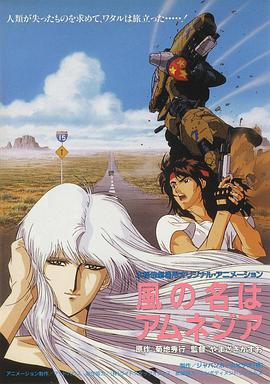
A Wind Named Amnesia (1990) WikiData IMDb TMDB Douban
風の名はアムネジア
★ 6.6 (9 ratings) director: 山崎和男 actor: 矢尾一树 / 户田惠子 …
other title: 随风而逝的记忆 / 風の名はアムネジア …
A wind has swept the Earth taking all the memories from everyone. No one knows who they are, how to speak, or how to use the tools of modern civilization. Two years later, a young man who has been re-educated travels across America on a mysterious journey.
Anharten: On the eve of the 21st century, the collective memory of every living being on Earth was wiped by an inexplicable mass phenomenon, decimating civilization and reducing the human race to roving tribes of scavengers devoid of language, reason or technology. Wataru, a survivor of this worldwide amnesia meets Sophia, a mysterious young woman seemingly unaffected by this worldwide epidemic. The two embark on a journey across the heartland of America in search of answers not only to the question of what caused humanity’s downfall, but what it means to be a human being at all. The film’s animation definitely shows its age in some respects, and when it comes to the thematic ambitions of its subject matter versus its narrative execution its reach more often than not exceeds its grasp, but A Wind Named Amnesia remains a thought-provoking movie and an understated gem in rough of early ’80s animation. Word to the wise: steer clear of the English dub, as it dispels most of the film’s nuance and subtext in lieu of playing it up as a comparatively hollow action adventure.—Toussaint Egan

Movie

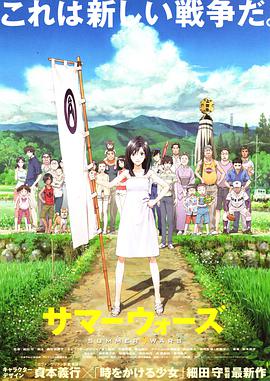
Summer Wars (2009)
サマーウォーズ
★ 8.3 (947 ratings) director: 细田守 actor: 神木隆之介 / 樱庭奈奈美 …
other title: 夏日大作战 / サマーウォーズ …
A student tries to fix a problem he accidentally caused in OZ, a digital world, while pretending to be the fiancé of his friend at her grandmother's 90th birthday.
Anharten: Summer Wars is pretty much a beat-for-beat remake of Hosoda’s previous work on the second Digimon film, Our War Game, released in 2000. However, when a film is this well-animated and put together, the accusation of unoriginality can be forgiven. Summer Wars is the story of Kenji Koiso, a shy and unassuming math prodigy who works as an admin assistant for OZ, a massive digital network that’s supplanted the internet as the major connective system across the world. When Kenji’s OZ avatar is hijacked by Love Machine, a sentient computer virus hell bent on throwing the entire planet into chaos, it’s up to him and the extended family of his fake girlfriend Natsuki (long story) to band together and go to war. OZ resembles a psychedelic “superflat” dreamscape à la Takashi Murakami thanks to Anri Jojo’s art design, and with impeccable character art by the likes of Gainax veteran Yoshiyuki Sadamoto, Masaru Hamada, and Takashi and Mina Okazaki, Summer Wars is an engrossing big family drama with heart couched inside a candy-coated “Internet of Things” scenario of catastrophic proportions.—Toussaint Egan

Movie

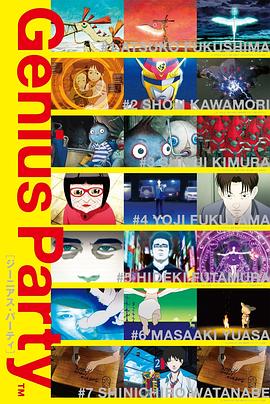
Genius Party (2007)
Genius Party
★ 8.3 (149 ratings) director: 福岛敦子 / 河森正治 … actor: 菊地凛子 / 柳乐优弥 …
other title: 天才嘉年华 / 创世峰会 …
2007 anthology of short animated films
Anharten: If you’re looking for a collection of some of the most eccentric, colorful, and unique animated shorts from some of the most preeminent anime directors working today, you can’t go wrong with Genius Party. Released in 2007, the film serves the purpose of what any good anthology should—putting supremely talented animators on a project and allowing them to throw whatever they want at the wall. And that’s what it succeeds as a whole in doing—to varying degrees of individual success, of course. Shoji Kawamori’s “Shanghai Dragon” is a wild free-wheeling take on Super Sentai hero antics, Yoji Fukuyama’s “Doorbell” is a unsettling and confounding psychological thriller, and Shinji Kimura’s “Deathtic 4” is a bizarre 3D-animated short that’s sure to play well for Tim Burton fans on an aesthetic level. The only dud in this collection is Hideki Futamura’s “Limit Cycle,” which, although having one of the most unique art styles of the bunch, meanders in pop-scientific pontification and pretentious navel-gazing. The crowning jewels of the collection however are Masaaki Yuasa’s “Happy Machine” and Shinichiro Watanabe’s “Baby Blue,” which each exemplify the best defining talents of their respective creators. All in all, Genius Party is a stunning collection of shorts produced by one of the most eclectic production studios operating today and should not be missed.—Toussaint Egan

Movie

Cowboy Bebop: The Movie (2001)
カウボーイビバップ 天国の扉
★ 8.7 (481 ratings) director: 渡边信一郎 actor: 山寺宏一 / 石冢运升 …
other title: 星际牛仔:天国之门 / カウボーイビバップ 天国の扉 …
2001 Japanese anime film by Shin'ichirō Watanabe
Anharten: When Cowboy Bebop first premiered in North America on Adult Swim in September of 2001, it was one of the great defining moments of anime securing its cultural foothold in the West. Set in the year 2071, Cowboy Bebop was many things: a sci-fi western noir character drama built around the themes of existentialism, identity and loneliness. But above all else it was a master course in cinematic evocation, channeling the ineffable cool of turn-of-the-century jazz, rock ’n’ roll, and film noir and transforming it into something that was unlike anything that had come before or since. With a script penned by Keiko Nobumoto, a score by the inimitable Yoko Kanno, action scenes framed and choreographed by Yutaka Nakamura, and series’ director Shinichiro Watanabe returning at the helm, Knockin’ on Heaven’s Door is the anime equivalent of a seminal band getting back together for one last farewell tour after ending off on a high-note and a bang.—Toussaint Egan

Movie

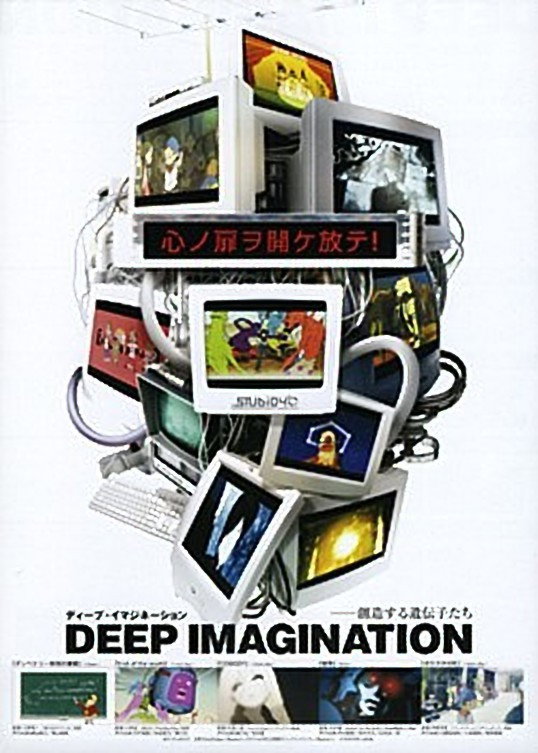
Deep Imagination (2006) IMDb TMDB
スウェットパンチ
other title: スウェットパンチ / Sweat Punch …
A series of five Studio 4°C shorts collected in January 2007 as a direct-to-DVD package film titled Deep Imagination. Featuring Professor Dan Petory's Blues, End of the World, Comedy, Higan, and Junk Town.
Anharten: Sweat Punch is a curious beast that’s a bit hard to track down, but worth the effort. Comprising five animated shorts originally released as a part of Grasshoppa! DVD magazine issues, they were then collected into one release titled Deep Imagination. Deep, indeed, would be one way to describe these shorts, which range across the map both in style and subject matter. The first, “Professor Dan Petory’s Blues,” doesn’t really try to make sense, and is content to simply throw all kinds of wild animation techniques in a blender with some songs and jokes, to kaleidoscopic effect. It only gets weirder from there. “The End of The World” is another standout, concerning the life of a young alien girl named Yuko, who meets a friend at a rock concert, then proceed to go back to her home planet and battle with S&M monsters (no, really). A third, confusingly entitled “Comedy” by Studio 4C, is a dark, gothic tale verging on horror that concerns a young girl, a master swordsman, and the Irish War of Independence. Most of these shorts break not only from traditional narrative, but also from traditional anime art style and animation techniques. These are animation in its purest form, the directors and animators involved clearly just enjoying the riot of color and movement they present to the viewer. It’s pointless to try to explain more, really. Sweat Punch must be seen to be believed, and “understanding” it might be beside the point. —J.D.


Movie

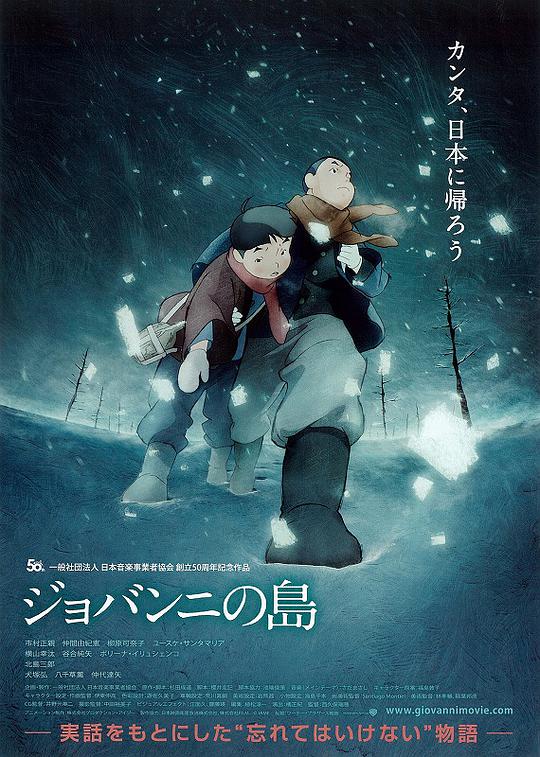
Giovanni's Island (2014)
ジョバンニの島
★ 7.7 (26 ratings) director: 西久保瑞穗 actor: 市村正亲 / 仲间由纪惠 …
other title: 乔瓦尼之岛 / ジョバンニの島 …
2014 film by Mizuho Nishikubo
Anharten: One of the most appreciable qualities of Japanese animation is the readiness in which they are willing to relate and contextualize their history as a country and as a people through a medium which is too often looked down upon as inherently trite and childish. Case in point: Giovanni’s Island. Set in the aftermath of World War II, the film follows the stories of Junpei and Kanta, two young boys whose home island of Shikotan is quickly occupied by Soviet allied forces in the wake of Japan’s surrender. As their world is irrevocably by the intrusive hardships and indignities of the real world, the boy grasp to a solitary thread of hope through their imaginative love of Kenji Miyazawa’s novella Night on the Galactic Railroad, a book from which their names are inspired. Directed by Mizuho Nishikubo, who served as the esteemed animation director of Oshii’s Patlabor 2, the film touts simplistic though beautifully expressive character designs and dynamic settings featuring distinctive jagged outlines and shadows. The film’s fantasy sections are wonderful as a well, rendering the allusions to Miyazawa’s novella with such modern imaginative fidelity that it easily sits beside that of Gisaburo Sugii’s masterful 1985 adaptation. Akin to Takahata’s Grave of the Fireflies, Giovanni’s Island is an affirming if tragic story of the resilience of a family living through the end of a World War, but it’s also something all its own. It’s a story of the intrinsic human persistence to forge connections and friendships in the face of seemingly unassailable differences. An excellent film about history, family, language, and hope.—Toussaint Egan

Movie

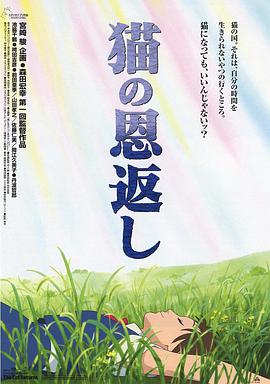
The Cat Returns (2002)
猫の恩返し
★ 7.9 (686 ratings) director: 森田宏幸 actor: 池胁千鹤 / 袴田吉彦 …
other title: 猫的报恩 / 猫の恩返し …
Young Haru rescues a cat from being run over, but soon learns it's no ordinary feline; it happens to be the Prince of the Cats.
Anharten: A spiritual successor-of-sorts to Yoshifumi Kondo’s Whisper of the Heart, The Cat Returns is a playful romp that combines Studio Ghibli’s signature brand of magical realism imbued with a fresh perspective courtesy of director Hiroyuki Morita. When Haru Yoshioka, a shy and absent-minded schoolgirl, rescues a mysterious cat while on her way home from school, she realizes she possesses the latent ability to talk to cats. Her life is then turned upside down as the cat’s father, the king of cats, showers her in bizarre tokens of gratitude and orders her betrothal to his son as “reward” for her kindness. It’s then up to her seek out the fabled Bureau of Cats to find the one person who might be able to save her: the dashing gentleman-noble Baron Humbert von Gikkingen. Naoya Tanaka’s art direction and Satoko Morikawa’s character designs are the real draw that distinguish the film’s look and feel, and with a simple yet whimsical story built around likable personalities and beautiful settings, The Cat Returns easily warrants mention alongside Studio Ghibli’s very best.—Toussaint Egan

Movie

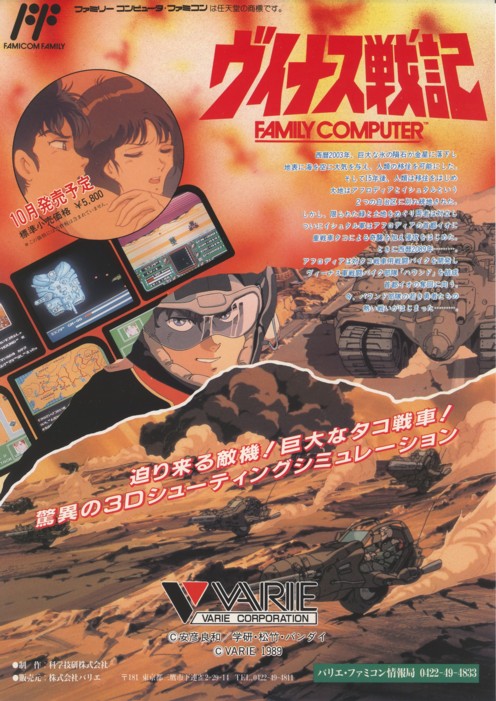
Venus Wars (1989) WikiData IMDb TMDB Douban
ヴイナス戦記
★ 7.1 (19 ratings) director: 安彦良和 actor: 植草克秀 / 水谷优子 …
other title: 金星战记 / ヴイナス戦記 …
1989 film by Yoshikazu Yasuhiko
Anharten: Adapted from Yoshikazu Yasuhiko’s own original manga series in 1989, Venus Wars is a spectacular sci-fi action war film filled with terrific animation, surprising depth, and a delightfully hammy soundtrack courtesy of Joe Hisaishi. Taking place on, you guessed, the second planet in the solar system nearly seventy following a terraforming event, Venus Wars follows a group of teenage monobike racers-turned-freedom fighters after their home of Aphrodia is occupied by the forces of Ishtar, their neighboring rival to the North. With mechanical designs courtesy of Makoto Kobayashi, a notable experimental use of live-action footage to simulate Venus’ barren terrain, and a creative staff that consists of a veritable “who’s who” of 1980s anime icons, including character designer Toshihiro Kawamoto of Cowboy Bebop fame, Venus Wars is a memorable film that delivers as a pulp sci-fi adventure on a visual level but manages to be a thoughtful exploration of what it means to watch one’s home transformed into a police state during a time of war.—Toussaint Egan

Movie

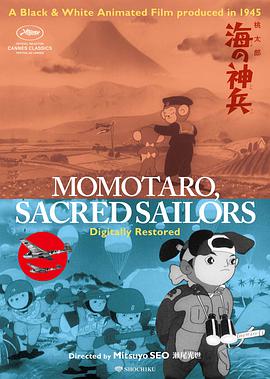
Momotaro's Divine Sea Warriors (1945) WikiData IMDb TMDB Douban
桃太郎 海の神兵
★ 6.4 (5 ratings) director: 濑尾光世
other title: 桃太郎 海之神兵 / 桃太郎 海の神兵 …
The first Japanese feature-length animated film. It was directed by Mitsuyo Seo, who was ordered to make a propaganda film for the war by the Japanese Naval Ministry. Shochiku Moving Picture Laboratory shot the 74-minute film in 1944 and screened it on April 12, 1945. It is a sequel to Momotarō no Umiwashi, a 37-minute film released in 1943 by the same director. It is black and white. The whole movie also depicts the Japanese "liberation of Asia", as proclaimed by the Government at the time. Seo tried to give dreams to children, as well as to instill the hope for peace, with hidden movie's hints of dreams and hopes, under the appearance of war propaganda.
Anharten: Long before Tezuka Osamu laid the foundation for the signature aesthetic behind anime and the medium’s stylistic maturation in the mid-’80s opposite its ascendancy as a global cultural export, the roots of modern japanese animation were born from format in which most if not all animation originated in the early 20th century: as propaganda films created in order to win hearts and minds and spur their respective nation’s youth to take up arms and fight for, what was at the time thought to be, “the good fight.” Momotaro: Umi No Shinpei, known to western audiences as Momotaro’s Divine Sea Warriors, holds the distinction of being the first feature-length animated film produced in Japan. Believed lost for decades before being rediscovered in 1984, Momotaro is invaluable touchstone in the history of Japanese animation, transporting viewers back to a time of startlingly different attitudes and sensibilities.—Toussaint Egan

Movie

Combustible (2012) IMDb TMDB Douban
火要鎮
★ 7.7 (79 ratings) director: 大友克洋 actor: 早见沙织 / 森田成一
other title: 火要镇 / 火要鎮 …
A traveler is confronted by spirits in an abandoned shrine; a story of honor and firefighting in ancient Japan; a white bear defends the royal family from a monstrous red demon; ragtag soldiers battle a robotic force in futuristic Japan.
Anharten: A multimedia project consisting of four animated shorts plus one videogame, each representing a different period in Japan’s history, Short Peace is a delightful grab bag. With Otomo at the helm guiding the project, and providing one of the shorts, this project pulled together a ton of talent, all in the service of some gorgeous animated short films. The unifying concept barely hangs together, but each of the tales are so singular and stunningly rendered, this is a minor concern. The most singular of the bunch is “Possessions,” was nominated for an Oscar, and it’s easy to see why. The visual technique and seamless rendering of CG/2D animation is absolutely captivating. Otomo’s own contribution, “A Farewell to Weapons,” based on his manga, is the other centerpiece and closes out the collection. It remains true to many of Otomo’s extant themes—mainly, the effects of technology on humanity, and the inability of man to escape his patterns of tribal violence and conquest. The designs are incredibly detailed and well-thought out, like all of Otomo’s work, and the animation is of course hyper realistic. Overall, Short Peace is an excellent modern entry in the hallowed tradition of great collections of anime short films, even if the feast it provides is a bit more for the eyes than the brain. —J.D.

Movie

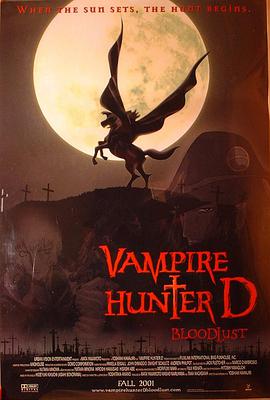
Vampire Hunter D: Bloodlust (2000)
バンパイアハンターD
★ 8.6 (319 ratings) director: 川尻善昭 actor: 田中秀幸 / 永井一郎 …
other title: 吸血鬼猎人D / バンパイアハンターD …
2001 film directed by Yoshiaki Kawajiri
Anharten: The follow-up to Toyoo Ashida’s 1985 classic, Vampire Hunter D: Bloodlust is lauded for its comparatively higher production values and exquisitely rendered set pieces courtesy of Yuji Ikehata and Madhouse’s host of talented in-house background artists. A loose adaptation of Demon Deathchase, the third installment in Hideyuki Kikuchi’s long-running Vampire Hunter D visual novel series, Bloodlust follows the titular half-human vampire hunter as he is hired to rescue the daughter of a wealthy benefactor after she’s abducted by Baron Meier Link, a powerful vampiric nobleman with shadowy intentions. The film comes across as a retread of sorts for Kawajiri, doing little to differentiate itself from the journeyman premise of his work on Ninja Scroll or to build on the mythology of Ashida’s original aside from emphasizing the series’ gothic western sci-fi aesthetic. Still, with character designs by series illustrator Yoshitaka Amano of Final Fantasy fame and a number of visually memorable and impressive settings and showdowns, Vampire Hunter D: Bloodlust is a visually exhilarating action film that seldom fails to satisfy on a moment-to-moment level.—Toussaint Egan

Movie

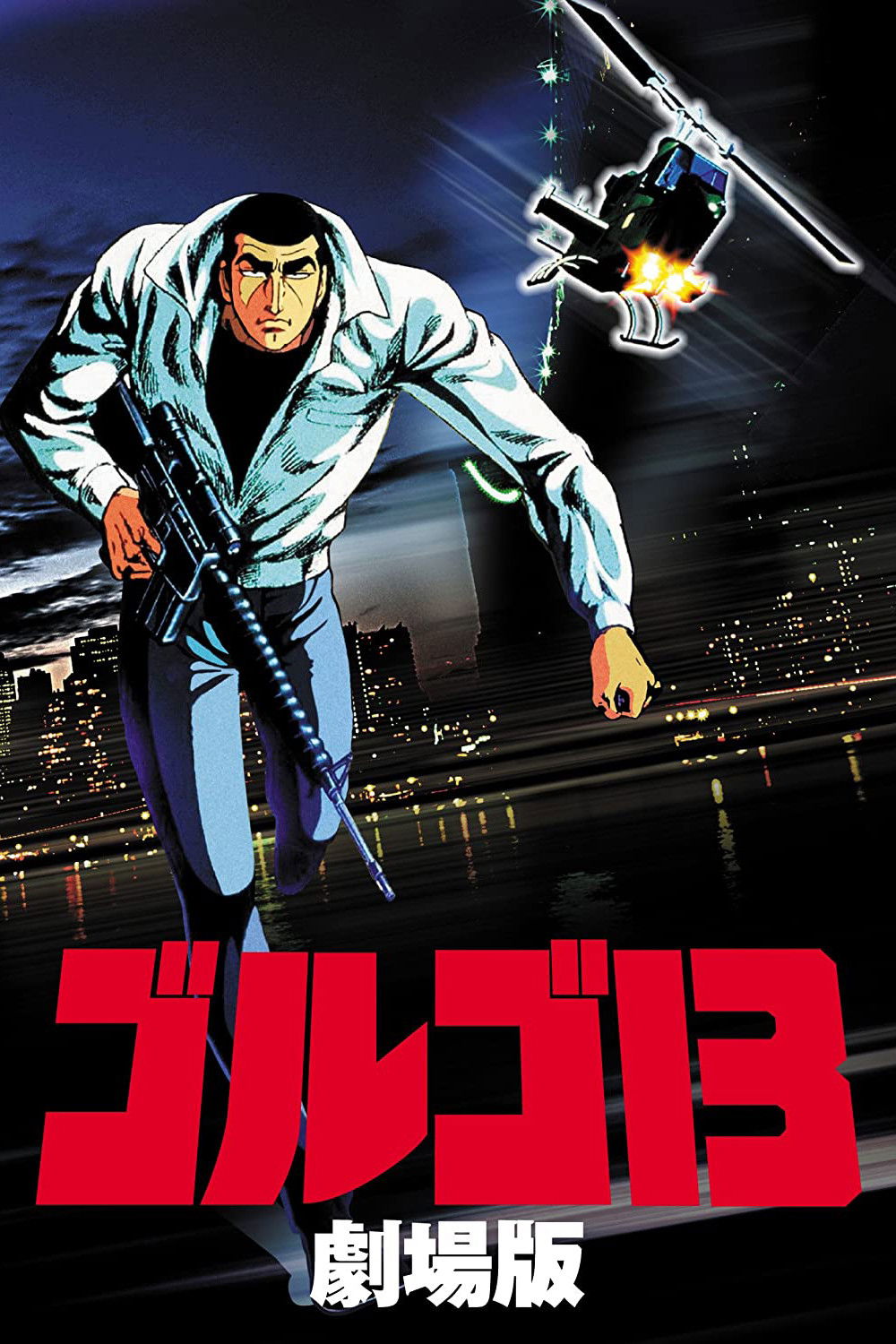
Golgo 13: The Professional (1983) WikiData IMDb TMDB
ゴルゴ13
director: 出崎统 actor: 瑳川哲朗 / 小林清志 …
other title: 고르고 13 / ゴルゴ13 劇場版 …
Indestructible to his enemies and irresistible to women, the professional assassin codenamed Golgo 13 is shrouded in mystery and anonymity. If you're on his hit list, you're already dead. Always hired on his reputation alone, Golgo never breaks a contract. Can he survive the combined forces of the FBI, CIA, the Pentagon and the U.S. Army? Has the nameless agent finally met his match against the superhuman powers of the Snake and the twin evils of the psychopathic mercenaries, Gold and Silver?
Anharten: Directed by Osamu Dezaki, known as the innovator who created the now common “Postcard Memories” technique, Golgo 13: The Professional is both a remarkable time capsule of ’80s grimy crime fiction, and true to the manga from which it is drawn. Golgo, the titular assassin, is basically an evil character who exemplifies alpha male toughness to a ridiculous degree. He is, above all, a Professional. Think Lee Marvin in Point Blank, or Charles Bronson in The Mechanic, or Steve McQueen in … well, anything. Where Golgo charms is in the glorious, fluid animation, the sophisticated cinematic techniques used by Dezaki (including very early usage of CGI), and the tense and incredibly violent action sequences. Filled with gratuitous nudity, violence and rape, this unrated film is not for the faint of heart. Yet Golgo 13: The Professional presents a quintessential example of the Japanese alpha male character, and somehow we root for him, even as we know he’s nothing more than a killer. —J.D.

Movie

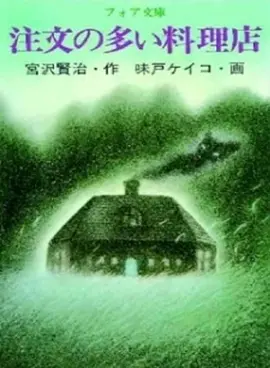
The Restaurant of Many Orders (1993) IMDb TMDB Douban
注文の多い料理店
director: 冈本忠成
other title: 要求特别多的餐厅 / 注文の多い料理店 …
A short film based on a story by Japanese writer Kenji Miyazawa in which two young British hunters get lost in the woods and discover a strange restaurant. Are the hunters about to discover how it feels to be hunted?
Anharten: The Restaurant of Many Orders is remarkably unique compared to nearly every other film of its era that has gone on to shape the aesthetic template of Japanese animation. Created in 1990 by Tadanari Okamoto, who in the ’70s and ’80s established himself as one of Japan’s preeminent animators, the film was originally conceived as a warm up in preparation for his planned feature debut Hotarumomi. Unfortunately, Okamoto would pass away that year from liver cancer and the film was later finished by his close friend and fellow animator Kihachiro Kawamoto. Based on the short story of the same name by the much-adapted poet and children’s author Kenji Miyazawa, The Restaurant of Many Orders is story of two hunters who happen upon a mysterious inn deep in a secluded forest while stalking wild game. The two enter thinking that they’ll be treated to a decent meal and warm place to rest, only to later discover that this restaurant is anything but what it appears to be. Okamoto’s charcoal copper-plate aesthetic is the film’s most distinctive trait, emulating the artistry of veteran animator Reiko Okuyama and achieved through the use of acrylic gouache paint to render the foreground and background of each cell inseparable from one another. Winner of the prestigious Noburo Ofuji Award for Excellence and Innovation, The Restaurant of Many Orders is a beautiful parting gift from one of the most undersung innovators of Japanese animation.—Toussaint Egan

Movie

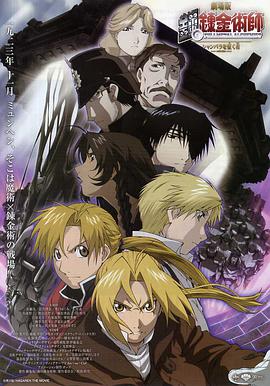
Fullmetal Alchemist-Conqueror of Shamballa (2005) WikiData IMDb TMDB Douban
鋼の錬金術師 シャンバラを征く者
★ 7.7 (156 ratings) director: 水岛精二 actor: 朴璐美 / 钉宫理惠 …
other title: 钢之炼金术师:香巴拉的征服者 / 鋼の錬金術師 シャンバラを征く者 …
2005 film by Seiji Mizushima
Anharten: Hiromu Arakawa’s Fullmetal Alchemist is one of the most critically successful manga and anime series of the early 2000s. Premiering in 2001 and spawning two long-running television adaptations, Fullmetal Alchemist follows the adventures of Edward and Alphonse Elric, two prodigiously talented young men whose respective limbs and bodies are taken from them in a grisly alchemic accident. Becoming state-appointed alchemists, they search for the mythical philosopher’s stone as a means of restoring their bodies to their original state. Conqueror of Shamballa picks up from the conclusion of the 2003 anime series, with Alphonse’s body fully restored though his memory erased and Edward stranded on the other side of a portal leading to a strange yet familiar world teetering on the cusp of a world war. With an intriguing alternative history story that intermingles key figures such as Karl Haushofer and Fritz Lang and events such as the infamous Beer Hall Putsch of 1923, as well as an impressive series of destructive final fight scenes storyboarded by Yutaka Nakamura, Conqueror of Shamballa is a satisfying if irresolute capstone to the original anime and far and away the best Fullmetal Alchemist film to date.—Toussaint Egan

Movie

The Dog Of Flanders (1997) WikiData IMDb TMDB Douban
フランダースの犬
★ 8.4 (58 ratings) director: 黑田昌郎 actor: 八木亚希子 / 津村真琴 …
other title: 佛兰德斯的狗 / フランダースの犬 …
Nello Tarth is a poor but happy orphan who lives with his grandfather Jehan and his dog Patrasche in a little village near Antwerp. He spends his days drawing and delivering milk. When Nello decides to enter an art contest, he experiences firsthand the ignorance and cruelty of the villagers of the town. Nonetheless, with the help of his beloved dog, Nello perseveres to achieve his dream.
Anharten: Yoshio Kuroda’s finest work is perhaps second only to Grave of the Fireflies as one of the saddest anime ever made. Based on the 1872 Flemish novel of the same name, A Dog of Flanders is the tale of a young boy, Nello, and his dog, Pastrache. The story is set in Belgium, and is episodic in nature—mostly concerning Nello’s struggles to rise above the poverty into which he was born, and his persecution by an upper-class member of his village, who wrongly accuses Nello of a terrible crime. The film is ultimately a simple class tragedy, but remains a compelling story that has stood the test of time. In adapting the feature from his TV series of the same name, Kuroda mostly restrains himself from going too “big” with animation flourishes, working carefully to recreate the feel of Industrial Age Antwerp, and servicing the story with quiet, beautiful artwork and scenes that take their time to unfold. The American release, from Pioneer, has an excellent dub for the time, but removed 10 minutes of story with some very choppy edits, so the subtitled version is preferable. Don’t expect a happy ending—this is a three-hanky classic. —J.D.

Movie

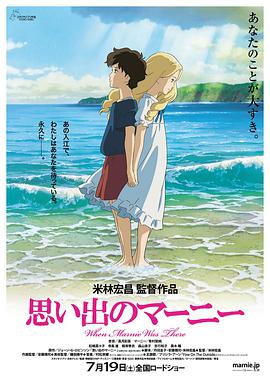
When Marnie Was There (2014)
思い出のマーニー
★ 7.5 (199 ratings) director: 米林宏昌 actor: 高月彩良 / 有村架纯 …
other title: 记忆中的玛妮 / 思い出のマーニー …
Upon being sent to live with relatives in the countryside due to an illness, an emotionally distant adolescent girl becomes obsessed with an abandoned mansion and infatuated with a girl who lives there - a girl who may or may not be real.
Anharten: David Foster Wallace once said that every love story was a ghost story. He easily could have have been describing the spirit of When Marnie Was There, the second film directed by Hiromasa Yonebayashi and the last Ghibli production before the studio’s hiatus following Hayao Miyazaki and Isao Takahata’s retirement in 2013. Twelve-year-old Anna Sasaki is a melancholic introvert with a deep distrust of both other and herself. After collapsing at school from a fit of asthma, Anna’s foster parents send her to stay with her adoptive aunt and uncle at their idyllic rural seaside home adjourning Kushiro to help her condition. There she meets Marnie, a mysterious young girl whose friendship helps Anna to grow and open up and whose troubled story may in fact be inextricably linked with Anna’s own. Although its revelatory conclusion is overpacked with details that could have been better paced along the film’s prevailing mystery, When Marnie Was There is an emotionally affecting depiction of female friendship that cruises along patiently like a quiet boat trip across a moonlit lake.—Toussaint Egan

TV

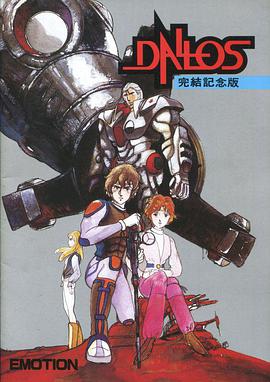
Dallos (Darosu) (1983) TMDB Douban
ダロス Season 1 part of TV Series: Dallos
★ 7.6 (9 ratings) director: 押井守 actor: 佐佐木秀树 / 池田秀一 …
Shun Nonomura is a young man out of Monopolis, a sprawling miner's colony on the lunar surface. His people mine essentials for Earth. In the late 21st century, Earth's resources are depleted and the planetary government has resorted to authoritarian rule to get what they want. As the put-upon miners start to organize a revolt, they come under attack from Earth's new lunar commander, Alex Rigel. As Shun's idealism and Alex's chilly pragmatism clash, Monopolis is thrown into chaos. The last, best hope for victory lies within a mysterious alien artifact the lunarians worship as a god: Dallos!
Anharten: Of the many films that Mamoru Oshii has directed, Dallos is inarguably his worst. With a subpar space opera plot that’s been described by anime historians such as Helen McCarthy and Jonathan Clements as “an unremarkable rip-off of Robert Heinlein’s The Moon Is a Harsh Mistress” and an animation style that could only be charitably described as low budget, showing little to nothing of the mark of its director who later become known for the likes of Patlabor 2 and Ghost in the Shell, there’s a reason why Dallos occupies the darkest unknown corners of Oshii’s oeuvre. So why is it on this list? Because despite its overall lackluster production, that quality is all but eclipsed by the sheer magnitude of its historical significance. Simply put, Dallos was the first anime to be marketed and sold as a multi-part home video production, introducing a new format free of the restrictions of conventional theatrical and televised animation and opening anime up to the west That might ring as somewhat faint praise now in the year 2016, but were it not for the precedent of Dallos’ release, the means through which anime would have found its international audience during the 1980s would not have existed.—Toussaint Egan

Movie

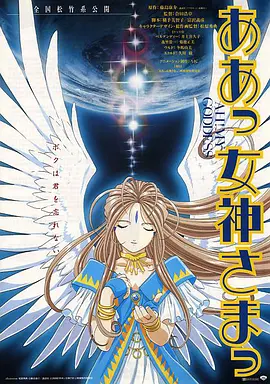
Ah! My Goddess The Movie (2000) WikiData IMDb TMDB Douban
ああっ女神さまっ 劇場版
★ 7.7 (6 ratings) director: 合田浩章 actor: 井上喜久子 / 菊池正美 …
other title: 我的女神 剧场版 / ああっ女神さまっ 劇場版 …
It has been three spring-times since Belldandy came to Earth to grant Keiichi one wish. Things seem to be fine with them while living in the temple with Belldandy's sisters Urd and Skuld, but little do they know that a fallen god from Belldandy's past has escaped from his lunar prison. He has plans for everyone which do not include what the goddess and her human lover wanted for themselves.
Anharten: A sequel to a five-part OVA from 1993, based on a popular manga, Ah! My Goddess: The Movie is the very rare example of a film based on an existing anime/manga franchise that’s superior to the original source material. A self-contained story revolving around college student Morisato Keiichi and the Goddess Belldandy, the film finds ways to inject more drama and urgency into the typically light-hearted romance of the original story, while the longer run time allows more room for character development and deepened motivations for all of the main cast members. Putting Belldandy at the center of a plot to hack the Yggdrasil computer in the heavens (long story) and forcing Keiichi to grapple with what Belldandy has come to mean to him places the romance and sweetness that was always the heart of this series in the foreground. The animation quality is very high, with some well integrated CGI allowing Fujishima’s wilder concepts to finally reach fruition in a way the more limited OVA budget couldn’t. Ah! My Goddess: The Movie was well-received by both critics and audiences, and spawned two later TV series that were similarly well regarded. In the wake of today’s popular fantasy seinen/shonen titles, Ah! My Goddess now feels somewhat ahead of its time. Either way, this sweet, fun romance is worth checking out. —J.D.

Movie

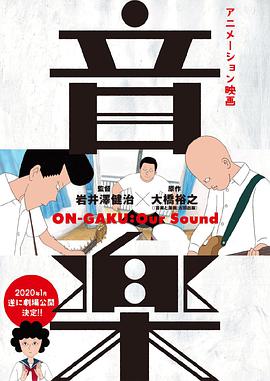
On-Gaku: Our Sound (2019) WikiData IMDb TMDB Douban
音楽
★ 8.3 (196 ratings) director: 岩井泽健治 actor: 坂本慎太郎 / 驹井莲 …
other title: 音乐 / 音楽 …
animated feature film
Anharten: Being a teenager in a suburban town can be excruciatingly boring. With no variety in routine, everything feels useless. But then, sometimes, something appears that banishes that monotony and breathes excitement into an otherwise dull existence. That discovery can be revelatory; life can suddenly have purpose. In the case of the trio of delinquents in Kenji Iwaisawa’s incredible debut feature, On-Gaku: Our Sound, they discover the catharsis and power of music. On-Gaku: Our Sound is writer/director Iwaisawa’s love letter both to the power of music and to the manga of the same name by Hiroyuki Ohashi. As the DIY-feeling film progresses through its musical numbers, Iwaisawa experiments with form (like expressive rotoscoping) as certain songs evoke different emotions from his characters, whether it is a kindly folk song or a primitive-feeling rocker that reverberates in a listener’s chest. In contrast to the visual style, the phenomenal deadpan comedic delivery is reminiscent of American animated comedies of the ‘90s like Beavis and Butthead or King of the Hill. Kenji in particular embodies that tone, through both line delivery by Japanese rock legend Shintarô Sakamoto and a design that includes an unrelenting stare, thin mustache that zigzags across his upper lip and shiny, bald head. Despite being a high school student, Sakamoto’s grizzled voice gives Kenji the vibe of a tired old man who has seen everything, when really he’s just a bored teenager who smokes too many cigarettes and watches too much TV. Iwaisawa’s own passion fills the chilled-out slacker comedy with a lot of heart and a gorgeous variety of animation styles.—Mary Beth McAndrews

Movie

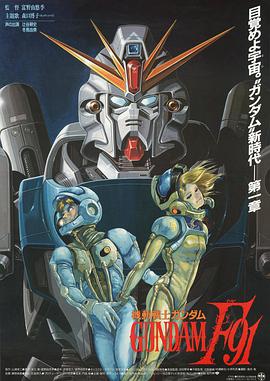
Mobile Suit Gundam F91 (1991) WikiData IMDb TMDB Douban
機動戦士ガンダムF91
★ 7.2 (29 ratings) director: 富野由悠季 actor: 辻谷耕史 / 冬马由美 …
other title: 기동전사 건담 F91 / 機動戦士ガンダムF91 …
U.C. 0123. After a generation of peace, the Earth Federation has begun to build new space colonies to house humanity's growing population. But a new force, the aristocratic Crossbone Vanguard, plans to seize the colonies of the newly constructed Frontier Side for itself. As their home becomes a battlefield, a handful of young civilians struggle to escape the conflict. To save his friends and family, the reluctant warrior Seabook Arno becomes the pilot of a new Gundam which bears the code name F91.
Anharten: Set 30 years after the events of Char’s Counterattack, Mobile Suit Gundam F-91 is a strange anomaly in the Gundam universe, yet not an unwelcome one. The story happened because Yoshiyuki Tomino had decided to begin a new Gundam story set a full generation after the hard-won peace achieved at the end of Char and Amaro’s final battle. Originally set up as a series, Tomino recruited a “greatest hits” of his former collaborators for the project, including Yoshikazu Yasuhiko and Kunio Ookawara. It’s unclear exactly why, but somewhere in the early stages of the production, internal conflicts resulted in the series being shelved. Not wanting to abandon the project (approximately 13 episode scripts had been written), Tomino decided to condense the story he had been developing into a movie. The result, Mobile Suit Gundam F-91, is a messy but very worthy entry in the Gundam canon. The story revolves around an attack by a separatist group, the Crossbone Vanguard, against the unsuspecting earth colonies after years of peace. Amaro analogue Seabrook Arno and his Gundam, F-91, are the heroes around which the plot revolves. Of particular note here are the sleek Gundam designs—Tomino wanted much smaller Gundams for this entry that felt more like “Mobile suits” and less like giant robots—and some of the most brutal fight sequences in any Gundam project. Starting off like most Gundam tales, with clean divisions between factions and a clear focus on key characters on either side of the conflict, things get messy by the third act, coming to a somewhat clumsy and unearned happy ending. Yet like most of Tomino’s other work, the action sequences are thrilling, the characters are vibrant, and the Mobile Suits are … well … mobile. Mobile Suit Gundam is a somewhat underappreciated stab at a reboot, but one that’s worth checking out and one that doesn’t require any foreknowledge of the Universal Century timeline to enjoy. Suit up. —Jason DeMarco
Reply Quote Sept. 25, 2026