
Paste Magazine's The 100 Best Anime Movies of All Time (2023 Update)

98 movies   2 tv shows  

Movie

A Silent Voice: The Movie (2016)
聲の形
★ 6.9 (584 ratings) director: Naoko Yamada actor: Miyu Irino / Saori Hayami …
other title: 목소리의 형태 / 映画 聲の形 …
Shouya Ishida starts bullying the new girl in class, Shouko Nishimiya, because she is deaf. But as the teasing continues, the rest of the class starts to turn on Shouya for his lack of compassion. When they leave elementary school, Shouko and Shouya do not speak to each other again... until an older, wiser Shouya, tormented by his past behaviour, decides he must see Shouko once more. He wants to atone for his sins, but is it already too late...?
Anharten: In a medium that too often feels at times constricted by the primacy of masculine aesthetic sensibilities and saturated with hyper-sexualized portrayals of women colloquially coded as “fan service,” Naoko Yamada’s presence is a welcome breath of fresh air, to say nothing of the inimitable quality of her films themselves. Inspired by the likes of Yasujiro Ozu, Alejandro Jodorowsky, Sergei Parajanov, Sofia Coppola, and Lucile Hadzihalilovic, Yamada is a director par excellence, capable of arresting attention and evoking melancholy and bittersweet catharsis through delicate compositions of deft sound, swift editing, ephemeral color palettes, and characters with rich inner lives rife with knotty, relatable struggles. A Silent Voice, adapted from Yoshitoki Oima’s manga of the same name, is a prime example of all these sensibilities at play. When Shoya Ishida meets Shoko Nishimiya, a deaf transfer student, in elementary school, he bullies her relentlessly to the amusement of his classmates. One day when Shoya goes too far, forcing Shoko to transfer again for fear of her own safety, he is branded a pariah by his peers and retreats into a state of self-imposed isolation and self-hatred. Years later, Shoya meets Shoko once again, now as teenagers, and attempts to make amends for the harm he inflicted on her, all while wrestling to understand his own motivations for doing so. A Silent Voice is a film of tremendous emotional depth, an affecting portrait of adolescent abuse, reconciliation, and forgiveness for the harm perpetrated by others and ourselves.—Toussaint Egan

Movie

The place promised in our early days (2004)
雲のむこう、約束の場所
★ 7.4 (403 ratings) director: 新海诚 actor: 吉冈秀隆 / 萩原圣人 …
other title: 云的彼端,约定的地方 / 雲のむこう、約束の場所 …
2004 Japanese anime film created and directed by Makoto Shinkai
Anharten: Trying to nail down Makoto Shinkai’s “best” film is a difficult task, to say the least. While none of his films are “bad” per se, his work has the tendency to retread a common arrangement of visual and thematic motifs that, although entertaining, leave something to be desired in the way of range. To put it simply: If you’ve seen one of his films, you can reliably guess what his others will be like. That’s what makes The Place Promised in Our Early Days so exemplary. It touches on all of Shinkai’s major themes and emotional beats (“lonely sadness,” ennui, romantic melancholy) and wrapping his aesthetic sentimentality in a strong sci-fi fantasy drama that gives those beats heft and a satisfying course of resolution. Shinkai’s first feature-length production, The Place Promised in Our Early Days is set in an alternate universe where Japan has been stratified into two opposing territories occupied by the Soviet Union and United States. The film follows the stories of Hiroki, Takuyi and Sayuri, three childhood friends who in 1996 form a pact to one day fly to the mysterious spindling tower built on the Union’s territory and discover its secrets. This adolescent quest soon escalates into a dramatic international conflict involving parallel dimensions, false realities and experimental technology. Flushed with the grandiose settings of sepia-coated cloudscape that Shinkai is best known for, The Place Promised in Our Early Days hones the director’s talents to a fine point, delivering an exhilarating emotional high in its final climactic moments.—Toussaint Egan

Movie

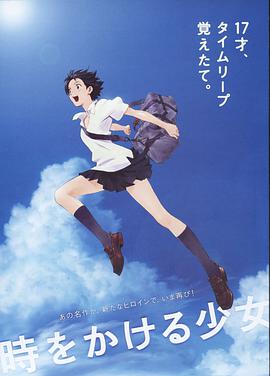
The Girl Who Leapt Through Time (2006)
時をかける少女
★ 8.4 (1251 ratings) director: 细田守 actor: 仲里依纱 / 石田卓也 …
other title: 穿越时空的少女 / 時をかける少女 …
When 17-year-old Makoto Konno gains the ability to, quite literally, "leap" backwards through time, she immediately sets about improving her grades and preventing personal mishaps. However, she soon realises that changing the past isn't as simple as it seems, and eventually, will have to rely on her new powers to shape the future of herself and her friends.
Anharten: Though The Girl Who Leapt through Time may not technically be Mamoru Hosoda’s first turn as a director, it’s nonetheless the film that first introduced his name to the world stage and affixed the albatross title of “the next Miyazaki” around his neck. Based on Yasutaka Tsutsui’s 1967 novel, Hosoda’s film is a spiritual successor of sorts to the original. Makoto Konno is by all appearances an average high school girl with a habit of clumsiness and oversleeping. But after discovering a mysterious artifact while hanging around after class, she soon discovers that she has the ability to “leap” backward through time. What then begins as frivolous dalliances of youthful indiscretion soon enough cascades into an unforeseen series of chain reactions that threaten to shake her life to the core and force her to commit to the consequences of her actions. It’s a beautiful film for sure, with terrific animation confidently bringing Yoshiyuki Sadamoto’s signature character designs to life. Like all great science-fiction, The Girl Who Leapt through Time offers the satisfaction of speculative wish fulfillment combined with an earthly lesson that touches home: time waits for no one, and no matter our fears or regrets, an inescapable part of growing up means taking a leap of faith into the unknown and learning how to fly on our way down.—Toussaint Egan

Movie

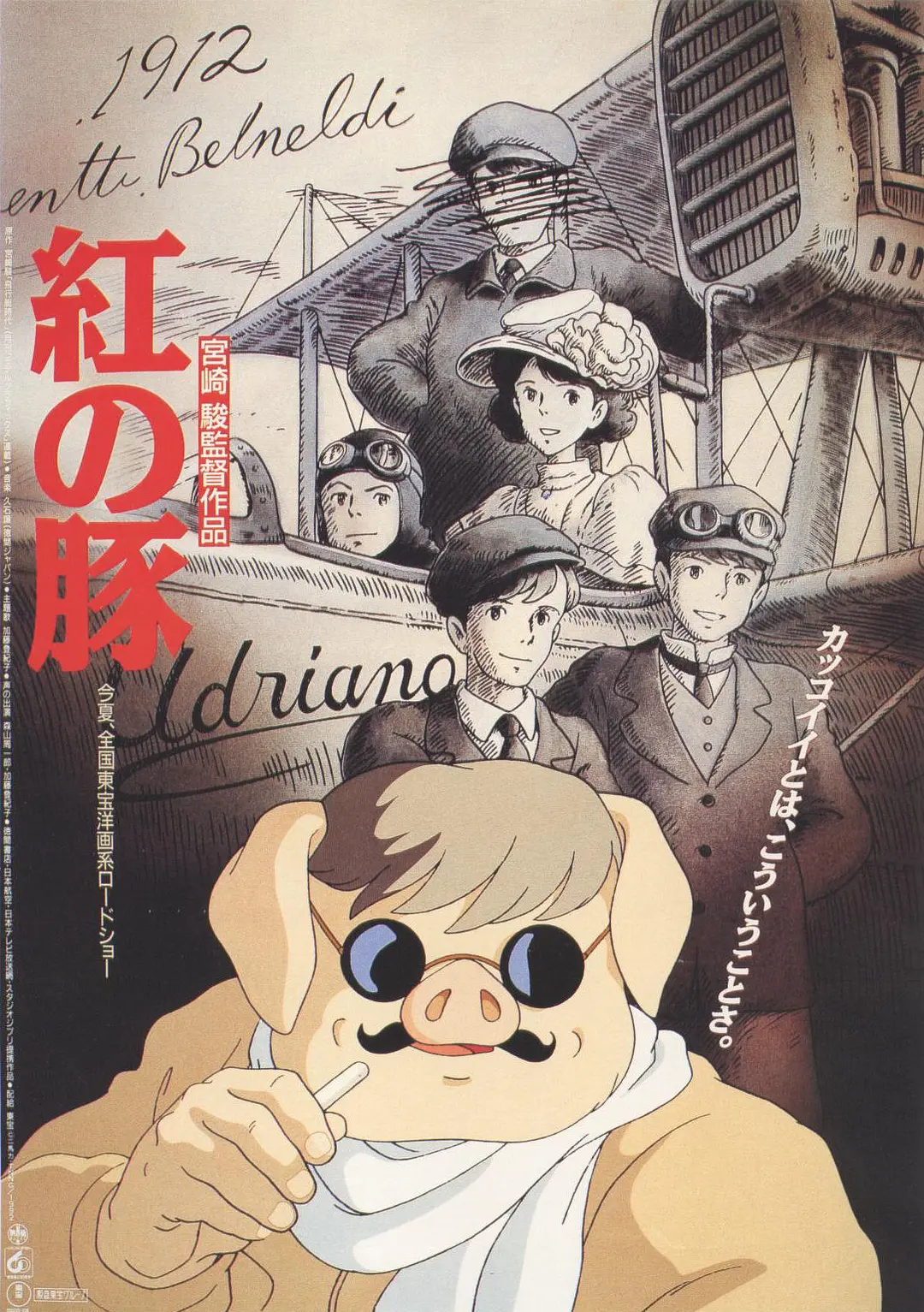
Porco Rosso (1992)
紅の豚
★ 8.4 (1003 ratings) director: 宫崎骏 actor: 森山周一郎 / 加藤登纪子 …
other title: 붉은 돼지 / 紅の豚 …
In Italy in the 1930s, sky pirates in biplanes terrorize wealthy cruise ships as they sail the Adriatic Sea. The only pilot brave enough to stop the scourge is the mysterious Porco Rosso, a former World War I flying ace who was somehow turned into a pig during the war. As he prepares to battle the pirate crew's American ace, Porco Rosso enlists the help of spunky girl mechanic Fio Piccolo and his longtime friend Madame Gina.
Anharten: Sometimes cited as “lesser Miyazaki,” Porco Rosso is actually one of his most complex and melancholy films. Set in Croatia in the years immediately following World War I, the film revolves around the the titular character, an ex-WWI flying ace who has been turned into a human-sized pig through a mysterious curse (which is never really explained, only alluded to). Most of the film covers the story of Porco’s rivalry with a brash American pilot, Curtis, and their competition to win the hand of Gina, Porco’s longtime friend and the love of his life. Originally commissioned as a short in-flight film for Japan Airlines based on Miyazaki’s short manga, it slowly expanded into a feature film—and was of course a huge hit in Japan, despite being a bit of a departure for Miyazaki. Up until his most recent film, The Wind Rises, Porco Rosso was the Studio Ghibli film that perhaps had the most “Miyazaki” in it. His obsessions with European towns, the forward march of technology, the disruptive effect of war, plucky young heroines, and of course, planes and flight, are more than just foregrounded here—they are the film. The entire enterprise has a mournful, melancholy feel, and thus a possibly ridiculous situation (a pig living his life as a man) is given a surprising amount of pathos. Porco pretends not to care that he isn’t human any more, and we learn that he feels he was cursed due to an act of cowardice in battle—although it’s never really clear if there’s anything he could have done differently. Porco’s mournfulness and survivor’s guilt permeate everything he does, and his resignation at his transformed state stunts his growth in other areas, making him a particularly sad protagonist. Paced more deliberately than other Miyazaki films, Porco Rosso comes together for a rousing climax, a beautifully realized dogfight that lives up to the insanely high bar set by Miyazaki’s other flying sequences. Along with The Wind Rises, Porco Rosso is one of Miyazaki’s least fanciful films, using real planes, a real location, and set during real events. More grounded than a fantasy about a pig man would suggest, Porco Rosso nevertheless reaches heights that will leave any anime fan breathless—and does it in style. —J.D.

Movie

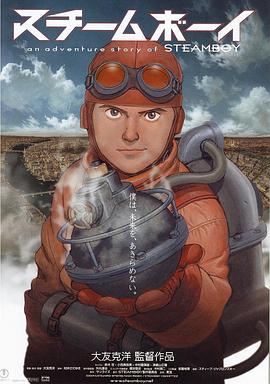
Steamboy (2004) WikiData IMDb TMDB Douban
スチームボーイ
★ 7.5 (216 ratings) director: 大友克洋 actor: 铃木杏 / 小西真奈美 …
other title: 蒸汽男孩 / スチームボーイ …
2004 anime film directed by Katsuhiro Otomo
Anharten: Steamboy, Katsuhiro Otomo’s long awaited follow-up to his defining 1988 film Akira, is remarkable for many reasons. Set in 1866 amid the landmark Great Exhibition in London, Steamboy is a high-flying steampunk adventure centered on a young inventor named Ray and a powerful object engineered by his genius scientist father and grandfather. The film is replete with the intricate details and expressive character animations that are synonymous with Otomo’s reputation as a master of the craft. The set-pieces are sweeping, and the action is entertaining, but there’s something missing. The plot plods and grinds to an excruciatingly slow pace during the film’s third act with just an hour left of the movie. The supporting characters are slight and ultimately insignificant to the arcs of either the protagonist or antagonist. And the film’s central theme, the question of what do the pursuit of science and industry owe to the whole of humanity, comes across as at best muddled and at worst disappointingly simplistic. Inspired initially by Otomo’s short “Cannon Fodder” for his 1995 anthology Memories and the pulp fantasy adventure novels of Edward Ellis and Harry Enton, Steamboy’s production lasted just shy of a decade, consisted of over 180,000 drawings and 440 computer-animated cuts, and cost an estimated $20 million. With that being said, despite its shortcomings, Steamboy remains a visually impressive technical achievement in modern animation. It’s a low mark in a filmography of outstanding work that still manages to crest higher than the majority of works it was released alongside of.—Toussaint Egan

Movie

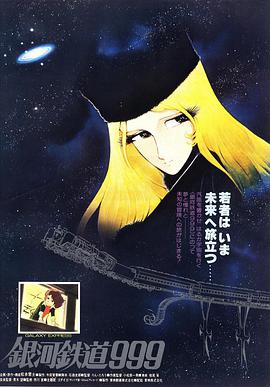
Galaxy Express 999: The Signature Edition (1979)
銀河鉄道999
★ 7.5 (58 ratings) director: 林太郎 actor: 野泽雅子 / 池田昌子 …
other title: 银河铁道999 / 銀河鉄道999 …
1979 Japanese anime film directed by Rintarō
Anharten: Leiji Matsumoto was, along with Go Nagai, one of the preeminent creators of manga and anime in Japan in the 1970s. He is best known for his Yamato series, but his ultimate artistic achievement is perhaps the shared universe represented by the Galaxy Express 999, Captain Harlock and Queen Emeraldas manga and anime series. Galaxy Express 999 started as a manga, then became a 113-episode anime, and culminated in a series of films, of which the self-titled is the first. Directed by the great Rintaro (Metropolis, X, Neo-Tokyo), and written by and adapted from Leiji Matsumoto’s manga, Galaxy Express 999 is quintessential Leiji. The story (inspired by the classic novel A Night on the Galactic Railroad) concerns a distant future where humans have developed the ability to download their consciousness into robot bodies, essentially achieving immortality—but also losing some measure of humanity. Only the richest humans can afford this procedure, and the poor are forced to live in squalor and die in backwater areas. Tetsuo Hoshino is a young boy whose mother was determined for them both to become immortal. Hearing of the legend of the galactic train, the Galaxy Express 999, whose passengers are guaranteed immortality, he meets Maetel, a mysterious woman who controls the train and offers to grant his wish if he keeps her company along the way. Exploring concepts like class struggle, immortality and what it really means to be human, Galaxy Express 999 is a heady piece of work. Leiji’s designs remain very idiosyncratic, his style being highly defined by this point, and though this film was made for a relatively small amount of money, the backgrounds and designs are uniformly beautiful. The animation itself is not really above the quality of the TV series upon which it was based, but that doesn’t really hurt the proceedings. As a way of summing up over a hundred episodes of story into one film, it’s a surprisingly lucid, affective piece of melancholy science fiction—Leiji’s specialty. It was a smash at the Japanese box office, leading to a somewhat confusing sequel, Adieu Galaxy Express 999, three years later. It was adapted for the U.S. market in 1980 by Roger Corman’s production company, and as was typical for the time, highly edited and changed for American consumption. Stick to the original with this one. A good place to start with Leiji Matsumoto, when you are ready to go beyond Yamato. —J.D.

Movie

The End of Evangelion: Episode 25': Love is Destructive/One More Final: I Need You (1997)
新世紀エヴァンゲリオン劇場版 Air/まごころを、君に
★ 9.3 (796 ratings) director: 庵野秀明 / 鹤卷和哉 actor: 绪方惠美 / 林原惠美 …
other title: 新世纪福音战士剧场版:Air/真心为你 / 新世紀エヴァンゲリオン劇場版 Air/まごころを、君に …
1997 anime film directed by Hideaki Anno
Anharten: The final two episodes of Neon Genesis Evangelion are notorious among fans of the series.Titled “Do you love me?” and “Take Care of Yourself,” the two-part finale infamously sidelined the climactic finale to the series’ central conflict, instead opting to take place entirely away from the action within the subconscious of the show’s protagonist, Shinji Ikari, as he wrestled to resolve the self-loathing and hatred which plagued him throughout the story’s duration. The unconventionality and unsatisfying nature of this conclusion prompted disgruntled fans to issue death threats on Anno’s life and Gainax’s building to be defaced with graffiti. In response, Anno set to work on an alternative ending to the series to be produced in two parts and aired in theaters. If you were looking for a light, campy and celebratory conclusion, End of Evangelion is not that movie. Instead, what fans were treated to was perhaps one of the most fatalistic, avant garde, and oddly enough, life-affirming endings to an anime series ever produced. In short, it is the best and worst of everything that is Evangelion combined to create a film that is unlike anything that had come before it. Despite its unrelenting darkness, End of Evangelion remains true to the ethos of its subtitle, that the joy of death is in the act of rebirth.—Toussaint Egan

Movie

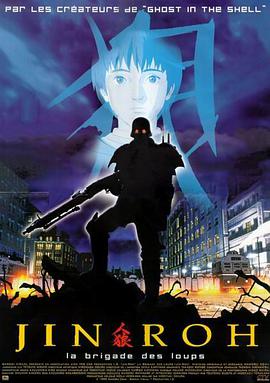
Jin Roh: The Wolf Brigade (1999)
人狼 JIN-ROH
★ 8.5 (225 ratings) director: 冲浦启之 actor: 藤木义胜 / 武藤寿美 …
other title: 人狼 / 人狼 JIN-ROH …
1999 film by Hiroyuki Okiura
Anharten: Written and storyboarded by Mamoru Oshii, Jin-Roh: The Wolf Brigade is Hiroyuki Okiura’s feature film debut and the third and final installment in Oshii’s Kerberos trilogy. Jin-Roh follows a member of an elite anti-terrorist police unit who, after failing to subdue a mysterious suicide bomber in the midst of a heated riot, is plagued by disquieting visions and doubt regarding the virtue of his service. The film is as thematically complicated as it is aesthetically breathtaking, with superbly realistic animation, deafening firefights and oppressive melancholic ambiance owed in part to Hajime Mizoguchi’s score. Jin-Roh: The Wolf Brigade is an audacious reimagining of Charles Perrault’s “Little Red Riding Hood” set in an authoritarian alternate history Japan where the lines between the wolf and the girl, the hero and the villain, become blurred to the point where the two are rendered tragically indistinguishable by their fallibility.—Toussaint Egan

Movie

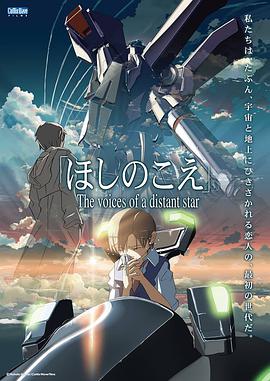
Voices of a Distant Star (2002)
ほしのこえ
★ 7.9 (319 ratings) director: 新海诚 actor: 筱原美香 / 新海诚 …
other title: 星之声 / ほしのこえ …
It is 2046 when a mysterious alien force begins their annihilation of the human race. Leaving behind the one person she loves, Mikako joins the interstellar battle as a pilot. And so - while Mikako risks her life to save mankind - Noboru waits. The two lovers, worlds apart, desperately strive to remain connected as the gap between them widens at a frightening pace.
Anharten: Makoto Shinkai’s debut is a testament to his skill as a director, and a primer for every broad emotional and aesthetic through line that would go on to define his work. When middle-schooler Mikako Nagamine is recruited by the UN Space Army to serve as a mecha pilot to fight off an alien threat striking at human civilization from the fringes of the solar system, she leaves behind her friend Noboru Terao on Earth. Initially committed to being pen pals, the gulf of time between their responses grows longer and longer given the relative distance of Mikako’s ship traveling from Earth. Produced almost entirely by Shinkai himself with music composed and performed by long-time friend and collaborator Tenmo, Voices of a Distant Star hones in on the themes of time, space and distance, and how they impact the fragility of human relationships in a way that few other works can, securing Shinkai’s status as one of anime’s premier auteur directors.—Toussaint Egan

Movie

Ghost in the Shell 2: Innocence (2004)
攻殻機動隊2 イノセンス
★ 9.1 (673 ratings) director: Mamoru Oshii actor: Atsuko Tanaka / Akio Otsuka …
other title: 攻壳机动队2:无罪 / 攻殻機動隊2 イノセンス …
Cyborg detective Batou is assigned to investigate a series of murders committed by gynoids—doll-like cyborgs, which all malfunctioned, killed, then self-destructed afterwards. The brains of the gynoids initialize in order to protect their manufacturer's software, but in one gynoid, which Batou himself neutralized, one file remains: a voice speaking the phrase "Help me."
Anharten: Ghost in the Shell 2: Innocence is a sharp detour, both visually and conceptually, from the tone and tenor of Oshii’s 1995 classic. Set three years after the events of Ghost in the Shell and the disappearance of Major Motoko Kusanagi, Innocence follows Batou, the Major’s former partner and acting field commander of Public Security Section 9. While investigating a wave of murders perpetrated by an experimental line of sex gynoids, Batou and Section 9 uncover a deadly conspiracy linked to a rash of mysterious disappearances that extends to the highest echelons of the Japanese government. As Batou plunges into the depths of the criminal underground in his search for answers, he begins to question the extent of his own humanity as a prosthetic cyborg. Can someone ever truly recreate themselves? What does it mean to be happy? And will the Major ever truly return? Innocence is a noticeably different film than the original in regard to its tone and subject matter. Approaching it less as a sequel and more of epistemological investigation through the medium of anime, Oshii doubles down on the Christian esotericism and philosophical koan-esque questions that define the greater part of his work to create a film that, although visually impressive and conceptually complex, feels bogged down in its latter half by the weight of too much ambition. If you’re a Ghost in the Shell devotee, Innocence is definitely recommended: a dense excavation into a wellspring of ideas and questions that don’t often come to the forefront of contemporary cyberpunk stories. If you’re more of a casual viewer, stick with the somewhat more palatable (but no less profound) 1995 original.—Toussaint Egan

Movie

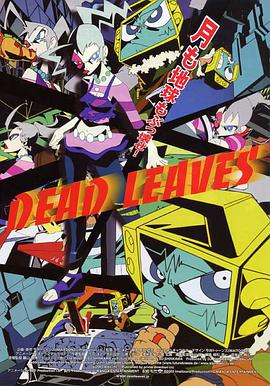
Dead Leaves (2004)
Dead Leaves
★ 8.6 (118 ratings) director: 今石洋之 actor: 山口胜平 / 本田贵子 …
other title: 落叶 / DEAD LEAVES …
Pandy and Retro awaken naked on Earth with no recollection of their past. They embark on a crime spree in search of food and clothing, but are captured by authorities and sent to the infamous lunar penitentiary named Dead Leaves.
Anharten: You may not recognize Hiroyuki Imaishi’s name from a first glance, but in his career as an animator and director over the past two decades, he has amassed a body of work that’s iconic among post-millennial animation. Most recognized for his work as an animator on shows like FLCL and Neon Genesis Evangelion before going on to direct such cult classic series as Tengen Toppa Gurren Lagann and Kill La Kill, his directorial feature debut, Dead Leaves, is a pure encapsulation of all of Imaishi’s idiosyncrasies and quirks as a director. The film follows the hyper-violent misadventures of two amnesiac criminals sentenced to life imprisonment aboard a space penitentiary embedded in the remnants of the moon. The film’s art style resembles what one would picture from an hyper-stylized underground cult comic from the ’90s, albeit injected with an industrial-sized adrenaline shot of anarchism, profanity and phallic imagery. The sum total of Imaishi’s aesthetic legacy can be traced back to Dead Leaves, whether it be his affinity for drill imagery that would later take center stage in Gurren Lagann or the frenzied hyperactive gunfights that would pop up in his work on FLCL. Dead Leaves is unapologetically low on story and crammed wall to wall with style, but when this combination plays so well to the director’s strengths, excess is absolutely what you want out of a film like this.—Toussaint Egan

Movie

Howl's Moving Castle (2004)
ハウルの動く城
★ 8.7 (2094 ratings) director: Hayao Miyazaki actor: Chieko Baisho / Takuya Kimura …
other title: 哈尔的移动城堡 / ハウルの動く城 …
Sophie, a young milliner, is turned into an elderly woman by a witch who enters her shop and curses her. She encounters a wizard named Howl and gets caught up in his resistance to fighting for the king.
Anharten: Howl’s Moving Castle was the Miyazaki film that almost didn’t happen. Conceived in 2001 amidst the height of Spirited Away’s success, Mamoru Hosoda was originally slated to direct the adaptation of Diana Wynne Jones’ 1986 novel before he and Ghibli had a falling out due to a conflict of creative visions. Miyazaki seized the reins and made the film his own, crafting the source material into a creative vessel through which he could forge his impassioned contempt for the then-ongoing U.S. invasion of Iraq into a parable about a fruitless magical proxy war between two nations in a steampunk fantasy setting. Howl’s is a whimsical if occasionally tepid adventure of a timid young woman who, after being cursed with the body of an old crone by a jealous witch, is rescued by a charismatic wizard who lives in a gigantic walking house. The film’s titular castle is one of Miyazaki’s finest creations, resembling a bow-legged fish armed with stumpy wings and turrets hobbling across the countryside and shuffling debris to and fro. To be sure, though its finale is a bit muted and the abrupt resolution of a love story in the movie’s denouement is a bit too neat and tidy, the film is a quintessential Miyazaki effort nonetheless that’s sure to please both newcomers and enthusiasts who might have somehow not seen it yet.—Toussaint Egan

Movie

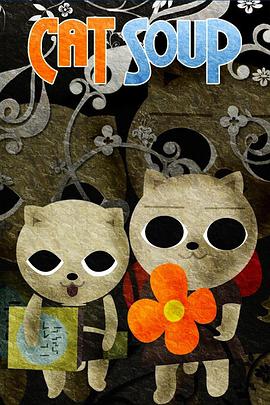
Nekojiru-so (2001)
ねこぢる草
★ 8.6 (433 ratings) director: 佐藤龙雄
other title: ねこぢる草 / 猫汤 …
2001 film by Tatsuo Satō
Anharten: There’s a lot of ways to go about describing Cat Soup to someone who’s never seen it before. Hallucinatory. Macabre. Avant-garde. Adorable. The only thing you can’t call it is boring. Directed in 2001 by Tatsuo Sato and co-conceived by Sato and Masaaki Yuasa, Cat Soup is an award-winning dark comedy short film inspired by the work of cult manga artist Nekojiru. The film is a brilliant example of stream-of-consciousness animation, following the exploits of a young kitten named Nyatta who embarks on a bizarre journey to recover the soul of his sister Nyaako. Describing what happens in the film is insufficient in attempting to understand it as compared to simply watching it. Cat Soup is a disquieting head-trip, a pastel-colored fever dream, and above all else a supremely creative short film that’s as visually entertaining as it is conceptually unnerving.—Toussaint Egan

Movie

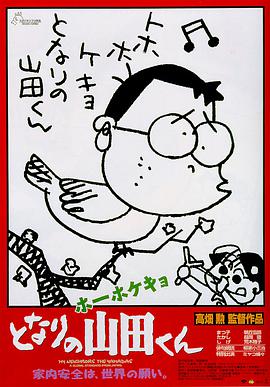
My Neighbors the Yamadas (1999) WikiData IMDb TMDB Douban
ホーホケキョとなりの山田くん
★ 8.7 (278 ratings) director: 高畑勋 actor: 朝丘雪路 / 益冈彻 …
other title: 我的邻居山田君 / ホーホケキョとなりの山田くん …
The Yamadas are a typical middle class Japanese family in urban Tokyo and this film shows us a variety of episodes of their lives. With tales that range from the humorous to the heartbreaking, we see this family cope with life's little conflicts, problems, and joys in their own way.
Anharten: Isao Takahata, for all his legendary status as a director and co-founder of Studio Ghibli, is sometimes a hard director to pin down, stylistically. Case in point: the delightful, virtually plot-free, humane comedy My Neighbors the Yamadas, which looks and feels like nothing else in his oeuvre. Despite this, it somehow also feels like quintessential Takahata. Based on the comic strip manga, Nono-Chan, the film is a series of vignettes centered around the Yamadas, an average family living in metropolitan Japan. These vignettes cover everything from how Takashi and Matsuko (the parents at the center of many of the tales) met, to family arguments over who has control of the TV remote, to grandmother Shige’s advice and proverbs told to the family. Despite not having an overarching story, by the end of the film, each character and their interconnecting relationships are finely and realistically drawn, and it’s easy to find oneself in love with this family, and their silly, crabby humanity. Complex truths about aging, marriage, family, and childhood are expressed through these simple tales about particular family members and their trials, tribulations and daily foibles. Also of note is the striking visual style of the film, designed to look like a watercolor comic strip. Takahata was so firm in his desire to achieve this look that My Neighbors the Yamadas ended up becoming the first fully digital film from Studio Ghibli. Whether you find it slow-moving or delightfully sedate, the visuals will captivate. My Neighbors the Yamadas is a film only Ghibli would make, and only Takahata could shape into such a poignant ode to the humanity of everyday families. Essential Takahata, indeed. —J.D.

Movie

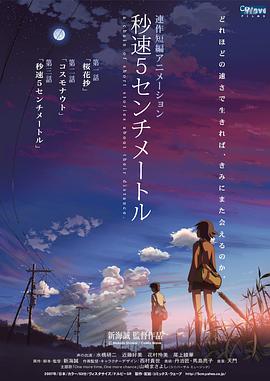
5 Centimeters per Second (2007)
秒速5センチメートル
★ 7.9 (1668 ratings) director: 新津知世 / 新海诚 actor: 水桥研二 / 近藤好美 …
other title: 秒速5厘米 / 秒速5センチメートル …
Three moments in Takaki's life: his relationship with Akari and their forced separation; his friendship with Kanae, who is secretly in love with him; the demands and disappointments of adulthood, an unhappy life in a cold city.
Anharten: Makoto Shinkai’s fourth and arguably most well-known film, 5 Centimeters Per Second, focuses on the seemingly intractable distance, both physically and emotionally, between two childhood friends who pine for one another all the while the mounting circumstances of their lives intervene to pull them apart. Told across three short stories, the film follows Takaki Tono through childhood, adolescence, and eventually adulthood, documenting how his unrealized romance with his former best friend, Akari Shinohara, both spurs him forward and tragically leaves him incapable of pursuing human connection elsewhere. Set between the early ’90s and late aughts, 5 Centimeters Per Second ingenuously uses the absence and later ubiquity of modern communication technology to tell a story of mixed connections and emotional resonance. Filled with Shinkai’s requisite emotional motifs of loneliness, existential melancholy and romantic ennui, 5 Centimeters Per Second is perhaps the definitive introduction to Shinkai’s oeuvre for aficionados and newcomers alike.—Toussaint Egan

Movie

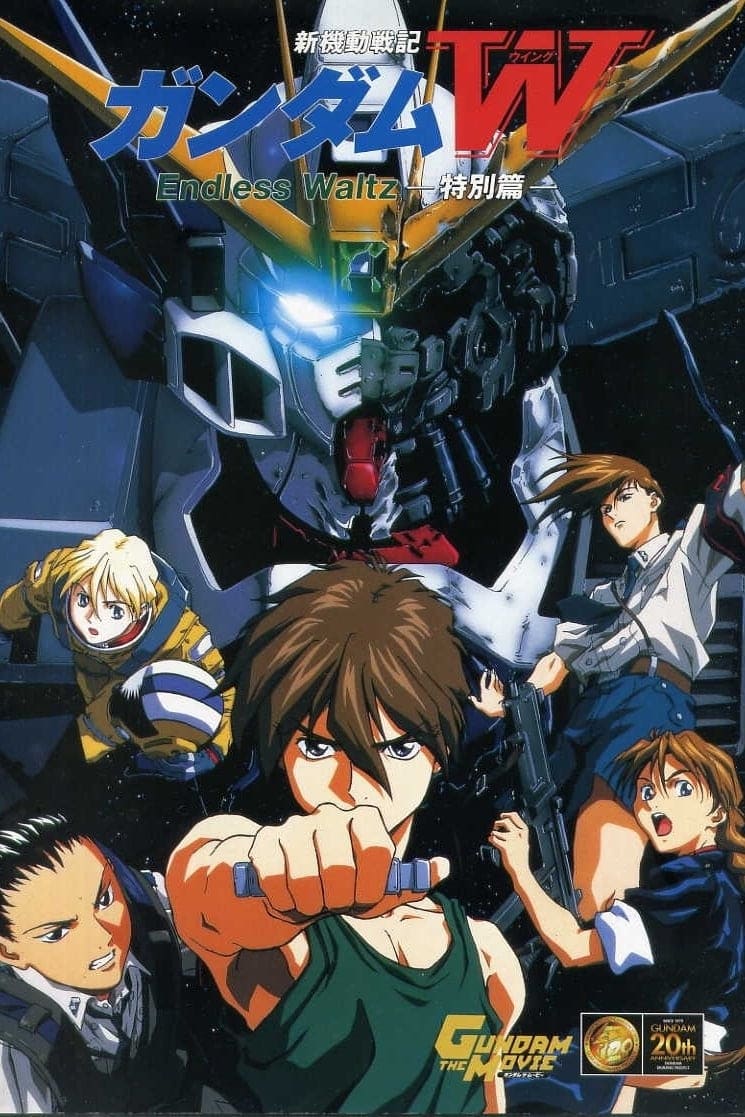
Gundam Wing: The Endless Waltz (1998) IMDb TMDB
新機動戦記ガンダムW Endless Waltz 特別篇
other title: 新机动战记高达W 无尽的华尔兹 剧场版 / 新機動戦記ガンダムW Endless Waltz 特別篇 …
After Colony (A.C.) 196. One year after the events of the "Gundam Wing" television series, peace has spread through the Earth Sphere and the colonies. The Gundam pilots now find themselves attempting to rebuild their lives in this new era. No longer having need of their weapons of war, they have sent their Gundams into the sun to be destroyed. But suddenly, Relena Darlian, who has become a high-ranking government official, is kidnapped by a colony with aspirations of total dominance. The Gundam pilots and their allies find themselves called into action once again. The Endless Waltz has resumed...
Anharten: Endless Waltz was originally produced as a three-part OVA wrapping up the story of the Gundam Wing TV series, which takes place outside the normal continuity of the Gundam “Universal Century” timeline. The movie cut is the superior viewing experience, however. Endless Waltz takes place one year after the events that wrapped up Gundam Wing, and involves the Gundam pilots, and their enemy Zechs Merquise, coming out of retirement to battle one last threat—and in some cases, each other. Where the Gundam Wing TV series had a plot that tended to meander, and sometimes used cheap animation or repeated cels, Endless Waltz is a feast for the eyes—filled with gorgeous, fluid battle scenes that any fan of giant robots will appreciate. Add to that the very smart decision to have the great Katoki Hajime (Short Peace, Gundam 0083) redesign the Gundams into their “evolved” forms, and this becomes much more than a simple end of series cash-in. For this film version, several shots from the OVA were retouched, and there are some mild adjustments to the original animation. As a payoff to the TV series, it’s a great way to visit with the Gundam pilots one last time, and as a stand alone, it works well enough that even if one is not familiar with the source material, it’s a fun ride. The usual questions about the cost of war, the price of peace, and human determinism that run through virtually all Gundam series are on full display here. If you want a concise example of what Gundam does so well relative to other types of giant robot anime, this is a dance worth taking. —J.D.

Movie

The Animatrix (2003)
The Animatrix
★ 8.8 (412 ratings) director: 钟彼得 / Andy Jones … actor: 大冢明夫 / 克莱顿·华生 …
other title: 黑客帝国动画版 / 骇客帝国动画版 …
Straight from the creators of the groundbreaking Matrix trilogy, this collection of short animated films from the world's leading anime directors fuses computer graphics and Japanese anime to provide the background of the Matrix universe and the conflict between man and machines. The shorts include Final Flight of the Osiris, The Second Renaissance, Kid's Story, Program, World Record, Beyond, A Detective Story and Matriculated.
Anharten: The Animatrix is, without a doubt, the best thing to come out of the Matrix franchise since the original movie. At the height of the series’ popularity between production of the Matrix Reloaded and Revolutions, the Wachowskis recruited the talents of seven of the most preeminent directors working in the field of anime to co-create an anthology of nine short films set within and around the continuity of the Matrix universe. All the familiar tropes are present: the mirrorshades, the kung fu acrobatics, the pulsing rain of digital kanji. But the greatest quality of the Animatrix anthology was in refracting the singular vision of the Wachowskis to a kaleidoscope of yet-unexplored visual and conceptual possibilities within the series’ core concept. Whether it be Mahiro Maeda’s chilling prequel in “The Second Renaissance,” Shinichiro Watanabe’s low-tech noir mystery in “A Detective Story,” or Peter Chung’s bizarre and psychedelic journey into the mind of a human-designed matrix with “Matriculated,” the Animatrix dove directly into heart of films’ collective mythology and reimagined it with every last drop of untapped creativity the series had then yet to muster.—Toussaint Egan

Movie

One Thousand and One Nights (1969) WikiData IMDb TMDB Douban
千夜一夜物語
★ 7.5 (34 ratings) director: 山本映一 actor: 芥川比吕志 Hiroshi Akutagawa / 青岛幸男 …
other title: 一千零一夜 / 千夜一夜物語 …
Aldin, a vagabond water vendor, embarks of a series of fantastical and tragic misadventures through the Middle East in search of love, fortune, and power.
Anharten: Created by Mushi Productions, the studio behind such classics such Astroboy, Kimba the White Lion and Dororo, and produced by none other than anime patriarch Osamu Tezuka, One Thousand and One Nights was the first installment in what would later come to be known as the Animerama series, a trilogy of thematically linked experimental erotic films created for adult audiences. Directed by Eiichi Yamamoto and written by Tezuka with the assistance of Kazuo Fukasaka and Hiroyuki Kumai, the film’s initial release in Japan was championed for its abstract animation, experimental live-action footage, adult storyline, and psychedelic rock music score. One Thousand and One Night would later be dubbed and receive an American release, predating the adult animated film phenomenon sparked by Ralph Bakshi’s 1972 Fritz the Cat, only to flop and receive a limited release. The English dub of One Thousand and One Nights is thought to be lost to the annals of history, with only the film’s original subtitled version to stand as a testament to one of the most bizarre and intriguing experiments in Japanese animation.—Toussaint Egan

Movie

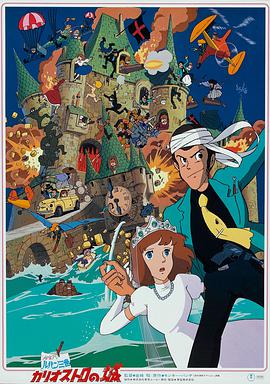
Lupin III: Castle of Cagliostro (1979)
ルパン三世 カリオストロの城
★ 8.3 (213 ratings) director: 宫崎骏 actor: 山田康雄 / 小林清志 …
other title: 鲁邦三世:卡里奥斯特罗城 / ルパン三世 カリオストロの城 …
1979 film directed by Hayao Miyazaki
Anharten: The nature of Miyazaki’s oeuvre is such that it brims with an embarrassment of riches, each film in its own part situated indelibly into the continuum that is the anime canon. His films garner so much acclaim for their visual storytelling and emotional virtuosity that even those few that could be considered his “worst” movies still rank leagues above those animators who only aspire to his status. Case in point: Lupin III: The Castle of Cagliostro. Miyazaki’s take on Kazuhiko Kato’s notorious master criminal is at once a rip-roaring heist film with heart and what might arguably be Miyazaki’s lesser films. Chalk it up to Miyazaki’s nascent efforts as a director, Castle of Cagliostro suffers from a plodding middle-half and a disappointingly simplistic antagonist while still somehow managing to sparkle with his signature charm peeking through the baggage of a preexisting work. Fans of the series passionately criticized the film for relieving Lupin of his anarchic predilections and instead casting him in the mold of a true gentleman thief, stealing only when his nebulous sense of honor permits it. In any case, The Castle of Cagliostro remains an important and essential artifact of Miyazaki’s proto-Ghibli work. A flawed Miyazaki film is a triumph all the same.—Toussaint Egan

TV

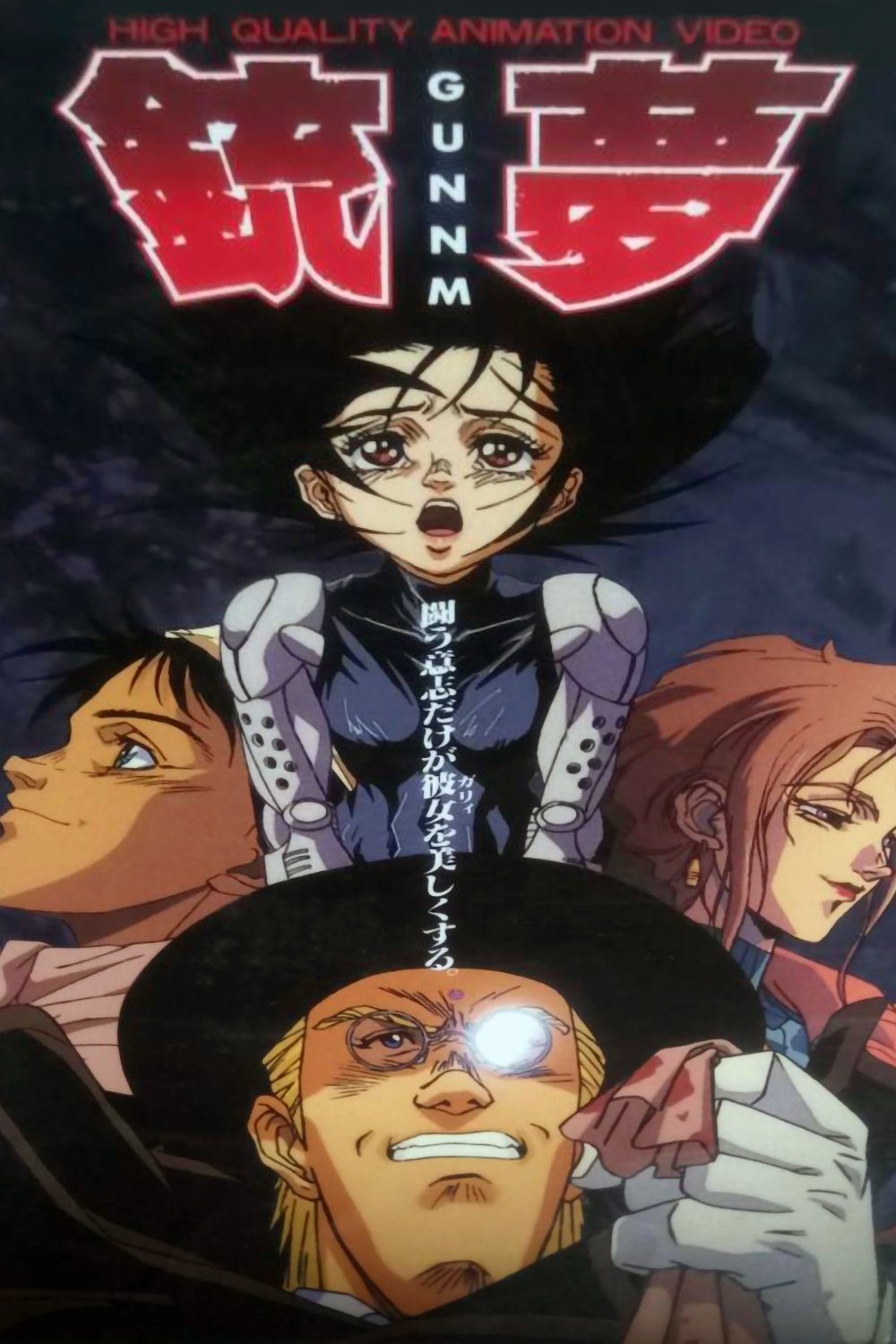
Battle Angel TMDB
part of TV Series: Battle Angel
空中都市ザレムが全てを支配する世界。地に残されたわずかな人類はザレム直下に吐きだれるゴミ溜めの周囲に寄り添い、なんとか生き延びていた。サイバネ医師であり賞金稼ぎでもあるイド・ダイスケはスクラップの中から少女の頭部を見つけ再生させる。少女は記憶を失っていたものの失われた古武術・機甲術をその身に宿していた。自身のルーツ、生きる意味…人生の問いを追い求め、少女は賞金稼ぎとなり、戦いの日々を送るが…!?
Anharten: Based off of the first two volumes of Yukito Kishiro’s long-running sci-fi manga series, Battle Angel (or Gunnm, as it’s known in Japan) is the story of Gally, an amnesiac cyborg who wakes up to a dystopian future after being rescued by a kindly prosthetic scientist and later embarks on a personal journey of self-discovery and adventure. Despite the series’ popularity and the manga having run for a cumulative nineteen years, Battle Angel adapts only the first two volumes of the series. The film is premium cyberpunk material, with sprawling cityscapes, homicidal cyborg junkies, brooding bounty-hunters, and an enormous megacity hanging above the mainland separating the haves from the have-nots. Battle Angel does a wonderful job of fleshing out Gally’s initial arc from an unassuming youth to a formidable bounty hunter and martial artist. The film’s impressive quality only makes absence of any subsequent adaptation all that more peculiar. Battle Angel just barely scratches the surface of its source material, but if you’re looking for vintage cyberpunk story and a concise introduction to Kishiro’s opus, you’d be remiss not to give this one a shot.—Toussaint Egan
Reply Quote Sept. 25, 2026