Rock
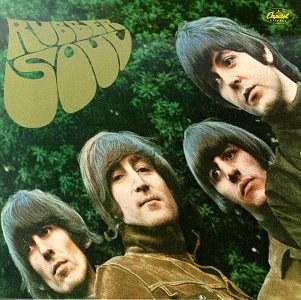
Rubber Soul Douban Discogs
★ 9.5 (210 ratings) The Beatles genre: Rock
release date 1965-01-01 publisher: Capitol
Rank 'em how you like, Rubber Soul is an undeniable pivot point in the Fab Four's varied discography no matter where, or how, you first heard it. The album was softened up in its original 12-song American edition to jibe with the Dylan/Byrds folk-rock sound, as well as squeeze money from the Parlophone catalog. The 14-song U.K. edition--the version now available on compact disc--is a different, more dynamic, and ultimately more accomplished achievement. So many classics: "Drive My Car" and "Nowhere Man" (both omitted from the U.S. edition) merge the early combustible Beatifics to a burgeoning studio consciousness; "The Word" can be read as a pre-psych warning shot; the sitar-laden "Norwegian Wood" and the evocative "Girl" (the latter written on the last night of the sessions) stand as turning points in John Lennon's oeuvre. George finally emerges too, with the McGuinn-ish "If I Needed Someone." EMI. 2005.
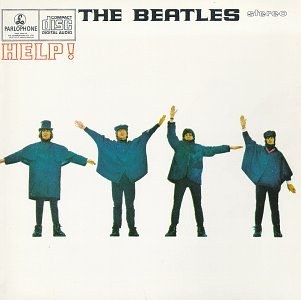
Help! Douban Spotify Discogs
★ 9.3 (148 ratings) The Beatles genre: Rock
release date 1965-01-01 publisher: Capitol
Digitally remastered digipak edition of this classic 1965 album from The Beatles featuring 'Ticket To Ride', 'Help!', 'You've Got To Hide Your Love Away', 'I've Just Seen A Face', 'Yesterday' and many more. The album has been remastered at Abbey Road Studios in London utilizing state of the art recording technology alongside vintage studio equipment, carefully maintaining the authenticity and integrity of the original analogue recordings. Within the CD's new packaging, the booklet includes detailed historical notes along with informative recording notes. A newly produced mini-documentary on the making of the album is included as a QuickTime file on each album. The documentary contains archival footage, rare photographs and never-before-heard studio chat from The Beatles, offering a unique and very personal insight into the studio atmosphere. Capitol.
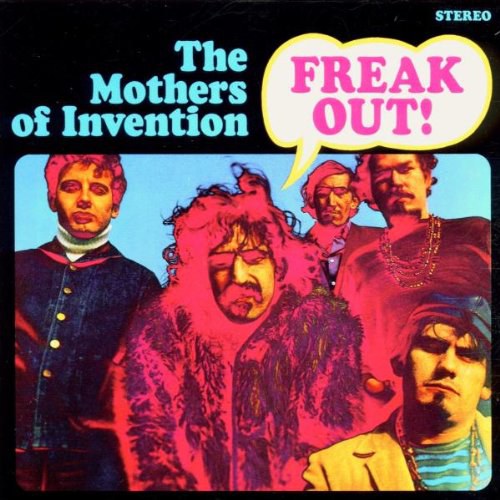
Freak Out Douban
★ 8.8 (24 ratings) Frank Zappa & The Mothers of Invention genre: Rock
release date 1995-05-02 publisher: Rykodisc
One of the most ambitious debuts in rock history, Freak Out! was a seminal concept album that somehow foreshadowed both art rock and punk at the same time. Its four LP sides deconstruct rock conventions right and left, eventually pushing into territory inspired by avant-garde classical composers. Yet the album is sequenced in an accessibly logical progression; the first half is dedicated to catchy, satirical pop/rock songs that question assumptions about pop music, setting the tone for the radical new directions of the second half. Opening with the nonconformist call to arms &Hungry Freaks, Daddy,& Freak Out! quickly posits the Mothers of Invention
as the antithesis of teen-idol bands, often with sneering mockeries of the teen-romance songs that had long been rock's commercial stock-in-trade. Despite his genuine emotional alienation and dissatisfaction with pop conventions, though,
Frank Zappa was actually a skilled pop composer; even with the raw performances and his stinging guitar work, there's a subtle sophistication apparent in his unorthodox arrangements and tight, unpredictable melodicism. After returning to social criticism on the first song of the second half, the perceptive Watts riot protest &Trouble Every Day, & Zappa exchanges pop song structure for experiments with musique concrète, amelodic dissonance, shifting time signatures, and studio effects. It's the first salvo in his career-long project of synthesizing popular and art music, high and low culture; while these pieces can meander, they virtually explode the limits of what can appear on a rock album, and effectively illustrate Freak Out!'s underlying principles: acceptance of differences and free individual expression.
Zappa would spend much of his career developing and exploring ideas -- both musical and conceptual -- first put forth here; while his myriad directions often produced more sophisticated work, Freak Out! contains at least the rudiments of almost everything that followed, and few of Zappa's records can match its excitement over its own sense of possibility.