人类学
Screen Shots
Douban
Rebecca L. Stein publishing house: Stanford University Press 2021 - 6
在过去的二十年里,随着智能手机在全球范围内的普及,国家对平民的杀戮越来越多地被旁观者和警察的相机所捕捉。《屏幕快照》一书以以色列对巴勒斯坦的占领为背景来研究这一现象。丽贝卡·斯坦恩(Rebecca Stein)发现:相机——作为政治工具,在包括巴勒斯坦活动家、以色列士兵、犹太定居者和人权工作者在内的广泛的行动者和机构之中激增。所有人都将镜头对准了以色列的国家暴力,并被一个共同的梦想所驱动:以更近、更快、更清晰为特征的数码摄影将推动他们各自的政治议程。但是,丽贝卡认为大多数人会感到失望。根据民族志调查,她记录了寻求正义的巴勒斯坦视频活动家(video-activists)、努力完善军队形象的以色列士兵,以及指责巴勒斯坦人“装死”的犹太复国主义阴谋论者。斯坦恩在书中反驳了技术乐观主义,通过揭示相机梦想和幻灭,她呈现了以色列和巴勒斯坦的殖民现状,以及智能手机时代权力和斗争条件的变化。——结绳志 In the last two decades, amid the global spread of smartphones, state killings of civilians have increasingly been captured on the cameras of both bystanders and police. Screen Shots studies this phenomenon from the vantage point of the Israeli occupation of Palestinian territories. Here, cameras have proliferated as political tools in the hands of a broad range of actors and institutions, including Palestinian activists, Israeli soldiers, Jewish settlers, and human rights workers. All trained their lens on Israeli state violence, propelled by a shared dream: that advances in digital photography―closer, sharper, faster―would advance their respective political agendas. Most would be let down. Drawing on ethnographic work, Rebecca L. Stein chronicles Palestinian video-activists seeking justice, Israeli soldiers laboring to perfect the military's image, and Zionist conspiracy theorists accusing Palestinians of "playing dead." Writing against techno-optimism, Stein investigates what camera dreams and disillusionment across these political divides reveal about the Israeli and Palestinian colonial present, and the shifting terms of power and struggle in the smartphone age.
The Moral Triangle
Douban
Sa'ed Atshan / Katharina Galor publishing house: Duke University Press Books 2020
两位作者萨义德·阿特尚(Sa’ed Atshan)与卡特里娜·伽罗尔(Katharina Galor)分别是巴勒斯坦人和以色列人,前者是斯沃斯莫尔学院(Swarthmore College)人类学与中东研究教授,后者是布朗大学(Brown University)考古学教授。本书以德国,特别是柏林,为出发点讨论第二次世界大战后德国在处理巴以问题上的态度和柏林本地的巴勒斯坦人与以色列人的生存现况。战时的犹太人大屠杀导致了德国政府对以色列政府的支持和公开场合上对反犹太主义的抵制,但这反而导致了在柏林人的巴勒斯坦群体频频遭受种族歧视与伊斯兰恐惧症对待。作者们以田野调查和访谈的方式包括了对公共和私人领域的探究。这些关系形成的原因错综复杂,包括了德国人自己在二战中进行的犹太人大屠杀、巴以矛盾问题和德国今年欢迎中东移民的政策。德国人、以色列人与巴勒斯坦人间互动夹杂了不同类型的创伤的形成和对恢复性正义的寻求。迁移、创伤与当代国际政治总是相互影响。——结绳志 Berlin is home to Europe's largest Palestinian diaspora community and one of the world's largest Israeli diaspora communities. Germany's guilt about the Nazi Holocaust has led to a public disavowal of anti-Semitism and strong support for the Israeli state. Meanwhile, Palestinians in Berlin report experiencing increasing levels of racism and Islamophobia. In The Moral Triangle Sa'ed Atshan and Katharina Galor draw on ethnographic fieldwork and interviews with Israelis, Palestinians, and Germans in Berlin to explore these asymmetric relationships in the context of official German policies, public discourse, and the private sphere. They show how these relationships stem from narratives surrounding moral responsibility, the Holocaust, the Israel/Palestine conflict, and Germany's recent welcoming of Middle Eastern refugees. They also point to spaces for activism and solidarity among Germans, Israelis, and Palestinians in Berlin that can help foster restorative justice and account for multiple forms of trauma. Highlighting their interlocutors' experiences, memories, and hopes, Atshan and Galor demonstrate the myriad ways in which migration, trauma, and contemporary state politics are inextricably linked.
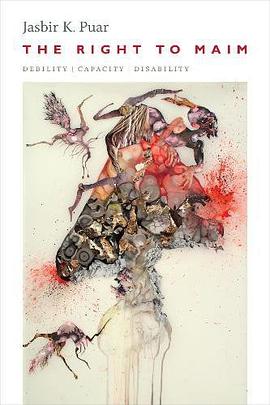
The Right to Maim
Douban Eggplant.place
Jasbir K. Puar publishing house: Duke University Press Books 2017 - 11
In The Right to Maim Jasbir K. Puar brings her pathbreaking work on the liberal state, sexuality, and biopolitics to bear on our understanding of disability. Drawing on a stunning array of theoretical and methodological frameworks, Puar uses the concept of “debility”—bodily injury and social exclusion brought on by economic and political factors—to disrupt the category of disability. She shows how debility, disability, and capacity together constitute an assemblage that states use to control populations. Puar's analysis culminates in an interrogation of Israel's policies toward Palestine, in which she outlines how Israel brings Palestinians into biopolitical being by designating them available for injury. Supplementing its right to kill with what Puar calls the right to maim, the Israeli state relies on liberal frameworks of disability to obscure and enable the mass debilitation of Palestinian bodies. Tracing disability's interaction with debility and capacity, Puar offers a brilliant rethinking of Foucauldian biopolitics while showing how disability functions at the intersection of imperialism and racialized capital.
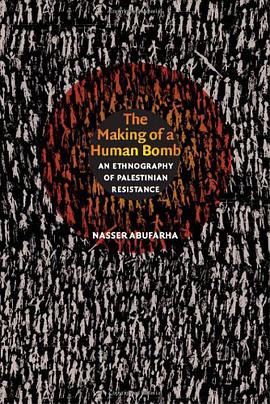
The Making of a Human Bomb
Douban Goodreads
Nasser Abufarha publishing house: Duke University Press 2009 - 7 other title: The Making of a Human Bomb: An Ethnography of Palestinian Resistance
In "The Making of a Human Bomb", Nasser Abufarha, a Palestinian anthropologist, explains the cultural logic underlying Palestinian martyrdom operations (suicide attacks) launched against Israel during the Al-Aqsa Intifada (2000-06). In so doing, he sheds much-needed light on how Palestinians have experienced and perceived the broader conflict. During the Intifada, many of the martyrdom operations against Israeli targets were initiated in the West Bank town of Jenin and surrounding villages. Abufarha was born and raised in Jenin. His personal connections to the area enabled him to conduct ethnographic research there during the Intifada, while he was a student at a U.S. university. Abufarha draws on the life histories of martyrs, interviews he conducted with their families and members of the groups that sponsored their operations, and examinations of Palestinian literature, art, performance, news stories, and political commentaries. He also assesses data - about the bombers, targets, and fatalities caused - from more than two hundred martyrdom operations carried out by Palestinian groups between 2001 and 2004. Some involved the use of explosive belts or the detonation of cars; others entailed armed attacks against Israeli targets (military and civilian) undertaken with the intent of fighting until death. In addition, he scrutinized suicide attacks executed by Hamas and Islamic Jihad between 1994 and 2000. In his analysis of Palestinian political violence, Abufarha takes into account Palestinians' understanding of the history of the conflict with Israel, the effects of containment on Palestinians' everyday lives, the disillusionment created by the Oslo peace process, and reactions to specific forms of Israeli state violence. "The Making of a Human Bomb" illuminates the Palestinians' perspective on the conflict with Israel and provides a model for ethnographers seeking to make sense of political violence.
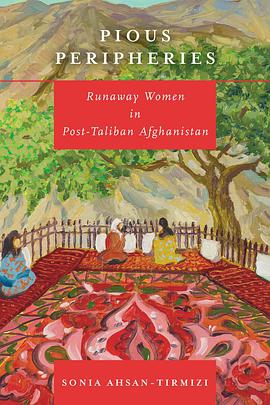
Pious Peripheries
Douban
Sonia Ahsan-Tirmizi publishing house: Stanford University Press 2021 - 5
The Taliban made piety a business of the state, and thereby intervened in the daily lives and social interactions of Afghan women. Pious Peripheries examines women's resistance through groundbreaking fieldwork at a women's shelter in Kabul, home to runaway wives, daughters, mothers, and sisters of the Taliban. Whether running to seek marriage or divorce, enduring or escaping abuse, or even accused of singing sexually explicit songs in public, "promiscuous" women challenge the status quo—and once marked as promiscuous, women have few resources. This book provides a window into the everyday struggles of Afghan women as they develop new ways to challenge historical patriarchal practices. Sonia Ahsan-Tirmizi explores how women negotiate gendered power mechanisms, notably those of Islam and Pashtunwali. Sometimes defined as an honor code, Pashtunwali is a discursive and material practice that women embody through praying, fasting, oral and written poetry, and participation in rituals of hospitality and refuge. In taking ownership of Pashtunwali and Islamic knowledge, in both textual and oral forms, women create a new supportive community, finding friendship and solidarity in the margins of Afghan society. So doing, these women redefine the meanings of equality, honor, piety, and promiscuity in Afghanistan.
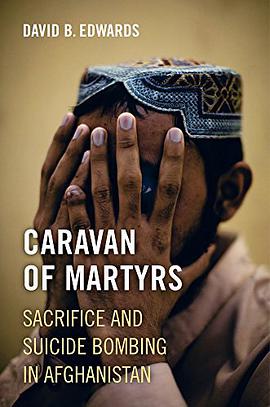
Caravan of Martyrs
Douban
David B. Edwards publishing house: University of California Press 2019 - 4
What compels a person to strap a vest loaded with explosives onto his body and blow himself up in a crowded street? Scholars have answered this question by focusing on the pathology of the “terrorist mind” or the “brainwashing” practices of terrorist organizations. In Caravan of Martyrs, David Edwards argues that we need to understand the rise of suicide bombing in relation to the cultural beliefs and ritual practices associated with sacrifice. Before the war in Afghanistan began, the sacrificial killing of a sheep demonstrated a tribe’s desire for peace. After the Soviet invasion of 1979, as thousands of people were killed, sacrifice took on new meanings. The dead were venerated as martyrs, but this informal conferral of status on the casualties of war soon became the foundation for a cult of martyrs exploited by political leaders for their own advantage. This first repurposing of the machinery of sacrifice set in motion a process of mutation that would lead nineteen Arabs who had received their training in Afghanistan to hijack airplanes on September 11 and that would in time transform what began as a cult of martyrs created by a small group of Afghan jihadis into the transnational scattering of suicide bombers that haunts our world today. Drawing on years of research in the region, Edwards traces the transformation of sacrifice using a wide range of sources, including the early poetry of jihad, illustrated martyr magazines, school primers and legal handbooks, martyr hagiographies, videos produced by suicide bombers, the manual of ritual instructions used by the 9/11 hijackers, and Facebook posts through which contemporary “Talifans” promote the virtues of self-destruction.
Losing Afghanistan
Douban
Noah Coburn publishing house: Stanford University Press 2016
The U.S.-led intervention in Afghanistan mobilized troops, funds, and people on an international level not seen since World War II. Hundreds of thousands of individuals and tens of billions of dollars flowed into the country. But what was gained for Afghanistan—or for the international community that footed the bill? Why did development money not lead to more development? Why did a military presence make things more dangerous? Through the stories of four individuals—an ambassador, a Navy SEAL, a young Afghan businessman, and a wind energy engineer—Noah Coburn weaves a vivid account of the challenges and contradictions of life during the intervention. Looking particularly at the communities around Bagram Airbase, this ethnography considers how Afghans viewed and attempted to use the intervention and how those at the base tried to understand the communities around them. These compelling stories step outside the tired paradigms of 'unruly' Afghan tribes, an effective Taliban resistance, and a corrupt Karzai government to show how the intervention became an entity unto itself, one doomed to collapse under the weight of its own bureaucracy and contradictory intentions.
Fixing Failed States
Douban
Ashraf Ghani / Clare Lockhart publishing house: Oxford University Press 2009 - 10
Today between forty and sixty nations, home to more than one billion people, have either collapsed or are teetering on the brink of failure. The world's worst problems--terrorism, drugs and human trafficking, absolute poverty, ethnic conflict, disease, genocide--originate in such states, and the international community has devoted billions of dollars to solving the problem. Yet by and large the effort has not succeeded. Ashraf Ghani and Clare Lockhart have taken an active part in the effort to save failed states for many years, serving as World Bank officials, as advisers to the UN, and as high-level participants in the new government of Afghanistan. In Fixing Failed States, they describe the issue--vividly and convincingly--offering an on-the-ground picture of why past efforts have not worked and advancing a groundbreaking new solution to this most pressing of global crises. For the paperback edition, they have added a new preface that addresses the continuing crisis in light of ongoing governance problems in weak states like Afghanistan and the global financial recession. As they explain, many of these countries already have the resources they need, if only we knew how to connect them to global knowledge and put them to work in the right way. Their state-building strategy, which assigns responsibility equally among the international community, national leaders, and citizens, maps out a clear path to political and economic stability. The authors provide a practical framework for achieving these ends, supporting their case with first-hand examples of struggling territories such as Afghanistan, Sudan, Kosovo and Nepal as well as the world's success stories--Singapore, Ireland, and even the American South.
斯瓦特巴坦人的政治过程
Political Leadership among Swat Pathans Douban
[挪威] 弗雷德里克·巴特 translator: 黄建生 publishing house: 上海人民出版社 2005 - 3
本书是人类学田野调查的经典之作,自1959年初版以来,已经十余数重版,在英国、美国、加拿大等多个国家出版。作者弗雷德里克.巴特是社会人类学的前辈,他50年代在斯瓦特(现阿富汗、巴基斯坦边境)这一相对独立、闭塞的地区作了周详的实地调查,书中描述了该地区各社会群体的关系,包括血缘的、政治的、宗教的关系及其政治互动过程的基本政治结构。更重要的是,作者建立起一个用于分析复杂的日常生活现象的理论模型,提供了一套人类学研究方法,即从微观层次的观察来发现其与宏观层次间的联系,并研究宏观层次的理论问题。
肮脏哲学
a philosophy of dirt Douban
[芬]奥利·拉格斯佩兹 translator: 沈敏一 publishing house: 华中科技大学出版社 2021 - 4
本书囊括的主题和时代,涵盖了以弗所的克拉克利特,经由文艺复兴、路德维希·维特根斯坦、马丁·海德格尔和玛丽·道格拉斯,知道现代的卫生制品,并结束语卑贱物的当代艺术。拉格斯佩兹对肮脏这一主题的当代思想有所质疑,他根据我们与世界的物理关系,退出了一种关于肮脏的新观点。《肮脏哲学》是从事哲学研究学者和学生的必备读物,当然也适合一般想了解肮脏问题的读者。
外乡的高雅艺术
High Art Down Home: An Economic Ethnography of a Local Art Market Douban
[美国]斯图尔特·普拉特纳 translator: 郭欣然 publishing house: 译林出版社 2019 - 11
一部关于艺术家日常生活的趣味盎然的文化人类学作品,从中你可以发现,原来伟大的艺术家也必须在柴米油盐之中,找到艺术行走于人间的道路。 也许世界上没有任何商品像艺术品那样难以捉摸。艺术品的经济价值并不由其材质、形式和劳动成本决定,而取决于一群富有激情的社会和文化行动者。这些艺术家、收藏家、交易商和策展人的生活反之受到艺术品价值的影响,而他们是如何应对这样一个无形的市场的呢? 斯图尔特·普拉特纳避开了聚光灯笼罩的艺术高地,转而将注意力投向更具典型意义和本土色彩的圣路易斯圈。在崇高艺术理想与迫切生存压力相互纠缠的圣路易斯,艺术市场的主要参与者讲述了他们在与同行和市场互动中所受到的挫折与回报、约束与激励,揭示了他们在艺术品价值创造的神秘过程中各自发挥的作用。
音乐神童加工厂
PRODUCING EXCELLENCE Douban
★ 8.0 10 ratings
伊莎贝拉·瓦格纳 translator: 黄炎宁 publishing house: 华东师范大学出版社 2016 - 6
*首次展现西方古典乐界打造精英演奏家模式 *用法语、俄语、波兰语、英语进行的第一手采访 *访谈了90位小提琴手、建立了339位独奏学生档案 *分剖独奏职业的国际化、天才演奏家的低龄化等 *消除音乐老师和学生、家长之间的认知隔阂 *讲解大师班在晋级、精艺、扩展人脉等方面的运行规则 *关注评委、指挥、伴奏者、音乐会组织者、乐器修理师、音响师、经纪人等少为人知的重要角色 *音乐教育不仅有关乐器技艺的练习与打磨,更是一次社会化过程 ———————————————————————————— 19世纪的意大利曾有这样一则传说:小提琴大师帕格尼尼把自己的灵魂交给魔鬼,由此换得出神入化的演奏技艺。你是否也曾好奇,马友友怎样成功书写他的传奇;朗朗又如何横空出世?本书虽以小提琴界为研究主体,却意在展现整个西方古典乐界打造精英演奏家的模式: 野心勃勃的家长自作主张,引 领孩子走上一条前途未卜的人生道路。他们与老师合作,力图让年幼的孩子克服爱玩天性,苦练乐器。老师带给学生的不只有乐理和演奏技巧,更包括独奏界的处事规则和人脉资源。他们甚至亲自为学生参加比赛、获得演出机会打通关系。指挥、经纪人、小提琴制作师……一个又一个角色在独奏教育中逐渐登场。然而,所有人都小心翼翼地维护着家长和学生时而脆弱、时而炽热的梦想;尽管他们都清楚,绝大多数学生无法走通这条独奏之路。 在近二十年日复一日的高强度乐器训练中,独奏学生不仅需经历自我怀疑和彷徨,更要苦苦寻觅进入古典乐市场的契机——师从一位独奏大师、赢得一场重大比赛,或是一把稀世小提琴…… 没错,他们的成功亦有模式,远非天赋异禀和精通演奏那么简单。 名家推荐: 一流的民族志观察、扎实的社会学分析和一段段引人入胜的故事共同组成了这本书。它向我们讲述了一个复杂、且有些残酷的世界——小提琴表演界;而这与我们从报纸上读到的截然不同。此书没有像如今大量存在的那些社会学著作一样,陷入无止境的文献引用和理论堆砌之中。作者运用另一种方式,将理论分析与事例恰到好处地结合起来。我从书中得知,原来乐器修理师、收藏家、音响师以及资助者都是漫长、曲折的独奏之路上必不可少的力量。只有堪称非凡的田野投入才能带给我们如此丰富、完整的信息。 ——霍华德S .贝克 (Howard S. Becker),社会学芝加哥学派代表人物之一,美国越轨社会学、艺术音乐社会学家,“标签理论”奠基人。 这本书显然是迄今为止对于古典音乐表演家们最杰出的研究。如此深度的民族志考察和研究模式,短时间内难有其他学者能望其项背。如果说E.C.休斯(E.C. Hughes)和霍华德•贝克开启了对职业社会化过程予以民族志研究的传统,那么本书作者为该传统做出了重要的贡献和复兴。我相信,此书将吸引类型广泛的读者:那些研究艺术社会学、艺术经济、音乐表演和音乐史等领域的学者自不必说,还包括古典乐从业者——他们将从作者的叙述中看到自己的成长轨迹,以及渴望把孩子送上音乐道路的家长和老师们。 ——保罗•狄马乔(Paul DiMaggio),美国普林斯顿大学社会学教授,曾任该系首席教授。
人类学的邀请(第4版)
Invitation to Anthropology, 4e Google Books Douban
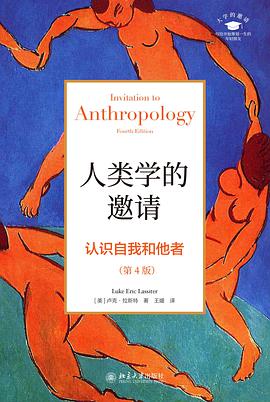
[美] 卢克·拉斯特 translator: 王媛 publishing house: 北京大学出版社 2021 - 7 other title: 人类学的邀请:认识自我和他者
《人类学的邀请:认识自我和他者》是一部人类学入门经典,风行国外高校多年。中文版译自全新英文第四版,在旧版基础上做了大幅更新。 全书分为两大部分。第一部分“人类学、文化和民族志”,集中介绍基础假设和概念,它们自现代人类学开端,就推动了人类学理论和实践的发展。随后重点将缩小到文化(尤其是社会文化人类学)上,探究了一些具有推动作用的故事、隐喻和分析,当代人类学家都是从这些内容中获得他们的灵感、理论和方法论的。第二部分“民族学:一些人类问题”,探究了三个跨文化的人类问题:社会性别、婚姻/家庭/亲属关系和宗教。书中列举了大量引人入胜的例子,来展示人类学观点如何应用于个人、地区乃至世界层面的现实议题。 作者卢克·拉斯特致力于激发读者跳出书本,探索书外鲜活的世界,并以多种多样的形式投入广阔的人类学天地。若想了解人类学这个充满多样性的迷人领域,本书是一部相当简明实用的入门指南。
Fandom Unbound
Douban
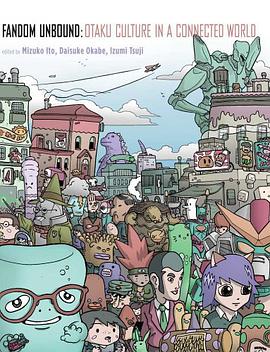
Mizuko Ito / Daisuke Okabe … publishing house: Yale University Press 2012 - 2
In recent years, otaku culture has emerged as one of Japan's major cultural exports and as a genuinely transnational phenomenon. This timely volume investigates how this once marginalized popular culture has come to play a major role in Japan's identity at home and abroad. In the American context, the word otaku is best translated as 'geek' - an ardent fan with highly specialized knowledge and interests. But it is associated especially with fans of specific Japan-based cultural genres, including anime, manga, and video games. Most important of all, as this collection shows, is the way otaku culture represents a newly participatory fan culture in which fans not only organize around niche interests but produce and distribute their own media content. In this collection of essays, Japanese and American scholars offer richly detailed descriptions of how this once stigmatized Japanese youth culture created its own alternative markets and cultural products such as fan fiction, comics, costumes, and remixes, becoming a major international force that can challenge the dominance of commercial media. By exploring the rich variety of otaku culture from multiple perspectives, this groundbreaking collection provides fascinating insights into the present and future of cultural production and distribution in the digital age.
Reading Material Culture
Douban
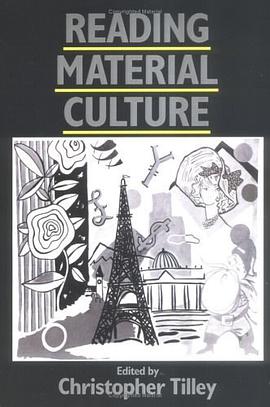
Christopher Tilley publishing house: Blackwell Publishers 1991 - 2
Central to any understanding of the significance of material objects, whether contemporary or prehistoric, is a discussion of the very nature of interpretation itself: how we 'read' artifacts and inscribe them into the present. This book examines the complex relations between material culture, social structures and social practices from structuralist, hermeneutical and post-structuralist viewpoints. Reading Material Culture explores this interpretative process though examinations of the work of outstanding contemporary thinkers, focusing on Roland Barthes, Jacques Derrida, Michel Foucault, Clifford Geertz, Claude Levi-Strauss and Paul Ricoeur. It is considers their contributions to understanding past and present social worlds and the role of material-culture production and use within them. Among the themes discussed are the nature of time and history; discourse and textuality; the problem of subjectivity; and the politics of academic production. Each chapter concludes with an assessment of the theorists relevance to the future of material-culture studies in the 1990s. These essays challenge many of our fundamental preconceptions about language, society and the material world we inhabit. Transcending disciplinary boundaries, this book will be indispensable reading for students and specialist in archaeology, anthropology, literary criticism, and cultural and media studies.
诸神的游戏
Douban
巴晓光 publishing house: 福建人民出版社 2021 - 2
《诸神的游戏——中国福州龙舟的传统与禁忌》一书首次对福州龙舟传统文化进行了搜集整理,在大量田野调查与口述历史资料的基础上,还原了福州龙舟独特的形制、工艺、花色、变迁,呈现了福州源远流长、深植民间的龙舟习俗和现状,揭示了福州地区的龙舟传统与民间信俗、境社、宗族等多领域文化的密切关系。该书融数百张珍贵照片、龙舟词典、手绘水系图、神明图像等于一体,极具收藏价值。 龙舟竞渡犹如神明的游戏,至今仍年复一年在福州的内河湖泊江海中上演,人们将神灵信仰、谱系传续、境社礼法的执念投注其中,使其成为福州这座城市“一个关于‘民间’的样本”。
美好时代的背后
Behind the Beautiful Forevers: Life, Death and Hope in a Mumbai Undercity Douban Goodreads
★ 8.0 5 ratings
[美]凯瑟琳·布 translator: 何佩桦 publishing house: 新星出版社 2021 - 6
“由于世界的运作方式,我没办法成为更好的人。” 这是我见过对经济不平等最有力的控诉之一。——芭芭拉·艾伦瑞克,《我在底层的生活》作者 · ★ 比尔·盖茨、奥巴马、诺奖得主阿马蒂亚·森一致推荐——小小贫民窟为何获得全球关注? ★ 潜入印度底层三年,参考上千份官方档案,揭示 全球资本主义神话下贫穷的真相与本质 ★ 美国国家图书奖获奖作品,书写大城市里小人物的生、死和希望——这不是一小撮人的故事,而是许许多多人的命运 ★ 在这里,失业比断指更可怕,读大学是为了嫁得更好,腐败成了穷人翻身的绝好机会,希望像毒品一样令人上瘾 ★ 作者获普利策奖、麦克阿瑟天才奖,何伟激赏“极具洞察力”,《无依之地》作者杰西卡·布鲁德最喜爱的作家,被誉为“乔治·奥威尔最出色的追随者” ★ 非虚构文学里程碑之作:入选《时代》周刊2010年代10年10佳非虚构权威榜单,《纽约客》《纽约时报》《华盛顿邮报》《华尔街日报》《金融时报》《经济学人》等20多家权威媒体年度好书 · 在孟买国际机场旁写着“永远美丽”的广告牌背后,贫民窟安纳瓦迪的居民不时梦想着更美好的生活。 垃圾回收者阿卜杜勒梦想有个不嫌弃他身上味道的老婆,两人一起到除安纳瓦迪以外的任何地方安家;他的母亲泽鲁妮萨则梦想在安纳瓦迪有个更干净的家,要有一扇可以排放油烟的小窗户,要铺着像广告里那样美丽的瓷砖;厕所清洁工拉贾·坎伯梦想能有钱换一副心瓣膜,好保住来之不易的工作,继续供养全家;热衷于调解邻里纠纷、从中捞取好处的阿莎梦想成为安纳瓦迪最有权有势的人物,让自己的女儿成为贫民窟第一个女大学生。 在都市的繁华表象之下,他们就像世界上的大多数人一样,努力地为梦想奔走。然而,他们掌握不了任何东西,一个普通日子里的微小变动便足以让他们的生活天崩地裂。这是印度的故事,却是全世界的问题。 · 无论是她的文字还是写作目的,都让人想起狄更斯和左拉。《美好时代的背后》就像是一个关于谋杀的悬疑故事,一个反应日常生活的、情节复杂的故事,它提醒我们,有时对作者而言,最重要的是倾听。 ——美国国家图书奖颁奖词 如果你想阅读关于印度贫民窟生活原汁原味的第一手的报道,我向你推荐这本书。——比尔·盖茨,微软创始人 这本书通过精巧的叙事,讲述印度大城市中那些生活动荡、无权无势之人的悲伤与喜悦、忧愁与坚忍,他们无法融入这个快速发展的时代,被抛在一边。这是一部散播智识、掀起讨论、燃起义愤、唤起同情、激发行动的杰作。——阿马蒂亚·森,诺贝尔经济学奖得主 以真实而又动人的笔触刻画了孟买贫民窟安纳瓦迪的居民们。拾荒者、窃贼、不公正的受害者——凯瑟琳·布把我们带入他们的生活,他们也紧紧牵动着我们的心,让我们无法离开。一部杰出的作品。 ——特雷西·基德尔,《非虚构的艺术》作者 《美好时代的背后》开头就以阿卜杜勒逃跑的故事吸引了我,随后又用一个又一个的人物和家庭串联起来。让人们通过接连不断的冲突和矛盾了解到印度贫民窟里的艰苦生活,甚至在某种程度上呈现出了贫民窟里穷人与穷人之间的“互害模式”。“互害模式”背后折射出的是社会底层和贫困人群改变自身命运无力感,他们只能通过争夺捡垃圾的蝇头小利来维系生存,却无从融入大都市的现代化生活。凯瑟琳·布所写的书,文字流畅、可读性强,且不失深刻的观察和启示。——田丰,《岂不怀归:三和青年调查》作者 、中国社会科学院研究员 · 这本书是至少半个世纪以来关于印度的最佳报道,它可以和另一部与贫穷相关的开创性作品——乔治·奥威尔的《通往维根码头之路》——相媲美。——《纽约时报》 凯瑟琳·布兼具诗人的文笔,小说家的叙事技巧,优秀新闻记者的报道才能。如果哪本书能把人物写活,那一定就是这本。 ——《纽约客》 一场十分真诚、毫无功利之心的报道,一部充满人性、力量和深刻见解的作品,它揭示了全球化时代下,穷人的生、死与希望。——《波士顿环球报》 令人惊艳的好书,在以下几个方面表现突出:立足底层叙说大都市里底层人物的故事;报道深入且敏锐,对常被主流叙事排除在外的人们的生活、希望与恐惧感同身受;讲述了一个从未被外国人讲述过的印度故事。但最令人震撼的还是这本书的诞生。——《华盛顿邮报》 《美好时代的背后》着实是一份馈赠,是人类精神丰富且饱满的体现,也是底层人民在这个原本下沉的世界中奋力向上的见证。安纳瓦迪的故事既让人惴惴难安,也让人备受鼓舞。这是一本需要我们每个人去阅读并回味的作品。——《芝加哥论坛》 这是关于印度残酷转型时代的最佳作品……凯瑟琳·布生动刻画了安纳瓦迪居民的生活,让我们得以了解他们,并赞叹他们在艰难时世中的生存智慧。——科克斯书评