视觉文化
Visual Cultures in Science and Technology
Google Books
Klaus Hentschel publishing house: Oxford University Press 2014
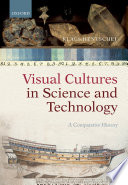
This book offers a broad, comparative survey of a booming field within the history of science: the history, generation, use, and function of images in scientific practice. It explores every aspect of visuality in science, arguing for the concept of visual domains. What makes a good scientific image? What cultural baggage is essential to it? How are imagery and text intertwined? This book attempts a synthesis. It delves into the rich reservoir of case studies on visual representations in scientific and technological practice that have accumulated over the past couple of decades by historians, sociologists, and philosophers of science. The main aim is thus located on the meta-level. It adopts an integrative view of recurrently noted general features of visual cultures in science and technology, something hitherto unachieved and believed by many to be a mission impossible. By systematic comparison of numerous case studies, the purview broadens away from myopic microanalysis in search of overriding patterns. The many different disciplines and research areas involved encompass mathematics, technology, natural history, medicine, the geosciences, astronomy, chemistry, and physics. The chosen examples span the period from the Renaissance to the late 20th century. The broad range of visual representations in scientific practice is treated, as well as schooling in pattern recognition, design and implementation of visual devices, and a narrowing in on the special role of illustrators and image specialists.
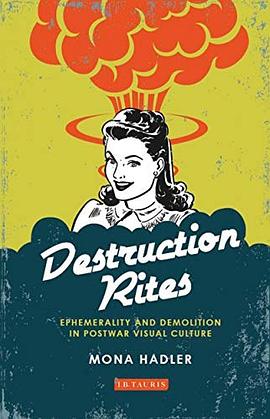
Destruction Rites: Ephemerality and Demolition in Postwar Visual Culture
Douban
In the early sixties, crowds gathered to watch rites of destruction - from the demolition derby where makeshift cars crashed into each other for sport, to concerts where musicians destroyed their instruments, to performances of self-destructing machines staged by contemporary artists. Destruction, in both its playful and fearsome aspects, was ubiquitous in the new Atomic Age. This complicated subjectivity was not just a way for people to find catharsis amid the fears of annihilation and postwar trauma, but also a complex instantiation of ideological crisis-in a time with some seriously conflicted political myths.Destruction Rites explores the ephemeral visual culture of destruction in the postwar era and its links to contemporary art. It examines the demolition derby; games and toys based on warfare; playgrounds situated in bomb sites; and the rise of garage sales, where goods designed for obsolescence and destined for the garbage heap are reclaimed and repurposed by local communities. Mona Hadler looks at artists such as Jean Tinguely, Niki de Saint Phalle, Martha Rosler and Vito Acconci to expose how the 1960s saw destruction, construction and the everyday collide as never before. During the Atomic age, whether in the public sphere or art museums, destruction could be transformed into a constructive force and art objects and performances often oscillated between the two.
Face and Mask
Douban
Hans Belting translator: Abby J. Hansen publishing house: Princeton University Press 2017 - 3
A cultural history of the face in Western art, ranging from portraiture in painting and photography to film, theater, and mass media This fascinating book presents the first cultural history and anthropology of the face across centuries, continents, and media. Ranging from funerary masks and masks in drama to the figural work of contemporary artists including Cindy Sherman and Nam June Paik, renowned art historian Hans Belting emphasizes that while the face plays a critical role in human communication, it defies attempts at visual representation. Belting divides his book into three parts: faces as masks of the self, portraiture as a constantly evolving mask in Western culture, and the fate of the face in the age of mass media. Referencing a vast array of sources, Belting's insights draw on art history, philosophy, theories of visual culture, and cognitive science. He demonstrates that Western efforts to portray the face have repeatedly failed, even with the developments of new media such as photography and film, which promise ever-greater degrees of verisimilitude. In spite of sitting at the heart of human expression, the face resists possession, and creative endeavors to capture it inevitably result in masks―hollow signifiers of the humanity they're meant to embody. From creations by Van Eyck and August Sander to works by Francis Bacon, Ingmar Bergman, and Chuck Close, Face and Mask takes a remarkable look at how, through the centuries, the physical visage has inspired and evaded artistic interpretation.
How To See the World
Douban
Nicholas Mirzoeff publishing house: Pelican 2015 - 6
In recent decades, we have witnessed an explosion in the number of visual images we encounter, as our lives have become increasingly saturated with screens. From Google Images to Instagram, video games to installation art, this transformation is confusing, liberating and worrying all at once, since observing the new visuality of culture is not the same as understanding it. Nicholas Mirzoeff is a leading figure in the field of visual culture, which aims to make sense of this extraordinary explosion of visual experiences. As Mirzoeff reminds us, this is not the first visual revolution; the 19th century saw the invention of film, photography and x-rays, and the development of maps, microscopes and telescopes made the 17th century an era of visual discovery. But the sheer quantity of images produced on the internet today has no parallels. In the first book to define visual culture for the general reader, Mirzoeff draws on art history, theory and everyday experience to provide an engaging and accessible overview of how visual materials shape and define our lives.
Visual Culture Studies
Douban
Smith, Marquard 编 publishing house: Sage Publications Ltd 2008 - 6
"Visual Culture Studies" presents 13 engaging and detailed interviews with some of the most influential intellectuals working today on the objects, subjects, media and environments of visual culture. Exploring historical and theoretical questions of vision, the visual and visuality, this collection reveals the provocative insights of these thinkers, as they have contributed in exhilarating ways to disturbing the parameters of more traditional areas of study across the Arts, Humanities, and Social Sciences. In so doing, they have key roles in establishing Visual Culture Studies as a significant field of inquiry. Each interview draws out the interests and commitments of the interviewee to critically interrogate the past, present and future possibilities of Visual Culture Studies and visual culture itself.The discussions concentrate on three broad areas of deliberation: the intellectual and institutional status of Visual Culture Studies; the histories, genealogies and archaeologies of visual culture and its study; and the diverse ways in which the experiences of vision, and the visual, can be articulated and mobilized to political, aesthetic and ethical ends. This book demonstrates the intellectual significance of Visual Culture Studies, and the ongoing importance of the study of the visual. Marquard Smith is Reader in Visual and Material Culture at Kingston University, London, and Editor-in-Chief of the Journal of Visual Culture.The contents are: Visual Culture, Everyday Life, Difference and Visual Literacy Interview with Nicholas Mirzoeff; Mixing it up - The Media, the Senses and Global Politics Interview with W.J.T. Mitchell; Globalization, Cosmopolitanism, Politics and the Citizen Interview with Susan Buck-Morss; On the State of Cultural Studies Interview with Paul Gilroy; Disability Studies, the Humanities and the Limits of the Visible Interview with Lennard J. Davis; Naming, Networks and Scientific Regimes of Vision Interview with Lisa Cartwright; Phenomenology, Mass Media and Being-in-the-world Interview with Vivian Sobchack; Performance, Live Culture and Things of the Heart Interview with Peggy Phelan; and Cultural Cartography, Materiality and the Fashioning of Emotion Interview with Giuliana Bruno.It also includes: Visual Studies, Historiography and Aesthetics Interview with Mark A. Cheetham, Michael Ann Holly and Keith Moxey; That Visual Turn - The advent of visual culture Interview with Martin Jay; Polemics, Postmodernism, Immersion, Militarized Space Interview with Hal Foster; and The Object of Visual Culture Studies and Preposterous History Interview with Mieke Bal.
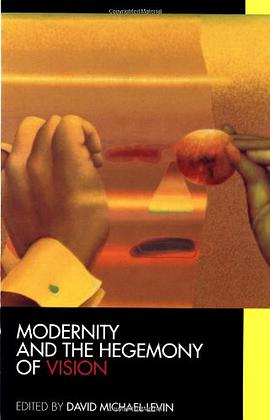
Modernity and the Hegemony of Vision
Douban
David Michael Levin publishing house: University of California Press 1993 - 8
This collection of original essays by preeminent interpreters of continental philosophy explores the question of whether Western thought and culture have been dominated by a vision-centered paradigm of knowledge, ethics, and power. It focuses on the character of vision in modern philosophy and on arguments for and against the view that contemporary life and thought are distinctively "ocularcentric." The authors examine these ideas in the context of the history of philosophy and consider the character of visual discourse in the writings of Plato, Descartes, Hegel, Nietzsche, Husserl, Heidegger, Benjamin, Sartre, Merleau-Ponty, Levinas, Derrida, Foucault, Gadamer, Wittgenstein, and Habermas. With essays on television, the visual arts, and feminism, the book will interest readers in cultural studies, gender studies, and art history as well as philosophers.
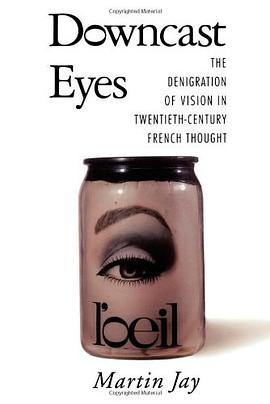
Downcast Eyes
Douban
Martin Jay publishing house: University of California Press 1994 - 9
Long considered 'the noblest of the senses', vision has increasingly come under critical scrutiny by a wide range of thinkers who question its dominance in Western culture. These critics of vision, especially prominent in twentieth-century France, have challenged its allegedly superior capacity to provide access to the world. They have also criticized its supposed complicity with political and social oppression through the promulgation of spectacle and surveillance. Martin Jay turns to this discourse surrounding vision and explores its often contradictory implications in the work of such influential figures as Jean-Paul Sartre, Maurice Merleau-Ponty, Michel Foucault, Jacques Lacan, Louis Althusser, Guy Debord, Luce Irigaray, Emmanuel Levinas, and Jacques Derrida. Jay begins with a discussion of the theory of vision from Plato to Descartes, then considers its role in the French Enlightenment before turning to its status in the culture of modernity. From consideration of French Impressionism to analysis of Georges Bataille and the Surrealists, Roland Barthes' writings on photography, and the film theory of Christian Metz, Jay provides lucid and fair-minded accounts of thinkers and ideas widely known for their difficulty. His book examines the myriad links between the interrogation of vision and the pervasive antihumanist, antimodernist, and counter-enlightenment tenor of much recent French thought. Refusing, however, to defend the dominant visual order, he calls instead for a plurality of 'scopic regimes'. Certain to generate controversy and discussion throughout the humanities and social sciences, "Downcast Eyes" will consolidate Jay's reputation as one of today's premier cultural and intellectual historians.
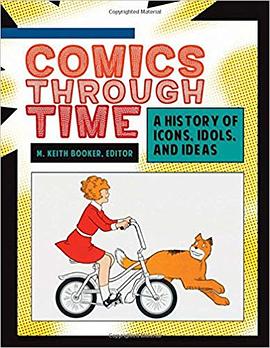
Comics through Time
Douban
M. Keith Booker (editor) publishing house: Greenwood Press 2014 - 10
Focusing especially on American comic books and graphic novels from the 1930s to the present, this massive four-volume work provides a colorful yet authoritative source on the entire history of the comics medium.* Provides historical context within individual entries that allows readers to grasp the significance of that entry as it relates to the broader history and evolution of comics* Includes coverage of international material to frame the subsets of American and British comics within a global context* Presents information that will appeal and be of use to general readers of comics and supply coverage detailed enough to be of significant value to scholars and teachers working in the field of comics
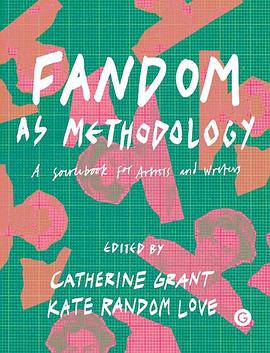
Fandom as Methodology
Douban
Catherine Grant / Kate Random Love publishing house: Goldsmiths Press 2019 - 11
Fandom as Methodology examines fandom as a set of practices for approaching and writing about art. The collection includes experimental texts, autobiography, fiction, and new academic perspectives on fandom in and as art. Key to the idea of “fandom as methodology” is a focus on the potential for fandom in art to create oppositional spaces, communities, and practices, particularly from queer perspectives, but also through transnational, feminist and artist-of-colour fandoms. The book provides a range of examples of artists and writers working in this vein, as well as academic essays that explore the ways in which fandom can be theorised as a methodology for art practice and art history. Fandom as Methodology proposes that many artists and art writers already draw on affective strategies found in fandom. With the current focus in many areas of art history, art writing, and performance studies around affective engagement with artworks and imaginative potentials, fandom is a key methodology that has yet to be explored. Interwoven into the academic essays are lavishly designed artist pages in which artists offer an introduction to their use of fandom as methodology.
Picturing the Social Landscape
Douban
Caroline Knowles / David Sweetman publishing house: Routledge 2004 - 7
We live in a visual culture, and visual evidence is increasingly central to social research. In this collection an international range of experts explain how they have used visual methods in their own research, examine their advantages and limitations, and show how they have been used alongside other research techniques. Contributors explore the following ideas: self and identity visualizing domestic space visualizing urban landscapes visualizing social change. The collection showcases different methods in different contexts through the examination of a variety of topical issues. Methods covered include photo and video diaries, the use of images produced by respondents, the use of images as prompts in interviews and focus groups, documentary photography, photographic inventory and visual ethnography. The result is an exciting and original collection that will be indispensable for any student, academic or researcher interested in the use of visual methods.
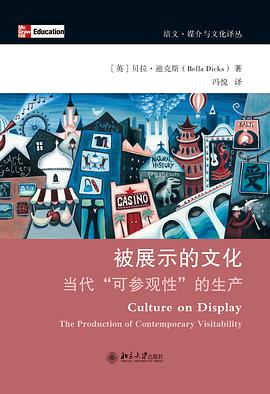
被展示的文化
Douban
[英]贝拉•迪克斯(Bella Dicks) translator: 冯悦 publishing house: 北京大学出版社 2012 - 1
英国的矿区如何复兴? 深圳的“世界之窗”展示了怎样的图景? 迪斯尼乐园和奥林匹克公园又满足了人们的何种欲望? 当今以“可参观性”形式展示文化的场所迅速增多,作者将各类展示的场所放置在更广阔的社会、经济和文化变迁的大背景下加以分析,其中包括现代旅游业、经济发展策略、对身份 的展现、全球化、互动性以及消费中的社会关系。作者尤其关注的是当文化在这些语境中被展示之后,如何发生改变。 本书的每一章都尽量生动、浅显地讨论了引起争议的一些关键的理论问题,比如真实性、商品化和再现。
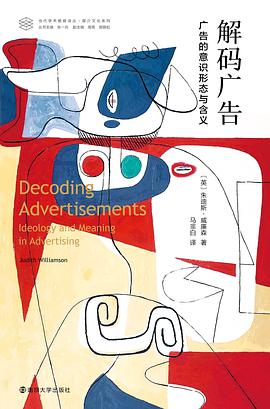
解码广告
Decoding Advertisements:Ideology and Meaning in Advertising Douban
[英]朱迪斯·威廉森 translator: 马非白 publishing house: 南京大学出版社 2021 - 8
“广告贩卖的实际上是消费品以外的东西:通过展现我们自身和产品之间的相互替代性,它卖给我们的其实是我们自己。” 广告以大众喜闻乐见的方式向我们呈现出一张张熟悉且令人愉悦的面孔,它显然具有经济功能,但它反映的不仅仅是现代经济。本书并没有简单地批评广告的虚假和剥削,而是通过一百多幅插图详细研究了广告的魅力,从而厘清它们毋庸置疑的吸引力从何而来。显然,广告的经济功能是吸引我们购买更多商品,而广告的意识形态功能让作为个体的我们置身于支撑我们社会经济基础的观念中。意识形态在经济环境中不可或缺,因为意识形态使经济环境看似不可或缺。 想要改变社会,就必须打破这种“不可或缺”与意识形态的恶性循环。本书试图打碎这条锁链中由我们自己铸造的一环,它提供的不是一个“答案”,而是一套“工具”,我们可以通过它改变自己对社会微妙、复杂的宣传形式之一的认知。 因此,本书对任何想了解图像和意识形态在我们社会中的运作方式的人来说都是一本经典读物,它为政治符号学和精神分析术语提供了简明、清晰的定义,告诉我们广告是如何不着痕迹地达到其预设效果的。
绘画是什么?如何用炼金术语言思考油画
What Painting Is? How to Think about Oil Painting, Using the Language of Alchemy Douban
[美] 詹姆斯·埃尔金斯 translator: 林煊 publishing house: 拜德雅 | 重庆大学出版社 2021 - 8
-编辑推荐- 单子?二分体?贤者之石?魔法一般的炼金术等你探寻 画家与颜料搏斗,正如密室里的炼金术士与万物拼杀 中世纪炼金术士与文艺复兴艺术大师的灵魂共振 充满创造力的学术建构,窥见欧洲天才头脑的绝妙想象力 揭秘艺术史上沉埋已久的哲学内涵 视觉文化学科的开创性奠基杰作之一 本书破除艺术史常见的论述模式和理论陈套,潜入中世纪炼金学文献之中,挖掘了在现代科学(尤其是化学)知识体系建立以前,关心物质的分类、合成与性质的学科——炼金术中的神秘幽微的哲学和丰富广博的想象力。作者将炼金术对水、石等物质存在的处理方式与古老的蛋彩画、油画创作技法联系起来,艺术家和炼金术士之间的共通性远多于我们的想象。艺术家通过绘画材质本身进行思考和创作,艺术那抽象的“神性”从来不能脱离其微妙而充满污秽的物质性。 -内容简介- 炼金术被埃尔金斯称为“被遗忘的化学”,其文献记载中大量违反科学常识的知识和公式,却是一门用于思考物质及其内部运动过程的最发达的语言。因此,关注炼金术能帮助当代人反思和重构古典时期的绘画本质和艺术理论。 作为利用水与石混合的例证,绘画等视觉艺术是其一,炼金术是其二。在炼金术中,贤者之石是终极目标;而在绘画中,通过水与石的关系最终表现出独一无二的图像和色彩是终极目标。炼金术和绘画一样,其本质是实验室中复杂、肮脏、混乱而漫长的实验,这些实验的成功率不高,失败的案例也很多,并且绝非仅靠文本功夫就能深入探究,必须结合充分、专业、倾尽全力的实践。“物质性的记忆”构成了绘画的主体,而本书正是通过对炼金术常见步骤的分析解读,重现并反思油画画布上细腻的颜料纹路、笔触技巧和调配秘诀,从而有效地充实和巩固艺术史学的“理论地基”。 -媒体/名人推荐- 真正的原创之作。它会让你以不同的眼光看待画作,从不同的角度思考颜料。 ——《波士顿环球报》 最好的撰著常常能展示一个新世界。本书充满了详尽的描述和富有启发的洞见,向读者展示了绘画材料、笔触技巧与万物的炼金术。此书将永远改变您的看画方式。 ——《哥伦布电讯报》 漫游在大都市里,需要在看艺术之余小憩一下,我去书店买了《绘画是什么?》并坐下来开始阅读。当我再次起身时,艺术看起来不一样了。这部埃尔金斯的最佳作品教给你如何更近距离地看并看到更多。 ——《艺术期刊》,大卫•凯利
低垂之眼
Downcast Eyes: The Denigration of Vision in Twentieth-Century French Thought Douban
★ 9.8 8 ratings
[美] 马丁·杰伊 translator: 孔锐才 publishing house: 拜德雅 | 重庆大学出版社 2021 - 8
-编辑推荐- ★ 首部以“视觉”为中心的法国思想史,全面考察法国“视觉中心主义”的兴亡 ☆ 极具学术想象力的跨学科研究,百科全书式的“视觉”话语大全 ★ 理解“视觉中心主义”的历史,洞悉充斥着图像与监视的21世纪 ☆ 作者马丁•杰伊作序推荐 -内容简介- 对视觉的推崇,在西方文化中早已根深蒂固——从柏拉图、笛卡尔直到启蒙运动,视觉往往与清晰、秩序和理性相关联。随着摄影、电影的出现,视觉更晋升为现代感官王国的领主。然而,来自法国的现代思想家——萨特、梅洛-庞蒂、福柯、拉康、巴特、德里达——也以各种方式质疑视觉的霸权地位:从印象派到超现实主义,从现象学到精神分析,从结构主义到后现代分析…… 本书为读者展现了“视觉中心主义”如何被撼动的历史。凭借其杰出的材料整合能力,作者将眼花缭乱的批判整合进宏大的思想史议题,从一个全新的角度呈现出法国思想史。 -媒体推荐- 一本宝贵的书……对于任何想要聚焦20世纪知识生活的人来说,杰伊的这部权威历史著作是必读之作。 ——《艺术论坛》 杰伊对20世纪法国视觉态度的探索,成就了这部令人印象深刻且严谨可靠的作品……杰伊的许多材料来自典籍,他对此进行了有说服力的综合。 ——《泰晤士报文学增刊》 本书所展示的学术成果让人眼花缭乱……它的出版是一个极其重要的知识事件。 ——《十月》 每一个想教授20世纪思想课程的人都该拥有这本书。 ——《现代史杂志》 就其冷静的观察基调而言,这本令人惊异的书是一次穿越思想史的感伤之旅。 ——《美学与艺术批评杂志》
Graphic Design as Communication
Douban
Malcolm Barnard publishing house: Routledge 2005 - 4
What is the point of graphic design? Is it advertising or is it art? What purpose does it serve in our society and culture? Malcolm Barnard explores how meaning and identity are at the core of every graphic design project and argues that the role and function of graphic design is, and always has been, communication. Drawing on a range of theoretical approaches including those of Derrida, Saussure, Foucault, and Barthes, and taking examples from advertising, magazines, illustration, website design, comics, greetings cards and packaging, Graphic Design as Communication looks at how graphic design contributes to the formation of social and cultural identities. Malcolm Barnard discusses the ways in which racial/ethnic groups, age groups and gender groups are represented in graphic design, as well as how images and texts communicate with different cultural groups. He also explores how graphic design relates to both European and American modernism, and its relevance to postmodernism and globalisation in the twenty-first century and asks why, when graphic design is such an integral part of our society and culture, it is not acknowledged and understood in the same way that art
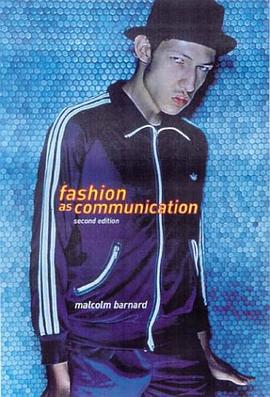
Fashion as Communication
Douban
Barnard, Malcolm publishing house: Routledge 2002 - 8
What kinds of things do fashion and clothing say about us? What does it mean to wear Gap or Gaultier, Milletts or Moschino? Are there any real differences between Hip-Hop style and Punk anti-styles? In this fully revised and updated edition, Malcolm Barnard introduces fashion and clothing as ways of communicating and challenging class, gender, and sexual and social identities. Drawing on a range of theoretical approaches from Barthes and Baudrillard to Marxist, psychoanalytic and feminist theory, Barnard addresses the ambivalent status of fashion in contemporary culture. He looks at the producers, consumers and critics of fashion, exploring the tensions between haute couture and high culture, and asking how meanings are generated, and by whom. Examining concepts such as culture, meaning, class, gender, reproduction and resistance, Barnard demonstrates that fashion is not an innocent form of communication, and uncovers the ways in which clothing can be used both to create and contest identities.
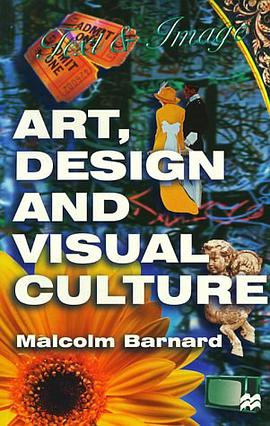
Art, Design and Visual Culture
Douban
Malcolm Barnard publishing house: Palgrave Macmillan 1998 - 10
This fascinating examination of visual experience offers an explanation and assessment of the traditional means of analyzing visual culture. Most of our experience is visual--we obtain most of our information and knowledge through sight, whether from reading books and newspapers, from watching television, or from quickly glimpsing road signs. Many of our judgments and decisions, as well as our entertainment and recreation, are based on the visual experience. Using a wide range of historical and contemporary examples, this book argues that the groups which artists and designers form, the audiences and markets which they sell to, and the different social classes which are produced and reproduced by art and design are all part of the successful explanation and critical evaluation of visual culture.