experimental
Place sub. v. MusicBrainz Douban Eggplant.place
AMM genre: free improvisation / Jazz
publisher: Matchless Recordings
Artwork – Myah Chun
Engineer [Recording Engineer] – Jaroslaw Rudnicki
Mixed By, Edited By – Sebastian Lexer
Percussion – Eddie Prévost
Piano – John Tilbury
Text By – Eddie Prévost
AMM – Lublin was recorded at CODES – The Festival of Traditional and Avant-garde Music, Lublin, Poland on 16 May 2012
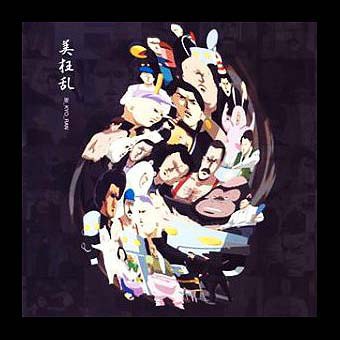
Sakigake! Cromartie High Original Soundtrack 2 Douban
美狂乱 / オリジナル・サウンドトラック
release date 2004-07-07 publisher: LACA
スチャラカ学園アニメだと思ってなめてはいけない。ジャパニーズ・プログレの雄、美狂乱がやってるのだ(デビュー前の貴重ライヴ(19)が入っていることで正式な美狂乱のアルバムとわかる)。ほのぼのした曲からいきなりギターの轟き渡ったりと気の抜けない傑作だ!
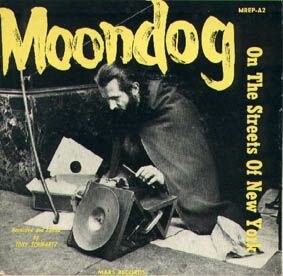
On The Streets of New York Douban
Moondog genre: Pop
release date 1953-01-01 publisher: Mars MREP A-2
Notes from the Mars release:
"Moondog on the Streets of New York" is the second presentation in a series of on-the-streets recordings made as a part of my project in New York 19. While working on this projekt of recording the folk expressions of the comminity of which I live, I recorded many street musicans of whom Moondog was the most unique.
Moondog, born in 1917, is a blind street musican who was born in Kansas and raised in Indian country in Wyoming. He was influenced by both Oriental and Occidental music. Snake time is the name he has given to the type of music he writes and playes. It is blending of primitive and classical elements.
Moondog came to New York in 1943 to establish himself as a composer. He designs, makes and writes music for many of the intruments he playes. The Oo, Utsu and Uni are introduced in this record.
Suzuko, Moondog´s wife, who has transcribed much of his music, sings and accompanies him in serveral of these selections.
I have selected the music on this record from the many on location recordings I have made of Moondog his arrival in New York.
(Recorded and edited by Tony Schwartz)
Notes from the London release:
Moondog is an itinerant musician-composer, who has appeared on the sidewalks of various parts of mid-town New York playing his original compositions on seldom heard instruments - several of which are of his own invention. Apart from the appeal he has had with sidewalk audiences, he has also attracted important attention from serious music students and composers who have evaluated his unique perception of melodies and rhythms as possessing academic qualities commensurate with the progress made by the "avant garde" composers. That Moondog has found it necessary to resort to sidewalk concerts is not a reflection on his ability, but possibly a commentary on the status of young composers in America, according to one group of disciples.
On the streets of new York was recorded by Tony Schwartz as part of his project called New York 19. The music heard in the EP is the result of recording and editing several hours of taped music in order to cull the most unusual. In this record, Moondog plays several new instruments - the "oo", the utsu", and the "samisen". In one composition, recorded near the Hudson River piers, the tugboat and ocean liners' whistles and foghorns complement the composition, while Moondog plays and improvises; in another work, the actual sound of new York traffic - automobile motors, taxi horns, sounds of brakes, etc. - is used similarly. The record includes six other works, one featuring his wife, Suzuko.
Moondog was born Louis Hardin, in Kansas in 1917. His parents were missionaries and he spent most of his youth in Indian reservations in the West. At the age of sixteen, he became blind and about the same time became interested in music. Influence of the primitive surroundings of his early environment is evidenced in his compositions. He can play, in addition to the various instruments heard on his records, piano, organ, clarinet, all the string instruments and most of the other woodwind instruments. He lives in new York with his wife, Suzuko. She is capable of singing in three octaves, and lately figures prominently as vocalist on his recordings and in appearances.
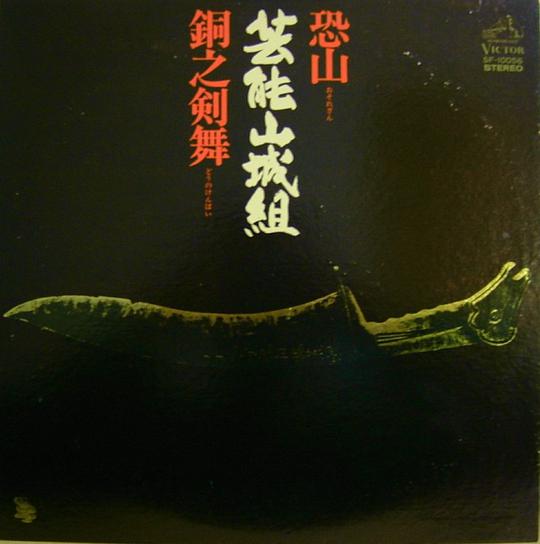
恐山・銅之剣舞 Douban
9.2 (12 ratings) 芸能山城組 / Geinoh Yamashirogumi genre: Rock
release date 1994-10-21 publisher: Invitation
Osorezan (La Montagne de la Peur)
Date de sortie 1976
Tracklist
01 geinoh yamashirogumi - osore-zan (mountain of fear)
02 geinoh yamashirogumi - dou no kenbai (copper sword dance)
Info sur le titre de l'album Osore-zan
Sur l'ile de Honshu dans l'arriere pays de TOHOKU, un volcan est l'attraction principale
de tous les passionnes de sueurs froide. 'la Montagne de la Peur' : un volcan qui fume sans cesse, et
dont le cratere (qui porte un lac immobile symbolisant les enfers bouddhiques) accueille chaque annee
des sorcieres-mediums, les itako. Ces jeunes femmes, souvent aveugles, sont formees par des pretresses
chamanes pour servir de porte-paroles des morts pour les familles.
Autour du Mont Osorezan, elle s'installe proche des vapeurs et entament un ceremonial ou s'elevent des voix
d'outre-tombe (est-ce le meme procede que pour la pythie de Delphes : une mise en transe par l'effet des fumees volcaniques ?).
Photo du site touristique :
Commentaire
Ce disque est une bombe. Une comete. Mais qui ne vaut que pour le premier instrumentale.
La seconde face est plus experimentale et risque d'en derouter plus d'un sauf si vous vous mettant dans l'ambiance flippante.
Tout de suite, ferme vos volets, fermez les yeux, et plongez dans l'horreur.
Car on flippe litteralement en ecoutant l'album. Imaginez-vous en pleine nuit, au pied de cette montagne, seul.
Du brouillard. Le vent dans les arbres. Et...je vous laisse a votre imagination pour la suite
Prologue : 0 a 2:18
Un cri dechirant vous fait sursauter, puis une douce percu annonce la couleur.
Basse electrique ensuite, et cris des itako. Soudain une femme a la voix douce chante
une priere tres melodique alors que les cris des fantomes et vent l'accompagnent.
Arrivee du synthe. Silence.
Developpement
[U]Intro :[/U]
Bruit de pas, et. Riffe de guitare electrique. Batterie. Que la melodie est belle. Des voix feminines, des voix de fantome, riffs plannant de guitare.
L'intro monte crescendo jusqu'a l'explosion qui est le plus beau moment du disque.
[U]Explosion lyrique[/U] a partir de 8:13
(le plus beau morceau de Geinoh Yamashirogumi)
Percu et basse annonce la couleur et la fantastique chorale commence comme une ballade de l'horreur.
Les Pink Floyd n'ont qu'a bien se tenir.
Gros solo melodique a la guitare (a partir de 9:28) - Un pure bonheur qui n'a rien a envier au Pink Floyd, c'est encore mieux ici.
Solo synthe a partir de 13:25
Retour des voix, cris dechirants melodiques, un pur bonheur artistique. Je rappelle que ce disque a ete compose en 1976. :blink:
Final (16:13 a fin)
Superbe melodie douce. Les voix ne sont plus flippante mais reposante. La conclusion est tres belle, puis, comme une
voix qui pleure, une femme chante une melopee japonaise ancienne, magnifique.
>>>
Geinoh Yamashirogumi (The Yamashiro Art Group) are a collective of about 200 people working in cultural anthropology, ethology, molecular biology and other related fields. From the 1960s they studied musical cultures from around the world, mastering something like 80 different musical systems. Listen and you would never know they were Japanese as they sing Bulgarian polyphony, or play Balinese gamelan. At the same time they play their own world mix of sounds in a hi-tech environment. Their music is mostly east Asian sounding, a sort of techno-gamelan rock, with Buddhist chanting, thundering Japanese drums or a collection of Tibetan instruments. They are probably best known for creating the soundtrack to the classic animated film 'Akira' an incredible collage of sounds that mixed gamelan with church organ and rock guitar. Osorezan (Ghost Mountain) comes with a health warning as it starts with a chilling scream, before developing into a collage of Japanese voices, gamelan, electric guitars and more weird screams. Track 2 has more vocal styles including shomyo (buddhist chants) and kecak (chanting) from Bali. Truly astonishing.
Version 2 Version: A Dub Transmission Douban
Bill Laswell
release date 2005-07-26 publisher: Roir
Version 2 Version – A Dub Transmission, Laswell’s fifth release for ROIR, brings us back to the elemental power that made Laswell’s earlier releases so compelling: thick earthy basslines, a bedrock of drums, fiery percussion, blustery guitar and atmospherics—all played by a world-class group of musicians who know how to breath life into a musical whole greater than the sum of its parts. On Version 2 Version the listener is drawn into a musical ecosystem full of life, death, earth, wind, fire and brimstone and a fecund existence as powerful as life itself. This dub transmission includes bassist Jah Wobble with whom Laswell co-wrote most of the tracks, keyboardist Bernie Worrell, percussionist Karsh Kale, and drummer/percussionist Abdou Mboup.
Versatile Arab Chord Chart Douban
Vibracathedral Orchestra genre: Rock
release date 2000-08-15 publisher: VHF Records
Music By – Adam Davenport, Bridget Hayden, Julian Bradley, Michael Flower, Neil Campbell
Recorded June - November 1999.
Company 91 Volume 3 (Friday And Saturday) Douban
Company 91 genre: Jazz
release date 1994-01-01 publisher: Incus
Company 91 :
Guitar - Buckethead , Derek Bailey
Bass - Paul Rogers
Keyboards, Electronics - Pat Thomas
Percussion - Paul Lovens
Saxophone - John Zorn
Trombone - Yves Robert
Violin - Alexander Balanescu
Voice - Vanessa Mackness
Company Week is a celebration of freely improvised music and in 1991 musicians came together for five days improvising, most of them meeting for the first time.
This CD is taken from the final two days (Friday and Saturday).
Revolutionary Pekinese Opera, Version 1.28 Douban
9.4 (18 ratings) Ground Zero genre: World Music
release date 1996-01-01 publisher: Recommended Records
在这个唱片之前首先说说德国前卫音乐家Heiner Goebbels(海捏尔·戈贝尔斯),这位著名颇为学院派气质的实验音乐家多年来一直为ECM公司保持着高质量的前卫音乐水准,尽管ECM并不擅于此道。1992年,他与前卫萨克司风手Alfred 23 Harth(阿尔佛雷德·23·哈瑟)合作,在地下前卫爵士厂牌Evva发行了一张以自由爵士与采样拼帖结合为主的专辑《Goebbels Heart》(戈贝尔斯之心)。专辑的最后一曲便是著名的长达十六分钟的《Peking-Oper》(京剧),当时,人们纷纷质疑它的形式,因为人们还不了解其中真正的精华。而后Heiner Goebbels特地写了一篇相关的短文介绍这首作品的内容由来,人们这才恍然大悟。 《Peking-Oper》是以革命题材京剧《沙家浜》为主要素材而创作的即席演奏与声音拼帖结合的作品。它的开头是京剧过门片段的反复,然后 Heiner Goebbels用他的理解来演奏二胡,简单的音阶,还有刮蹭的音效。随后他采样了戏文念白,演奏二胡高音的部分,再次混入原始的声音素材,加上 Alfred 23 Harth用萨克司风吹出《三大纪律八项注意》的主旋律,作品渐进高潮。曲过一半,Heiner Goebbels安排了阿庆嫂的出现,事后他解释说他个人的确对《沙家浜》这部戏很感兴趣,其中阿庆嫂是他最喜欢的角色。我们可以在这部分中听到 Alfred 23 Harth用萨克司风拟音的京剧念白,而Heiner Goebbels又不失分寸的引入拍节;作品变得音景化,锣鼓点与钢琴结合,衔接处混上电气的音色。最有意思的在结尾,Heiner Goebbels用西方传统打击乐器演绎京剧中的锣鼓点,他说,“京剧中的打击乐器快速而不混乱,我很赞叹这种表现方法。” 《Peking-Oper》这首作品影响了后来很多热中于此的前卫音乐家,其中就包括日本当今最为重要的实验音乐家大友良英。大友良英与其女友,同是日本最优秀的实验音乐家松原幸子等人组建了一支十分实验性的即席演奏团体——Ground Zero(队名出自华盛顿的一个宣扬毁灭爆炸的恐怖组织,原意为“大爆炸后一切皆无”,而“911”事件后,它又被覆盖上了新含义)。Ground Zero于1995年出版了一张名为《Revolutionary Pekinese Opera》(革命京剧)的唱片(1996年于英国著名实验音乐厂牌ReR再版做全球发行,故多数地方默认为1996年),它以Heiner Goebbels的《Peking-Oper》为原型,对其加以丰富和改进,形成了这样一张内容更加充实的唱片。Ground Zero在向致敬Heiner Goebbels的同时,根据自己的特点,更为鲜明的表达了对这些中国元素的独到观点。日本的历史,尤其是其音乐历史绝对不能同属于陆地上广大的东方国家,虽然整体西方世界对于日本也有类于“东方主义”的诠释,但是这并不能和处于更加低势的“东方世界”做比较。毕竟日本的音乐历史和西方是同步的,发达的一切有着不可否认的强大优势。 在专辑《革命京剧》中,Ground Zero使用了更为丰富的中国材料。从京剧《沙家浜》到粤语功夫片;从国产抗日电影对白到大量的广告片段(比如“华丰面”,哈);从演唱云南山歌到“奶奶您听我说”。大友良英这家伙的确是个不折不扣的东方主义者,他在东京念大学时主要研究的课题就是文革时期的中国音乐,后来还在1981年只身前往海南岛采风中国民间乐器。在九十年代初,他组建过的另一支概念乐队Mosquito Paper的名称就足够东方,它的出处是中国旧上海报业的俚语。而Mosquito Paper的现场演出并不是演奏音乐,而是朗诵和人声呼喊。后来Mosquito Paper与最初的Ground Zero走到了一起,也就形成了这支创作了《革命京剧》的超级阵容。而大友良英与中国的缘分并不只此,后来他又为很多中国电影制作过电影音乐,包括田壮壮的《蓝风筝》、许鞍华的《女人四十》、严浩的《我爱厨房》还有舒琪的《虎度门》。