
社会学
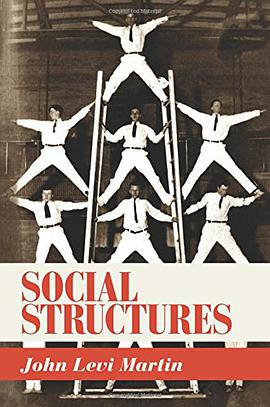
Social Structures
Douban
John Levi Martin
publishing house:
Princeton University Press
2009
- 8
Social Structures is a book that examines how structural forms spontaneously arise from social relationships. Offering major insights into the building blocks of social life, it identifies which locally emergent structures have the capacity to grow into larger ones and shows how structural tendencies associated with smaller structures shape and constrain patterns of larger structures. The book then investigates the role such structures have played in the emergence of the modern nation-state.
Bringing together the latest findings in sociology, anthropology, political science, and history, John Levi Martin traces how sets of interpersonal relationships become ordered in different ways to form structures. He looks at a range of social structures, from smaller ones like families and street gangs to larger ones such as communes and, ultimately, nation-states. He finds that the relationships best suited to forming larger structures are those that thrive in conditions of inequality; that are incomplete and as sparse as possible, and thereby avoid the problem of completion in which interacting members are required to establish too many relationships; and that abhor transitivity rather than assuming it. Social Structures argues that these "patronage" relationships, which often serve as means of loose coordination in the absence of strong states, are nevertheless the scaffolding of the social structures most distinctive to the modern state, namely the command army and the political party.

The Child's Conception of the World
Douban
Jean Piaget
translator:
Andrew Tomlinson
publishing house:
Rowman & Littlefield Publishers
2007
- 9
A milestone of child psychology, The Child's Conception of the World explores the ways in which the reasoning powers of young children differ from those of adults. What conceptions of the world does the child naturally form at the different stages of its development? To what extent does the child distinguish the external world from an internal or subjective world and what limits does he or she draw between the self and objective reality? These questions make up the first problem, the child's notion of reality. A second fundamental problem is the significance of explanations put forward by the child. What use does he or she make of the notions of cause and law? Is the form of explanation presented by the child a new type? These and like questions form the second problem, the child's notion of causality. Jacques Voneche, Director of the Piaget Archives in Geneva, Switzerland, provides a preface to this classic in which he reveals the provanance of The Child's Conception of the World within the context of Piaget's other work and the then-burgeoning field of developmental psychology.

The Institution of Science and the Science of Institutions
Douban
Marcel Herbst
publishing house:
Springer
2014
The present anthology, edited by Marcel Herbst, is partially based on a conference, held in 2009, to reflect on the legacy of Ben-David, and contains a selection of substantially revised papers, plus four contributions specifically written for this volume. The book focuses on three major lines of Ben-David’s research, namely “Center and Periphery” (Part I), “Role and Ethos” (Part II), and “Organization and Growth” (Part III). In addition, comprehensive introductory (“Prologue”) and concluding chapters (“Epilogue”, Part IV) by Marcel Herbst are provided. The volume addresses the following disciplines: higher education, history and sociology of science, philosophy of science, history of medicine, public administration, policy studies, Jewish studies, and economics. The anthology is one of two new publications on Joseph Ben-David after the special Minerva edition Vol. 25, Numbers 1–2, March 1987, and Gad Freudenthal’s collection of Ben-David’s writings [1991]. The text can be used in graduate studies, it addresses higher education professionals or public officials, and serves as a gateway to researchers in the field of higher education, science studies, or policy sciences.

Kingdom of Children
Douban
Mitchell L. Stevens
publishing house:
Princeton University Press
2001
More than one million American children are schooled by their parents. As their ranks grow, home schoolers are making headlines by winning national spelling bees and excelling at elite universities. The few studies conducted suggest that homeschooled children are academically successful and remarkably well socialized. Yet we still know little about this alternative to one of society’s most fundamental institutions. Beyond a vague notion of children reading around the kitchen table, we don’t know what home schooling looks like from the inside.
Sociologist Mitchell Stevens goes behind the scenes of the homeschool movement and into the homes and meetings of home schoolers. What he finds are two very different kinds of home education—one rooted in the liberal alternative school movement of the 1960s and 1970s and one stemming from the Christian day school movement of the same era. Stevens explains how this dual history shapes the meaning and practice of home schooling today. In the process, he introduces us to an unlikely mix of parents (including fundamentalist Protestants, pagans, naturalists, and educational radicals) and notes the core values on which they agree: the sanctity of childhood and the primacy of family in the face of a highly competitive, bureaucratized society.
Kingdom of Children aptly places home schoolers within longer traditions of American social activism. It reveals that home schooling is not a random collection of individuals but an elaborate social movement with its own celebrities, networks, and characteristic lifeways. Stevens shows how home schoolers have built their philosophical and religious convictions into the practical structure of the cause, and documents the political consequences of their success at doing so.
Ultimately, the history of home schooling serves as a parable about the organizational strategies of the progressive left and the religious right since the 1960s.Kingdom of Children shows what happens when progressive ideals meet conventional politics, demonstrates the extraordinary political capacity of conservative Protestantism, and explains the subtle ways in which cultural sensibility shapes social movement outcomes more generally.

The Explanation of Social Action
Douban
John Levi Martin
publishing house:
Oxford University Press, USA
2011
- 8
Conventional understanding of what it means to "explain" something in the social sciences provokes unnecessary confusion and conflict, and indeed is often based more on analysts' imaginations than actors' realities. The Explanation of Social Action lays out a sustained critique of this understanding, pointing out that the root of the problem is an attempt to counterpose two radically different types of answers to the question of why someone did a certain thing--first person responses and third person ones. John Levi Martin illustrates how this tendency is epitomized in attempts to explain human action in "causal" terms. He shows how this causality has little to do with the real world, but instead involves the creation of imaginary worlds, stemming from an intellectual history whereby social scientists began to distrust the self-understanding of actors and accepted fundamentally anti-democratic epistemologies, due to an epistemic hiatus in social knowledge and the adoption of practices in the intensely hierarchic setting of forced incarceral institutions for the insane. Martin moves on to highlight other traditions that do not assume that the cognitive schemes of actors are fundamentally arbitrary. These traditions in turn suggest that the analytic problems that now arise require attention to the nature of judgment, implying the need for an understanding of the process whereby actors intuit intersubjectively valid qualities of complex social objects. Tackling the very way in which social scientists analyze why people do things, The Explanation of Social Action is a novel and essential take on the evidence on which their explanations are based.

Administrative Behavior, 4th Edition
Douban
Herbert A. Simon
publishing house:
Free Press
1997
- 3
Description
In this fourth edition of his ground-breaking work, Herbert A. Simon applies his pioneering theory of human choice and administrative decision-making to concrete organizational problems. To commemorate the fiftieth anniversary of the book's original publication, Professor Simon enhances his timeless observations on the human decision-making process with commentaries examining new facets of organizational behavior. Investigating the impact of changing social values and modem technology on the operation of organizations, the new ideas featured in this revised edition update a book that has become a worldwide classic.
Named by Public Administration Review as "Book of the Half Century," Administrative Behavior is considered one of the most influential books on social science thinking, and was referred to by the Nobel Committee as "epoch-making."
Written for managers and other professionals who wish to understand the decision-making processes at the heart of organization and management, it is also essential reading for students in business and management, economics, sociology, psychology computer science, government, and law.
Find out more: Read an excerpt
Book Information
Free Press, March 1997
Hardcover, 384 pages
ISBN-10: 0-684-83582-7
ISBN-13: 978-0-684-83582-2

Decision Order and Time in Human Affairs
DoubanOriginally published in 1969, the second edition of Professor Shackle's book has a fresh preface, an extra chapter and a number of additions to its bibliography. The extra chapter is concerned with the point at which one would decide to abandon an old policy and replace it with a new one. It is, in the words of the author, a further, rather radical development of the Stockholm sequence analysis. Professor Shackle examines how a decision can be rational only in a special sense, that of exploiting to the best present effect, on the decision-maker's state of mind, the scope afforded to imagination by what is known and by the gaps in that knowledge. The attempt made in this book to provide a theory of such decision has been called 'an existentialist economics'.

Imagined Futures
Douban
Jens Beckert
publishing house:
Harvard University Press
2016
- 6
In a capitalist system, consumers, investors, and corporations orient their activities toward a future that contains opportunities and risks. How actors assess uncertainty is a problem that economists have tried to solve through general equilibrium and rational expectations theory. Powerful as these analytical tools are, they underestimate the future’s unknowability by assuming that markets, in the aggregate, correctly forecast what is to come.
Jens Beckert adds a new chapter to the theory of capitalism by demonstrating how fictional expectations drive modern economies—or throw them into crisis when the imagined futures fail to materialize. Collectively held images of how the future will unfold are critical because they free economic actors from paralyzing doubt, enabling them to commit resources and coordinate decisions even if those expectations prove inaccurate. Beckert distinguishes fictional expectations from performativity theory, which holds that predictions tend to become self-fulfilling prophecies. Economic forecasts are important not because they produce the futures they envision but because they create the expectations that generate economic activity in the first place. Actors pursue money, investments, innovations, and consumption only if they believe the objects obtained through market exchanges will retain value. We accept money because we believe in its future purchasing power. We accept the risk of capital investments and innovation because we expect profit. And we purchase consumer goods based on dreams of satisfaction.
As Imagined Futures shows, those who ignore the role of real uncertainty and fictional expectations in market dynamics misunderstand the nature of capitalism.
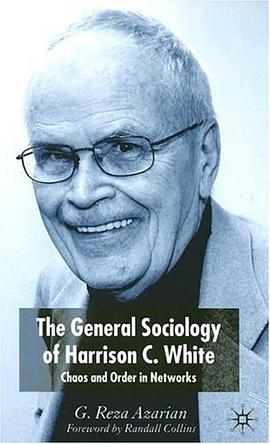
The General Sociology of Harrison C. White
Douban
G. Reza Azarian
publishing house:
Palgrave Macmillan
2006
- 4
Harrison C. White is one of American sociology's preeminent thinkers, yet until now his endeavour to develop a general theoretical perspective on the basis of social network analysis has remained largely unexamined. This book opens out for the first time White's contribution to those interested generally in his social network approach, but daunted by the complexity and mathematical modelling often employed in his published work. Special attention is paid to White's model of production markets, as an application of his general sociology. The book draws on interview material with White himself, as well as with several of his past students.
Measuring Culture
Douban
John W. Mohr
/
Christopher A. Bail
…
publishing house:
Columbia University Press
2020
- 7
Social scientists seek to develop systematic ways to understand how people make meaning and how the meanings they make shape them and the world in which they live. But how do we measure such processes? Measuring Culture is an essential point of entry for both those new to the field and those who are deeply immersed in the measurement of meaning. Written collectively by a team of leading qualitative and quantitative sociologists of culture, the book considers three common subjects of measurement—people, objects, and relationships—and then discusses how to pivot effectively between subjects and methods. Measuring Culture takes the reader on a tour of the state of the art in measuring meaning, from discussions of neuroscience to computational social science. It provides both the definitive introduction to the sociological literature on culture as well as a critical set of case studies for methods courses across the social sciences.

The Natural History of Revolution
Douban
Lyford P. Edwards
publishing house:
University of Chicago Press
1970

Contentious Curricula
Douban
Amy J. Binder
publishing house:
Princeton University Press
2004
- 5
This book compares two challenges made to American public school curricula in the 1980s and 1990s. It identifies striking similarities between proponents of Afrocentrism and creationism, accounts for their differential outcomes, and draws important conclusions for the study of culture, organizations, and social movements. Amy Binder gives a brief history of both movements and then describes how their challenges played out in seven school districts. Despite their very different constituencies - inner-city African American cultural essentialists and predominately white suburban Christian conservatives - Afrocentrists and creationists had much in common. Both made similar arguments about oppression and their children's well-being, both faced skepticism from educators about their factual claims, and both mounted their challenges through bureaucratic channels. In each case, challenged school systems were ultimately able to minimize or reject challengers' demands, but the process varied by case and type of challenge. Binder finds that Afrocentrists were more successful in advancing their cause than were creationists because they appeared to offer a solution to the real problem of urban school failure, met with more administrative sympathy toward their complaints of historic exclusion, sought to alter lower-prestige curricula (history, not science), and faced opponents who lacked a legal remedy comparable to the rule of church-state separation invoked by creationism's opponents. Binder's analysis yields several lessons for social movements research, suggesting that researchers need to pay greater attention to how movements seek to influence bureaucratic decision making, often from within. It also demonstrates the benefits of examining discursive, structural, and institutional factors in concert.

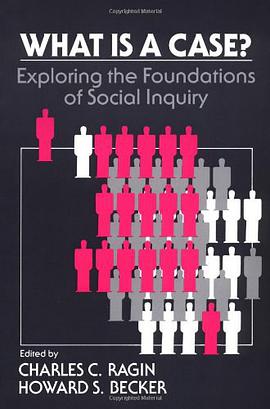
What Is a Case?
DoubanThe concept of the case is a basic feature of social science research and yet many questions about how a case should be defined, selected, and judged are far from settled. The contributors to this volume probe the nature of the case and the ways in which different understandings of the concept affect the conduct and the results of research. The contributions demonstrate that the work of any given researcher is often characterised by some hybrid of these basic approaches, and it is important to understand that most research involves multiple definitions and uses of cases, as both specific empirical phenomena and as general theoretical categories.

Power
Douban
Jeffrey Pfeffer
publishing house:
HarperBusiness
2010
- 9
In this crowning achievement, one of the greatest minds in management theory reveals how to succeed and wield power in the real world.
Over decades of consulting with corporations and teaching MBA students the nuances of organizational power, Jeffrey Pfeffer has watched numerous people suffer career reversals even as others prevail despite the odds.
Our most common mistake is not having a realistic understanding of what makes some people more successful than others. By believing that life is fair, we tend to subscribe to the “just-world phenomenon,” which leaves us unprepared for the challenges and competition of the real world.
Now Pfeffer brings decades of his incredible insights to a wider audience. Brimming with counterintuitive advice, numerous examples from various countries, and surprising findings based on his research, this groundbreaking guide reveals the strategies and tactics that separate the winners from the losers. Power, he argues, is a force that can be used and harnessed not only for individual gain but also for the benefit of organizations and society. Power, however, is not something that can be learned from those in charge—their advice often puts a rosy spin on their ascent and focuses on what should have worked, rather than what actually did. Instead, Pfeffer reveals the true paths to power and career success. Iconoclastic and grounded in the realpolitik of human interaction, Power is an essential organizational survival manual and a new standard in the field of leadership and management.

Genesis and Development of a Scientific Fact
Douban Goodreads Skybridge
Ludwik Fleck
translator:
Fred Bradley
/
Thaddeus J. Trenn
publishing house:
University Of Chicago Press
1981
- 8
Originally published in German in 1935, this monograph anticipated solutions to problems of scientific progress, the truth of scientific fact and the role of error in science now associated with the work of Thomas Kuhn and others. Arguing that every scientific concept and theory--including his own--is culturally conditioned, Fleck was appreciably ahead of his time. And as Kuhn observes in his foreword, "Though much has occurred since its publication, it remains a brilliant and largely unexploited resource."
"To many scientists just as to many historians and philosophers of science facts are things that simply are the case: they are discovered through properly passive observation of natural reality. To such views Fleck replies that facts are invented, not discovered. Moreover, the appearance of scientific facts as discovered things is itself a social construction, a "made" thing. A work of transparent brilliance, one of the most significant contributions toward a thoroughly sociological account of scientific knowledge."--Steven Shapin, "Science"

Working Knowledge
Douban
Douglas Harper
publishing house:
University Of Chicago Press
1987
- 7
A number of years ago, Douglas Harper moved to northern New York to teach in a small college. Upon his arrival there his department chairman noted his eight-year-old Saab and said, "You'll be meeting Willie." Haper spent the next years establishing not only a working relationship but a friendship with Willie. In "Working Knowledge," he introduces us to Willie, a mechanic and jack-of-all-trades. With this engaging and insightful profile--part biography, part ethnography, and part photo essay--Harper documents what Willie does and how he does it. Harper's dignified portrait captures a disappearing feature of modern life--the essential human factor in the world of work.
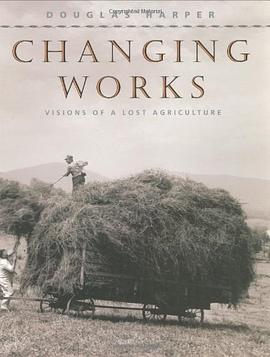
Changing Works
Douban
Harper, Douglas
publishing house:
Univ of Chicago Pr
2001
- 10
The work of Douglas Harper has for two decades documented worlds in eclipse. A glimpse into the life of dairy farmers in upstate New York on the cusp of technological change, "Changing Works" is no exception. With photographs and interviews with farmers, Harper brings into view a social world attended by machines and stuns us with gorgeous visions of rural times past. As a member of this community, Harper relates compelling stories about families and their dairies that reveal how the advent of industrialized labour changed the way farmers structure their work and organize their lives. His new book charts the transformation of American farming from small dairies based on animal power and cooperative work to industrialized agriculture. "Changing Works" combines Harper's pictures with classic images by photographers such as Gordon Parks, Sol Libsohn and Charlotte Brooks - men and women whose work during the 1940s documented the mechanization and automation of agricultural practices. Part social history and part analysis of the drive to mass production, "Changing Works" examines how we farmed a half century ago versus how we do today through pictures new and old and through discussions with elderly farmers who witnessed the makeover. Ultimately, Harper challenges timely ecological and social questions about contemporary agriculture. He shows us how the dissolution of cooperative dairy farming has diminished the safety of the practice, degraded the way we relate to our natural environment, and splintered the once tight-knit communities of rural farmers. Mindful of the advantages of preindustrial agriculture, and heeding the warning of the alarming spread of mad cow and foot-and-mouth disease, "Changing Works" harks back to the benefits of an older system.

Hong Kong
Douban
Caroline Knowles
/
Douglas Harper
publishing house:
University Of Chicago Press
2010
- 2
In 1997 the United Kingdom returned control of Hong Kong to China, ending the city’s status as one of the last remnants of the British Empire and initiating a new phase for it as both a modern city and a hub for global migrations. Hong Kong is a tour of the city’s postcolonial urban landscape, innovatively told through fieldwork and photography.
Caroline Knowles and Douglas Harper’s point of entry into Hong Kong is the unusual position of the British expatriates who chose to remain in the city after the transition. Now a relatively insignificant presence, British migrants in Hong Kong have become intimately connected with another small minority group there: immigrants from Southeast Asia. The lives, journeys, and stories of these two groups bring to life a place where the past continues to resonate for all its residents, even as the city hurtles forward into a future marked by transience and transition. By skillfully blending ethnographic and visual approaches, Hong Kong offers a fascinating guide to a city that is at once unique in its recent history and exemplary of our globalized present.