八九+六四=四通桥 - Review
Webpack实战:入门、进阶与调优
Douban
居玉皓 著 publishing house: 机械工业出版社 2019 - 6
这是一本能指导读者零基础快速掌握Webpack并轻松进阶的实战性著作。 作者是资深的前端工程师,在Webpack领域有深厚的积累,是知名开源打包工具YKit的主导者和核心开发者。本书从功能特性、工作原理、应用实践、性能优化4个维度对Webpack进行了全面的讲解,内容上尽力避免了网络上已经公开发表的各种资料和文档,而是从作者的实际经验出发,将更有价值的内容呈现给读者,尽量帮助读者少走弯路。 全书一共10章: 第1章是一个快速的指引,介绍了Webpack的概念、适用场景、开发环境搭建,以及如何快速上手。 第2~7章详细讲解了Webpack的各项功能特性及其工作原理,同时讲解了它们的适用场景,以及如何付诸实践。 第8~9章深入总结了打包的性能优化和开发环境的优化。 第10章介绍了其他打包工具并对这些工具进行了各项特性的对比。
Read
Aug. 15, 2020
看到69元定价以为是蛮厚一本书,到手居然是薄薄一本小书。明快、简洁、易读,即便用Vue这样已经自带webpack配置的框架,看完也能知其所以然。
Aug. 28, 2020 Review 《Webpack实战》笔记 - a review of Webpack实战:入门、进阶与调优
The One World Schoolhouse
Douban
萨尔曼·汗 publishing house: Twelve 2012 - 10
A free, world-class education for anyone, anywhere: this is the goal of the Khan Academy, a passion project that grew from an ex-engineer and hedge funder's online tutoring sessions with his niece, who was struggling with algebra, into a worldwide phenomenon. Today millions of students, parents, and teachers use the Khan Academy's free videos and software, which have expanded to encompass nearly every conceivable subject; and Academy techniques are being employed with exciting results in a growing number of classrooms around the globe. Like many innovators, Khan rethinks existing assumptions and imagines what education could be if freed from them. And his core idea-liberating teachers from lecturing and state-mandated calendars and opening up class time for truly human interaction-has become his life's passion. Schools seek his advice about connecting to students in a digital age, and people of all ages and backgrounds flock to the site to utilize this fresh approach to learning. In THE ONE WORLD SCHOOLHOUSE, Khan presents his radical vision for the future of education, as well as his own remarkable story, for the first time. In these pages, you will discover, among other things: How both students and teachers are being bound by a broken top-down model invented in Prussia two centuries ago Why technology will make classrooms more human and teachers more important How and why we can afford to pay educators the same as other professionals How we can bring creativity and true human interactivity back to learning Why we should be very optimistic about the future of learning. Parents and politicians routinely bemoan the state of our education system. Statistics suggest we've fallen behind the rest of the world in literacy, math, and sciences. With a shrewd reading of history, Khan explains how this crisis presented itself, and why a return to "mastery learning," abandoned in the twentieth century and ingeniously revived by tools like the Khan Academy, could offer the best opportunity to level the playing field, and to give all of our children a world-class education now. More than just a solution, THE ONE WORLD SCHOOLHOUSE serves as a call for free, universal, global education, and an explanation of how Khan's simple yet revolutionary thinking can help achieve this inspiring goal.
引人兴趣的媒介
Douban
[日本] 原研哉 translator: 张朵朵 publishing house: 广西师范大学出版社 2011 - 6
本书是继《设计中的设计|全本》之后,广西师范大学出版社推出的全新的原研哉著作。SENSEWARE是原研哉同TOKYO FIBER合作的一个延续性项目,旨在通过设计的创想来发掘面料、纤维的各种可能性,不断发展的技术和独特的美感使面料在当今呈现多样纷呈的面貌,通过原研哉对展览的策划并和各界的设计师、艺术家诸如隈研吾、深泽直人、坂茂等,以及以设计见长的企业如索尼、松下、本田的合作,以小见大,让读者进一步感受到设计的魅力所在。 本书是原研哉至臻出版品风格的延续,浓郁的日式风格和独特的思考角度,让读者在《设计中的设计|全本》之外,发掘原研哉的另一个面向。
Read
Sept. 4, 2018
有时候觉得日本设计师对工业设计的「感官」这块纤细到近乎矫情,甚至会因为太过于在意某各方面至高的体验而一叶障目,做出可笑的作品。但是即便如此,还是会被这种追求感动到,并且,结合一下自己粗糙的心灵,正好中和出一个还能用的东西。
Sept. 6, 2018 Review SENSEWARE:基于感性的设计 - a review of 引人兴趣的媒介
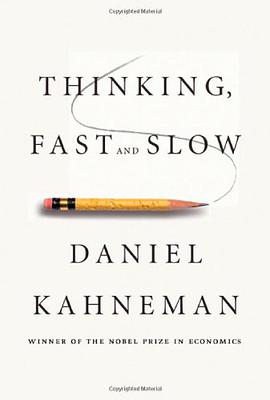
Thinking, Fast and Slow
Thinking, Fast and Slow Douban Goodreads Skybridge
★ 8.4 43 ratings
Daniel Kahneman publishing house: Farrar, Straus and Giroux 2011 - 10
Major New York Times bestseller Winner of the National Academy of Sciences Best Book Award in 2012 Selected by the New York Times Book Review as one of the best books of 2011 A Globe and Mail Best Books of the Year 2011 Title One of The Economist’s 2011 Books of the Year One of The Wall Street Journal's Best Nonfiction Books of the Year 2011 In the international bestseller, Thinking, Fast and Slow, Daniel Kahneman, the renowned psychologist and winner of the Nobel Prize in Economics, takes us on a groundbreaking tour of the mind and explains the two systems that drive the way we think. System 1 is fast, intuitive, and emotional; System 2 is slower, more deliberative, and more logical. The impact of overconfidence on corporate strategies, the difficulties of predicting what will make us happy in the future, the profound effect of cognitive biases on everything from playing the stock market to planning our next vacation—each of these can be understood only by knowing how the two systems shape our judgments and decisions. Engaging the reader in a lively conversation about how we think, Kahneman reveals where we can and cannot trust our intuitions and how we can tap into the benefits of slow thinking. He offers practical and enlightening insights into how choices are made in both our business and our personal lives—and how we can use different techniques to guard against the mental glitches that often get us into trouble. Winner of the National Academy of Sciences Best Book Award and the Los Angeles Times Book Prize and selected by The New York Times Book Review as one of the ten best books of 2011, Thinking, Fast and Slow is destined to be a classic. One of the New York Times Book Review's Top 10 Books of 2011 Editorial Reviews Amazon.com Review Amazon Best Books of the Month, November 2011: Drawing on decades of research in psychology that resulted in a Nobel Prize in Economic Sciences, Daniel Kahneman takes readers on an exploration of what influences thought example by example, sometimes with unlikely word pairs like "vomit and banana." System 1 and System 2, the fast and slow types of thinking, become characters that illustrate the psychology behind things we think we understand but really don't, such as intuition. Kahneman's transparent and careful treatment of his subject has the potential to change how we think, not just about thinking, but about how we live our lives. Thinking, Fast and Slow gives deep--and sometimes frightening--insight about what goes on inside our heads: the psychological basis for reactions, judgments, recognition, choices, conclusions, and much more. --JoVon Sotak Review “A tour de force. . . Kahneman’s book is a must read for anyone interested in either human behavior or investing. He clearly shows that while we like to think of ourselves as rational in our decision making, the truth is we are subject to many biases. At least being aware of them will give you a better chance of avoiding them, or at least making fewer of them.”—Larry Swedroe, CBS News “Daniel Kahneman demonstrates forcefully in his new book, Thinking, Fast and Slow, how easy it is for humans to swerve away from rationality.”—Christopher Shea, The Washington Post “An outstanding book, distinguished by beauty and clarity of detail, precision of presentation and gentleness of manner. Its truths are open to all those whose System 2 is not completely defunct. I have hardly touched on its richness.”— Galen Strawson, The Guardian “Brilliant . . . It is impossible to exaggerate the importance of Daniel Kahneman’s contribution to the understanding of the way we think and choose. He stands among the giants, a weaver of the threads of Charles Darwin, Adam Smith and Sigmund Freud. Arguably the most important psychologist in history, Kahneman has reshaped cognitive psychology, the analysis of rationality and reason, the understanding of risk and the study of happiness and well-being . . . A magisterial work, stunning in its ambition, infused with knowledge, laced with wisdom, informed by modesty and deeply humane. If you can read only one book this year, read this one.”— Janice Gross Stein, The Globe and Mail “A sweeping, compelling tale of just how easily our brains are bamboozled, bringing in both his own research and that of numerous psychologists, economists, and other experts...Kahneman has a remarkable ability to take decades worth of research and distill from it what would be important and interesting for a lay audience...Thinking, Fast and Slow is an immensely important book. Many science books are uneven, with a useful or interesting chapter too often followed by a dull one. Not so here. With rare exceptions, the entire span of this weighty book is fascinating and applicable to day-to-day life. Everyone should read Thinking, Fast and Slow.” —Jesse Singal, Boston Globe “We must be grateful to Kahneman for giving us in this book a joyful understanding of the practical side of our personalities.” —Freeman Dyson, The New York Review of Books “Brilliant . . . It is impossible to exaggerate the importance of Daniel Kahneman’s contribution to the understanding of the way we think and choose. He stands among the giants, a weaver of the threads of Charles Darwin, Adam Smith and Sigmund Freud. Arguably the most important psychologist in history, Kahneman has reshaped cognitive psychology, the analysis of rationality and reason, the understanding of risk and the study of happiness and well-being . . . A magisterial work, stunning in its ambition, infused with knowledge, laced with wisdom, informed by modesty and deeply humane. If you can read only one book this year, read this one.” — Janice Gross Stein, The Globe and Mail “It is an astonishingly rich book: lucid, profound, full of intellectual surprises and self-help value. It is consistently entertaining and frequently touching, especially when Kahneman is recounting his collaboration with Tversky . . . So impressive is its vision of flawed human reason that the New York Times columnist David Brooks recently declared that Kahneman and Tversky’s work ‘will be remembered hundreds of years from now,’ and that it is ‘a crucial pivot point in the way we see ourselves.’ They are, Brooks said, ‘like the Lewis and Clark of the mind’ . . . By the time I got to the end of Thinking, Fast and Slow, my skeptical frown had long since given way to a grin of intellectual satisfaction. Appraising the book by the peak-end rule, I overconfidently urge everyone to buy and read it. But for those who are merely interested in Kahenman’s takeaway on the Malcolm Gladwell question it is this: If you've had 10,000 hours of training in a predictable, rapid-feedback environment—chess, firefighting, anesthesiology—then blink. In all other cases, think.”—The New York Times Book Review “Ask around and you hear pretty much the same thing. 'Kahneman is the most influential psychologist since Sigmund Freud,' says Christopher Chabris, a professor of psychology at Union College, in New York. 'No one else has had such a broad impact on so many fields' . . . It now seems inevitable that Kahneman, who made his reputation by ignoring or defying conventional wisdom, is about to be anointed the intellectual guru of our economically irrational times.”— Evan R. Goldstein, The Chronicle of Higher Education “There have been many good books on human rationality and irrationality, but only one masterpiece. That masterpiece is Daniel Kahneman’s Thinking, Fast and Slow . . . This is one of the greatest and most engaging collections of insights into the human mind I have read.”—William Easterly, Financial Times “[Thinking, Fast and Slow] is wonderful, of course. To anyone with the slightest interest in the workings of his own mind, it is so rich and fascinating that any summary would seem absurd.”— Michael Lewis, Vanity Fair “Absorbingly articulate and infinitely intelligent . . . What's most enjoyable and compelling about Thinking, Fast and Slow is that it's so utterly, refreshingly anti-Gladwellian. There is nothing pop about Kahneman's psychology, no formulaic story arc, no beating you over the head with an artificial, buzzword-encrusted Big Idea. It's just the wisdom that comes from five decades of honest, rigorous scientific work, delivered humbly yet brilliantly, in a way that will forever change the way you think about thinking.”—Maria Popova, The Atlantic “I will never think about thinking quite the same. [Thinking, Fast and Slow] is a monumental achievement.”—Roger Lowenstein, Bloomberg/Businessweek “Profound . . . As Copernicus removed the Earth from the centre of the universe and Darwin knocked humans off their biological perch, Mr. Kahneman has shown that we are not the paragons of reason we assume ourselves to be.” —The Economist “[Kahneman’s] disarmingly simple experiments have profoundly changed the way that we think about thinking . . . We like to see ourselves as a Promethean species, uniquely endowed with the gift of reason. But Mr. Kahneman’s simple experiments reveal a very different mind, stuffed full of habits that, in most situations, lead us astray.” —Jonah Lehrer, The Wall Street Journal “[A] tour de force of psychological insight, research explication and compelling narrative that brings together in one volume the high points of Mr. Kahneman's notable contributions, over five decades, to the study of human judgment, decision-making and choice . . . Thanks to the elegance and force of his ideas, and the robustness of the evidence he offers for them, he has helped us to a new understanding of our divided minds—and our whole selves.” —Christoper F. Chabris, The Wall Street Journal “The ramifications of Kahenman’s work are wide, extending into education, business, marketing, politics . . . and even happiness research. Call his field “psychonomics,” the hidden reasoning behind our choices. Thinking, Fast and Slow is essential reading for anyone with a mind.” —Kyle Smith, The New York Post “A major intellectual event . . . The work of Kahneman and Tversky was a crucial pivot point in the way we see ourselves.” —David Brooks, The New York Times “Kahneman provides a detailed, yet accessible, description of the psychological mechanisms involved in making decisions.” —Jacek Debiec, Nature “With Kahneman’s expert help, readers may understand this mix of psychology and economics better than most accountants, therapists, or elected representatives. VERDICT A stellar accomplishment, a book for everyone who likes to think and wants to do it better.” —Library Journal “The mind is a hilariously muddled compromise between incompatible modes of thought in this fascinating treatise by a giant in the field of decision research. Nobel-winning psychologist Kahneman (Attention and Effort) posits a brain governed by two clashing decision-making processes. The largely unconscious System 1, he contends, makes intuitive snap judgments based on emotion, memory, and hard-wired rules of thumb; the painfully conscious System 2 laboriously checks the facts and does the math, but is so "lazy" and distractible that it usually defers to System 1. Kahneman uses this scheme to frame a scintillating discussion of his findings in cognitive psychology and behavioral economics, and of the ingenious experiments that tease out the irrational, self-contradictory logics that underlie our choices. We learn why we mistake statistical noise for cohere...
Read
April 9, 2018
这是我读过的最深情的一封情书,给Amos和迷信又可爱的人类。
April 11, 2018 Review 一份粗糙的大纲 - a review of Thinking, Fast and Slow
e-Learning and the Science of Instruction
Douban
Clark, Ruth Colvin publishing house: John Wiley & Sons Inc 2007 - 9
In this thoroughly revised edition of the bestselling e-Learning and the Science of Instruction authors Ruth Colvin Clark and Richard E. Mayer— internationally-recognized experts in the field of e-learning—offer essential information and guidelines for selecting, designing, and developing asynchronous and synchronous e-learning courses that build knowledge and skills for workers learning in corporate, government, and academic settings. In addition to updating research in all chapters, two new chapters and a CD with multimedia examples are included.
Read
Oct. 22, 2018
虽然相见恨晚,但是废话也是真的多。
March 1, 2018 Review 大脑呕吐物 - a review of e-Learning and the Science of Instruction
塑造和突破网格
Making and Breaking the Grid:A Graphic Design Layout Workshop Douban
[美] 蒂莫西·萨马拉 translator: 王飞飞 / 雷肖 … publishing house: 电子工业出版社 2014 - 6
对于以任何媒介工作的设计师来说,毋庸置疑,版式是最基本也最重要的元素。有效的版式对传达至关重要,并且使终端用户不仅为新颖的设计所吸引,还能使其易于消化信息。对于设计工作,推倒条条框框和打破陈规的重要性不言而喻,而且在设计师之间涌现出的对理性结构的违反早已点燃了一场持续5 0多年并且还在继续的辩论。这种倾向常常以牺牲条理性为代价,但是直觉构图法已催生了一些平面设计史上最有意思和最激动人心的设计作品。《塑造和突破网格》是一本内容全面的版式设计著作。本书提出,为了有效地打破基于网格的设计的规则,首先必须理解那些规则,并清楚如何将它们应用到真实的设计项目之中。
Read Jan. 17, 2018
平面构成教材。读的原版,不知中文版翻译得怎样所以不打分了。原版本身就是对网格系统很出色的应用。结构很棒,行文优雅,读起来有种爽快感。
设计
Jan. 23, 2018 Review 网格之于设计 - a review of 塑造和突破网格
色彩构成
Douban
约瑟夫•阿尔伯斯 translator: 李敏敏 publishing house: 重庆大学出版社/楚尘文化 2012 - 4
《色彩构成》是约瑟夫·阿尔伯斯在色彩感知的研究与教学方面独特实验的成果,囊括了阿尔伯斯的主要色彩理论。《色彩构成》自问世之日起就引起了广泛的关注,迄今已被看作20世纪色彩研究这一领域最大胆、最全面、最巧妙、最精彩的书籍之一。对于希望在色彩感知方面探求新发现的艺术家、设计师、教师或者普通爱好者而言,《色彩构成》都是不可或缺的经典之作。
Read
Dec. 31, 2017
色相翻译成色调,明度一会儿翻译作光亮度一会儿翻译作亮度,好好一本殿堂级教科书翻译得狗屁不通,全本字号打如苍蝇双倍行距铜版纸,建议直接阅读原版。
Jan. 8, 2018 Review 翻译勘误 - a review of 色彩构成
Don't Make Me Think, Revisited
Douban Goodreads Skybridge
★ 8.3 11 ratings
Steve Krug publishing house: New Riders 2013 - 12 other title: Don't Make Me Think, Revisited: A Common Sense Approach to Web Usability
Since Don’t Make Me Think was first published in 2000, hundreds of thousands of Web designers and developers have relied on usability guru Steve Krug’s guide to help them understand the principles of intuitive navigation and information design. Witty, commonsensical, and eminently practical, it’s one of the best-loved and most recommended books on the subject. Now Steve returns with fresh perspective to reexamine the principles that made Don’t Make Me Think a classic–with updated examples and a new chapter on mobile usability. And it’s still short, profusely illustrated…and best of all–fun to read. If you’ve read it before, you’ll rediscover what made Don’t Make Me Think so essential to Web designers and developers around the world. If you’ve never read it, you’ll see why so many people have said it should be required reading for anyone working on Web sites. “After reading it over a couple of hours and putting its ideas to work for the past five years, I can say it has done more to improve my abilities as a Web designer than any other book.” –Jeffrey Zeldman, author of Designing with Web Standards
Read
Sept. 17, 2016
一页纸就能说完的内容硬是写了本200页的书。大写的服。信息密度低至如此,真是看得煎熬无比,宁愿啃O’Reilly家800页的JS也没有办法多看一页这种自以为是又连篇累牍的俏皮话。
Sept. 19, 2016 Review 读书笔记 - a review of Don't Make Me Think, Revisited
版面设计的原理
Douban
★ 8.7 6 ratings
[日] 伊达千代 translator: 周淳 publishing house: 中信出版社 2011 - 10
《版面设计的原理》内容简介:以条理分明的章节及浅显易懂的文字,有层次地说明设计的各个环节。作者从建立条理、添加变化、强调重点、设计技巧和设计中的色彩几个方面将自己实际操作经验与心得全部记录下来。以系统化的内容向读者说明自己所建立的“设计原理”的基本原则,为设计入门奠定了扎实的基础。 书中没有太多不实用的理论.而是提供具体可遵循的原理和实际案例,让设计新手的设计质量大幅提升:同时也提醒对设计心怀憧憬的人们:任何设计都不是随意完成的,而是存在着既定的原理只有掌握了这些原理,才能够做出好的设计作品。
Read
July 1, 2016
不管是刚入门还是进阶选手,花一天时间读掉这本小书都是有价值的。可惜条理不够清楚,以及作为正面例子来用的示范丑得有些令人发指。
July 29, 2016 Review 夹带私货的读书笔记 - a review of 版面设计的原理
白
Douban
★ 8.8 5 ratings
[日本] 原研哉 publishing house: 中央公論新社 2008 - 5
前言 本书不是讲颜色的。其实,我是在尝试探究一个叫做“白”的实体,以找到人自身文化所假定的感觉的那些资源。换句话讲,我是在尝试通过白的概念找到一种营造简单和微妙的日本美学的源头。 设计是我的工作。我的职业领域是沟通。这意味着,比起做“东西”来,我更多地是在解析“环境”和“条件”。我已在大量的展览中展示了我的工作,做了数不清的海报、包装设计、符号标志以及书籍设计。这些产品都反映了我的给定“环境”的本质。我的职业引导我思考怎样才能创造出能不断获得新力量的形象,能留下长久印象的无比清晰的东西。这一思维过程,反过来又使我开始关注在日本,或更广泛而言,在全世界发展起来的文化传播的手段。随着此思想进程的进展,我越来越强烈地感觉到它正在引出新的答案。 “空”(utsu)与“空虚”(karappo)是我在试图抓住沟通本质时思考的一些概念。当人们分享各自的想法时,他们一般是倾听彼此的意见,而非将信息扔给对方。换句话讲,成功沟通的基础在于我们能够多好地倾听,而非我们能够多好地将我们的意见推给坐在我们面前的那个人。人们已通过使用诸如“空的容器”这样的用语将沟通技巧概念化,以使自己更好地理解对方。例如,与那些涵义被限定得较窄的标志不同,十字、日本旗上的红色圆盘这样的符号可以让我们的想象力能不受任何疆界限制地自由驰骋。它们就像无数空的容器一样,能包含各种可能的涵义。空的概念同样可以从洞穴式的陵墓、教堂、小花园或茶室中发现。它们都反映了空的概念。虽然一开始我是在写“空”,但没多久我就发现,我其实是在说“白”:通过与“空”那宽广的涵义谱系对抗,“白出现了。从语言学上来说,白这个字,在日语里是出现在空白这个词组里的”。这一联系最终迫使我根据与白的关系去探索空的涵义。相应地,我最终也是先写的白,然后再转到空。 我的希望是,当你读完本书,白对于你,看起来已经有所不同了。如果你觉得它闪耀着崭新的、更清晰的光芒,我们就可以说,你的感觉更纯净了。这样一个提高了的对白的认识也就提供了一种条件,使我们可以在更亮的光中看我们的世界。 ------------------------------ 第一章 白的发现 作为感觉经验的白 “白”这样的东西是不存在的。其实,“白”只存在于我们的感觉认知中。因此,我们一定不要试图去寻找“白”,而要去找一种感觉白的方式。通过这一过程,我们会获得一种对白的知觉,比我们正常体验到的白还要更白一点点。这会让我们察觉到日本文化中白的惊人多样性。我们开始理解寂静和空的空间这样的词语,并能区分它们之中所包含的隐含意义。当我们达成了与白的这种密切关系,我们的世界就会更亮,而其阴影也会更深。 打字稿的黑并不意味着那些字真的黑。它们只是在与一张白纸的对比中显得黑。同样地,日本旗上的圆也只是在与其白背景的关系中才显得红。当蓝色或棕色被置于白背景中,这种相对性对它们也同样奏效。因为不存在渴望存在,它们不时会创造出比存在本身更强烈的存在感。要保持白的纯洁性是困难的,因为它太容易被污染。它的美之所以如此强烈地打动我们,皆因我们痛苦地意识到其短暂性。 日本建筑、空间概念、书籍设计以及花园这样的东西,都是在对引入白的这种思维过程的响应中诞生的。类似的一种接近白的方式是谷崎润一郎(1886-1965)在其文章《阴影颂》中提出的,从阴影的角度对日本美学进行了诠释。谷崎用阴影找到一张图的消逝点的想法棒极了。而难道不能还有另一个消逝点,即,那与黑色阴影对比下的极亮? 颜色是什么? 白是一种颜色吗?它像是一种颜色,但同时,我们也可把它看成一种无色。那么我们就须追问:颜色到底是什么? 颜色机制已被组织成清晰的系统,其本身即是现代物理学的产物。最普通的两种颜色分类法是门塞尔法与奥斯瓦尔德法。在其系统中,颜色的三元素:色值、色彩和色度(简言之,即透明度与亮度)可通过构建一个三维环形物来解释,以便我们更容易观察其物理现象(即颜色)。然而该物之构建,并不能使我们获得对所谓颜色的完全体验。诸如一只打破的鸡蛋蛋黄之澄澄金黄,或是一盏茶杯中满盈的茶水,都不止是颜色。它们其实是在一种更深的层次,带着质感与味道等其物质本性中所固有的属性被看到。人们是通过这些元素的组合看到颜色的。在此,对颜色的理解不是仅仅通过我们的视觉感官,而是通过我们所有的感官。只要颜色系统还仅只是建立在物体的物理、视觉性质上,它们是无法传达我们的总体反应的。 如今,我们在为印刷、纺织以及制造品选择颜色时要使用色标本。大多数色标颜色都按照此前提到的门塞尔法与奥斯瓦尔德法的规范进行了标准化处理,使用起来十分方便实用。其秩序性与客观性使得我们能够清楚地将一种颜色与另一种颜色区分开来。 我经常提到的另一种色标本叫做“传统日本色”,是以日本人使用的老的颜色名称组成的。这个本子的初衷不是系统的一贯性,所以当要求精确的时候就无法使用了。它以具有能唤起人们想象力的力量著称。只要我拿起这个本子,我总是能顺利而自然地接受其文字所捕捉到的颜色的特性。同时,我的感觉被唤醒,仿佛听到了家乡的口音,我感到了抚慰,以及一丝孤独。而这些情感的来源又是什么呢? 毫无疑问,颜色可以反映我们细微的情感。但这并非全部。我们看得到发现颜色的那一刻所涌起的人类情感本身的核心吗?颜色并不单独、独立地存在于自然之中。它们随着光的细微级差而不断变化。是语言,无比伟大地赋予了它们清晰的存在。我们从感情层面吸收了那些语言命名的正确性。色彩被感知和体会的方式存储于一种已形成的文化之中,其大标题叫“传统色”。 当我们试着去想象颜色,可能有必要将所有预先设定的类别从我们的头脑中清除,回到一种空白状态。事实上,iro这个“色 ”字的日语,也意味着“情人”。它包含着比现在的颜色所拥有的远为宽广的联想范围。当我们还是小孩时,我们拿到用来画画的那些12支一盒的铅笔好坏参半地塑造了我们的感知。从此我们存储起了诸如“水色”、“肉色”等等概念。可是假使这些参数并不存在,而我们用来描述颜色的词汇又太少怎么办?我们还会以当今世界所通行的方式看待颜色吗? 据说在8世纪的日本,当第一部诗集《万叶集》出版的时候,与颜色有关的词汇还很少。那时使用的基本形容词只有四个:akai(红)、kuroi(黑)、shiroi(白)以及aoi(蓝)。(加i使名词变成形容词。)这四种颜色是指:光明和能量(红),没有亮光(黑),耀眼(白),朦胧的印象(蓝)。这四个形容词可能会让我们感觉太少,但实际上每个词都有很广的范围。人们能够在语境中表达含义上和气氛上很细微的差异。没必要像我们今天这样将颜色严格分类。这就意味着,例如蓝和绿可从情感上归成一堆儿,都算是广义的蓝(aoi)这一类。用形容词表示颜色要依赖于接受者的心理,我们可以假设他们使用的是植物性颜料的名称,如靛青、紫罗兰或是苦橙、灰以及嫩草等等。 我们冠以“传统”的无数颜色源于谦和的平安文化。人们对于自然中的变化有一种精微的把握,并能通过诸如其衣服和家具之类的东西来表达这些变化。这就使一种基于分享美学的新式文化得以产生。一年一般是被分为四个季节,而中国的历法则辨别出72个有不同特征的天气模式或是“候 ”,分为24个“节气”。这一历法又被日本人按其自己的感觉加以采用和修改。一个日本人要想被人认为有教养,他或是她就须获得一种对美的深层意识-以“雪 -月-花”一语表达-在被分为五日周期的季节变化中去发现。 精确指明变化季节的词语,如moegi-iro(发芽植物之亮绿)或是asagi-iro(韭葱叶之绿蓝)是脆弱的,但它们是有说服力的,因为它们捕捉到了观察的瞬间。这就是为什么它们能如此深入我们的内心。颜色名称的作用就像穿过一根细针的一根线,能将我们最微妙的感情缝合在一起。当针触到其目标时,我们便会感到快乐或是入神。它也可能令我们感到痛苦,因为它使我们明白,这种微妙正从我们的现代生活环境中消失。 正如钟乳石洞是经由一滴又一滴下落的水珠日复一日不断重复累积方才形成,自然之精彩或是变化中世界的精神影像亦是逐渐积累才形成颜色的名称。某些东西失去了,其他的转化了,然而最终,没有任何人觉察到,颜色作为一个知觉的大系统建立起来了。传统颜色系统的数量可能会和这个世界上的语言和文化一样多。“传统日本色”只是其中之一。
Read
July 28, 2016
看完好想去银阁寺。
July 29, 2016 Review 读书笔记 - a review of 白
设计师的自我修养
Douban
★ 6.9 7 ratings
左佐 publishing house: 电子工业出版社 2014 - 7
一本关于字体/标志/常识/理论/讲谈/思考/经验/技巧的书籍
Read
July 29, 2016
凭心而论,对于学习中文字型设计还是有帮助的,可以获得不少灵感和思维方式。但是可以明显感觉到作者缺乏才华,对细节把控能力弱,英文字型设计和图形设计能力更是差得令人汗颜。如果真的想要学习字型设计的话,远可以找到比这本书好的教材。如果把这本书作为「如何包装平庸的作品和自己,并且名利双收」的行动指南,倒是本不错的书(认真脸)。
July 10, 2016 Review 个人作品集,甚至不算好的作品集 - a review of 设计师的自我修养
正见
Almost Buddhist/近乎佛教徒 Douban Goodreads
★ 8.9 71 ratings
[不丹] 宗萨蒋扬钦哲仁波切 translator: 姚仁喜 publishing house: 中国友谊出版公司 2007 - 1
在这本书中,宗萨蒋扬钦哲仁波切的以最简单的语言来说明佛教最核心的四法印见地,文字看似简单,却包含了深入浅出的层层奥义。下笔行云流水,诙谐幽默又字字珠玑。在轻快的字句后面,充满了引导无明众生脱离轮回的佛菩萨大悲大愿。 宗萨蒋扬钦哲仁波切是藏传佛教的老师,也是闻名影坛的导演。在书中,他以电影的虚拟实境,巧妙地比喻我们身处的幻相世界;而证悟的过程就彷佛脱去妄念所带来的层层蔽障,了解因缘的善变与无常;因而放下我执,迈向醒觉之路。 他爽洁而利落地破除常人对佛教徒的误解:佛教徒等于祥和与非暴力;其实,这并非佛法的核心。对于要成为一位佛教徒,你必须接受佛教的四法印见地:一切和合现象都是无常,一切情绪都是痛苦,一切事物无自性,以及证悟超越概念。宗萨蒋扬钦哲仁波切以实证的经验加以分析,体现四见地最精要的部分,对于修行者有甚大的帮助。有缘读此书的人,都能更清楚地见识到法教的神髓,了悟无常,解脱万千烦恼;原来,佛教徒不只是着僧袍、坐禅、戒荤食与禁欲;而是觉知这四种见地,化解对如幻世事的执着。
Read
Feb. 7, 2013
不能面对本心真是一件很烦人的问题啊。若是说承认无常确实能够使人克服恐惧,接受来自内心的虚无与外在一切的变幻,而对它“上帝不能举起自己”式的指摘(“诸行无常”这个法印是有常还是无常?)只是在玩文字游戏,那“诸漏皆苦”这一点,不论如何也没法接受。特别是关于“爱”这个话题,书里也没说得特别清楚。有时对文科诸多东西爱不起来就是因为觉得其在把问题复杂化,用艰深的隐喻和比方在试图说一个其实很浅显的道理。也许是没缘,也许是我造化不够,坐井观天了。话说洗脸看书把书掉水里了这种事我会告诉你们吗。
Feb. 7, 2013 Review 我是大不敬的学生吗?老师你这个书名有点自大啊。 - a review of 正见